What was the Argead Dynasty?
The Argead dynasty, also known as the Temenid dynasty, was the ruling family of ancient Macedon from approximately 700 to 310 BC, making it one of the most influential royal...
Heracles, known as Hercules in Roman mythology, is a legendary figure from Greek mythology who was incorporated into Roman culture and mythology.
He is one of the most famous heroes in both Greek and Roman traditions.
Heracles was originally a Greek hero, the son of Zeus (Jupiter in Roman mythology) and Alcmena, a mortal woman. His name “Heracles” means “Glory of Hera,” but he is more commonly known by his Roman name, Hercules.
One of the most well-known aspects of Hercules in both Greek and Roman mythology is his Twelve Labors. These were a series of tasks or trials imposed on him as punishment for killing his wife and children in a fit of madness, which was induced by Hera (Juno in Roman mythology), who harbored a grudge against him.
Hercules became renowned for his incredible strength and numerous heroic deeds. He is often depicted battling various monsters and completing challenging feats, such as slaying the Nemean Lion, capturing the Erymanthian Boar, and cleaning the Augean stables.
In Roman mythology, Hercules is considered the son of Jupiter (Zeus) and Alcmena. His divine heritage contributed to his exceptional abilities and strength.
Apart from the Twelve Labors, Hercules had many other adventures and quests. Some of these adventures, like his participation in the Argonauts’ quest for the Golden Fleece, were incorporated into Roman literature and art.
Hercules was worshipped as a god in Roman religion. He was associated with physical strength, courage, and protection. Temples and altars were dedicated to him, and he had a significant following among soldiers and athletes.
Hercules left a lasting legacy in Roman culture. His stories, feats, and iconography were depicted in various forms of art, literature, and architecture. He remained a popular and enduring figure in Roman mythology and continued to be celebrated long after the decline of the Roman Empire.
Also, in Roman astronomy, Hercules is represented as a constellation in the night sky, often depicted as a man holding a club and the skin of the Nemean Lion.

The Argead dynasty, also known as the Temenid dynasty, was the ruling family of ancient Macedon from approximately 700 to 310 BC, making it one of the most influential royal...

The Nemean Games were one of the four major Panhellenic athletic festivals in Ancient Greece, held every two years in the small town of Nemea. They were established as early...

Nessus is a notable centaur in Greek mythology, renowned for his tragic role in the story involving Heracles (Hercules in Roman Mythology) and Deianeira. The tale of Nessus not only...

Lions have captivated human imagination and culture for millennia, appearing in the art, mythology, and literature of various civilizations. The lions of Ancient Greece and the popular image of the...
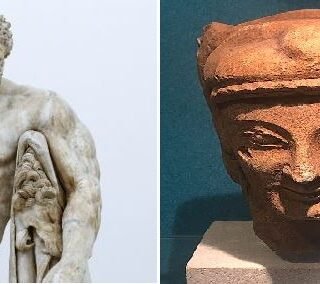
The Phoenician deity Melqart and the Greek demigod Heracles share a multitude of similarities that underscore the cultural exchanges and syncretism prevalent in the ancient Mediterranean world. These figures, central...

Greek mythology is replete with gods, goddesses, heroes, and, of course, demigods. Demigods, often the offspring of a divine parent and a mortal, occupy a unique place in Greek mythology....

In the realm of Greek mythology, the Stymphalian Birds stand tall as one of the most legendary and fearsome creatures. These menacing birds, with their deadly metallic feathers, have captured...

The Panhellenic Games were a series of ancient Greek athletic competitions that brought together athletes from different city-states (poleis) to compete in various sporting events. These games were considered prestigious...

Today, we know that our galaxy, the Milky Way, is just one of the billions of galaxies that exist in the vast universe. Stretching at an estimated 100,000 light-years in...

Perseus is a figure from Greek mythology who is known for his heroic deeds and adventures. He was the son of Zeus and Danaë, and was famous for slaying the...

Vicious, horrifying, hideous, fierce. These were some of the words the ancient Greeks used to describe the Gorgons. Who were the Gorgons? And how did they become such frightening creatures?...

A quick look at some of the major mythologies and religions around the world and immediately one cannot help but notice that the concept of the underworld exists in almost...

The Amazons in ancient Greek mythology refer to a group of female warriors and hunters that were revered for their physical prowess and sheer strength comparable to the bravest of...
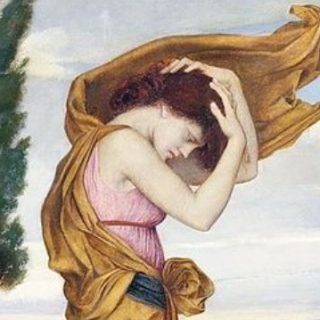
In Greek mythology, Deianira’s name means “destroyer of her husband” or “man-destroyer”. A princess of the Greek city of Calydon in ancient Aetolia, Deianira was one of the three wives...

Hercules is a Roman god and a hero. He is the son of Jupiter (Zeus) and Alcmene (a mortal). In Greek mythology, Hercules is equivalent to the demigod and hero...





