What hairstyles did the ancient Egyptians maintain?
“But if a woman have long hair, it is a glory to her: for her hair is given her for a covering.” “All the days of the vow of...
The pharaohs were the rulers of Ancient Egypt, considered to be living gods on Earth. They held both political and religious authority and played a pivotal role in the development and sustenance of one of the world’s most enduring civilizations.
Here’s a brief overview of some of the most notable pharaohs and their contributions:
Narmer (or Menes): Credited with unifying Upper and Lower Egypt around 3100 BC, he founded the First Dynasty and established the capital at Memphis.
Djoser: Reigned during the Third Dynasty and is best known for building the Step Pyramid at Saqqara, considered the first monumental stone structure.
Sneferu: Founder of the Fourth Dynasty, he is known for building three major pyramids, laying the groundwork for his son’s achievement.
Khufu (Cheops): Built the Great Pyramid at Giza, one of the Seven Wonders of the Ancient World.
Senusret III: One of the most powerful pharaohs of the Twelfth Dynasty, known for his extensive building projects and military campaigns.
Ahmose I: Founder of the Eighteenth Dynasty and the New Kingdom, he expelled the Hyksos invaders and reconsolidated Egyptian rule.
Hatshepsut: One of the few female pharaohs, she focused on trade expeditions and grand building projects during her peaceful reign.
Akhenaten (Amenhotep IV): Known for introducing the worship of Aten and neglecting traditional Egyptian deities, leading to a brief period of monotheism.
Tutankhamun: Famous primarily because of his intact tomb, discovered by Howard Carter in 1922. He became pharaoh at a young age and died under mysterious circumstances.
Ramesses II (Ramesses the Great): One of Ancient Egypt’s most powerful pharaohs, he ruled for 66 years and is known for numerous military campaigns, monumental building projects, and the signing of the first recorded peace treaty with the Hittites.
Cleopatra VII: The last pharaoh of Ancient Egypt, known for her relationships with Roman rulers Julius Caesar and Mark Antony. Her reign ended with the Roman conquest of Egypt.
Core functions of the pharaoh
Throughout their history, the pharaohs were responsible for maintaining Ma’at, or cosmic order and balance, in the land. They commissioned grand architectural projects, engaged in diplomatic relationships, and led military campaigns, leaving behind a legacy that continues to captivate the world.
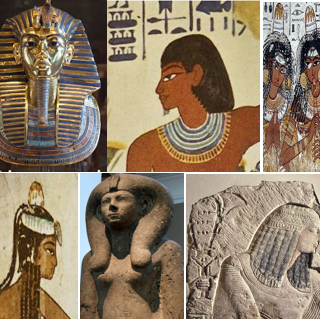
“But if a woman have long hair, it is a glory to her: for her hair is given her for a covering.” “All the days of the vow of...

March 30, 1867, marked the day in history when the Treaty of Cession was finalized by William H. Seward, the then-U.S. Secretary of State, and Baron Edouard de Stoeckl, a...

Well known for her elegance, remarkable beauty and strength as a ruler, Cleopatra VII was a very powerful pharaoh of Ptolemaic Egypt. She accomplished many things during a reign that...

Thutmose III, one of ancient Egypt’s greatest rulers, was the 6th pharaoh of the Eighteenth Dynasty. His reign, which spanned from around 1479 to 1425 BC, was one marked by...
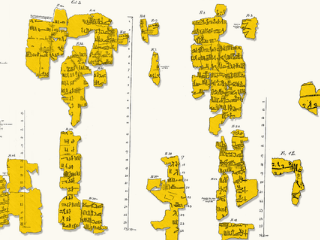
Also known as the Turin Canon, the Turin Papyrus of Kings is an important ancient Egyptian manuscript which provides a list of all kings of the 1st dynasty down to...

Amenhotep III, also known as Amenhotep the Magnificent, was the ninth pharaoh of the 18th Dynasty of ancient Egypt. His reign is believed to have lasted from around 1386 to...

Menes was the mighty ruler who according to legend united Upper and Lower Egypt during the Early Dynastic Period of ancient Egypt. Owing to this, he is generally regarded by...

Ancient Egypt’s famous boy-king Tutankhamun, also known as Tutankhamen, was a pharaoh from the 18th dynasty of Egypt. Commonly known today as “King Tut”, Tutankhamun was a young 8/9-year-old boy...
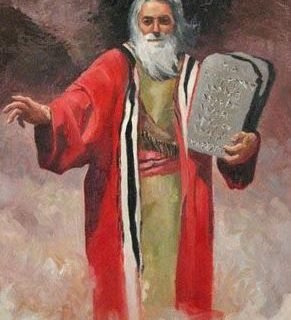
The Birth of Moses Little Moses was still confined in his mother’s womb when his Israeli generation were held as slaves in Egypt. Under the watch of the malicious king Pharaoh,...

The history of ancient Egypt is vast, spanning over three millennia and encompassing numerous dynasties and rulers. The pharaohs of Egypt were not only political leaders but also considered divine...





