The Báb
The Báb, born as ʿAlí Muḥammad in 1819 in Shiraz, Iran, was the founder of the Bábí Faith and a central figure in the Baháʼí Faith. His mission was to prepare humanity for the coming of “He Whom God Shall Make Manifest.”
His teachings, which called for spiritual renewal and societal transformation, challenged the established religious and political order of 19th-century Persia, leading to his execution in 1850. Despite his short life, the Báb’s impact has been profound, laying the groundwork for the global Baháʼí Faith.
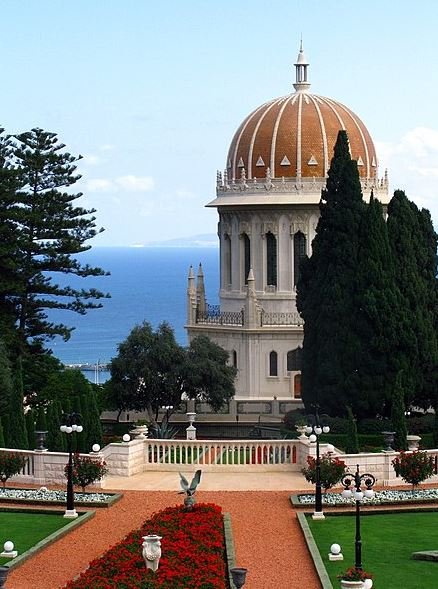
A view of the Shrine of the Báb, from the garden.
Early Life and Background
The Báb was born into a family of merchants, tracing his lineage to the Prophet Muhammad. Orphaned at an early age, he was raised by his maternal uncle, who introduced him to trade and commerce. Despite limited formal education, the Báb displayed profound spiritual insight and an innate understanding of religious matters. His youth was marked by a deep sense of piety, and he spent much time in prayer and meditation, which later influenced his revelations.

The Declaration and Early Ministry
In 1844, at the age of 25, the Báb publicly declared his mission to Mullá Husayn, a seeker from the Shaykhí school of thought. He proclaimed himself as the “Gate” (Báb) to divine knowledge and as a forerunner to a greater Manifestation of God. Within months, eighteen disciples, known as the “Letters of the Living,” accepted his claims and spread his teachings across Persia and beyond. The Báb’s declaration marked the beginning of a tumultuous period, as his message attracted both ardent followers and vehement opposition from the religious elite.
The Letters of the Living were the first 18 disciples of the Báb, tasked with spreading his teachings throughout Iran and Iraq.
Teachings and Doctrinal Contributions
The Báb’s teachings introduced radical reforms aimed at spiritual and social transformation. He emphasized the concept of progressive revelation, asserting that religious truth is continually revealed over time. Among his key teachings were:
- Unity of Religions: The Báb asserted that all religious messengers came from the same divine source and that a new revelation would soon appear.
- Moral and Social Reform: He advocated for the improvement of women’s status, the abolition of the traditional clergy, and the promotion of education and scientific inquiry.
- New Religious Laws: The Báb’s primary work, the Persian Bayán, introduced new religious laws, many of which were symbolic and preparatory for the next manifestation.
- Independent Investigation of Truth: He called on individuals to seek truth for themselves rather than blindly follow religious authorities.
Persecution and Imprisonment
The Báb’s growing influence alarmed the Persian clerics and government, leading to severe persecution. He was arrested and placed under house arrest in Shiraz before being transferred to the remote fortress of Maku and later to Chihríq. Despite harsh conditions, his teachings continued to spread. His followers, known as Bábís, faced mass executions, torture, and exile.
In 1848, during the Conference of Badasht, his followers formally broke from Islamic tradition, signifying the birth of an independent religious movement. This further intensified government crackdowns, leading to armed conflicts between Bábís and state forces, notably at Fort Tabarsí.

Trial and Execution
In 1850, the Prime Minister of Persia, Amir Kabir, ordered the Báb’s execution in Tabriz. Before his death, the Báb reportedly told his captors that no force could take his life until he had finished his mission. When the first volley of bullets failed to kill him, he was found alive and unharmed. A second firing squad was assembled, successfully executing him. His remains were hidden by his followers and later transferred to Haifa, where they were interred in the Shrine of the Báb on Mount Carmel in 1909.
The Báb’s Writings
The Báb produced a vast body of writings, including prayers, commentaries, and theological treatises. Some of his most notable works include:
- Qayyúmu’l-Asmá: A commentary on the Surah of Joseph, considered his first major revelation.
- Persian Bayán: A comprehensive exposition of his laws and teachings, outlining the coming of “He Whom God Shall Make Manifest.”
- Arabic Bayán: A shorter companion to the Persian Bayán, emphasizing spiritual and mystical themes.
- Seven Proofs: A theological defense of his claim to divine revelation. These works laid the foundation for the Baháʼí teachings and continue to be studied by Baháʼís worldwide.

A Bábí da’ira
The Báb’s Legacy and Influence
Although the Bábí movement was violently suppressed, it set the stage for the emergence of the Baháʼí Faith. Baháʼílláh, a prominent Bábí who later declared himself as “He Whom God Shall Make Manifest,” established the Baháʼí Faith, which today has millions of adherents worldwide.
The Báb’s influence extended beyond religious boundaries. His emphasis on equality, education, and social justice resonated with reformers in Persia and beyond. His teachings challenged entrenched power structures, inspiring progressive thought and modernist movements in the Islamic world.
Today, the Báb is revered as a divine messenger, his teachings serving as a bridge between past revelations and the progressive future envisioned by Baháʼílláh.
Timeline
- 1819 – The Báb is born in Shiraz, Iran, to a family of merchants and descendants of Prophet Muhammad.
- 1844 – Declares his mission to Mullá Husayn in Shiraz, initiating the Bábi Faith and proclaiming himself the “Gate” (Báb) to a greater Manifestation of God.
- 1845 – Faces growing opposition from the clergy; placed under house arrest but later released due to a cholera outbreak.
- 1846 – Moves to Isfahan, gains support from the governor, and publicly debates religious scholars.
- 1847 – Ordered to Tehran but diverted to prison in Maku; begins writing the Bayán, outlining new religious laws and preparing for “He Whom God Shall Make Manifest.”
- 1848 – Brought to Tabriz for trial, tortured, and imprisoned in Chehriq; his followers hold the Conference of Badasht, marking a break from Islamic law.
- 1850 – Executed in Tabriz by a firing squad; his remains are later secretly moved and interred in the Shrine of the Báb in Haifa in 1909.
Frequently Asked Questions
What does the title “Báb” mean?
“Báb” means “gate” in Arabic, signifying his role as the gateway to the coming divine figure who would bring a new world order.

Shrine of the Báb, located in the city of Haifa in Israel.
What was the central message of the Báb’s teachings?
He emphasized the renewal of religion, unity of humanity, independent investigation of truth, the advancement of women, modern education, and the coming of a greater spiritual figure.
How did the Báb begin his religious mission?
On May 22, 1844, he declared his mission to Mullá Husayn, his first disciple, in Shiraz, marking the beginning of the Bábí movement.
What was the Bayán?
The Bayán was the Báb’s most significant book, outlining his teachings and laws while emphasizing the advent of “He whom God shall make manifest.”
Why was the Báb persecuted?
His teachings challenged Islamic orthodoxy and the authority of the clergy, leading to widespread persecution by religious leaders and the Qajar government.
How and when was the Báb executed?
He was executed by firing squad in Tabriz on July 9, 1850. A first volley of bullets failed to kill him, and he was found alive before being shot again.
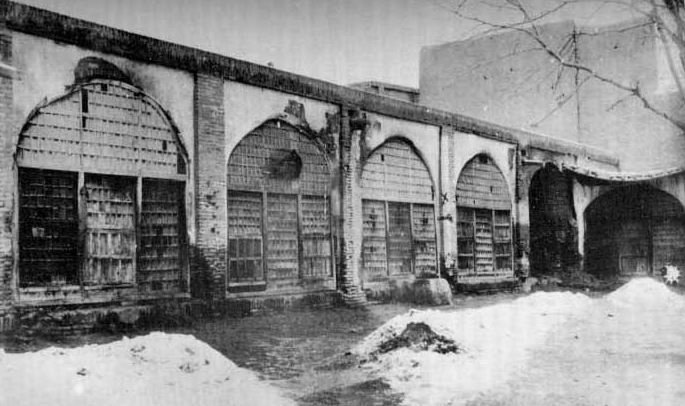
The barrack square in Tabriz, Iran. The execution site of the Báb.
What happened to the Báb’s remains?
His remains were secretly transported over decades and were finally interred in the Shrine of the Báb on Mount Carmel in Haifa, Israel, in 1909.
What role does the Báb play in the Bahá’í Faith?
Bahá’ís regard him as a Manifestation of God and a forerunner to Bahá’u’lláh, similar to John the Baptist’s role in Christianity.
How did the Báb influence women’s rights?
He advocated for gender equality, discouraged polygamy, and supported women’s education, exemplified by his prominent female disciple Táhirih.
What was the relationship between the Báb and Bahá’u’lláh?
The Báb’s teachings prepared the way for Bahá’u’lláh, who later declared himself as “He whom God shall make manifest” and founded the Bahá’í Faith.
How do Bahá’ís commemorate the Báb?
His birth, declaration, and martyrdom are observed as holy days, and his shrine in Haifa is a major pilgrimage site.





