The Essex Junto was a powerful political group in New England during the late 18th and early 19th centuries, primarily consisting of lawyers, merchants, and politicians. The name “Essex Junto” originates from Essex County, Massachusetts, where many of the group’s founding members hailed from. The group was influential in shaping Federalist Party policies and its members played significant roles in the political landscape of early America. While their activities were crucial to Federalist politics, their ideas were often controversial and have been the subject of much debate.
What was the Essex Junto – and what was its stance on secession?
In the article below, World History Edu explores the origins of the Essex Junto, its early political activities, and its involvement in the War of 1812, shedding light on how this group influenced American political history.
Origins of the Essex Junto
The term “Essex Junto” was first coined in 1778 by John Hancock, who used it as a term of invective to describe a faction of Massachusetts politicians opposing a proposed state constitution. Hancock’s use of the term highlighted the political tensions of the time, as the proposal for the new constitution was ultimately rejected by the people of Massachusetts. Instead, the state adopted the Massachusetts Constitution in 1780, which became one of the most enduring documents of early American governance.

The term “Essex Junto” was later associated with a group of prominent Federalist leaders, many of whom were from Essex County, Massachusetts. Although Hancock is often credited with coining the term, John Adams, the second president of the United States, also used it in reference to this faction. Initially, the Essex Junto was seen as a derogatory term, but over time it came to be used to describe the group more neutrally, especially by those who sympathized with its political views. The Essex Junto was composed primarily of lawyers, merchants, and politicians, many of whom were staunch supporters of the Federalist ideology.
Among the key figures associated with the Essex Junto were Timothy Pickering, George Cabot, Fisher Ames, Francis Dana, Nathan Dane, Benjamin Goodhue, Stephen Higginson, Jonathan Jackson, John Lowell, Israel Thorndike, and Theophilus Parsons. These individuals played crucial roles in shaping the political direction of Massachusetts and New England during the early years of the United States. Their opposition to the dominance of the Jeffersonian Republicans, their advocacy for a strong central government, and their opposition to what they viewed as the excesses of democracy in the new nation made them significant figures in the political history of early America.
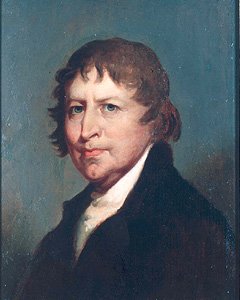
Theophilus Parsons played a prominent role in the Essex Junto.
Political Activities and Federalist Support
The Essex Junto was closely aligned with the ideas of Alexander Hamilton, one of the leading figures of the Federalist Party. Hamilton’s vision of a strong central government and his support for a robust national economy resonated with many in the Junto. However, the group’s political activities went beyond mere support for Hamilton’s policies. They were also deeply involved in the political dynamics of New England and the Federalist Party.
One of the most notable early political activities of the Essex Junto was its involvement in the radical ideas of Timothy Pickering, one of its leading members. Pickering and others in the Junto supported the idea of New England’s secession from the Union. Their belief in secession was rooted in their frustration with the political dominance of the southern states, especially after the election of Thomas Jefferson as president in 1800. The Essex Junto believed that New England’s interests were being neglected by the federal government, which was dominated by the Jeffersonian Republicans. They felt that New England’s economic and political power was being undermined by the expansion of southern influence, particularly in the areas of agriculture and slavery.

Thomas Jefferson
In the early 1800s, the Essex Junto sought to gain the support of Aaron Burr, the former vice president under Thomas Jefferson, to further their goals. Burr, who had lost his bid for the presidency in 1800 and was politically sidelined, was receptive to the idea of New England secession as a means of regaining political power. Burr was rumored to have been involved in a plot with members of the Essex Junto to organize a movement for New England’s separation from the Union. However, Burr ultimately rejected the idea of secession after Hamilton, his longtime political rival, distanced himself from the scheme.
The War of 1812 and the “Blue Lights”
The Essex Junto’s political influence reached a critical point during the War of 1812. This conflict between the United States and Britain led to widespread discontent in New England, which was heavily reliant on trade and maritime commerce. The war disrupted these industries, leading to economic hardship and frustration among many in the region. The Essex Junto, which had long been critical of the Jeffersonian Republicans and their policies, became increasingly disillusioned with the war effort.
During the War of 1812, the Essex Junto became associated with a controversial movement known as the “Blue Lights.” This term refers to the alleged practice of certain individuals in New England signaling to British ships by shining blue lights along the coast. It was believed that these signals were used to warn British vessels of the movements of American ships or to help British ships evade the U.S. Navy’s blockade. The accusation that the Essex Junto was involved in such activities was never proven, but it became widely circulated in the press, leading to the group’s negative public image during and after the war.
Despite the allegations surrounding the “Blue Lights,” the Essex Junto was an ardent critic of the war and of President James Madison’s administration. The group’s opposition to the war culminated in its support for the Hartford Convention of 1814. This convention, which took place in Hartford, Connecticut, was a gathering of New England Federalists who sought to address the region’s grievances with the federal government.
Although the Hartford Convention’s primary focus was on advocating for New England’s interests, it became associated with the idea of secession. The Junto’s involvement in the Hartford Convention, however, has been somewhat overstated in historical accounts. While there was talk of secession, it is now believed that the convention’s delegates were primarily concerned with securing constitutional amendments to protect New England’s economic and political interests.
Legacy and Decline
The influence of the Essex Junto began to wane after the War of 1812 and the demise of the Federalist Party. The war had tarnished the reputation of the Federalists, particularly in New England, where the party’s opposition to the war alienated many voters. The Hartford Convention, which was seen by many as unpatriotic, further discredited the Federalist cause, and the party’s political power gradually diminished. By the mid-1820s, the Federalists had effectively disappeared from the national stage, and the Essex Junto’s influence dissipated along with the party.
However, the legacy of the Essex Junto and its members remained significant in New England politics. Many of the ideas associated with the Junto, including support for a strong central government and a market-oriented economy, continued to resonate with political leaders in the region. The group’s advocacy for New England’s economic interests, as well as its skepticism about the federal government’s power, set the stage for later debates over states’ rights and the role of the federal government in American politics.
Frequently Asked Questions
Why was it called the Essex Junto?
The term “Essex Junto” was coined in 1778 by John Hancock as a derogatory label for a faction opposing a proposed Massachusetts constitution. It later came to refer to the group of prominent Federalists from Essex County, Massachusetts.
Who were key members of the Essex Junto?
Prominent members included Timothy Pickering, George Cabot, Fisher Ames, Nathan Dane, Benjamin Goodhue, and others. These individuals were central figures in Federalist politics during the early years of the United States.
The Essex Junto was a group of influential New England Federalists, mainly composed of lawyers, merchants, and politicians, known for their political activity and advocacy for New England’s interests, particularly in the late 18th and early 19th centuries.
What was the Essex Junto’s stance on secession?
The Essex Junto supported the idea of New England’s secession from the Union due to dissatisfaction with the dominance of southern states and the policies of President Thomas Jefferson, though their plans for secession were not widely implemented.
What role did Alexander Hamilton play with the Essex Junto?
Hamilton was a key intellectual influence on the Essex Junto, with many members supporting his vision of a strong central government and his opposition to the Jeffersonian Republicans. However, Hamilton ultimately rejected plans for New England’s secession.
What was the “Blue Lights” controversy during the War of 1812?
The Essex Junto became associated with the “Blue Lights” scandal, where they were accused of signaling British ships to assist in avoiding the U.S. Navy’s blockade. The allegations were never proven but tarnished the group’s reputation.
What was the Hartford Convention, and how did the Essex Junto influence it?
The Essex Junto supported the Hartford Convention, a gathering of New England Federalists during the War of 1812 that discussed grievances with the federal government. While there was talk of secession, the convention’s focus was on seeking constitutional amendments for regional interests.
What happened to the Essex Junto and the Federalist Party after the War of 1812?
After the War of 1812, the Essex Junto’s influence waned as the Federalist Party lost power due to its opposition to the war. The party declined in the 1820s, and the group’s political power largely faded with it.





