The Gadsden Purchase
The Gadsden Purchase was a significant land acquisition by the United States, negotiated in 1853 between the U.S. and Mexico. The purchase involved the sale of a 29,670 square-mile tract of land (now part of southern Arizona and New Mexico) from Mexico to the United States for $10 million.
The Gadsden Purchase resolved a border dispute and was driven by U.S. ambitions to expand its territory and build a southern transcontinental railroad. This event occurred against the backdrop of tensions following the Mexican-American War, domestic U.S. political challenges, and growing sectionalism that would eventually lead to the American Civil War.
Historical Context

The Aftermath of the Mexican-American War
The Gadsden Purchase took place in the context of strained relations between the United States and Mexico, which had endured years of conflict culminating in the Mexican-American War (1846-1848). The Treaty of Guadalupe Hidalgo, which ended the war, resulted in Mexico ceding a vast amount of territory to the United States, including present-day California, Nevada, Utah, Arizona, and parts of Colorado, New Mexico, and Wyoming. This acquisition, known as the Mexican Cession, added approximately 525,000 square miles of land to the U.S., fundamentally altering the map of North America.
However, the Treaty of Guadalupe Hidalgo left some ambiguity regarding the southern boundary of the newly acquired territories, particularly the border between the U.S. state of Texas and Mexico. The unresolved issue of the exact border location west of the Rio Grande caused ongoing friction between the two nations. Additionally, Mexico’s weakened state, following the war, left the country struggling economically and politically, making it vulnerable to further territorial negotiations.
Economic and Political Pressures on Mexico
In the years following the war, Mexico found itself financially strained, facing the challenges of rebuilding its infrastructure, paying war debts, and dealing with internal rebellions and political instability. Antonio López de Santa Anna, who had led Mexico during the war and returned to power several times afterward, was again president of Mexico in the early 1850s. Santa Anna’s government was marked by authoritarianism and corruption, and his administration was in dire need of funds to maintain control over the country.
Santa Anna’s repeated attempts to secure loans from foreign powers and stabilize the Mexican economy were largely unsuccessful, which left him open to the prospect of selling additional territory to the United States in exchange for much-needed money. Santa Anna believed the sale of territory would provide immediate financial relief for his administration and help suppress the internal revolts threatening his rule.
U.S. Expansionism and the Transcontinental Railroad
In the United States, the 1850s were marked by the doctrine of Manifest Destiny—the belief that the U.S. was divinely destined to expand its territory across North America. Expansionism was a significant driving force behind U.S. foreign policy at the time, and the acquisition of new territories was seen as critical to the nation’s growth.
One of the key motivations for acquiring the Gadsden Purchase was the desire to build a southern transcontinental railroad. After the success of the California Gold Rush in 1849, there was an increased demand for efficient transportation routes to connect the eastern U.S. with the new western territories. Many southern leaders and railroad advocates, including Jefferson Davis, who was then Secretary of War under President Franklin Pierce, favored a southern route for the railroad. Such a route would run through the lower part of the United States, including the lands of the Gadsden Purchase, and provide economic benefits to the southern states.
A southern transcontinental railroad route was seen as a way to strengthen the South’s economic position within the U.S., particularly at a time when tensions over slavery and sectionalism were growing. The completion of the railroad would also increase access to California’s ports, helping facilitate trade with Asia. However, the rough terrain and inadequate transportation infrastructure in the Southwest made it necessary for the U.S. to acquire more land from Mexico to ensure the best route for the railroad.
The Role of James Gadsden

James Gadsden, U.S. minister to Mexico, and Mexican President Antonio López de Santa Anna signed the initial agreement on December 30, 1853. The U.S. Senate ratified it on April 25, 1854. Image: An 1831 portrait of Gadsden.
Gadsden’s Appointment and Mission
James Gadsden was a railroad executive, businessman, and diplomat who had long been an advocate of building a southern transcontinental railroad. Born in 1788 in Charleston, South Carolina, Gadsden had a background in the military and business, and he had strong connections with southern political figures. His enthusiasm for expansion and his ties to pro-slavery southern politicians made him an ideal candidate for negotiations with Mexico.
In 1853, President Franklin Pierce, who was elected on a platform favoring territorial expansion, appointed Gadsden as the U.S. Minister to Mexico. Gadsden’s primary mission was to negotiate the purchase of additional land that would facilitate the construction of the southern railroad. However, his instructions from Washington also included other potential goals, such as securing transit rights across the Isthmus of Tehuantepec, which was seen as a possible route for a canal connecting the Atlantic and Pacific Oceans (though this never materialized).
Gadsden’s mission to Mexico was supported by Jefferson Davis, who strongly advocated for the acquisition of land to benefit the South’s economic interests. Davis, as Secretary of War, provided Gadsden with specific instructions to negotiate the purchase of land south of the Gila River to ensure an optimal route for the railroad.
Negotiations with Santa Anna
When Gadsden arrived in Mexico City in 1853, he found Santa Anna willing to negotiate the sale of territory, largely due to the Mexican president’s need for funds. However, the negotiations were not without challenges. Santa Anna initially resisted the idea of selling large portions of Mexican land, fearing that it would further diminish his popularity and make him appear weak to his political opponents.
Nonetheless, the promise of $10 million for a smaller, more specific strip of land, rather than the original larger area Gadsden sought, was enough to sway Santa Anna. Gadsden initially proposed purchasing a vast tract of northern Mexican territory, which included parts of present-day Sonora, Chihuahua, and Baja California. However, Mexico was reluctant to part with so much land, given that the loss of the Mexican Cession was still fresh in the minds of its citizens.
Ultimately, the negotiations led to the sale of a 29,670 square-mile strip of land, located south of the Gila River and extending from the Rio Grande to the Colorado River. This tract was strategically located to serve as the potential route for a southern railroad, as it avoided the rugged terrain of northern New Mexico and Arizona.
On December 30, 1853, James Gadsden and Mexican officials signed the treaty in Mexico City. The terms of the Gadsden Purchase were relatively straightforward: Mexico would cede the designated land to the United States in exchange for $10 million, and the U.S. would settle any outstanding claims by American citizens against Mexico.
The Gadsden Purchase Agreement
Key Provisions
- Land Acquisition: The United States acquired approximately 29,670 square miles of land in what is now southern Arizona and New Mexico. This territory was crucial for completing the southern transcontinental railroad and resolving ongoing border disputes.
- Payment: The U.S. agreed to pay Mexico $10 million for the land. The payment provided immediate financial relief to Santa Anna’s government.
- Settling Claims: The treaty also included provisions for the settlement of American claims against Mexico, resolving lingering financial disputes from the Mexican-American War.
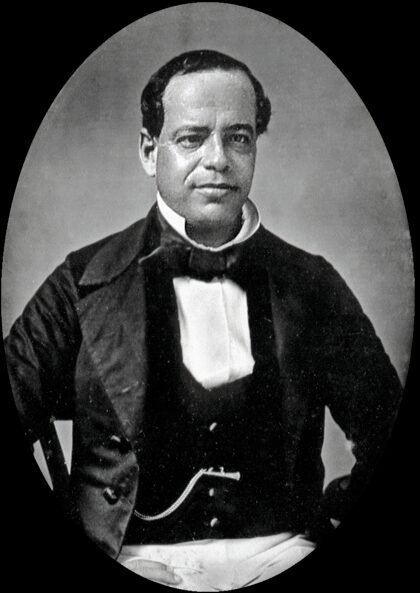
The Gadsden Purchase, or “Venta de La Mesilla” in Spanish, was a 29,670-square-mile region of southern Arizona and southwestern New Mexico acquired by the U.S. from Mexico through the Treaty of Mesilla, effective June 8, 1854. Image Antonio López de Santa Anna.
U.S. Senate Ratification
The Gadsden Purchase Treaty was signed on December 30, 1853, but it faced opposition in the United States before it could be ratified. Many northern politicians were suspicious of the South’s motives in acquiring the land, fearing that it would strengthen the political power of the southern states, which were heavily invested in the institution of slavery. Some northerners believed that the purchase was part of a larger strategy to expand slavery into the newly acquired territories.
Despite this opposition, the treaty was amended and eventually ratified by the U.S. Senate on April 25, 1854. The amendments reduced the size of the purchased land slightly, but the overall terms of the agreement remained intact. President Franklin Pierce signed the treaty into law, and the Gadsden Purchase officially became part of U.S. territory.
Impact of the Gadsden Purchase
Resolution of Border Disputes
One of the immediate effects of the Gadsden Purchase was the resolution of long-standing border disputes between the United States and Mexico. The treaty clarified the location of the U.S.-Mexico border west of El Paso, Texas, providing a more stable and defined boundary. This reduced tensions between the two nations, although it did not entirely eliminate the animosity that had developed during and after the Mexican-American War.
Southern Transcontinental Railroad
The primary motivation for the Gadsden Purchase was to acquire land suitable for constructing a southern transcontinental railroad. Many southern leaders believed that a southern railroad route would provide a significant economic advantage to the South, connecting the region more effectively with the West Coast and increasing trade opportunities with Asia.
However, despite the land acquisition, the southern railroad route was not built as quickly as its advocates had hoped. The Civil War, which broke out in 1861, delayed the construction of many infrastructure projects, including the southern transcontinental railroad. Additionally, political divisions within the U.S. further hindered progress on the project.
The first transcontinental railroad, completed in 1869, followed a more northern route through the central United States. It was built by the “big four” western railroad magnates—Collis P. Huntington, Leland Stanford, Mark Hopkins, and Charles Crocker—and connected California with the eastern states. The southern transcontinental railroad did not become a reality until 1881 when the Southern Pacific Railroad’s tracks met those of the Atchison, Topeka, and Santa Fe Railroad in New Mexico Territory. The Gadsden Purchase land proved to be critical for this southern route, as it provided the necessary terrain for a smooth connection between the southern and western regions.
Effects on U.S.-Mexico Relations
The Gadsden Purchase had both short-term and long-term effects on U.S.-Mexico relations. In the short term, it provided financial relief to the Mexican government, which was struggling to maintain stability in the wake of the Mexican-American War. However, the sale of additional territory further weakened Mexico’s standing and diminished Santa Anna’s popularity. His decision to sell the land was widely criticized within Mexico, and it contributed to his eventual downfall. In 1855, just two years after the Gadsden Purchase, Santa Anna was overthrown and exiled.
In the long term, the Gadsden Purchase represented the final major territorial acquisition by the United States from Mexico. It solidified U.S. control over the southwestern borderlands and completed the continental expansion of the U.S., fulfilling the ambitions of Manifest Destiny. However, it also marked the end of significant U.S. territorial expansion on the North American continent.
The purchase did not fully resolve all tensions between the two nations, as disputes over trade, immigration, and other issues would continue into the 20th century. Nevertheless, it helped establish a more stable and defined border between the U.S. and Mexico, which remains in place to this day.
Economic and Social Impact
The Gadsden Purchase had lasting economic and social implications for the United States, particularly in the Southwest. The acquisition of southern Arizona and New Mexico opened up new opportunities for settlement, agriculture, and mining. The region’s arid climate made large-scale farming difficult, but ranching and mining became important industries in the years following the purchase.
The construction of the southern transcontinental railroad in the 1880s further spurred economic development in the region, facilitating trade and transportation between the southern and western parts of the country. Towns and cities along the railroad’s path, such as Tucson, Arizona, and Las Cruces, New Mexico, grew rapidly as a result of increased commerce and migration.
The Gadsden Purchase also contributed to the ongoing displacement of Native American populations in the Southwest. As settlers moved into the newly acquired territories, conflicts with indigenous groups, including the Apache and Navajo, intensified. The U.S. government’s efforts to control and relocate Native American communities were part of a broader pattern of westward expansion that had devastating consequences for indigenous peoples across the continent.

Conclusion
The Gadsden Purchase was a pivotal moment in the history of U.S. expansion and relations with Mexico. It resolved lingering border disputes, provided a crucial corridor for the construction of the southern transcontinental railroad, and completed the territorial ambitions of Manifest Destiny. While it brought economic benefits to the U.S. and contributed to the growth of the Southwest, it also deepened tensions between the North and South and had lasting consequences for Native American populations in the region.
Questions and Answers about the Gadsden Purchase
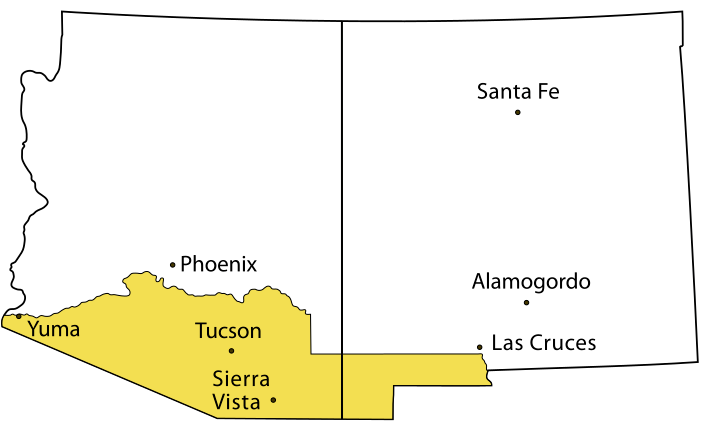
The Gadsden Purchase, also known as the Gadsden Treaty, was an agreement signed on December 30, 1853, between the United States and Mexico, in which Mexico sold 29,670 square miles of land (now southern New Mexico and Arizona) to the U.S. for $10 million. Image: A map showing the major cities associated with the Gadsden Purchase.
Who signed the Gadsden Purchase?
The Gadsden Purchase was signed by U.S. Minister to Mexico James Gadsden and three envoys of Mexican President General Antonio López de Santa Anna.
Why did Santa Anna agree to sell the land to the United States?
Santa Anna agreed to sell the land to help raise money to alleviate financial strains caused by the Mexican War and ongoing rebellions.
When was the Gadsden Purchase ratified by the U.S. Senate?
The U.S. Senate ratified the Gadsden Purchase, with amendments, on April 25, 1854.
What issue did the Gadsden Purchase resolve?
The Gadsden Purchase resolved a border dispute between the U.S. and Mexico west of El Paso, Texas.
How did President Franklin Pierce and Jefferson Davis influence the Gadsden Purchase?
President Franklin Pierce, influenced by Jefferson Davis, a supporter of a southern transcontinental railroad, sent James Gadsden to negotiate the purchase, with the hope of securing land for the railroad.
What role did the southern transcontinental railroad play in the Gadsden Purchase?
Supporters of a southern transcontinental railroad, including Jefferson Davis, believed that controlling the land acquired in the Gadsden Purchase would benefit southern states and facilitate the construction of a southern railroad route.
When was the first southern transcontinental railroad completed?
The southern transcontinental railroad was completed in 1881 when the Southern Pacific Railroad’s tracks met those of the Atchison, Topeka, and Santa Fe Railroad in New Mexico Territory, on land acquired through the Gadsden Purchase.
Who were the “big four” of western railroad construction, and what was their role in the first transcontinental railroad?
The “big four” of western railroad construction were Collis P. Huntington, Leland Stanford, Mark Hopkins, and Charles Crocker. They built the first transcontinental railroad, which followed a more northern route rather than the southern route that supporters of the Gadsden Purchase had hoped for.