The Parthenon Sculptures, also known as the Elgin Marbles, are among the most famous and controversial pieces of ancient art in history. These sculptures once adorned the Parthenon, a temple on the Athenian Acropolis dedicated to Athena, the city’s patron goddess. Designed by the renowned sculptor Phidias and his assistants in the mid-5th century BCE, the sculptures exemplify the artistic and cultural pinnacle of Classical Greece. Today, they serve as a symbol of Greece’s cultural heritage while also being central to an ongoing debate about cultural property and repatriation.
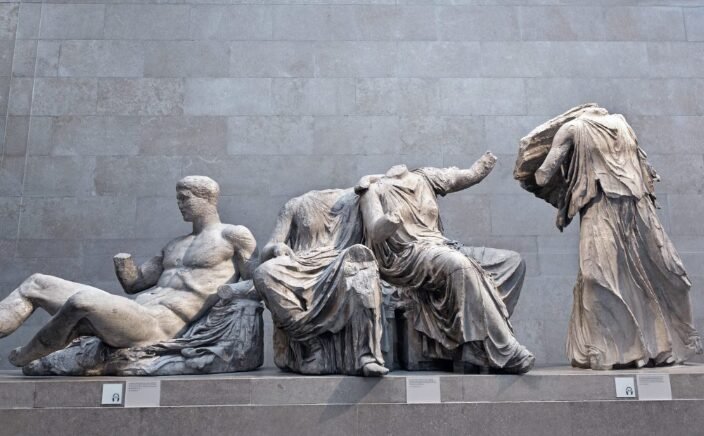
Statuary from the East Pediment
READ MORE: Most Famous Ancient Greek Sculptors
Historical and Artistic Context
The Parthenon was constructed between 447 and 432 BCE during the leadership of Pericles, at a time when Athens was at the height of its political, military, and cultural influence. The temple was part of a larger building program that showcased the wealth and power of the city-state. Built primarily in Pentelic marble, the Parthenon was designed as both a sanctuary and a treasury, housing a monumental statue of Athena Parthenos (Athena the Virgin) sculpted by Phidias.
The decorative program of the Parthenon was exceptionally rich and complex, encompassing:
- The frieze, a continuous band of low-relief sculpture.
- The metopes, high-relief panels located above the outer colonnade.
- The pediments, large triangular compositions at either end of the temple.
Together, these elements celebrated Athenian identity, religious devotion, and mythological narratives.
The Sculptural Program
The Parthenon sculptures can be divided into three primary categories: the pediments, the metopes, and the frieze.
The Pediments
The east and west pediments depicted critical moments in Athenian mythology:
- East Pediment: Showed the birth of Athena from the head of Zeus, a moment of divine splendor witnessed by the gods.
- West Pediment: Depicted the contest between Athena and Poseidon for the patronage of Athens. Athena’s gift of the olive tree secured her victory.
Both compositions emphasized the power and divine favor of Athena while reinforcing the idea of Athens as a city blessed by the gods.
The Metopes
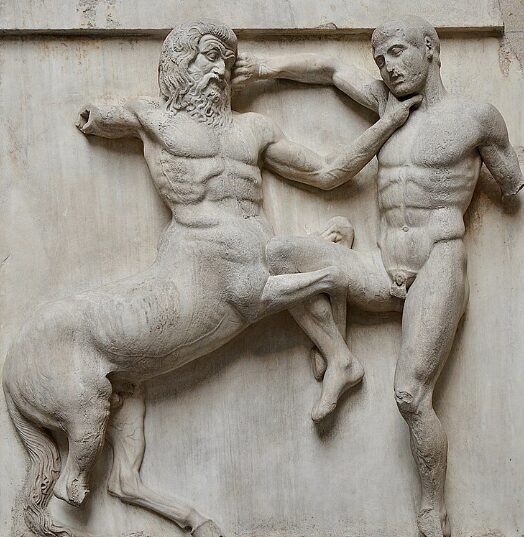
Metope from the Elgin Marbles depicting a Centaur and a Lapith fighting
The metopes illustrated mythological battles, reflecting the theme of civilization triumphing over chaos:
- Gigantomachy (battle between gods and giants).
- Centauromachy (battle between Lapiths and centaurs).
- Amazonomachy (battle between Athenians and Amazons).
- Trojan War scenes.
These reliefs were not just decorative; they served as allegories for human struggles and Athenian values like order, courage, and justice.
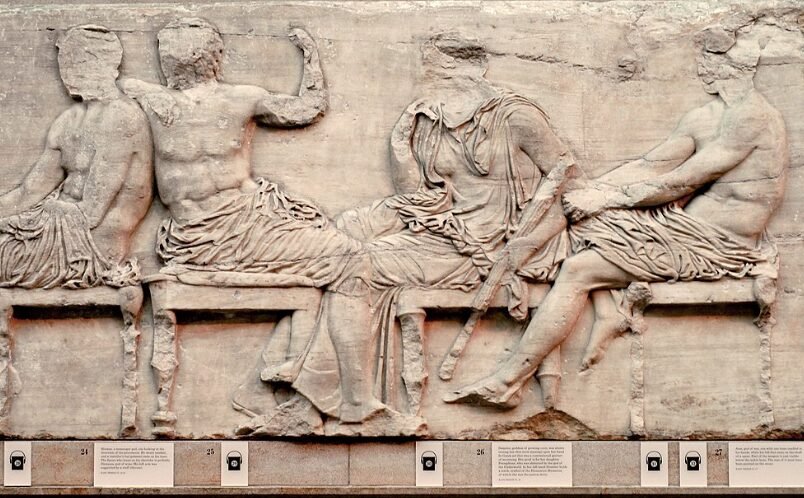
Ares with Demeter, Dionysus and Hermes on the frieze of the Parthenon
The Frieze
The frieze, running around the inner chamber of the temple (cella), depicted the Panathenaic Procession, an annual festival in honor of Athena. The scene includes:
- Horsemen, chariots, and musicians.
- Religious officials and sacrificial animals.
- A depiction of the presentation of a peplos (a woven robe) to Athena.
The frieze is celebrated for its dynamic composition and intricate detail, capturing the unity and civic pride of Athens.
Phidias and His Legacy
Phidias was the artistic director of the Parthenon’s sculptural program, and his work set a benchmark for Classical art. His sculptures are known for their naturalism, idealized proportions, and ability to convey motion and emotion. The Parthenon sculptures reflect his mastery of depicting drapery, musculature, and the interplay of light and shadow.

Phidias of Athens was known for his works on the Parthenon sculptures and the Statue of Zeus at Olympia. Image: Workshop of ancent Greek sculptor Phidias at Olympia
History of the Sculptures
The Parthenon endured centuries of use, destruction, and neglect. It was converted into a church, a mosque, and later a powder magazine. In 1687, an explosion caused by a Venetian bombardment severely damaged the structure, destroying many sculptures. Over time, surviving fragments were looted or removed.
The Elgin Marbles
In the early 19th century, Thomas Bruce, the 7th Earl of Elgin, removed a significant portion of the remaining Parthenon sculptures during Ottoman rule. Elgin claimed to have obtained permission from the Ottoman authorities, though the legitimacy of this permit remains debated.
Elgin’s collection included:
- 247 feet of the frieze.
- 15 metopes.
- 17 figures from the pediments.
- Various architectural fragments.
These artifacts were transported to Britain and later sold to the British Museum in 1816, where they remain to this day.
The Controversy
The removal of the sculptures has sparked one of the most high-profile debates about cultural heritage. Key points of contention include:
Legal and Ethical Questions
- Was Elgin’s acquisition legal? Critics argue that the Ottoman Empire, as an occupying power, lacked the authority to authorize the removal.
- Ethics of Removal: Many view the act as a form of cultural theft.
Preservation
- Supporters of Elgin’s actions argue that the sculptures were saved from further damage or destruction.
- Critics counter that the removal process itself caused harm and disrupted the integrity of the Parthenon as a monument.
Calls for Repatriation
The Greek government has consistently called for the return of the sculptures, asserting that they are an integral part of the Parthenon and should be reunited with other fragments housed in the Acropolis Museum in Athens.
The British Museum’s Position
The British Museum maintains that:
- The sculptures were acquired legally.
- They are preserved and displayed for a global audience.
- Returning them could set a precedent, leading to demands for the restitution of other artifacts.
Modern Perspectives
The debate over the Parthenon Sculptures raises broader questions about cultural heritage:
- Ownership vs. Stewardship: Should artifacts belong to their country of origin, or to institutions that preserve and display them?
- Cultural Identity: How do artifacts contribute to national identity?
- Universal Museums: Can large museums serve as spaces for cross-cultural understanding, or do they perpetuate colonial inequalities?
The Acropolis Museum
Opened in 2009, the Acropolis Museum was designed to house artifacts from the Parthenon and other Acropolis sites. It features a dedicated space for the Parthenon sculptures, including casts of pieces held in the British Museum, emphasizing the gap left by the missing originals.

Portion of the Parthenon Frieze
Conclusion
The Parthenon Sculptures are both artistic masterpieces and symbols of cultural identity. While they showcase the heights of Classical Greek art, they also highlight the complexities of history, colonialism, and international diplomacy. The ongoing debate about their future continues to inspire discussions about how humanity values and preserves its shared heritage.
Questions and answers about the Parthenon Sculptures

The Elgin Marbles in the British Museum
What was the Parthenon, and when was it built?
The Parthenon was an elaborately adorned temple built between 447 and 432 BCE on the Acropolis of Athens to honor Athena, the patron goddess of Athens.
What materials were used in the construction of the Parthenon?
The Parthenon was constructed using 22,000 tons of Pentelic marble, valued for its white purity and golden hues when exposed to sunlight.
Who designed the Parthenon, and what was its purpose?
The architects Iktinos and Kallikratis designed the Parthenon to celebrate Athens’ glory and the Greek triumph over Persia. It was directed by Pericles as a symbol of political and cultural dominance.
What is significant about the Parthenon’s sculptural program?
The Parthenon’s sculptural program showcased unparalleled artistic quality and political symbolism. Directed by Phidias, it included 92 metopes, a continuous frieze, and pediments filled with monumental figures, emphasizing the theme of order triumphing over chaos.
What was depicted on the east pediment of the Parthenon?
The east pediment depicted the miraculous birth of Athena from Zeus’s head, surrounded by Olympian gods. Helios’ chariot represented dawn, while Selene’s horses sinking into the ocean symbolized nightfall.
What did the west pediment illustrate?
The west pediment depicted the competition between Athena and Poseidon for Athens’ patronage, with Athena’s olive tree symbolizing her victory and the city’s prosperity.
What are the metopes, and what themes did they depict?
The metopes are high-relief sculptures adorning the temple’s outer colonnade. They depicted mythological battles: gods versus giants on the east, Greeks versus Amazons on the west, scenes from the Trojan War on the north, and the Lapiths versus centaurs on the south.
What does the frieze of the Parthenon represent?
The 160-meter-long frieze depicted the Panathenaic Procession, a religious festival honoring Athena. It included 380 figures and 220 animals in low relief, celebrating civic pride and devotion.
How did the Parthenon suffer damage over time?
The Parthenon was converted into a church, a mosque, and later an ammunition depot. A 1687 explosion during a Venetian siege caused severe damage, and subsequent looting further scattered its sculptures.
What are the Elgin Marbles?
The Elgin Marbles are a collection of Parthenon sculptures removed by Lord Elgin in the early 19th century and later sold to the British Museum.
Where can fragments of the Parthenon sculptures be found today?
Fragments of the Parthenon sculptures are housed in the British Museum, the Louvre, and the Acropolis Museum in Athens.
Why are the Parthenon sculptures significant today?
The Parthenon sculptures remain symbols of classical artistry and cultural heritage, sparking debates on ownership, preservation, and the legacy of ancient art. They continue to captivate audiences worldwide.





