The Sicilian Expedition during the Peloponnesian War: History & Major Facts
The Sicilian Expedition, one of the most ambitious yet disastrous military campaigns undertaken during the Peloponnesian War, serves as a pivotal example of overreach and misjudgment in military history. It spanned from 415 to 413 BC, involving a massive Athenian force sent to attack Syracuse in Sicily. The expedition aimed to extend Athenian influence further west, but it ended in a complete military disaster and significantly weakened Athens.
A brief history of Ancient Athens and how it became the birthplace of Western Civilization
In the article below, World History Edu summarizes key aspects of the Sicilian Expedition, highlighting its origins, execution, aftermath, and its significant impact on Athens’ fortunes in the Peloponnesian War.
Background and Rationale
The idea for the Sicilian Expedition originated from several Athenian motives.
Firstly, there were economic incentives: Sicily was a fertile region known for its grain production, which could potentially support Athens and its allies.
Secondly, controlling Sicily would give Athens strategic control over the central Mediterranean trade routes.
Thirdly, there was a call for help from Segesta, a city in Sicily, which was in conflict with Selinus, an ally of Syracuse. The Segestans promised financial support to Athens for a military intervention.
Despite these seemingly favorable incentives, the decision to invade Sicily was hotly debated in Athens. Nicias, a prominent general and political leader, opposed the idea, arguing that it would stretch Athenian resources too thin and provoke unnecessary new enemies.
Alcibiades, a young and ambitious general, strongly supported the expedition, seeing it as an opportunity to extend Athenian power and his personal glory. The assembly, swayed by Alcibiades and the promise of vast riches and glory from Segesta, ultimately decided to launch the expedition.

Originally proposed by the ambitious Athenian leader Alcibiades, the Sicilian Expedition aimed to expand Athenian influence over Sicily, control key trade routes, and perhaps even dominate the entire Western Mediterranean. Image: A painting of Alcibiades by French artist François-André Vincent.
The Expedition’s Launch
In 415 BC, a massive fleet of over 100 triremes and 5,000 hoplites, along with numerous other light-armed troops and allies, set sail from Athens to Sicily under the command of Alcibiades, Nicias, and Lamachus, who represented a compromise between the war and peace parties in Athens. The scale of the force reflected the high hopes Athens placed on this campaign.
Upon arrival in Sicily, the Athenians began their campaign by initially negotiating with various Sicilian cities. However, the response was lukewarm as most cities remained neutral or opposed to Athens’ overtures. The Athenians managed to secure an alliance with Catana, but their primary target, Syracuse, prepared for war.
The Alcibiades Scandal and Its Consequences
Shortly after the expedition arrived in Sicily, Alcibiades was recalled to Athens to face charges of sacrilege related to the mutilation of the Hermae (sacred statues of Hermes), a scandal that broke out just before the fleet’s departure.
Alcibiades escaped en route to Athens and eventually defected to Sparta, where he advised the Spartans to send aid to Syracuse and to fortify Decelea near Athens, dividing Athenian military focus.

The Siege of Syracuse
In 414 BC, under the command of Nicias, the Athenians laid siege to Syracuse. Initial Athenian success in isolating the city and establishing a fort was met with robust resistance as Syracusans fortified their city and received reinforcements from Sparta and Corinth.
The arrival of the Spartan general Gylippus in Syracuse marked a turning point. He revitalized the Syracusan defense and led sorties that effectively challenged the Athenian positions.
As the siege dragged on, Nicias sent desperate messages to Athens, pleading for reinforcements. In response, despite the increasingly strained resources at home, Athens sent an additional fleet and soldiers under the command of Demosthenes. This second force arrived in 413 BC but achieved little more than the first.

Alcibiades, the driving force behind the campaign, was recalled to Athens to stand trial for alleged sacrilege, leaving the expedition without its charismatic leader. Command fell to Nicias and Lamachus, who lacked Alcibiades’ aggressive strategic vision. Image: Nicias (c. 470 BC – c. 413 BC).
The Turning Point and Disaster
The Athenian position became untenable following a series of military blunders, including a failed night attack on the Syracusan fortifications. The Syracusans and Spartans then managed to trap the Athenian fleet in the harbor of Syracuse, destroying many Athenian ships and cutting off their escape by sea.
Recognizing their desperate situation, the Athenians attempted a retreat overland. However, the retreating Athenian forces were harassed continuously, lacked supplies, and were eventually surrounded and massacred or captured by the Syracusan and Spartan forces. Nicias and Demosthenes were executed, and the remaining Athenian soldiers were sent to work in Sicilian quarries, where many died from disease and malnutrition.
Aftermath and Consequences
The complete failure of the Sicilian Expedition was a catastrophic blow to Athens. It resulted in the loss of an enormous part of Athens’ fleet and thousands of hoplites, which severely weakened Athenian military power.
The psychological impact on Athens was profound, shaking the confidence of its citizens and allies. The disaster encouraged revolts among Athenian subject states and invigorated its enemies.
The aftermath saw the war’s continuation in a more emboldened manner by Sparta and its allies, leading to increased Persian involvement against Athens and eventually to Athens’ surrender in 404 BC, marking the end of the Peloponnesian War.
The Sicilian Expedition thus stands out as a classic example of strategic overreach and its dire consequences, demonstrating the dangers of hubris and poor strategic judgment in the annals of military history.
FAQs
Here are some frequently asked questions (FAQs) about the Sicilian Expedition (415-413 BC), providing insight into its origins, execution, and consequences:

The Sicilian Expedition was a major military campaign undertaken by Athens during the Peloponnesian War, aimed at conquering Syracuse and expanding Athenian influence over Sicily to control key Mediterranean trade routes. Image: A map of the Sicilian Expedition, showing the Athenian army’s root (the orange line) to Sicily.
Who proposed the Sicilian Expedition and why?
The expedition was proposed by Alcibiades, an ambitious Athenian leader, who sought to expand Athenian power, secure new sources of wealth, and potentially dominate the Western Mediterranean. His proposal played on Athenian desires for glory and imperial expansion.
What were the strategic missteps of the Sicilian Expedition?
The expedition suffered from poor strategic planning and internal discord. Initially planned as a modest venture, it expanded into a massive operation due to political and personal rivalries. The unclear command structure and the recall of Alcibiades to Athens for a trial left the force without effective leadership, contributing to its failure.
How did the military campaign unfold in Sicily?
Upon arrival, Athenian forces achieved early successes, securing alliances with several Sicilian cities and initiating a siege of Syracuse. However, the arrival of Spartan general Gylippus revitalized the Syracusan defense, leading to a series of Athenian tactical errors and eventual military disasters, including devastating naval losses.
What was the outcome of the Sicilian Expedition?
The expedition ended in a catastrophic defeat for Athens, with the majority of its forces killed or captured. The fleet was largely destroyed, and the survivors faced harsh conditions in captivity. This defeat severely weakened Athens both militarily and politically.

What impact did the defeat in Sicily have on Athens?
The failure of the expedition had profound repercussions: it significantly weakened Athens’ naval and military capabilities, undermined political confidence in Athenian leadership, and encouraged Persian support for Sparta. It also led to political upheaval within Athens, including the brief rule of the Thirty Tyrants.
Why do historians consider the Sicilian Expedition a turning point in the Peloponnesian War?
Historians view the expedition as a crucial turning point due to the severe losses it inflicted on Athens, which drastically reduced its military power and strategic position. The ambitious operation highlighted the dangers of overextension and poor judgment, setting the stage for Athens’ eventual defeat in the war.
What lessons does the Sicilian Expedition provide in military strategy?
The expedition serves as a cautionary tale about the risks of hubris, overconfidence, and the complexities of extended military campaigns far from home. It underscores the importance of clear strategic objectives, coherent leadership, and the perils of underestimating an opponent’s resilience and capabilities.
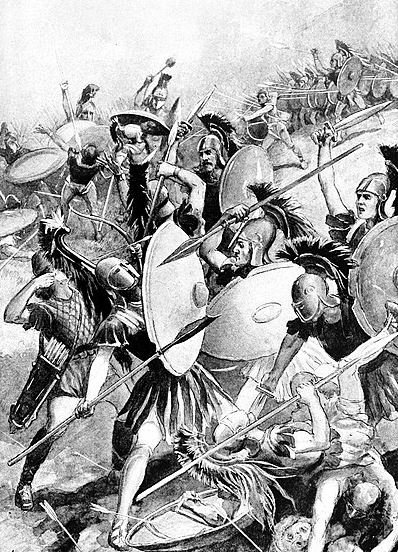
Despite Athens’ material capacity to rebuild its fleet, the irreplaceable loss of manpower and the psychological blow of such a defeat decisively weakened its empire and contributed to its eventual surrender in 404 BC, marking the end of its golden age. Image: An illustration of the decimation of the Athenian military force in Syracuse.
How did Thucydides describe the Sicilian Expedition?
Thucydides, the contemporary historian who documented the Peloponnesian War, portrayed the Sicilian Expedition as a disastrous overreach driven by Athenian hubris. He was struck by the stark resilience of Athens, which managed to continue fighting for years despite the staggering losses incurred during the campaign.





