Timeline of St. Augustine, Florida, United States

1513 – Juan Ponce de León’s Exploration: The Spanish explorer Juan Ponce de León lands on the Florida coast, naming it “La Florida.” Although he did not establish a permanent settlement, this marks the beginning of Spanish interest in the region.
1565 – Founding of St. Augustine: On September 8, Pedro Menéndez de Avilés officially establishes St. Augustine, making it the oldest continuously inhabited European-established settlement within the continental U.S. The establishment was a strategic move against the French, who had their settlement at Fort Caroline.

Image: Spanish explorer Pedro Menéndez de Avilés
1568 – Retaliation by the French: French captain Dominique de Gourgues avenges the Spanish destruction of Fort Caroline by attacking Spanish forts in the St. Augustine area.
1586 – Sir Francis Drake’s Raid: The English privateer Sir Francis Drake sacks St. Augustine, causing significant damage but not capturing the city.
1672-1695 – Construction of Castillo de San Marcos: Recognizing the strategic importance of St. Augustine and the need for robust defenses, the Spanish begin construction on Castillo de San Marcos. This fort would later play a pivotal role in protecting the city from invasions.

1702 – Siege by the English: English forces from the nearby Carolina colony lay siege to St. Augustine and the Castillo. The Spanish residents retreat to the safety of the Castillo, and the city is burned, but the fort remains unconquered.
1763 – Treaty of Paris: Following the Seven Years’ War (known as the French and Indian War in North America), the Treaty of Paris is signed. Florida is ceded by Spain to Britain in exchange for Havana, Cuba. St. Augustine comes under British control.
1784 – Return to Spanish Rule: After the American Revolutionary War, the second Treaty of Paris is signed. Florida is returned to Spanish control. St. Augustine remains a Spanish possession for the next 37 years.

Aerial view of Castillo de San Marcos fort in St. Augustine, Florida
1821 – Florida becomes U.S. Territory: Spain cedes Florida to the United States as part of the Adams-Onís Treaty. St. Augustine transitions from a Spanish town to an American one.
1837 – Seminole Wars: During the Seminole Wars, St. Augustine serves as a military base for U.S. operations against the Seminole Indians.
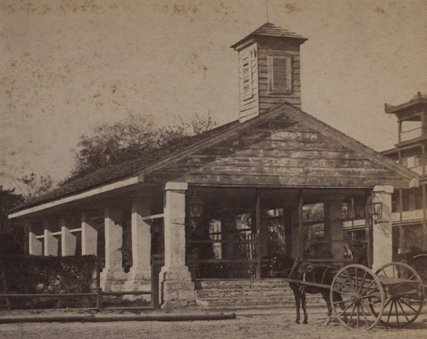
Slave Market, St. Augustine, Florida in 1886
1862 – Civil War and Confederate Control: During the U.S. Civil War, Confederate troops take control of St. Augustine. However, later that year, Union forces reclaim the city without a fight, and it remains under Union control for the duration of the war.
1888 – Henry Flagler’s Influence: Railroad magnate Henry Flagler arrives in St. Augustine. Recognizing its potential as a winter resort for the wealthy, he constructs the luxurious Ponce de León Hotel, kickstarting a tourism boom.

St. Augustine in 1891 from the former San Marco Hotel, Spanish St. on left, Huguenot Cemetery lower left corner, Cordova St. on right
1964 – Civil Rights Movement: St. Augustine becomes a significant battleground for civil rights. Protests, demonstrations, and racial tensions culminate in the arrest of Dr. Martin Luther King Jr. The events in St. Augustine are instrumental in garnering support for the Civil Rights Act of 1964.
2000 and beyond – Modern-day St. Augustine: The city celebrates its 445th anniversary in 2010. Modern St. Augustine is a blend of its historical roots with contemporary American culture, drawing millions of visitors each year to its historic sites, beaches, and festivals. As the city approaches its 450th anniversary in 2015, it continues to be a testament to the rich tapestry of cultures that have shaped it.
Major Facts about St. Augustine

Location of St. Augustine in the United States
These facts further reinforce St. Augustine as a unique and historically significant location in the United States.
- Oldest Established City: Founded in 1565 by Spanish explorers, St. Augustine is the oldest continuously inhabited European-established settlement in the contiguous United States.
- Ponce de León: Often associated with the legend of the Fountain of Youth, Spanish explorer Ponce de León first landed in Florida in 1513 and is often mistakenly linked to St. Augustine’s foundation.
- Spanish Colonial Architecture: St. Augustine is renowned for its well-preserved Spanish colonial architecture, offering a glimpse into its historical roots.

- Flagler College: Originally the luxurious Ponce de León Hotel built by Henry Flagler in 1888, this historic site is now part of Flagler College.
- St. Augustine Lighthouse: This iconic lighthouse, built in 1874, is an operational lighthouse and museum, offering panoramic views of the city and surrounding waters.
- St. Augustine Alligator Farm: Established in 1893, it’s one of Florida’s oldest continuously operating attractions.
-
The Castillo de San Marcos: Located in St. Augustine, Florida, this structure holds the title as the oldest masonry fort in the contiguous United States. Constructed between 1672 and 1695 by the Spanish, it stands as a monument to the conflicts and alliances that shaped the history of North America. With its star-shaped design, the fort has withstood sieges and wars, becoming a National Monument that showcases the enduring Spanish influence on Florida’s architecture and history.

Castillo de San Marcos: This iconic fort, built between 1672 and 1695, is the oldest masonry fort in the U.S. and is a National Monument.
- Diverse History: Over the centuries, St. Augustine has been under Spanish, British, and American rule, giving it a rich and diverse cultural history.
- Narrow Streets: Many streets in the historic district, like Aviles Street, maintain their original narrow, meandering layout from the Spanish colonial era.
- Annual Nights of Lights: A popular holiday event where the city is adorned with millions of white lights, reflecting the city’s Spanish tradition of displaying a white candle during the Christmas holidays.
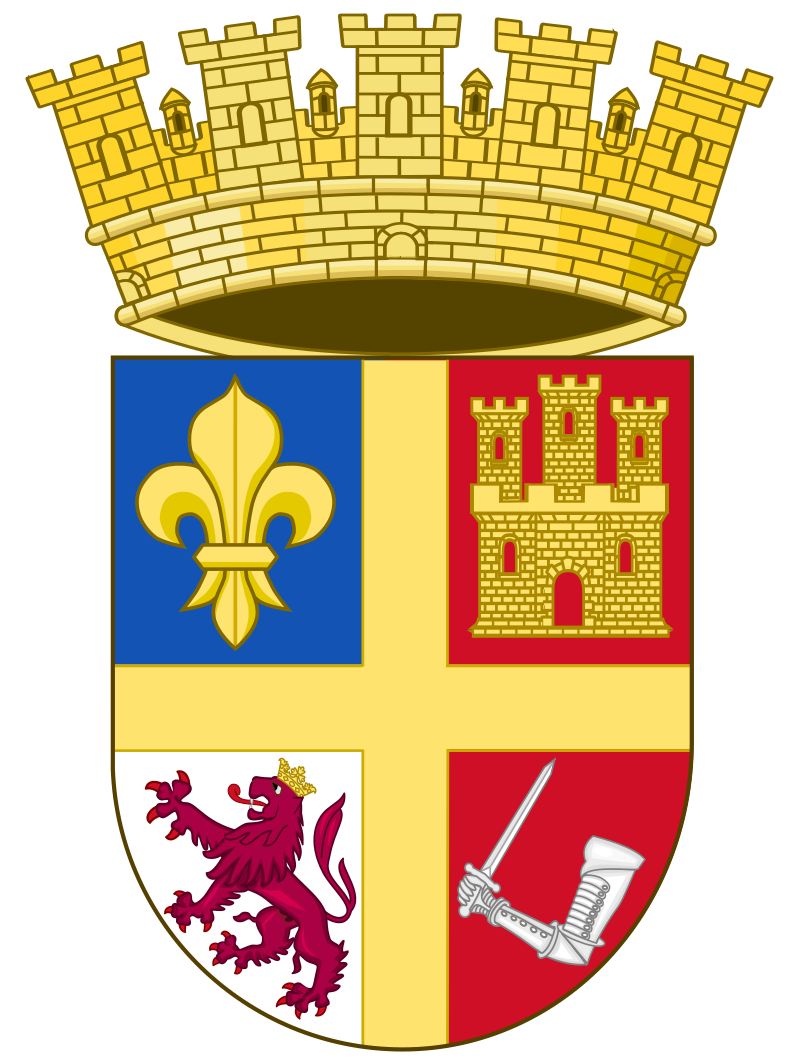
The coat of arms of St. Augustine, Florida, reflects its rich history and Spanish heritage. It incorporates elements reminiscent of the city’s founding by Spanish explorers in 1565. As with many heraldic symbols, the coat of arms serves as a visual representation of St. Augustine’s identity, legacy, and significance in American history. Image: Coat of arms of St. Augustine





