Tomyris: Queen of the Massagetae

Over three thousand years ago, the powerful Scythians ruled over most of the steppe territories in modern-day Kazakhstan. They were so powerful that no one dared conquer their lands, with enemies being particularly afraid of the Scythian women who alongside their men in battles, including their queen, Tomyris.
Tomyris, a name that resonates through the annals of ancient history, is celebrated as a formidable queen of the Massagetae, a nomadic confederation related to the Scythians who lived in the vast steppes of Central Asia. Her story is one of resilience, vengeance, and the indomitable spirit of a warrior queen who dared to defy one of the most powerful empires of her time.
Below, this narrative delves into her early life, her reign, her legendary conflict with Cyrus the Great, and her enduring legacy.
Early Life and Background
Tomyris’s early life is rooted in the traditions and culture of the Massagetae. She was born into royalty, a descendant of a lineage of great rulers. Her great-grandfather, King Madiy, and possibly her father or grandfather, King Sypyr, had established a legacy of leadership and strength. Growing up in such an environment, Tomyris was exposed to the rigors of nomadic life and the martial traditions of her people.
From a young age, Tomyris displayed remarkable prowess. She became well-acquainted with weapons and combat, an essential skill for survival and leadership in the steppes. By the age of five, she was an exceptional equestrian, showing a particular affinity for stubborn horses, which mirrored her own unyielding spirit.
At six, she attempted to wield an akinak, a short Scythian sword, demonstrating her early inclination towards martial skills. The loss of her mother in her infancy meant that her father played a central role in her upbringing, instilling in her the values and skills necessary for a future leader.
Marriage and Ascension to Power
As Tomyris grew older, her life took a significant turn with her marriage to Rustam, the son of the Scythian tribe, Tigraxauda. Rustam was known for his strength, a characteristic highly prized among the nomadic tribes. Initially resistant to the union, Tomyris was eventually charmed by Rustam’s smile and accepted his hand in marriage. However, their marriage was marked by challenges. Rustam, preoccupied with hunting and feasting, grew distant, leaving Tomyris feeling increasingly isolated.
The death of Tomyris’s father shortly after her marriage thrust her into a position of leadership. She ascended to the throne, becoming the ruler of the Massagetae. This transition was not without its emotional toll. Having spent most of her life under her father’s guidance, his death left her feeling lonely and burdened with the responsibilities of rulership. Despite these challenges, Tomyris’s leadership was characterized by strength and determination.
Conflict with Cyrus the Great
The most defining chapter of Tomyris’s reign was her conflict with Cyrus the Great, the Persian ruler and founder of the Achaemenid Empire. Cyrus, known for his expansive conquests, set his sights on the land of the Massagetae. His initial approach was diplomatic; he sought to marry Tomyris, hoping to acquire her kingdom through this union. However, Tomyris, astutely recognizing his ulterior motives, rejected his proposal.

Image: A panting of Cyrus the Great, by French artist Charles Texier.
Cyrus’s reaction to this rejection was swift and aggressive. He initiated an invasion, beginning with the construction of a bridge over the Araxes River, a strategic move to facilitate his army’s advance into Massagetae territory. Tomyris, displaying both courage and wisdom, sent a message to Cyrus, advising him to focus on ruling his own empire and to leave her people in peace. Her advice, however, fell on deaf ears.
The initial clashes between the Massagetae and the Persians saw the former emerging victorious. Despite this setback, Cyrus devised a cunning plan to ambush Tomyris’s forces. He set up a lavish banquet, replete with an excess of wine, and then withdrew his troops. The Massagetae, unfamiliar with wine as they were accustomed to kumis (fermented mare’s milk) and cannabis, fell into the trap. They indulged in the wine, became intoxicated, and were subsequently slaughtered by Cyrus’s returning forces. Among the casualties was Rustam, Tomyris’s husband.
The greatest personal loss for Tomyris was her son, Spargapises, who led the Massagetae army and was captured during the ambush. Spargapises pleaded for his life and, upon being granted freedom, chose to take his own life rather than live with the shame of defeat. This act of desperation and the profound loss of her son fueled Tomyris’s desire for vengeance.
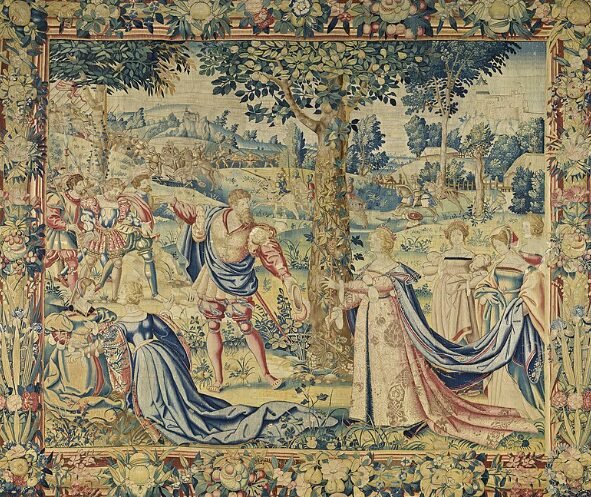
Death of Queen Tomyris’s son Spargapises
The Battle and Vengeance
Tomyris’s resolve only hardened after the death of Spargapises. She sent a message to Cyrus, warning him of the dire consequences if he did not leave her land. Her words were chilling: she promised to “give him more blood than he could drink.” This vow set the stage for a decisive and brutal confrontation.
The final battle between the Massagetae and the Persians was a monumental clash. Despite the odds being heavily in favor of the Persians, who boasted an army of over 200,000 soldiers, Tomyris led her forces with unparalleled ferocity. The Massagetae, driven by the desire to avenge their fallen, fought with unmatched vigor.
In the end, Tomyris’s leadership and the indomitable spirit of her warriors led to a stunning victory. Cyrus the Great was killed in the battle, and true to her word, Tomyris beheaded him. She placed his head in a bag filled with blood, declaring, “drink your fill of blood!” This act of vengeance became legendary, symbolizing Tomyris’s relentless determination and unyielding spirit.
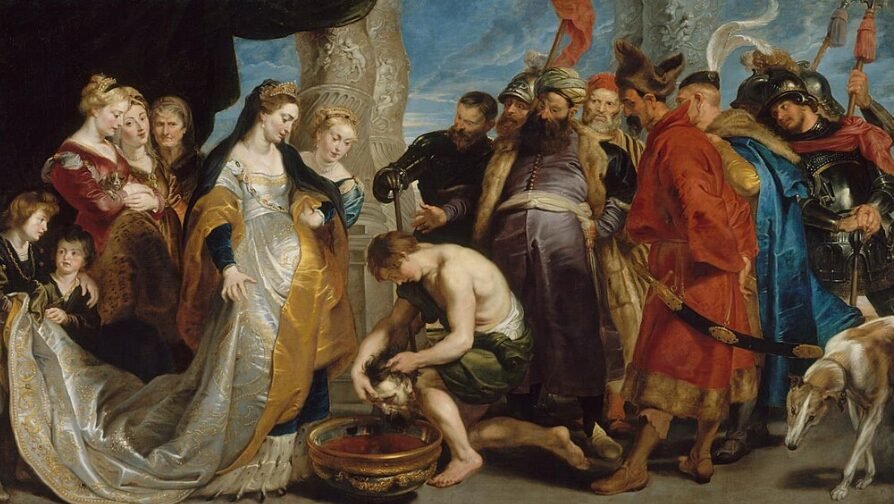
Image: Tomyris Plunges the Head of the Dead Cyrus Into a Vessel of Blood by Flemish artist Rubens
Legacy and Influence
The story of Tomyris did not end with her victory over Cyrus. Her legacy endured through various forms of art, literature, and historical accounts. During the Renaissance, Tomyris was a popular figure in art and literature, celebrated for her bravery and leadership. Renowned artists like Francesco Allegrini, Luca Ferrari, and Gustave Moreau depicted her in their works. In the late 14th century, poet Eustache Deschamps included Tomyris as one of the nine “Female Worthies,” a testament to her lasting impact.
William Shakespeare also referenced Tomyris in his play, “King Henry VI,” highlighting her prominence in the cultural consciousness of the time. In 1707, an opera titled “Thomyris, Queen of Scythia” was staged in London, further cementing her place in the arts.
Tomyris’s influence extended beyond the arts into the realm of science. Her name was adopted in taxonomy, with a group of Central American moths named the Tomyris species and a genus of skipper butterflies called the Tamyris genus. Additionally, one of the minor planets, 590 Tomyris, was named in her honor, highlighting her enduring legacy even in modern scientific nomenclature.
In her homeland of Kazakhstan, Tomyris is celebrated as a national heroine. Her legacy is commemorated in various ways, including the issuance of legal tender bearing her image. This recognition underscores her importance in Kazakh history and culture, symbolizing the strength and resilience of the nation’s heritage.
Frequently Asked Questions about Tomyris
Tomyris, Queen of the Massagetae, stands as a towering figure in history, a symbol of defiance, vengeance, and the enduring spirit of leadership. Her story, marked by personal tragedy and monumental triumph, resonates through the ages as a testament to her indomitable will and the fierce independence of her people.
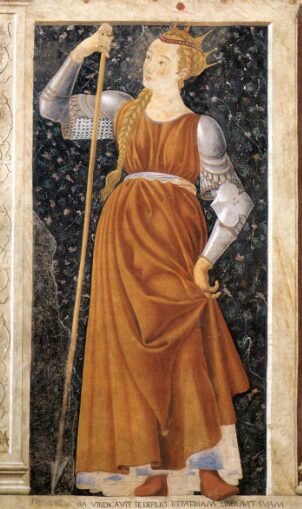
Tomyris was the great-granddaughter of King Madiy and was acquainted with weapons from a young age, attempting to fight with an akinak at six years old. She spent most of her childhood under the care of her father after her mother passed away. Image: Tomyris as imagined by Italian Renaissance painter Castagno, 15th century
Below are some frequently asked questions about this ancient queen:
Who were the Scythians and what was their territory in modern-day terms?
The Scythians were a powerful group that ruled over most of the steppe territories in modern-day Kazakhstan.
Who was the queen of the Scythians who beheaded Cyrus the Great?
Queen Tomyris was the Scythian queen who beheaded Cyrus the Great in battle in 530 BC.
Who did Tomyris marry, and what was significant about her husband?
Tomyris married Rustam, the son of the Scythian tribe, Tigraxauda. Rustam was known for his strength, and though Tomyris initially resisted the union, she was eventually charmed by his smile.
Rustam spent most of his time hunting and feasting, leading to the couple drifting apart. Tomyris grew closer to her bodyguard, Bakhtiyar, who was later revealed to be a traitor.
Why did Cyrus the Great invade the land of Massagetae?
It is said that Cyrus the Great invaded Massagetae after Queen Tomyris rejected his marriage proposal, which was an attempt by Cyrus to acquire her kingdom.
How did Queen Tomyris respond to Cyrus’s invasion and the death of her son Spargapises?
Queen Tomyris vowed revenge after her son Spargapises fell for Cyrus’s ambush and was killed. She led her army into battle against the Persians, ultimately killing Cyrus and beheading him.
How did Tomyris ensure that Cyrus the Great “drank his fill of blood”?
After killing Cyrus, Tomyris beheaded him and placed his head in a bag filled with blood, telling him to “drink your fill of blood.”
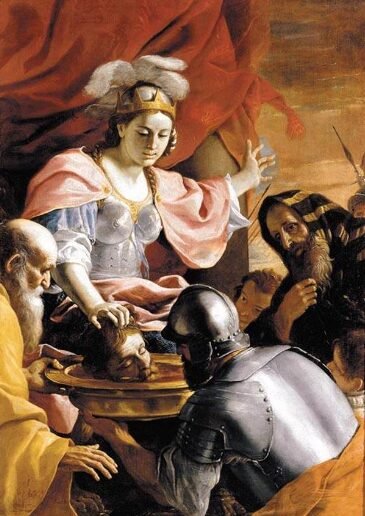
Image: Tomyris Receiving the Head of Cyrus by Italian Baroque artist Mattia Preti, 1670–72

Queen Tomyris caught the eye of the Persian ruler, Cyrus the Great, who asked for her hand in an attempt to acquire her kingdom through marriage. The queen was aware of his intentions and rejected his proposal. In anger, Cyrus responded to the rejection by choosing to invade Massagetae. Image: Queen Tomyris and the head of Cyrus, by Mattia Preti.
What are some ways in which Tomyris’s legacy has been preserved in arts and literature?
Tomyris was a popular reference during the Renaissance, appearing in the works of artists like Francesco Allegrini and writers like William Shakespeare. An opera titled “Thomyris, Queen of Scythia” was staged in London in 1707.
How has Tomyris been recognized in the field of science?
Tomyris’s name has been adopted in taxonomy for a group of Central American moths and a genus of skipper butterflies. Additionally, one of the minor asteroids in our solar system, 590 Tomyris, was named after her.
What national honor did Kazakhstan bestow upon Tomyris?
Kazakhstan recognized Tomyris as a national heroine and issued a legal tender in her honor.
Rulers of the Achaemenid Empire: From Cyrus the Great to Artaxerxes V





