What are some of the most pervasive myths about WWI?
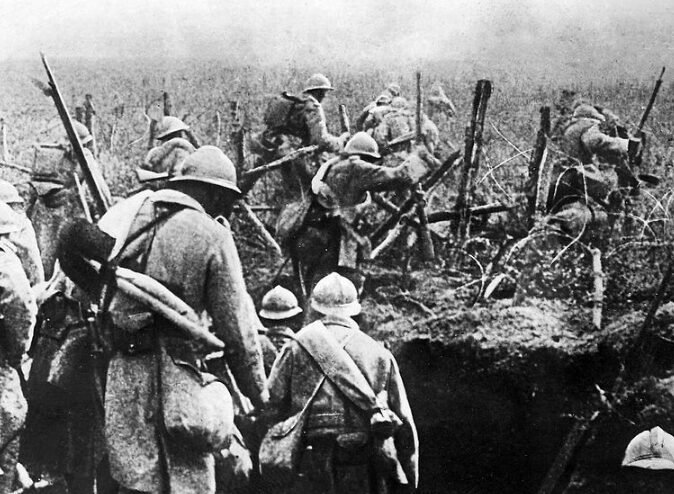
World War I was not just a European conflict; it was a truly global war with far-reaching consequences that affected people and nations around the world. Image: French soldiers advancing from their trench during the 1916 Battle of Verdun, preparing for a fierce attack.
In the article below, World History Edu provides an an in-depth exploration of the major myths surrounding World War I and offers a clearer understanding of the realities behind these misconceptions.
Myth 1: World War I Was an Inevitable War
One of the most common myths about World War I is that it was an inevitable conflict, a war that was bound to happen due to the complex web of alliances, militarism, and nationalism that characterized early 20th-century Europe. While it is true that the conditions leading up to the war were fraught with tension, the idea that war was inevitable oversimplifies the situation and ignores the role of individual decision-making.
The assassination of Archduke Franz Ferdinand of Austria-Hungary in Sarajevo in June 1914 is often cited as the spark that ignited the war. However, the events that followed were not predetermined. European leaders made a series of conscious decisions that escalated the crisis into a full-scale war. For example, Germany’s decision to issue a “blank check” of support to Austria-Hungary, Austria-Hungary’s ultimatum to Serbia, and Russia’s mobilization of its army all contributed to the outbreak of war. Diplomatic efforts to defuse the situation were either half-hearted or failed due to mistrust and miscommunication. In short, while the conditions for war existed, the path to war was not inevitable; it was shaped by human choices.
Myth 2: The War Was Fought for Noble Causes
Another widespread myth is that World War I was fought for noble causes, such as democracy and freedom. This myth is particularly strong in Allied countries, where the war has often been portrayed as a struggle against German militarism and autocracy. However, the reality is much more complex.
The war was largely a conflict of imperial powers, each with its own set of ambitions and interests. Britain, France, and Russia were all imperial powers with vast colonies, and their motivations for going to war were often driven by a desire to maintain or expand their empires. For instance, Britain was deeply concerned about the threat posed by Germany’s growing naval power and its potential to challenge British dominance at sea and in its colonies. France sought to reclaim Alsace-Lorraine, a region lost to Germany in the Franco-Prussian War of 1870-71. Russia, on the other hand, saw the war as an opportunity to expand its influence in the Balkans and protect its Slavic allies.
While the rhetoric of democracy and freedom was used to rally public support, especially in the later stages of the war, the initial motivations of the major powers were more about power, prestige, and security than about defending noble ideals.
Myth 3: The Schlieffen Plan Was a Brilliant Strategy
The Schlieffen Plan is often regarded as a masterstroke of military strategy, designed by Germany to quickly defeat France and avoid a prolonged two-front war. According to the plan, Germany would launch a massive invasion of France through Belgium, quickly capturing Paris and forcing France to surrender. This would then allow Germany to focus its attention on the Eastern Front against Russia.
However, the reality of the Schlieffen Plan was far less brilliant. The plan was based on several flawed assumptions, including the belief that Russia would be slow to mobilize and that Belgium would offer little resistance. In practice, the plan failed to achieve its objectives. Belgian resistance was stronger than anticipated, delaying the German advance. Additionally, the violation of Belgian neutrality brought Britain into the war against Germany. The plan also underestimated the logistical challenges of moving large armies through Belgium and northern France, leading to supply shortages and exhaustion among German troops.
Moreover, the plan’s rigid timetable left little room for flexibility. When the German advance stalled and the French and British forces regrouped, the war quickly devolved into a stalemate and trench warfare, negating the swift victory that the Schlieffen Plan had sought to achieve.
Myth 4: Trench Warfare Was the Only Form of Combat
Trench warfare has become synonymous with World War I, conjuring images of soldiers huddled in muddy trenches, enduring relentless artillery bombardments, and launching futile charges against enemy lines. While trench warfare was indeed a significant and brutal aspect of the war, it was not the only form of combat.
The war was fought on multiple fronts, including the Western Front, the Eastern Front, the Italian Front, and the Middle Eastern Front, each with its own unique characteristics. On the Eastern Front, for example, the war was more mobile, with large-scale battles involving cavalry, infantry, and artillery. The vast expanse of the Eastern Front allowed for maneuver warfare, in contrast to the static nature of the Western Front.
In addition to trench warfare, World War I saw the introduction of new technologies and tactics that would shape future conflicts. The war witnessed the first use of tanks, which were initially deployed by the British in 1916 to break through enemy lines. Air warfare also emerged during the war, with airplanes used for reconnaissance, bombing, and dogfights. Chemical weapons, such as mustard gas and chlorine gas, were introduced, adding a new and horrific dimension to the battlefield.
Naval warfare was another crucial aspect of the conflict, particularly in the North Sea and the Atlantic Ocean. The war at sea involved battles between surface ships, as well as the use of submarines (U-boats) by Germany to disrupt Allied shipping. The sinking of civilian vessels, such as the RMS Lusitania, played a significant role in shaping public opinion and influencing the course of the war.
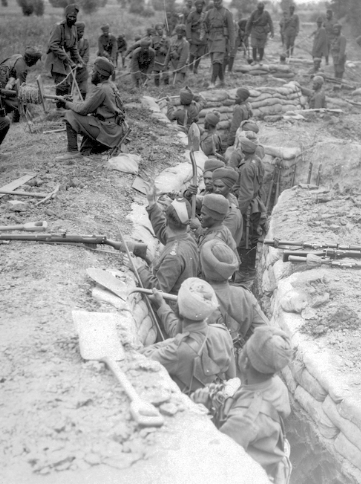
Image: British Indian soldiers digging trenches in Laventie, France, 1915
Myth 5: The Soldiers Were “Lions Led by Donkeys”
The phrase “lions led by donkeys” is often used to describe the soldiers of World War I—brave and courageous men who were led by incompetent and out-of-touch generals. This myth has been perpetuated by popular culture, including books and films, and it paints a picture of a rigid, uncreative military leadership that repeatedly sent soldiers to their deaths in futile attacks.
While it is true that the war saw horrific casualties and that some military leaders made catastrophic mistakes, the “lions led by donkeys” narrative is an oversimplification. The generals of World War I faced unprecedented challenges, including the sheer scale of the conflict, the rapid evolution of military technology, and the difficulty of coordinating large armies across vast battlefronts.
Moreover, many of the military leaders of the time were innovative and adaptive. For example, the British Army developed new tactics, such as the use of “creeping barrages” (artillery fire that moved forward in stages just ahead of the advancing infantry) and the integration of tanks and infantry in combined arms operations. The German Army, for its part, introduced “stormtrooper” tactics, involving small, mobile units that infiltrated enemy lines to disrupt command and supply structures.
The war also saw the rise of commanders who would go on to play significant roles in future conflicts, such as Douglas Haig, who despite his controversial reputation, implemented strategies that ultimately contributed to the Allied victory.
Myth 6: The Treaty of Versailles Was Solely Responsible for World War II
The Treaty of Versailles, signed in 1919, is often blamed for causing World War II by imposing harsh penalties on Germany, including significant territorial losses, military restrictions, and heavy reparations. While the treaty did contribute to the conditions that led to World War II, it is a myth to say that it was solely responsible for the subsequent conflict.
The Treaty of Versailles was indeed punitive and left Germany with a sense of humiliation and resentment. However, the causes of World War II were multifaceted. The global economic depression of the 1930s, the rise of extremist ideologies such as fascism and Nazism, and the failure of the League of Nations to prevent aggression all played crucial roles in the lead-up to the war.
Additionally, the treaty was not universally applied; other defeated powers, such as Austria-Hungary and the Ottoman Empire, were also subject to harsh peace settlements, yet these did not lead to a global conflict. The failure of the Weimar Republic to stabilize Germany politically and economically, combined with the appeal of Adolf Hitler’s promises to restore German pride and power, were significant factors in the road to World War II.
Myth 7: America Won the War for the Allies
Another common myth is that the United States’ entry into the war in 1917 was the decisive factor that won the war for the Allies. While America’s entry into the war did have a significant impact, it is an exaggeration to say that the United States single-handedly won the war.
By the time the United States entered the war, the Allies had already been fighting for nearly three years. The American Expeditionary Forces (AEF), commanded by General John J. Pershing, played a crucial role in the final offensives of 1918, particularly in the Meuse-Argonne Offensive. The infusion of fresh American troops and resources bolstered the Allied forces at a critical time when the Central Powers were exhausted and their morale was waning.
However, the war was a collective effort, and the contributions of the other Allied powers, particularly Britain, France, and the Commonwealth nations, were essential to the eventual victory. The British naval blockade of Germany, the French defense at Verdun, and the Russian sacrifices on the Eastern Front were all critical elements in the Allied war effort. The United States’ role was important, but it was part of a broader coalition that achieved victory.
Myth 8: The War Ended All Wars
The notion that World War I was “The War to End All Wars” is perhaps the most poignant and ironic myth. This phrase, popularized by British author H.G. Wells and later echoed by President Woodrow Wilson, captured the hope that the devastating conflict would be the last of its kind and that humanity would learn from the horrors of the war to prevent future conflicts.
However, this hope was tragically misplaced. Just two decades later, the world was plunged into an even more destructive conflict—World War II. The interwar period was marked by political instability, economic turmoil, and the rise of totalitarian regimes that would lead to renewed global warfare.
The belief that World War I would end all wars was based on the assumption that the war would teach nations the futility of conflict and the importance of diplomacy and international cooperation. While the League of Nations was established with the aim of preventing future wars, it ultimately failed to stop the aggression of the 1930s.
The reality is that World War I did not end all wars; instead, it set the stage for a century of conflicts, including colonial wars, civil wars, and Cold War proxy wars. The legacy of World War I continues to influence global politics and conflicts to this day.
Myth 9: The War Was Entirely a European Conflict
While World War I is often viewed as a primarily European conflict, this is another myth that overlooks the global nature of the war. The conflict involved not only the European powers but also their colonies and dominions, as well as nations from other continents.
The British and French empires, in particular, drew heavily on their colonies for manpower and resources. Soldiers from India, Africa, Australia, New Zealand, Canada, and the Caribbean fought in various theaters of the war, including the Western Front, the Middle East, and Africa. The war also spread to the colonies themselves, with battles fought in East Africa and the Middle East.
Japan, allied with the Entente powers, seized German colonies in Asia and the Pacific. The Ottoman Empire, siding with the Central Powers, fought on multiple fronts, including the Caucasus, Mesopotamia, and Palestine.
The war had significant consequences for many regions outside Europe. For example, the Middle East was profoundly reshaped by the war, leading to the collapse of the Ottoman Empire and the creation of new states under British and French mandates. In Africa, the war disrupted colonial economies and societies, contributing to post-war unrest and movements for independence.

Image: British prisoners guarded by Ottoman forces after the battle
Myth 10: Soldiers Were Cowards If They Suffered from Shell Shock
During World War I, many soldiers who experienced psychological trauma were diagnosed with “shell shock,” a condition that is now understood as a form of post-traumatic stress disorder (PTSD). At the time, however, there was a widespread belief that soldiers who suffered from shell shock were simply cowards or malingerers trying to avoid combat.
In reality, shell shock was a response to the horrific conditions of trench warfare, where soldiers were exposed to constant bombardment, the sight of death, and the stress of prolonged fighting. Many soldiers who experienced shell shock were physically and emotionally shattered by their experiences, and it was a serious medical condition that required treatment. Unfortunately, the understanding of psychological trauma was limited at the time, and many soldiers were stigmatized or even punished for their symptoms.
Myth 11: The War Was Caused Solely by Nationalism
While nationalism was a factor in the lead-up to World War I, it was not the sole or even the primary cause. Other factors, such as militarism, imperialism, and the complex web of alliances, played equally significant roles. The arms race between major powers, particularly between Britain and Germany, created an atmosphere of mutual distrust, while imperial ambitions in Africa, Asia, and the Balkans further strained relations between nations.
Nationalism did contribute to the tensions, especially in the Balkans, where Slavic groups sought independence from Austria-Hungary. However, it was not the only force driving the war. Economic competition, diplomatic miscalculations, and the ambitions of military leaders also contributed to the outbreak of conflict.
Myth 12: The Generals Were “Butchers” Who Mindlessly Sacrificed Troops
A common perception of World War I generals is that they were indifferent to the lives of their soldiers and blindly sent them to their deaths in pointless offensives. While it is true that the war saw horrendous losses and many commanders were slow to adapt to the new realities of modern warfare, it is unfair to label all generals as butchers. Many military leaders on both sides made serious efforts to minimize casualties and develop new tactics to break the deadlock of trench warfare.
The reality is that World War I was a massive conflict involving millions of troops, new technologies, and unprecedented logistical challenges. The military strategies of the time were not always effective in dealing with modern weaponry, such as machine guns and artillery. However, commanders did learn from their mistakes over time, and by the later stages of the war, new tactics, such as the use of tanks, infiltration tactics, and coordinated air-ground operations, were developed to achieve breakthroughs.
Conclusion
By examining these myths critically, we can gain a more nuanced and accurate understanding of the causes, nature, and consequences of the war. Recognizing the human decisions that led to the war, the imperial ambitions that drove it, and the global scale of the conflict helps us to appreciate the true complexity of World War I and its enduring impact on the world.
Questions and Answers

The outbreak of World War I was not automatic due to alliances. Diplomatic efforts were still possible, and key decisions made by Austria-Hungary, Germany, and Russia in July 1914 were critical to the war’s escalation.
What event is often cited as the immediate cause of World War I?
The assassination of Archduke Franz Ferdinand of Austria-Hungary by a Serbian nationalist is often cited as the immediate trigger of World War I.
How did political decisions contribute to the outbreak of World War I?
Governments in Austria-Hungary, Germany, and Russia chose to escalate tensions, believing they had more to gain from war than peace, rather than alliances automatically triggering the conflict.
Is it true that World War I was dominated by static trench warfare?
While trench warfare was prevalent on the Western Front, it is a misconception to say the entire war was static. In the Eastern Front, battles were more mobile, and naval and aerial warfare played significant roles globally.
Was the United States’ entry into the war in 1917 the decisive factor in the Allied victory?
The U.S. entry helped, but it was not the sole reason for victory. The Allies had already fought for years, and the Central Powers were weakened by internal unrest, economic hardships, and military exhaustion.
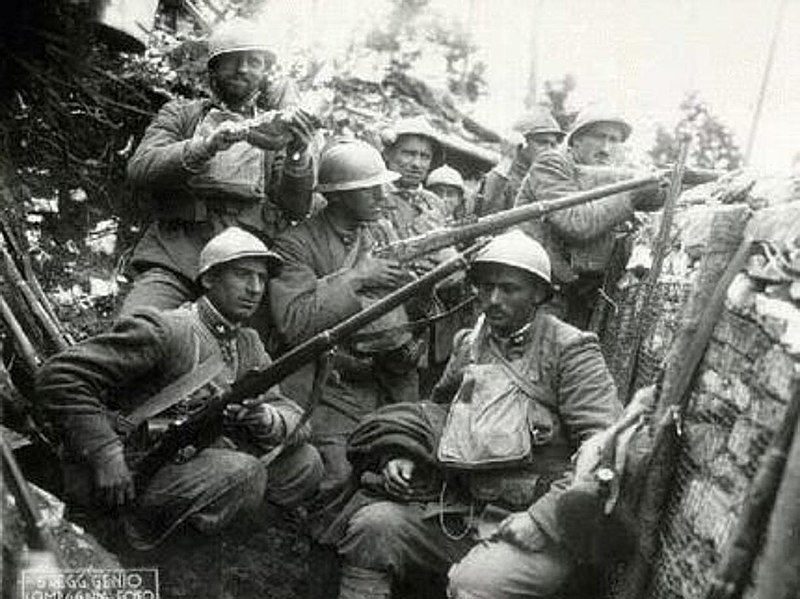
World War I was also called the Great War. The Allies had more than 40 million troops compared to the over 22 million troops that the Central Powers had. All in all, World War I claimed the lives of more than 35 million people. Image: Italian soldiers in trench, 1918
Did the Treaty of Versailles directly cause World War II?
While the Treaty of Versailles contributed to instability in Germany, it alone did not cause World War II. Post-war economic struggles, especially during the Great Depression, played a significant role in the rise of extremist movements like the Nazi Party.
What was the common belief about the duration of World War I when it started?
Many believed the war would be short, with soldiers home by Christmas, but this myth was shattered as the war lasted for four years with millions of casualties.
Was World War I confined to Europe?
No, World War I was a global conflict. It involved colonies from Africa and Asia, and battles took place in regions like the Middle East and the Pacific.
How did World War I impact global politics?
The war led to the collapse of major empires, such as the Austro-Hungarian, Ottoman, and German Empires, and facilitated the formation of new nations and political systems.
Did World War I lead to any advancements?
Yes, World War I accelerated technological and medical advancements, influencing aviation, communication, and healthcare developments that shaped the modern world.





