Who was Tapputi?
Tapputi, also known as Tapputi-Belatekallim, is one of the earliest recorded figures in the history of chemistry and perfume-making. Living around 1200 BCE in Babylonian Mesopotamia, Tapputi’s contributions stand out in both the fields of science and cosmetics.
Her work is a key representation of the sophisticated technical knowledge that existed in ancient Mesopotamian societies.
While we know relatively little about her personal life, the techniques she developed and her role in Mesopotamian society highlight the advanced state of early chemical knowledge.
Historical Context: Mesopotamia and the Rise of Chemistry
Mesopotamia, known as the “cradle of civilization,” was home to some of the earliest advanced cultures, including the Sumerians, Akkadians, Babylonians, and Assyrians. These societies made significant contributions to areas such as agriculture, mathematics, writing, and early science. The Babylonians, in particular, had a well-developed urban culture, with skilled artisans and scholars working in various fields, including medicine, astronomy, and alchemy.
During Tapputi’s time, Babylonian Mesopotamia was a thriving center of culture, trade, and intellectual pursuit. The royal court and temples were not only centers of political and religious power but also hubs of scientific activity. It was in this environment that Tapputi emerged as an influential figure, demonstrating the early development of chemical processes related to perfume and possibly medicinal compounds.
Tapputi: The First Chemist
Tapputi is widely regarded as one of the first known chemists, and her name appears in a cuneiform tablet dating to approximately 1200 BCE. She is believed to have worked in the Babylonian royal palace, where she held the title of “Belatekallim,” meaning a female overseer or supervisor. This indicates that she was a woman of considerable status and responsibility, overseeing activities within the palace, perhaps particularly in areas like cosmetics, medicine, or ritualistic perfumes.
While her title may reflect her administrative role in the palace, her fame endures primarily because of her contributions to the art of perfume-making, which was closely tied to early chemical processes. Tapputi’s work is significant because it provides some of the earliest documented evidence of chemical distillation and solvent use—techniques that form the foundation of modern chemistry.
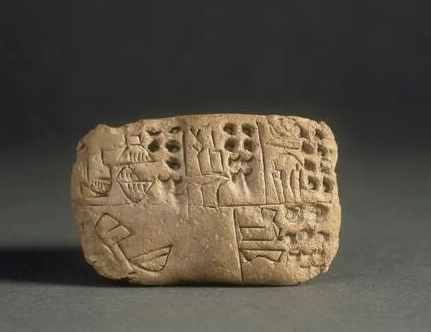
Image: Tapputi-Belatekallim, a Mesopotamian tablet from 1200 BCE, where Tapputi recorded the formula and instructions for making perfume.
The Perfume-Making Process
The details of Tapputi’s work come from a cuneiform tablet that outlines her method of creating perfumes. She is described as working with various natural ingredients, such as flowers, oil, calamus (a type of reed), cyperus (a plant used in perfumes), myrrh (a resin from trees), and balsam (a fragrant resin). Tapputi would blend these substances with water or other solvents to create a liquid mixture.
Her technique involved heating the mixture and then distilling it multiple times to achieve a refined product. The distillation process she used is one of the earliest known examples of this technique, which involves heating a liquid to produce vapor and then cooling it to create a purified substance. Distillation is a cornerstone of modern chemistry, used to separate and purify liquids, and it plays a vital role in industries such as perfume production, pharmaceuticals, and even alcohol production.
Tapputi’s process also involved filtration, another critical chemical technique, to ensure that the final perfume was free of impurities. This method of repeatedly distilling and filtering the liquid mixture was a sophisticated approach that allowed for the creation of higher-quality perfumes with enhanced fragrances and longer-lasting effects.

The Oldest Known Still
One of Tapputi’s most significant contributions to the history of chemistry is her use of what is believed to be the earliest known still—a device used for distillation. While the exact design of her still is not described in great detail, the reference to her distillation process suggests that she used a primitive form of the apparatus to separate and purify the fragrant compounds in her mixtures.
The use of a still in ancient Babylon is remarkable because it shows an early understanding of chemical principles. Tapputi’s ability to manipulate substances through heating and cooling demonstrates a level of scientific knowledge that was ahead of her time. The idea of controlling the transformation of liquids into gases and then back into liquids is a key principle in both chemistry and physics.
Tapputi’s Role in the Royal Court
Tapputi’s role as a perfume-maker and chemist was closely linked to her position within the royal palace. Perfumes and aromatic compounds were highly prized in Mesopotamian society, not only for personal use but also for religious ceremonies, rituals, and offerings to the gods. The creation of perfumes was a specialized and highly respected craft, and those who mastered it held significant status.
As a female overseer, Tapputi would have had access to the resources and equipment necessary for her work, as well as the patronage of the royal court. Her position suggests that women in Mesopotamian society, at least in some cases, could achieve prominence in technical and scientific fields. Tapputi’s presence in the historical record challenges modern assumptions about gender roles in ancient scientific practices.
Collaboration and Innovation
While Tapputi is often remembered individually, she did not work alone. The cuneiform tablet that mentions her also refers to a collaborator named —ninu, although part of this name is lost to history. This suggests that she worked in a team or at least collaborated with others in the development of her perfumes and chemical processes. The collaboration between artisans, scholars, and workers in the royal court likely fostered an environment of innovation, where new techniques could be developed and refined.
Tapputi’s Legacy
Tapputi’s legacy extends beyond her role as a perfume-maker in ancient Babylon. She is a significant figure in the broader history of chemistry, representing one of the earliest recorded uses of scientific techniques such as distillation and filtration. Her work laid the groundwork for the later development of alchemy and, eventually, modern chemistry.
Furthermore, Tapputi stands as an example of the contributions of women to early science, a fact that is often overlooked in historical accounts. Her ability to rise to a position of authority within the palace and to develop advanced techniques in perfume-making reflects the intellectual and technical capabilities of women in ancient societies.

Conclusion
Tapputi’s story is a remarkable example of the early development of scientific knowledge in ancient Mesopotamia. As one of the first known chemists, she pioneered techniques that would later form the foundation of modern chemistry and perfumery.
Her use of distillation, filtration, and solvents highlights the sophistication of early chemical processes, and her position in the royal palace demonstrates the respect and authority she commanded in her field.
Although much of her life remains a mystery, Tapputi’s contributions to science and her role as a trailblazing female chemist remain a vital part of our understanding of the history of chemistry.
Reasons why Mesopotamia is often called the “Cradle of Civilization”