Who was the Hungarian-born Physicist Leo Szilard?
Leo Szilard was an extraordinary figure in the world of science, known for his groundbreaking work across disciplines such as nuclear physics and biology. Born on February 11, 1898, in Budapest, Hungary, as Leó Spitz, Szilard’s contributions to scientific discovery and his efforts to mitigate the destructive potential of technology have left a lasting impact on modern science and society.
From the conception of the nuclear chain reaction to his involvement in the Manhattan Project, Szilard’s scientific genius was matched by his profound concern for humanity.
In the article below, World History Edu explores Leo Szilard’s remarkable life, his contributions to physics and biology, and his ethical stance on the use of scientific advances.
Early Life and Education
Szilard was born into a Jewish family in Budapest at a time of rapid social and political change in Europe. His early interest in science and technology was nurtured by his parents, who encouraged his intellectual development. After completing his secondary education, Szilard enrolled at the Palatine Joseph Technical University in Budapest to study engineering. However, World War I interrupted his studies, and he was conscripted into the Austro-Hungarian Army.
After the war, Szilard resumed his education, but he soon found that his true passion lay in the emerging field of physics. In 1919, Szilard left Hungary and moved to Germany, where he enrolled at the Technische Hochschule (now the Technical University of Berlin) in Berlin-Charlottenburg. Initially studying engineering, Szilard found the subject uninspiring and made the pivotal decision to transfer to the Friedrich Wilhelm University (now Humboldt University of Berlin) to study physics.
During his time at Friedrich Wilhelm University, Szilard became fascinated by thermodynamics, particularly a thought experiment known as Maxwell’s demon, which explores the relationship between entropy and information. His doctoral dissertation was centered around this topic, and he became the first to recognize the connection between thermodynamics and information theory, laying the groundwork for future developments in this area.
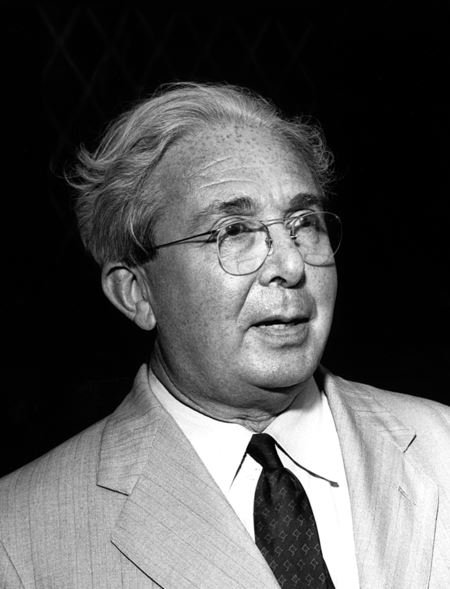
Image: Leo Szilard in 1960
Early Scientific Contributions
Szilard’s inventive mind led to several early contributions to science and technology. In 1928, he submitted a patent for the electron microscope, a device that would later become essential for studying materials at the atomic level. That same year, Szilard worked on the development of the linear accelerator, a machine used to accelerate charged particles to high speeds, which has become fundamental in particle physics and medical applications.
One of his most significant early collaborations was with the renowned physicist Albert Einstein. Together, they developed the Einstein-Szilard refrigerator in 1926, an innovative refrigeration system that required no moving parts and operated without electricity. Although the refrigerator never gained widespread commercial success, it demonstrated Szilard’s ability to think creatively across different scientific domains.
Escaping Europe and the Rise of Nazi Germany
In the early 1930s, Szilard’s life was profoundly affected by the political upheaval in Europe. With the rise of Adolf Hitler and the Nazi regime in Germany, Szilard, along with many other intellectuals and scientists, recognized the growing danger posed to Jewish academics. Anticipating the horrors to come, Szilard urged his family and colleagues to leave Europe while there was still time.
In 1933, Szilard himself fled Germany and moved to England. There, he co-founded the Academic Assistance Council (now the Council for Assisting Refugee Academics), which aimed to help displaced scholars find employment opportunities abroad. Szilard’s initiative helped numerous refugee scientists escape persecution and continue their work in safer environments.
It was during his time in England that Szilard made one of his most important scientific discoveries. While walking in London in 1933, he conceived the idea of a nuclear chain reaction—a process in which a single nuclear event can trigger a self-sustaining series of reactions, releasing a tremendous amount of energy. This concept would later become the foundation for both nuclear power and nuclear weapons.
Szilard immediately recognized the potential dangers of this discovery. He patented the idea in 1936, not to profit from it, but to ensure that it would not fall into the wrong hands. Szilard’s foresight in protecting this critical idea highlighted his concern about the destructive capabilities of nuclear technology.
Contribution to Nuclear Science and the Manhattan Project
In 1938, as tensions in Europe escalated toward World War II, Szilard made the decision to move to the United States, where he would make some of his most significant contributions to science. He began working with Enrico Fermi, a leading physicist, at Columbia University in New York, focusing on nuclear fission. In 1939, Szilard co-authored a letter, which was signed by Albert Einstein, warning U.S. President Franklin D. Roosevelt of the potential for Nazi Germany to develop nuclear weapons.
This letter set into motion the creation of the Manhattan Project, a top-secret U.S. government initiative tasked with developing the atomic bomb. Szilard played an integral role in the project, working alongside Fermi and other scientists to develop the first nuclear reactor, known as Chicago Pile-1. On December 2, 1942, Szilard was present when Chicago Pile-1 achieved the world’s first controlled nuclear chain reaction, marking a critical milestone in nuclear physics.
However, Szilard was deeply troubled by the potential consequences of using nuclear technology for warfare. He became a leading voice within the scientific community advocating for a demonstration of the atomic bomb’s power in an uninhabited area before it was deployed in combat. In 1944, Szilard drafted what became known as the Szilard petition, a document signed by several Manhattan Project scientists urging the U.S. government to consider the ethical implications of dropping the bomb on civilians. Unfortunately, his petition was ignored, and the atomic bombs were dropped on Hiroshima and Nagasaki in 1945, leading to widespread devastation.
Ethical Stance and Advocacy for Arms Control
Szilard’s involvement in the Manhattan Project left him deeply conflicted. Although he had helped develop the bomb, he was one of the earliest advocates for nuclear arms control and disarmament. Szilard feared that the proliferation of nuclear weapons could lead to catastrophic consequences for humanity, and he dedicated much of his later life to promoting the peaceful use of nuclear technology.
In the post-war period, Szilard publicly campaigned against the development of more advanced nuclear weapons, including salted thermonuclear bombs, which he warned could render large portions of the Earth uninhabitable. He believed that scientists had a moral obligation to prevent the destructive potential of their discoveries from being unleashed on humanity.
In 1962, Szilard founded the Council for a Livable World, an organization that sought to influence U.S. government policy on nuclear disarmament and arms control. His work in this area was aimed at ensuring that the destructive power of nuclear technology would not be used indiscriminately and that a more peaceful world could be achieved through rational policymaking and international cooperation.
Contributions to Biological Science
In addition to his contributions to physics, Szilard also made significant advances in the biological sciences. After World War II, Szilard shifted his focus toward biology, where he applied his knowledge of physics to tackle biological problems. One of his most important contributions was the discovery of feedback inhibition, a regulatory mechanism that helps control the activity of enzymes in biological systems. This discovery had a profound impact on the field of molecular biology and helped scientists better understand how cells regulate their biochemical processes.
Szilard also invented the chemostat, a device used to grow bacterial cultures under controlled conditions. The chemostat became an essential tool in microbiology, allowing researchers to study bacterial populations over time and observe how they respond to different environmental factors.
In addition to these contributions, Szilard played an important advisory role in the early research on human cell cloning. His insights and advice helped lay the groundwork for future advances in the field of cellular biology, making him a pioneer in both nuclear and biological sciences.

Despite his involvement in the development of the atomic bomb, Szilard’s commitment to preventing the destructive use of science made him a key figure in the post-war peace movement. Image: A 1915 picture of Szilard.
Later Life and Final Years
In the 1950s and 1960s, Szilard’s interests increasingly shifted toward promoting peace and preventing the misuse of nuclear technology. He became a resident fellow at the Salk Institute for Biological Studies, where he continued his work in biology while also engaging in social and political activism.
In 1960, Szilard was diagnosed with bladder cancer. Remarkably, he designed his own treatment plan, which involved the use of cobalt-60 radiation therapy. This innovative approach successfully treated his cancer, further demonstrating his remarkable intellect and resourcefulness.
Despite his scientific achievements, Szilard remained deeply concerned about the future of humanity. He continued to advocate for disarmament, arms control, and international cooperation until his death. Szilard passed away in his sleep from a heart attack on May 30, 1964, leaving behind a legacy of scientific brilliance and moral leadership.
Szilard’s Legacy
Leo Szilard’s legacy is one of both scientific innovation and moral responsibility. As one of the key figures behind the development of nuclear technology, Szilard’s contributions to physics were foundational, helping to usher in the atomic age. Yet, his deep ethical concerns about the use of nuclear weapons and his advocacy for arms control made him a unique figure in the history of science.
Szilard’s work in nuclear physics, including the conception of the nuclear chain reaction and his contributions to the Manhattan Project, revolutionized the field of energy and warfare. At the same time, his efforts to control the destructive potential of nuclear weapons through political activism demonstrated his commitment to using science for the betterment of humanity.
In addition to his contributions to nuclear physics, Szilard’s work in biology had a lasting impact. His discovery of feedback inhibition and his invention of the chemostat continue to influence scientific research today. His interdisciplinary approach, combining principles from physics and biology, showcased his ability to innovate across fields.
Szilard’s advocacy for ethical considerations in science remains a powerful reminder of the responsibility that comes with scientific discovery. His work through the Council for a Livable World and his efforts to prevent nuclear conflict highlight the importance of combining scientific progress with moral leadership.
Frequently Asked Questions
What significant scientific contribution did Szilard make in 1933?
In 1933, Szilard conceived the idea of the nuclear chain reaction, which became a key component in the development of nuclear energy and weapons. He later patented this idea in 1936.
What role did Szilard play in the Manhattan Project?
Szilard was instrumental in the Manhattan Project, the U.S. initiative to develop the atomic bomb during World War II. In 1939, he co-authored a letter with Albert Einstein urging the U.S. government to begin research on nuclear weapons, which eventually led to the creation of the project. He was also involved in the first successful nuclear chain reaction at Chicago Pile-1 in 1942.
What was Szilard’s stance on the use of the atomic bomb?
Despite his involvement in developing the atomic bomb, Szilard opposed its use on civilian populations. In 1944, he wrote the Szilard petition, urging President Truman to demonstrate the bomb’s power in an uninhabited area before using it in warfare, but this request was ignored.
What contributions did Szilard make to biology?
Szilard made significant contributions to biological sciences, including the discovery of feedback inhibition, a mechanism that regulates biological processes, and the invention of the chemostat, a device used to grow bacteria under controlled conditions. He also provided essential advice for early human cell cloning research.
What was the Szilard–Chalmers effect?
The Szilard–Chalmers effect, discovered by Szilard while he was in England, is a method for isotope separation. This process furthered the field of nuclear science and was a key discovery in Szilard’s career.
How did Szilard contribute to the development of nuclear reactors?
Szilard, along with Enrico Fermi, applied for a patent for a nuclear reactor design in 1944. Their work was instrumental in the creation of the first nuclear reactors used for energy production and scientific research.
What warnings did Szilard issue regarding nuclear weapons later in life?
Later in life, Szilard warned about the dangers of “salted” thermonuclear bombs, which he believed had the potential to annihilate humanity. His advocacy focused on arms control and preventing the further escalation of nuclear weapons.
What was Szilard’s involvement in the Salk Institute for Biological Studies?
In the 1960s, Szilard helped found the Salk Institute for Biological Studies, where he became a resident fellow. His work shifted toward biological sciences during this period, marking another phase of his diverse scientific career.
How did Szilard’s career reflect his concern for ethical issues in science?
Szilard’s career was marked by a profound concern for the ethical use of scientific discoveries. Though he played a crucial role in developing nuclear technology, he also worked tirelessly to prevent its misuse, advocating for peace, disarmament, and responsible scientific progress.
What is the Council for a Livable World, and how is Szilard connected to it?
Szilard founded the Council for a Livable World in 1962, an organization dedicated to promoting nuclear disarmament and influencing U.S. policy on nuclear weapons. The council sought to bring a rational voice to discussions on arms control.
What innovative medical treatment did Szilard undergo for his cancer?
Diagnosed with bladder cancer in 1960, Szilard underwent a cobalt-60 radiation treatment, a method that he had designed himself. This exemplified his inventive approach to both science and his personal life.
How did Szilard’s life end, and what was his legacy?
Leo Szilard passed away from a heart attack in his sleep on May 30, 1964. His legacy includes groundbreaking contributions to both nuclear physics and biology, as well as his advocacy for ethical considerations in science and his efforts to prevent nuclear warfare.





