Who were the Plebeians in Ancient Rome?
The plebeians, often referred to as the “commoners” of ancient Rome, played a significant role in shaping the political, social, and economic landscape of the Roman Republic. Their struggle for rights, known as the Conflict of the Orders, was a defining feature of early Roman history, and their eventual political ascent transformed the nature of Roman governance. The plebeians’ journey from marginalized citizens to influential participants in the Republic’s political institutions is a testament to their resilience and determination.
In the article below, World History Edu explores the origins, historical evolution, and key developments concerning the plebeians in ancient Rome.
Origins and Early Status of Plebeians
The distinction between plebeians and patricians, the elite class of Roman society, dates back to the early days of Rome. According to Roman tradition, the plebeians were initially excluded from political and religious authority, a privilege reserved for the patricians. The patricians, whose origins are traced to Romulus’ appointment of the first hundred senators, formed an aristocratic class that controlled most of the political and religious offices in early Rome. The descendants of these senators inherited their privileged status, creating a hereditary class that maintained a monopoly on political power.
The plebeians, on the other hand, constituted the majority of the Roman population but were largely excluded from the political decision-making process. They were ordinary citizens who worked as farmers, artisans, soldiers, and laborers. Although plebeians were not necessarily poor—some were wealthy landowners—they lacked the political clout of the patricians and were generally barred from holding high political office, serving in religious roles, or joining the Senate.
While the patricians held a tight grip on political and religious power, plebeians were crucial to the functioning of Roman society. They served in the Roman army, contributed to agricultural production, and were essential to the economic vitality of the Republic. However, their lack of political representation and legal protections led to growing tensions between the two classes, which culminated in the Conflict of the Orders.
READ MORE: Conflict between Romulus and Remus over the founding of Rome
The Conflict of the Orders
The Conflict of the Orders was a centuries-long struggle between the plebeians and the patricians, marked by a series of plebeian efforts to gain political equality and protections under the law. This conflict began in the early years of the Republic, around 494 BC, when the plebeians staged the first of several secessions, a tactic in which they withdrew from the city and refused to perform their duties until their demands were met.
During these secessions, plebeians effectively brought the functioning of the city to a standstill, as they made up the bulk of Rome’s workforce and military. These strikes were successful in forcing the patricians to make concessions, and over time, the plebeians achieved a number of important victories. One of the most significant outcomes of the early secessions was the establishment of the plebeian tribunes, officials elected by plebeians to protect their interests and veto unjust laws proposed by patricians. The creation of the tribunate gave plebeians a formal voice in the government for the first time and laid the foundation for further political reforms.

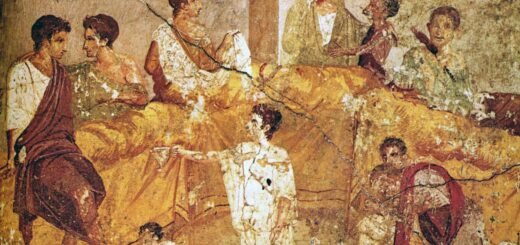
The distinction between plebeians and patricians was hereditary, with plebeians representing the common citizens, while patricians belonged to Rome’s elite families, traditionally holding political and religious authority. Image: Distributing bread to common citizens.
Legal Reforms and the Twelve Tables
A key moment in the plebeians’ fight for equality was the creation of the Twelve Tables around 450 BC. Before this time, Roman laws were unwritten and known only to patricians, who could interpret them as they saw fit. This legal obscurity left plebeians vulnerable to exploitation, as they had no means of knowing the laws that governed them.
In response to plebeian demands for transparency, the Twelve Tables were created as a written code of laws that applied to both plebeians and patricians. Although the laws were not entirely fair by modern standards, as they still favored the patricians in certain respects, the codification of Roman law was a significant step toward equality and the rule of law. The Twelve Tables guaranteed basic legal rights for all Roman citizens, such as property rights and protections from arbitrary treatment, and established the principle that all citizens were subject to the same laws.
The codification of laws also gave plebeians a sense of legal security and provided a foundation upon which future legal reforms could be built. The Twelve Tables served as a critical milestone in Roman legal history, influencing later Roman law and establishing a legacy that endured for centuries.
The Lex Canuleia and Social Integration
Another major victory for plebeians came in 445 BC with the passage of the Lex Canuleia, which allowed intermarriage between patricians and plebeians. Prior to this law, marriage between the two classes was prohibited, reinforcing the social divide and preventing the integration of plebeians into the patrician class.
The Lex Canuleia was a significant social reform because it allowed plebeians and patricians to form family alliances through marriage. This contributed to a gradual blending of the two classes, breaking down some of the social barriers that had previously defined Roman society. Over time, this integration helped plebeians gain more influence and representation in political and social institutions, as mixed families could inherit the status and privileges of both parents.
The ability to marry across class lines marked a turning point in the relationship between plebeians and patricians. While the plebeians still had to fight for equal political rights, the social barriers between the two groups began to erode, setting the stage for further political reforms.
Political Emancipation: The Consulship and Other Offices
One of the most significant political milestones for plebeians occurred in 367 BC with the passage of the Licinio-Sextian laws, which allowed plebeians to hold the office of consul, the highest political position in the Roman Republic. Previously, the consulship had been reserved exclusively for patricians, but this reform opened the door for plebeians to share power at the highest levels of government.
The Licinio-Sextian laws also addressed economic concerns, such as limiting the amount of public land (known as ager publicus) that any one individual could hold, a measure designed to curb the economic dominance of wealthy patricians. The inclusion of plebeians in the consulship marked a significant victory in the Conflict of the Orders, as it demonstrated that plebeians could now compete with patricians for the highest offices in the Republic.
Following this reform, plebeians gradually gained access to other important offices, including the position of praetor (a judicial officer) and aedile (a magistrate responsible for public works). By the middle of the fourth century BC, plebeians had successfully entered the political arena, and the Roman Republic began to be governed by a mixed elite of patricians and plebeians.
The Abolition of Debt Bondage
Debt bondage, a practice in which plebeians who could not repay their debts were forced into servitude, was a significant source of tension between the classes. Many plebeians were poor farmers who struggled to survive in an economy dominated by wealthy landowners. In times of economic hardship, plebeians often found themselves in debt to patrician creditors, leading to a cycle of indebtedness and servitude.
In 326 BC, the practice of debt bondage was abolished, freeing plebeians from the risk of being enslaved by their creditors. This reform was a major victory for the plebeians, as it improved their economic security and protected their personal freedom. The abolition of debt bondage also reduced the economic power of the patricians, who had used debt as a means of controlling the plebeian population.
The Lex Hortensia and Full Political Equality
The final major milestone in the plebeians’ quest for political equality came in 287 BC with the passage of the Lex Hortensia, which made the decisions of the Concilium Plebis (the Plebeian Council) binding on all Romans, including patricians, without the need for senatorial approval. This law effectively eliminated the last legal barrier between the plebeians and patricians, granting plebeians full political equality within the Roman Republic.
The passage of the Lex Hortensia marked the formal end of the Conflict of the Orders. Plebeians now had the ability to pass laws that applied to all Roman citizens, and their political representatives—the plebeian tribunes—had significant power within the government. The plebeians’ struggle for equality had culminated in the creation of a more inclusive political system in which both classes could participate in governance.
The Rise of the Plebeian Elite
As plebeians gained access to political offices and economic power, a new class of plebeian nobility emerged. These nobiles were defined not by birth, as the patricians had been, but by their political achievements and their service in high office. The rise of this plebeian elite blurred the lines between the classes, as plebeians who attained political success could now join the ranks of Rome’s governing aristocracy.
By the time of the late Republic, some plebeians had become as wealthy and powerful as patricians. Notable examples of plebeian nobiles include Gaius Marius, a military leader who reformed the Roman army, and Cicero, one of Rome’s greatest orators and statesmen. These individuals rose to prominence through their political and military accomplishments, challenging the dominance of the traditional patrician elite.
The Decline of the Plebeian-Patrician Distinction
By the late Republic, the distinction between plebeians and patricians had become less relevant. The rise of the plebeian elite and the integration of plebeians into the political and social institutions of Rome led to a blending of the two classes. While the term “plebeian” continued to be used, it no longer carried the same connotations of political exclusion or social inferiority.
Instead, the Roman Republic became increasingly dominated by a small group of wealthy and influential families—both plebeian and patrician—who controlled the highest offices of state. The political struggles of the late Republic, such as those between Julius Caesar, Pompey, and the Senate, were shaped more by personal rivalries and military power than by class distinctions. As Rome transitioned from a republic to an empire, the terms “plebeian” and “patrician” lost much of their political significance.
Conclusion
The history of the plebeians in ancient Rome is a story of political struggle and social transformation. From their initial exclusion from power, plebeians gradually gained political rights through a combination of secession, legal reforms, and social integration. The Conflict of the Orders resulted in significant victories for plebeians, including the creation of the plebeian tribunate, the codification of Roman law, the right to hold high political office, and full political equality with the patricians.
Over time, the distinction between plebeians and patricians became less important, as both classes contributed to the rise of a new Roman elite. The political and legal reforms achieved by the plebeians helped to create a more inclusive and stable Roman Republic, laying the groundwork for Rome’s expansion and influence throughout the ancient world.
Frequently Asked Questions

When is the distinction between patricians and plebeians?
The distinction between patricians and plebeians is believed to date back to the city’s early history, possibly as early as Romulus’ time, or it may have developed between the early regal period and the fifth century BC.
What role did Romulus play in the creation of the patrician class?
According to Livy and Dionysius, Romulus appointed the first hundred senators, whose descendants became the patricians, forming an elite group involved in politics and religious ceremonies.

How might the patricians have emerged as a distinct class in Roman society?
Patricians likely emerged as a distinct group by monopolizing hereditary priesthoods, granting them automatic positions in the Senate. Some also suggest they were originally wealthy religious leaders who formed an exclusive elite after the expulsion of the kings.
What was the Conflict of the Orders, and why was it significant?
The Conflict of the Orders was a long-standing struggle between plebeians and patricians for equal political rights. It was significant because it led to plebeians gaining access to political offices, legal reforms, and the eventual sharing of power with patricians.
What were some key reforms won by the plebeians during the Conflict of the Orders?
Key reforms included the establishment of the Twelve Tables around 494 BC, the creation of plebeian tribunes, the passage of the Lex Canuleia in 445 BC allowing intermarriage, the right to hold the consulship in 367 BC, and the abolition of debt bondage in 326 BC.
What was the significance of the Lex Hortensia passed in 287 BC?
The Lex Hortensia made laws passed by the plebeian assembly binding on all Romans, without requiring senatorial approval, marking a major milestone in plebeian political emancipation.
How did the rise of the plebeian elite contribute to Roman politics?
As plebeians gained political power, a new elite class called the nobiles emerged, composed of both patricians and plebeians. This group dominated Roman politics through high offices, such as the consulship, and contributed to the governance of Rome.
What was a novus homo, and what role did such individuals play in Roman society?
A novus homo, or “new man,” was a plebeian who rose to political power, typically by being elected consul. Notable examples include Gaius Marius and Cicero, who broke into the political elite despite their plebeian origins.
What was life like for plebeians in ancient Rome, and how did they advance socially?
Plebeians typically lived in crowded, poorly maintained apartment buildings called insulae, with limited education. They advanced socially through military service, business ventures, or by gaining political power through offices or the acquisition of land.