William McChesney Martin Jr. holds a distinctive place in American financial history as the longest-serving chairman of the Federal Reserve. His nearly two-decade tenure, from 1951 to 1970, spanned five presidential administrations and shaped modern U.S. monetary policy.
Martin’s leadership was marked by his staunch defense of the Federal Reserve’s independence from political influence and his ability to navigate complex economic landscapes. His life and career were influenced by deep familial ties to the Federal Reserve, early exposure to the financial world, and a commitment to serving the public interest.
Below, World History Edu delves into the life and career of William McChesney Martin Jr.

Chairman of the Federal Reserve William McChesney Martin, Jr. (Served from April 2, 1951–January 31, 1970)
Early Life and Family Connection to the Federal Reserve
William McChesney Martin Jr. was born in St. Louis, Missouri, on December 17, 1906, into a family already deeply connected to the nascent Federal Reserve system.
His father, William McChesney Martin Sr., played a pivotal role in shaping the U.S. central banking system. In 1913, when President Woodrow Wilson and Senator Carter Glass spearheaded efforts to create the Federal Reserve, Martin Sr. was summoned to help draft the Federal Reserve Act. This legislation laid the foundation for the Federal Reserve System, which was established on December 23, 1913. Following this, Martin Sr. served as a governor and later as president of the Federal Reserve Bank of St. Louis. This close familial connection would play a significant role in shaping the younger Martin’s career trajectory and understanding of the financial system.
Martin’s father, William McChesney Martin Sr., helped draft the Federal Reserve Act of 1913 and later served as president of the Federal Reserve Bank of St. Louis.
Education and Early Career
Despite his eventual career in finance, Martin’s early academic pursuits were in a different field. He attended Yale University, where he studied English and Latin, far removed from the world of monetary policy and banking. Nevertheless, the influence of his father and his innate interest in business guided him towards finance.
Upon graduating from Yale, Martin embarked on a career in the financial industry, taking his first job at A.G. Edwards & Sons, a brokerage firm in St. Louis. His rise in the company was swift; within two years, he became a partner, a testament to his acumen in the field.
Martin’s rapid ascent continued when, in 1931, he secured a seat on the New York Stock Exchange (NYSE), just two years after the infamous Wall Street Crash of 1929. The stock market crash had ushered in the Great Depression, a period marked by economic turmoil and a deep loss of public trust in financial institutions. Martin’s entry into the financial world during such a critical time would inform his later views on the need for careful regulation and oversight of financial markets.
READ MORE: History and Major Facts about New York City
Regulatory Work at the New York Stock Exchange
Martin’s work at the NYSE began during one of the most turbulent periods in U.S. financial history. He was committed to restoring public confidence in the stock market and believed that strong regulations were essential to preventing future crises.
In 1935, Martin was elected to the NYSE’s board of governors, and he worked closely with the newly formed Securities and Exchange Commission (SEC) to increase regulation of the stock market. His efforts to foster cooperation between the SEC and the NYSE were instrumental in restoring order to the financial markets during the 1930s.
At the age of 31, Martin became president of the NYSE in 1938, earning the nickname “boy wonder of Wall Street.” As president, he continued his efforts to improve market regulation, collaborating with the SEC to ensure that the stock exchange operated more transparently and with greater accountability. His leadership during this period was crucial in rehabilitating the NYSE’s reputation and making it a more stable institution.
The above early experiences with financial regulation would later influence Martin’s approach to monetary policy as head of the Federal Reserve.
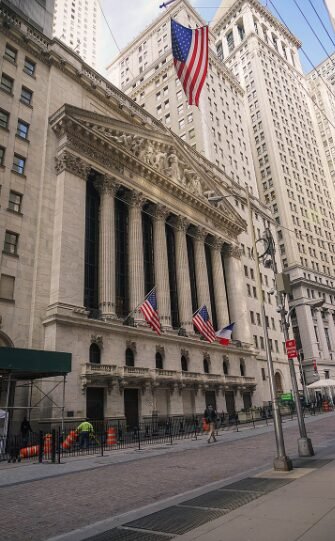
Martin secured a seat on the New York Stock Exchange (NYSE) in 1931, just two years after the Wall Street Crash of 1929.
Service in World War II
Like many of his contemporaries, Martin’s career was interrupted by World War II. He was drafted into the United States Army as a private but quickly rose through the ranks to become a colonel. His wartime service saw him involved in several important roles, including supervising the disposal of raw materials for the Munitions Allocation Board and acting as a liaison between the Army and Congress.
Martin also oversaw the lend-lease program with the Soviet Union, a program that provided U.S. military aid to Allied nations during the war. His experience in managing logistics and working with high-level government officials during the war would later prove valuable during his tenure at the Federal Reserve.
Post-War Career and Transition to Public Service
After the war, Martin returned to civilian life but shifted his focus from the private sector to public service.
In 1946, President Harry S. Truman, a fellow Missourian, appointed Martin as director of the Export-Import Bank, an institution that facilitated trade by providing loans and guarantees to foreign buyers of U.S. goods. At the Export-Import Bank, Martin earned a reputation as a “hard banker” who prioritized sound financial practices over political considerations. He clashed with the State Department on multiple occasions over the bank’s role, refusing to approve loans that he saw as politically motivated rather than financially viable.
Martin’s strict adherence to financial principles and his resistance to political pressures caught the attention of the Truman administration, which later appointed him assistant secretary for monetary affairs at the Treasury in 1949. It was in this capacity that Martin played a crucial role in the 1951 Treasury-Federal Reserve Accord, which reasserted the Federal Reserve’s independence from the Treasury. This agreement was a turning point in the history of U.S. monetary policy, as it allowed the Federal Reserve to set interest rates independently of the Treasury’s financing needs.
Martin’s involvement in these negotiations showcased his deep understanding of the Federal Reserve system and his ability to navigate complex financial and political dynamics.
Appointment as Chairman of the Federal Reserve
In 1951, shortly after the Treasury-Federal Reserve Accord, President Truman appointed William McChesney Martin Jr. as chairman of the Federal Reserve. Martin’s appointment came at a critical juncture for the Fed, which had just regained its independence from the Treasury. Many expected Martin, as a loyal Truman appointee, to follow the president’s wishes. However, Martin quickly proved that he was dedicated to preserving the Fed’s autonomy.
During his nearly 20 years as chairman, Martin worked under five U.S. presidents—Harry Truman, Dwight Eisenhower, John F. Kennedy, Lyndon B. Johnson, and Richard Nixon.
Throughout his tenure, Martin was a steadfast defender of the Fed’s independence, resisting political pressures to manipulate monetary policy for short-term gains. His commitment to this principle is perhaps best encapsulated by his famous statement that the Fed’s role is “to take away the punch bowl just as the party gets going”—a metaphor for tightening monetary policy when the economy starts to overheat.
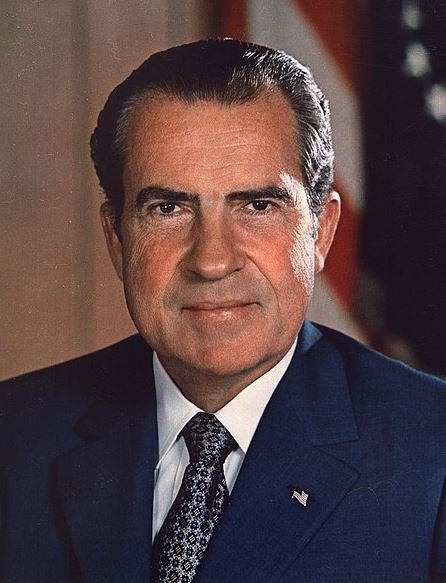
Appointed by President Truman and reappointed by four successors, Martin, once considering ministry, was known for his disciplined optimism, earning the nickname “the happy Puritan.” Image: A 1972 portrait of Nixon
Martin’s Monetary Policy and Leadership at the Federal Reserve
Martin’s approach to monetary policy was pragmatic and data-driven. He rejected simplistic economic models that relied on a single indicator to guide policy decisions. Instead, Martin believed in examining a wide array of economic data to make informed decisions that would promote long-term stability.
His primary goals as chairman were to control inflation and foster economic stability, even if that meant making unpopular decisions, such as raising interest rates during periods of economic expansion.
Under Martin’s leadership, the Federal Open Market Committee (FOMC) became more institutionalized, with a greater emphasis on collaboration among the various governors and presidents within the Federal Reserve System.
Martin famously described the Federal Reserve’s role as “taking away the punch bowl just as the party gets going,” referring to the Fed raising interest rates when the economy overheats.
Martin encouraged open discussion and valued consensus, which often resulted in unanimous votes on key monetary policy decisions. His inclusive leadership style ensured that decisions were made thoughtfully and based on the collective expertise of the FOMC, rather than relying solely on the chairman’s views.
His tenure as chief of the Federal Reserve was marked by several significant economic events, including the economic boom of the 1950s, the Kennedy tax cuts of the early 1960s, and the inflationary pressures of the late 1960s. Through it all, Martin remained committed to maintaining the Fed’s independence and ensuring that monetary policy was driven by sound economic principles rather than political expediency.
Challenges and Criticism
Despite his long and influential career, Martin faced challenges and criticism during his time as chairman.
One of the most notable instances occurred during the 1960 presidential election, when Republican candidate Richard Nixon blamed his loss on Martin’s tight-money policies. Nixon believed that Martin’s actions had slowed the economy and contributed to his defeat. This criticism resurfaced in 1969 when Nixon, now president, clashed with Martin over the Fed’s policies. Nixon was concerned that Martin’s focus on controlling inflation was pushing the economy toward recession, a view shared by conservative economist Milton Friedman. Despite these criticisms, Martin stood firm in his belief that the Fed’s role was to pursue long-term stability, even if it meant short-term political unpopularity.
Martin’s relationship with President Nixon became increasingly strained toward the end of his tenure. Nixon had expected Martin to step down at the start of his administration in 1969, but Martin chose to remain in his post. The tension between the two culminated in 1969, when Nixon confronted Martin over his monetary policies during a White House meeting. Martin refused to yield to Nixon’s demands, but by early 1970, he was replaced by Arthur Burns as chairman of the Federal Reserve.
Richard Nixon blamed his defeat in the 1960 election in part on Martin’s tight-money policies and criticized him again in 1969 for pushing the economy toward recession, though Martin did not yield.
Legacy and Later Life
William McChesney Martin Jr.’s tenure as chairman of the Federal Reserve ended on January 30, 1970, but his influence on U.S. monetary policy endured long after his departure. He is widely regarded as one of the most important central bankers in history, not only for his defense of the Fed’s independence but also for his pragmatic and data-driven approach to monetary policy.
After leaving the Federal Reserve, Martin continued to serve in various public and private roles. He was involved with several nonprofit organizations, including the Rockefeller Brothers Fund, and maintained his passion for tennis, serving as president of the National Tennis Foundation and chair of the International Tennis Hall of Fame.
Martin passed away on July 28, 1998, at the age of 91, but his legacy remains firmly intact. The 1974 Federal Reserve Annex, located next to the Eccles Building in Washington, D.C., was named in his honor, a fitting tribute to the man who shaped modern U.S. central banking and left an indelible mark on the financial world.
READ MORE: US Presidents that failed to get re-elected
Questions and Answers on William McChesney Martin Jr.

The 1974 Federal Reserve Annex next to the Eccles Building was named in Martin’s honor.
Where and when was William McChesney Martin Jr. born?
William McChesney Martin Jr. was born in St. Louis in 1906.
What did Martin study at Yale University, and how did this differ from his eventual career?
Martin studied English and Latin at Yale University, but he pursued a career in finance, largely influenced by his father’s involvement in the financial world.
After graduation, Martin joined the brokerage firm A.G. Edwards & Sons. He became a partner within two years.
What role did Martin play in regulating the stock market during the 1930s?
In 1935, Martin was elected to the NYSE’s board of governors, where he worked with the SEC to restore confidence in the stock market through increased regulation.
Martin became president of the NYSE at 31 years old and was nicknamed the “boy wonder of Wall Street.”
What was Martin’s role during World War II?
During World War II, Martin served in the U.S. Army, reaching the rank of colonel. He supervised raw material disposal and liaised with Congress and the Soviet Union under the lend-lease program.
What position did President Truman appoint Martin to after World War II?
After the war, President Truman appointed Martin as director of the Export-Import Bank.
Martin insisted that loans from the Export-Import Bank be financially sound, often opposing the State Department’s politically motivated loans.
What role did Martin play in the 1951 Treasury-Federal Reserve Accord?
Martin played a key role in negotiating the 1951 Accord, which reasserted the Federal Reserve’s independence from the Treasury.
How long did Martin serve as chairman of the Federal Reserve, and how does this compare to other chairs?
Martin served as chairman of the Federal Reserve for nearly two decades, making his tenure the longest in the Fed’s history.
How did Martin’s leadership style at the Fed differ from others?
Martin promoted a collaborative leadership style, gathering input from governors and presidents within the Federal Reserve System before making decisions, often leading to unanimous support in the FOMC.
What other roles did Martin take on after his time at the Federal Reserve?
After his time at the Federal Reserve, Martin served in various roles, including leading the National Tennis Foundation and chairing the International Tennis Hall of Fame.
When and how did William McChesney Martin Jr. die?
Martin died of a heart attack in Washington, D.C., in 1998 at the age of 91.





