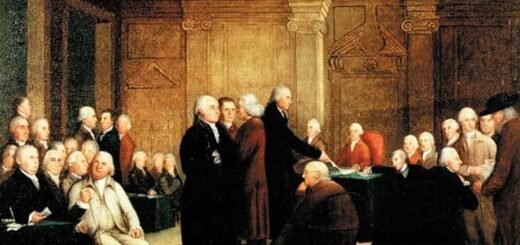
What role did Truman play in ending World War II?
Harry S. Truman, the 33rd president of the United States, played a pivotal role in ending World War II, taking over the presidency after the death of Franklin D. Roosevelt in April 1945. Truman’s decisions and leadership during the final months of the war had far-reaching consequences, both in terms of military strategy and post-war diplomacy. Truman inherited the leadership of a nation already deeply involved in global conflict, and his actions in the months following Roosevelt’s death were crucial in bringing about the war’s conclusion.

Taking Office in the Midst of War
Truman became president on April 12, 1945, just a few weeks before the war in Europe ended and several months before the war in the Pacific concluded. He was thrust into leadership at a critical time, facing numerous challenges related to both the ongoing conflict and the future of the post-war world.
Despite being vice president under Roosevelt, Truman had been kept relatively out of the loop on critical military decisions and strategies during the war. When he took office, he was quickly briefed on the various fronts of the conflict, including the ongoing battles in Europe, the Pacific, and the secret development of the atomic bomb—a project he had no knowledge of before becoming president. Truman had to make key decisions regarding military operations, the use of nuclear weapons, and diplomatic negotiations, particularly with the Allied powers.
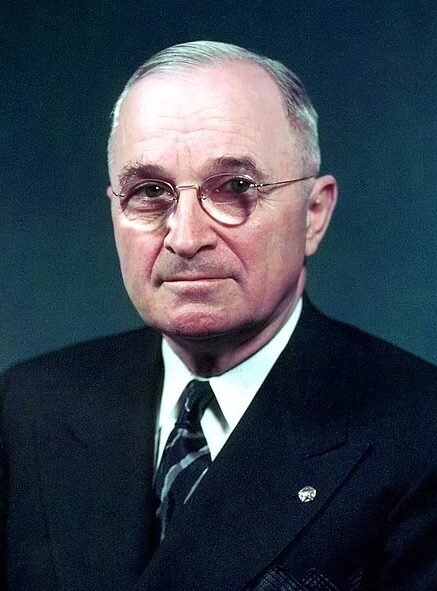
Image: An official portrait of Harry Truman in 1947.
The War in Europe
By the time Truman took office, the Allies were on the verge of defeating Nazi Germany. The Allied forces, led by American and British troops from the west and Soviet forces from the east, had already pushed into German territory, and the collapse of the Third Reich was imminent. In May 1945, after Adolf Hitler’s suicide in April, Germany formally surrendered to the Allies. Victory in Europe Day (V-E Day) was celebrated on May 8, 1945, marking the end of World War II in Europe.
Truman played an important role in the immediate aftermath of the European war, working to stabilize the continent and begin the rebuilding process. He attended the Potsdam Conference in July 1945, where he met with British Prime Minister Winston Churchill and Soviet leader Joseph Stalin to discuss the post-war fate of Germany and other European countries. The conference laid the groundwork for how Europe would be divided and rebuilt after the war, but it also exposed the growing tensions between the United States and the Soviet Union—tensions that would eventually lead to the Cold War.
The War in the Pacific
While the war in Europe had come to a close, the conflict in the Pacific against Japan was still raging when Truman became president. The United States and its Allies had been slowly advancing toward the Japanese mainland through a series of brutal island-hopping campaigns, but Japan showed no signs of surrender. The war in the Pacific was expected to result in heavy casualties if the Allies were to launch a full-scale invasion of Japan.
The Japanese military had demonstrated its willingness to fight to the last man, as seen in battles such as Iwo Jima and Okinawa, and the prospect of a protracted, bloody invasion of the Japanese mainland loomed. It was in this context that Truman faced one of the most significant and controversial decisions of his presidency: whether or not to use the atomic bomb.

Image: A 1945 picture of Truman with Joseph Stalin and Winston Churchill.
The Atomic Bomb Decision
One of the most crucial and defining moments of Truman’s presidency was his decision to authorize the use of atomic bombs on Japan. The Manhattan Project, a top-secret program initiated during the Roosevelt administration, had developed the world’s first nuclear weapons, and by the summer of 1945, the United States had successfully tested an atomic bomb in New Mexico.
At the Potsdam Conference in July 1945, Truman was informed that the first successful test of the atomic bomb had occurred, and he was faced with a difficult decision: should the U.S. use this devastating new weapon to force Japan’s surrender, or should he proceed with a conventional military strategy, which would likely involve an invasion of Japan?
There were several factors that influenced Truman’s decision to use the bomb:
- Avoiding a Costly Invasion: Military estimates suggested that an invasion of Japan could result in hundreds of thousands of American and Allied casualties, as well as millions of Japanese deaths. Japan had shown little willingness to surrender, and Truman was advised that using the bomb could bring a swift end to the war without the need for a ground invasion.
- Demonstrating U.S. Power: The use of the atomic bomb would also send a strong message to the world, particularly to the Soviet Union, about the United States’ military capabilities. This was important in the context of post-war power dynamics, as Truman and his advisors were already beginning to see the Soviet Union as a potential adversary in the coming Cold War.
- Japanese Resistance: Despite being largely defeated, Japan continued to resist surrender. Truman and his advisors believed that the shock and devastation caused by the atomic bomb might finally break the Japanese resolve and force them to accept unconditional surrender.
After weighing these factors, Truman authorized the use of the atomic bomb. On August 6, 1945, the first bomb was dropped on the city of Hiroshima, killing an estimated 140,000 people, many of them civilians. Despite the devastation, Japan did not immediately surrender. On August 9, a second bomb was dropped on the city of Nagasaki, killing another 70,000 people.
The use of atomic bombs on Hiroshima and Nagasaki remains one of the most controversial decisions in military history. While the bombings undoubtedly played a role in bringing about Japan’s surrender, critics argue that the use of such a devastating weapon against civilian populations was morally indefensible, and some have questioned whether Japan would have surrendered soon anyway, given the country’s increasingly desperate situation.
Japan’s Surrender and the End of the War
On August 15, 1945, just days after the second atomic bomb was dropped, Japan announced its unconditional surrender. This day became known as Victory over Japan Day (V-J Day), and it marked the official end of World War II.
Truman addressed the nation, expressing relief that the long and costly war had finally come to an end. While he defended his decision to use the atomic bombs as necessary to bring about a swift conclusion to the war, he also recognized the profound implications of nuclear weapons for the future of warfare and diplomacy. The world had entered the nuclear age, and Truman’s decision would shape international relations for decades to come.

Post-War Challenges
With the war over, Truman faced the enormous challenge of leading the United States through the transition from wartime to peacetime. This involved not only overseeing the demobilization of the U.S. military and the reintegration of millions of soldiers into civilian life but also managing the U.S.’s new role as a global superpower in a rapidly changing world.
One of Truman’s most important contributions during this period was the Marshall Plan, a massive aid program aimed at rebuilding war-torn Europe. The plan, which was implemented in 1948, provided billions of dollars in economic assistance to help European countries recover from the devastation of World War II and rebuild their economies. The Marshall Plan was widely seen as a success, helping to stabilize Western Europe and prevent the spread of communism in the region.
Truman also played a central role in the creation of the United Nations, an international organization designed to promote peace and cooperation among nations. The United Nations was officially established in 1945, and Truman supported its development as a way to prevent future conflicts and promote global stability.
Questions and Answers about President Truman
What political party did Truman belong to, and what was his early political career like?
Truman was a member of the Democratic Party. He served as a U.S. senator from Missouri from 1935 to 1945 and briefly as vice president under Franklin D. Roosevelt in 1945.
What were Truman’s major contributions to foreign policy?
Truman is best known for implementing the Marshall Plan to rebuild Western Europe’s economy, establishing the Truman Doctrine to contain Soviet communism, and helping form NATO to ensure collective security during the Cold War.
How did Truman handle domestic issues during his presidency?
Domestically, Truman proposed many liberal reforms, but most were blocked by the conservative coalition in Congress. He did manage to desegregate the U.S. Armed Forces and eliminate discrimination in federal agencies through Executive Orders 9980 and 9981.
What international events marked Truman’s presidency?
Truman oversaw the Berlin Airlift, the implementation of the Marshall Plan, and the early stages of the Cold War. He also led the U.S. into the Korean War, supporting South Korea against North Korean forces.
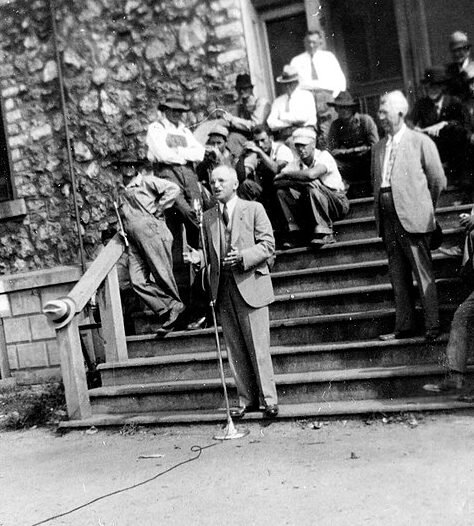
Image: In 1934, Truman hit the campaign trail as he ran for a seat in the U.S. Senate.
What challenges did Truman face on the domestic front?
Postwar economic challenges, such as strikes and inflation, posed significant difficulties for Truman. His attempts to pass civil rights legislation were blocked by Congress, but he issued executive orders to tackle racial discrimination in the military and federal agencies.
Why did Truman choose not to run for re-election in 1952?
With his popularity declining and facing poor polling numbers, Truman chose not to seek re-election in 1952.
How was Truman’s presidency viewed during his time, and how has his legacy evolved?
Truman’s presidency was heavily criticized when he left office, and he had a low approval rating. However, over time, historians and the public have reassessed his presidency more favorably, and he is now ranked among the top U.S. presidents for his leadership during a pivotal time in history.
What did Truman do after leaving the presidency?
After leaving office, Truman retired, founded his presidential library, and published his memoirs. Although there were rumors of financial difficulties, evidence suggests he had amassed significant wealth, some of it while still in office.