Immanuel Kant
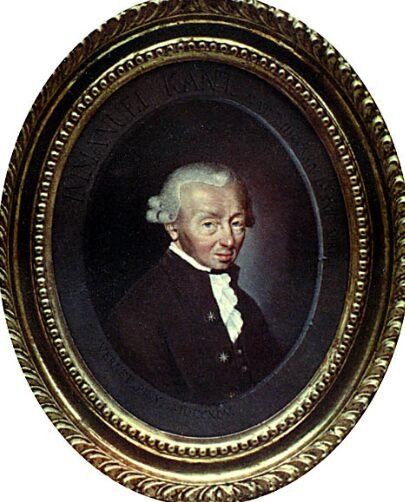
Immmanuel Kant is often called the “father of modern ethics,” “father of modern aesthetics,” and “father of modern philosophy” for synthesizing rationalism and empiricism. Image: Immanuel Kant by French painter Carle Vernet (1758–1836)
Immanuel Kant (1724-1804), one of the most influential philosophers in the history of Western thought, was born on April 22, 1724, in Königsberg (then part of Prussia, now Kaliningrad, Russia). Kant’s work in epistemology, ethics, metaphysics, and aesthetics has had a profound and lasting impact on philosophy, and he is best known for his contributions to modern philosophy through his ideas about the nature of knowledge, morality, and the limits of human understanding. His writings, particularly his “Critique of Pure Reason,” are regarded as foundational texts in philosophy.
Early Life and Education
Kant was born into a devoutly religious Lutheran family of modest means. His father was a saddle-maker, and his mother was deeply religious, instilling in young Kant a sense of piety and discipline. Though his family was not wealthy, Kant’s intellectual abilities were recognized early, and he attended the Collegium Fridericianum, a rigorous Pietist school, where he studied Latin, theology, and classical literature. He later enrolled at the University of Königsberg (Albertina University) in 1740 to study philosophy, mathematics, and the sciences.
Kant was particularly interested in physics and mathematics, and his early education was heavily influenced by the works of Isaac Newton. After completing his studies, Kant worked as a private tutor for several years, while continuing his research and writing.
Academic Career and Personal Life
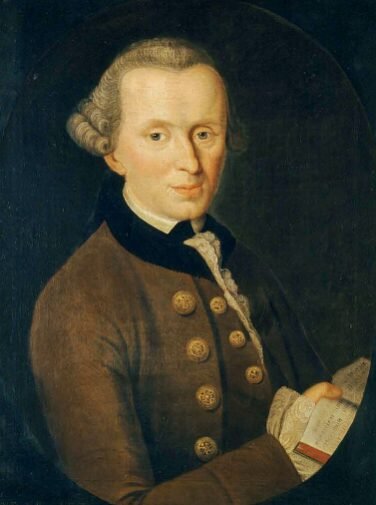
Portrait of German philosopher Immanuel Kant, 1768
Kant became a lecturer at the University of Königsberg in 1755, where he remained for the rest of his life. He lived a highly disciplined, routine-driven life, earning the nickname “The Philosopher of Königsberg.” His daily schedule was famously rigid, and he is said to have taken the same walk through the city every afternoon, so much so that the townspeople could set their clocks by his routine.
Despite his quiet, scholarly life, Kant never married and had no children. He remained committed to his intellectual work, focusing on his lectures and writing. Kant was known for his engaging teaching style, drawing students with his depth of knowledge and sharp analytical mind.
Kant’s early works were primarily concerned with natural philosophy, physics, and mathematics, where he engaged with Newtonian mechanics. However, it wasn’t until later in his career that Kant would develop the ideas that would cement his place as one of the greatest philosophers of all time.
Major Works of Immanuel Kant

Image: A statue of Kant in Kaliningrad, Russia, is a replica by Harald Haacke, replacing the original by Christian Daniel Rauch, lost in 1945.
The Critique of Pure Reason (1781, 1787)
The “Critique of Pure Reason” is Kant’s most famous and influential work. It is a profound exploration of the nature of human understanding and knowledge. Kant was responding to two dominant philosophical traditions: the rationalism of philosophers like René Descartes and Gottfried Wilhelm Leibniz, and the empiricism of thinkers like John Locke and David Hume.
Kant sought to reconcile these opposing views by proposing a new framework for understanding how we acquire knowledge. He argued that while all knowledge begins with experience, not all of it arises from experience. Instead, the human mind actively shapes and organizes sensory input through innate structures or categories. These categories are fundamental concepts like space, time, causality, and substance, which Kant referred to as “a priori” knowledge—knowledge that is independent of experience.
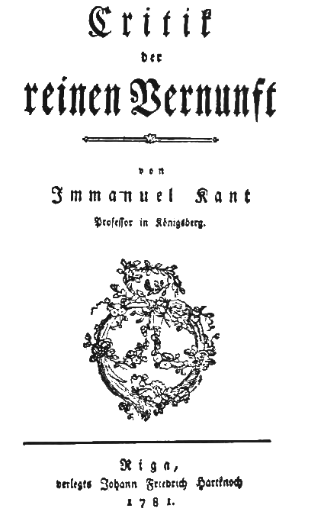
Immanuel Kant’s Critique of Pure Reason
Kant introduced the concept of “transcendental idealism,” the idea that our knowledge of objects is shaped by our perceptual and cognitive faculties, meaning we can never know the world as it is “in itself” (noumena), but only as it appears to us (phenomena). In this way, Kant sought to solve the problem of skepticism, particularly as articulated by Hume, who questioned the possibility of knowing causality or the existence of the external world.
The “Critique of Pure Reason” is notoriously difficult and dense, but it remains a cornerstone of modern philosophy. Kant’s approach laid the groundwork for future philosophers, particularly in epistemology and metaphysics, and it marked a turning point in the way we think about human cognition and the limits of knowledge.
The Critique of Practical Reason (1788)

Immanuel Kant’s Critique of Practical Reason
Kant’s second major critique, “The Critique of Practical Reason,” is focused on ethics and moral philosophy. In this work, Kant develops his moral philosophy, centered on the concept of the categorical imperative, which he introduced in his earlier work, “Groundwork of the Metaphysics of Morals” (1785).
The categorical imperative is the central principle of Kant’s moral theory. It holds that one should act only according to maxims that can be universalized—that is, that could be consistently applied to everyone without contradiction. This is famously summed up in Kant’s formulation: “Act only according to that maxim whereby you can at the same time will that it should become a universal law.”
Kant distinguishes between hypothetical imperatives, which are contingent on a person’s desires (e.g., “If you want to be healthy, you should exercise”), and categorical imperatives, which are unconditional moral obligations that apply to all rational beings, regardless of personal desires or inclinations. For Kant, moral duties arise from reason alone, not from empirical considerations or consequences.
In the Critique of Practical Reason, Kant expands on the role of freedom, autonomy, and duty in morality. He argues that to be morally responsible, individuals must be free to make their own choices. This freedom is grounded in our ability to act according to rational principles, rather than being driven solely by desires or inclinations.
Kant’s ethical theory is deontological, meaning it emphasizes the intrinsic rightness or wrongness of actions rather than their consequences. He famously rejected utilitarianism, which judges actions based on their outcomes, arguing instead that the moral worth of an action depends on whether it accords with duty and respects the autonomy of all rational beings.
The Critique of Judgment (1790)

Immanuel Kant’s Critique of Judgment
The third of Kant’s critiques, “The Critique of Judgment,” deals with aesthetics and teleology, exploring how humans perceive beauty and make judgments about the natural world. In this work, Kant develops a theory of aesthetic experience and taste, focusing on the nature of beauty and the sublime.
Kant argues that aesthetic judgments are subjective but universal. When we find something beautiful, we do not merely express a personal preference; we make a claim that others should also find it beautiful. This universality of aesthetic judgment, however, does not stem from any objective properties of the object itself but from the harmonious interplay between our cognitive faculties of imagination and understanding.
Kant also addresses the sublime, which he distinguishes from beauty. While beauty is connected to form and harmony, the sublime is associated with vastness, formlessness, and the overwhelming power of nature, which inspires awe and even fear. Kant’s treatment of the sublime influenced later Romantic thinkers, who saw in the sublime an expression of human creativity and emotion.
In the second part of “The Critique of Judgment,” Kant explores teleology, the study of purpose or design in nature. He asks whether we can legitimately see nature as having ends or purposes. While Kant argues that we cannot know for certain if nature is designed with specific purposes, we are justified in using teleological explanations as a regulative principle for understanding the complexity and order of the natural world.
Groundwork of the Metaphysics of Morals (1785)
Though shorter than his Critiques, Kant’s “Groundwork of the Metaphysics of Morals” is one of his most significant contributions to moral philosophy. It lays the foundation for his ethical theory and introduces the concept of the categorical imperative, which he would later expand in the “Critique of Practical Reason.”
The “Groundwork” is an attempt to establish the supreme principle of morality, which Kant argues must be based on reason and be universally binding. He insists that morality cannot be derived from empirical facts or contingent desires but must be grounded in rationality. The work remains a central text in ethical theory and is frequently studied for its rigorous exploration of duty, autonomy, and moral law.
Religion within the Boundaries of Mere Reason (1793)
In “Religion within the Boundaries of Mere Reason,” Kant applies his philosophical ideas to religion, particularly the relationship between reason and faith. He argues that morality is independent of religion, but that religious belief can play a role in promoting moral behavior. Kant’s view of religion is highly rationalistic, and he rejects supernatural elements and revealed dogmas as essential to ethical life.
Kant distinguishes between true religion—which, for him, involves following the moral law—and the organized practices and rituals of traditional religion, which he believes often stray from the essential moral core. This work was controversial in its time, as it challenged both orthodox Christianity and the authority of organized religious institutions.
Kant’s rational approach to religion influenced later thinkers who sought to reconcile faith with reason, and it contributed to the development of modern liberal theology.
Perpetual Peace (1795)
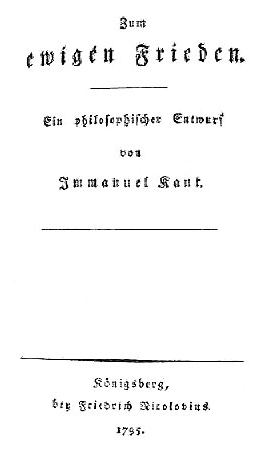
Immanuel Kant’s Perpetual Peace: A Philosophical Sketch
Kant’s “Perpetual Peace: A Philosophical Sketch” is a political treatise in which he lays out a vision for achieving lasting peace among nations. In this essay, Kant argues that perpetual peace can be achieved through a combination of republican governments, international cooperation, and respect for human rights.
Kant’s vision of peace is based on the idea that states, like individuals, must respect the moral law and act in accordance with principles of justice. He proposes the creation of a federation of free states, governed by the rule of law, as a means of preventing war and promoting peaceful coexistence.
“Perpetual Peace” had a lasting influence on political philosophy, particularly on the development of modern ideas about international law, democracy, and human rights. It is often cited as a foundational text in discussions of global governance and the ethics of war.
Metaphysics of Morals (1797)
In “The Metaphysics of Morals,” Kant develops a detailed ethical system, expanding on the ideas he introduced in the “Groundwork of the Metaphysics of Morals” and the “Critique of Practical Reason.” The work is divided into two parts: the Doctrine of Right and the Doctrine of Virtue.
The Doctrine of Right deals with the principles of justice and legal rights, focusing on the external actions of individuals in relation to others. Kant explores issues of property, contracts, and the role of the state in enforcing laws that protect individual freedoms.
The Doctrine of Virtue focuses on the internal moral duties of individuals, emphasizing the cultivation of virtuous character and the fulfillment of moral obligations. Kant discusses duties to oneself, such as self-respect and moral self-improvement, as well as duties to others, such as benevolence and respect for their autonomy.
This work provides a comprehensive overview of Kant’s ethical theory, addressing both legal and moral dimensions of human conduct.
Legacy and Influence
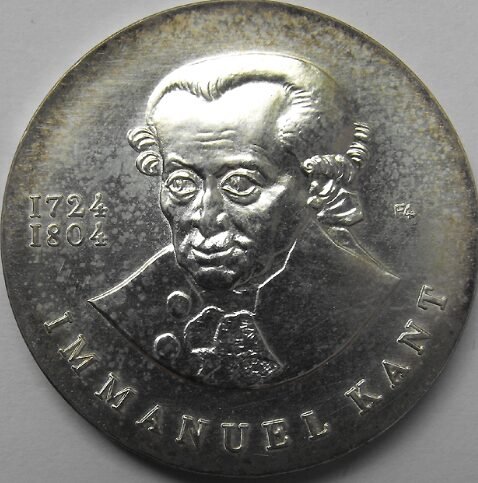
Image: East German commemorative coin honoring Immanuel Kant, 1974
Kant’s philosophy had an enormous impact on subsequent generations of thinkers. His critical philosophy—which emphasized the limits of human knowledge, the role of reason, and the importance of moral autonomy—profoundly shaped the course of modern philosophy. Kant’s ideas influenced later philosophical movements, including German Idealism (notably Hegel and Fichte), existentialism, phenomenology, and analytic philosophy.
In the realm of ethics, Kant’s deontological approach continues to be a dominant perspective, and his ideas about duty, autonomy, and universal moral laws remain central to contemporary discussions in moral philosophy.
In addition to his contributions to philosophy, Kant’s ideas about peace, justice, and the role of reason in human affairs have influenced political theory, legal philosophy, and discussions about human rights and international relations.
Kant died in 1804, but his ideas continue to be studied, debated, and developed, securing his place as one of the greatest philosophers in the history of Western thought.
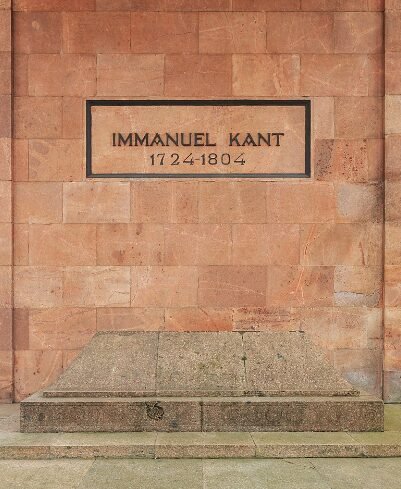
Immanuel Kant’s tomb in Kaliningrad, Russia
Unification of East and West Germany in 1990: History & Major Facts
Questions and Answers on Immanuel Kant

Immanuel Kant (1724–1804) was a German philosopher and a central figure of the Enlightenment. His works in epistemology, metaphysics, ethics, and aesthetics made him one of the most influential thinkers in Western philosophy. Image: Engraving of Immanuel Kant
What is Kant’s doctrine of transcendental idealism?
Immanuel Kant’s doctrine of transcendental idealism argues that space and time are not properties of the external world but “forms of intuition” that shape how humans perceive and experience reality. He claimed that while we can know the world as it appears to us (phenomena), the true nature of things “in themselves” (noumena) is unknowable.
What is Kant’s most famous work, and what problem did it address?
Kant’s most famous work is the “Critique of Pure Reason” (1781/1787). It addressed the problem of skepticism by suggesting that we can only know the world as it appears to us, structured by our cognitive faculties such as space, time, and categories of understanding, rather than as it truly is in itself.

Often regarded as the central figure of modern philosophy, Immanuel Kant’s work touched upon epistemology, metaphysics, ethics, and aesthetics. His “Critique of Pure Reason” is a seminal text in Western philosophy. Image: Weimar Republic stamp honoring Immanuel Kant, 1926
How did Kant relate his philosophy to the Copernican Revolution?
Kant drew an analogy between his philosophical approach and the Copernican Revolution. Just as Copernicus proposed that the Earth revolves around the Sun, Kant proposed that objects conform to the structures of our minds (space, time, and categories of understanding) rather than our minds simply reflecting the external world as it is.
How has Kant’s transcendental idealism influenced other fields?
Kant’s ideas about how human cognition is pre-structured by categories like space and time have influenced fields such as sociology and anthropology, which explore how cultural norms pre-orient human behavior and experience.

Image: Immanuel Kant with friends, including Christian Jakob Kraus, Johann Georg Hamann, Theodor Gottlieb von Hippel, and Karl Gottfried Hagen
What is Kant’s concept of the categorical imperative in ethics?
The categorical imperative is Kant’s central ethical principle, which states that one should act only according to maxims that can be universally applied. It emphasizes acting out of moral duty based on reason, not consequences or personal desires.
What were Kant’s views on aesthetics?
Kant believed that true aesthetic judgment arises from a disinterested perspective, meaning that the judgment of beauty or the sublime should not be influenced by personal desires or practical concerns but should be based on a universal sense of taste.
How are Kant’s religious views connected to his moral philosophy?
Kant’s religious views are closely linked to his moral philosophy, where he argued that morality is rooted in reason, not divine command. While Kant’s exact religious beliefs remain debated, he saw religion as supporting the moral law rather than dictating it.
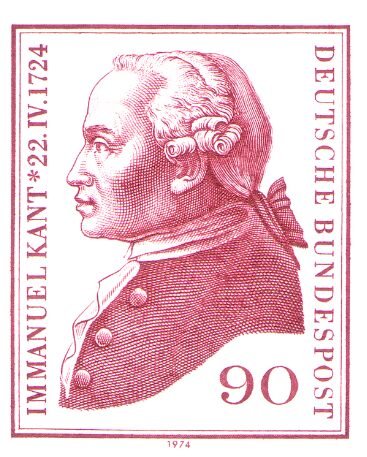
Image: West German postage stamp, 1974, commemorating the 250th anniversary of Immanuel Kant’s birth
What was Kant’s vision for perpetual peace?
Kant advocated for perpetual peace through the establishment of a federation of republican states and international cooperation. He believed that lasting peace could be achieved through rational diplomacy and respect for human rights.
What controversy surrounds Kant’s legacy?
Kant’s legacy is complicated by his earlier support of scientific racism, which he promoted for much of his career. However, in the final decade of his life, Kant is said to have renounced these views, adding complexity to his philosophical contributions.
How has Kant’s philosophy shaped modern thought?
Kant’s work continues to shape modern discussions in ethics, aesthetics, and epistemology, particularly through his emphasis on reason, morality, and the limits of human knowledge. His influence spans multiple fields, including philosophy, political theory, and social sciences
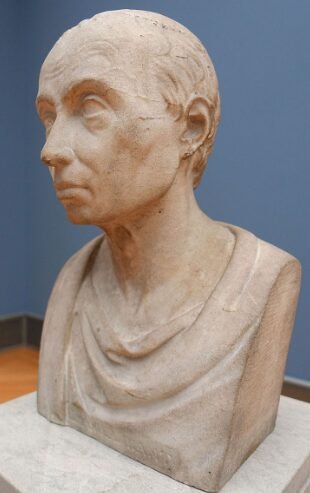
Bust of Immanuel Kant by Swiss sculptor Emanuel Bardou, 1798.





