History and Major Facts about the Munich Agreement signed in 1938
The Munich Agreement, signed on September 30, 1938, is one of the most significant and controversial diplomatic accords of the 20th century. It is often cited as a classic example of the policy of appeasement, where Western European powers sought to prevent war by conceding to some of Nazi Germany’s demands. The agreement’s implications were profound, both in the immediate context of pre-World War II Europe and in its long-term historical interpretation.
The Interwar Period and Rise of Nazi Germany
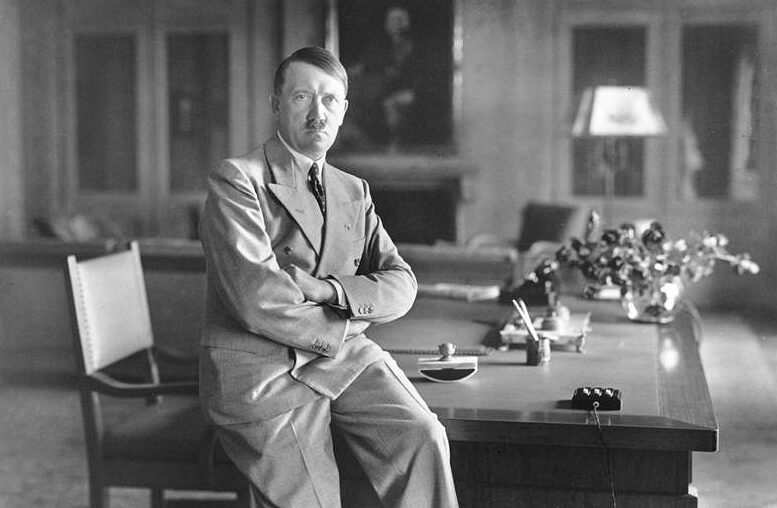
After World War I, the Treaty of Versailles (1919) imposed harsh penalties on Germany, including significant territorial losses, military restrictions, and reparations. Image: Adolf Hitler, serving as Germany’s head of state in 1934.
The treaty fostered widespread resentment and economic hardship in Germany, creating fertile ground for radical ideologies. Adolf Hitler and his National Socialist German Workers’ Party (Nazi Party) capitalized on this discontent, promoting a platform of German nationalism, anti-Semitism, and revisionism aimed at overturning the Versailles settlement.
Upon becoming Chancellor in 1933, Hitler rapidly consolidated power, transforming Germany into a totalitarian state. His foreign policy was aggressive, aiming to unite all German-speaking peoples and expand German territory. The reoccupation of the Rhineland in 1936, in violation of the Versailles Treaty, demonstrated his willingness to challenge the status quo.
The Sudetenland Crisis
The Sudetenland was a region of Czechoslovakia with a significant ethnic German population. Following the disintegration of the Austro-Hungarian Empire after World War I, the Treaty of Saint-Germain (1919) and the Treaty of Trianon (1920) established new national boundaries, including the creation of Czechoslovakia. Many ethnic Germans found themselves living in this new state, which led to tensions.
By the late 1930s, Hitler had begun to exploit these tensions, supporting the Sudeten German Party (SdP) led by Konrad Henlein, which demanded greater autonomy for the Sudeten Germans.

Henlein’s party pushed for demands that were increasingly radical, with clear backing from Berlin. The situation escalated throughout 1938, with Germany making increasingly aggressive moves. Image: Henlein (1898 – 1945).
The Munich Conference and Diplomatic Maneuvering
As tensions mounted, European leaders sought to avoid another war. British Prime Minister Neville Chamberlain and French Premier Édouard Daladier were particularly keen to find a peaceful resolution. They believed that by appeasing some of Hitler’s territorial demands, they could prevent a larger conflict. Italy’s dictator Benito Mussolini also played a mediating role.

On September 29-30, 1938, the leaders of Germany, Britain, France, and Italy met in Munich to discuss the crisis. Notably, Czechoslovakia and the Soviet Union, which had a mutual assistance treaty with Czechoslovakia, were excluded from the conference. Image: A picture of several heads of states prior to the signing of the agreement. From right to left: Galeazzo Ciano, Benito Mussolini, Adolf Hitler, Édouard Daladier, and Neville Chamberlain.
The Munich Agreement was reached after intense negotiations, with the main terms being that the Sudetenland would be ceded to Germany. An international commission would supervise the transfer, and other disputes would be settled through international arbitration.
Key Provisions of the Agreement
- Territorial Concessions: The Sudetenland would be transferred to Germany immediately, with the specifics of the transfer to be determined by an international commission.
- International Commission: This body was to oversee the details of the territorial transfer, ensuring that the process was orderly.
- Assurances of Peace: Hitler provided assurances that he had no further territorial ambitions in Europe.
Immediate Consequences
Reaction in Europe
The agreement was met with mixed reactions. Chamberlain famously declared that the Munich Agreement had achieved “peace for our time,” believing that the accord had averted a major war. Daladier, while less publicly optimistic, also hoped that the agreement would secure peace.
However, many were skeptical. Winston Churchill, then a backbencher in the British Parliament, criticized the agreement, warning that it was a case of sacrificing principles for temporary peace. In Czechoslovakia, the reaction was one of betrayal and disillusionment, as the country was not consulted in the decision-making process that led to the loss of its strategically vital border regions.
Strategic Implications

Moreover, the agreement emboldened Hitler, reinforcing his belief that the Western powers were unwilling to confront him militarily.
Long-term Impact
Prelude to World War II
The Munich Agreement is often seen as a prelude to World War II. In March 1939, in violation of the Munich Agreement, Hitler occupied the remainder of Czechoslovakia, demonstrating that his ambitions extended beyond merely uniting German-speaking peoples. This action shattered any remaining illusions about his intentions.
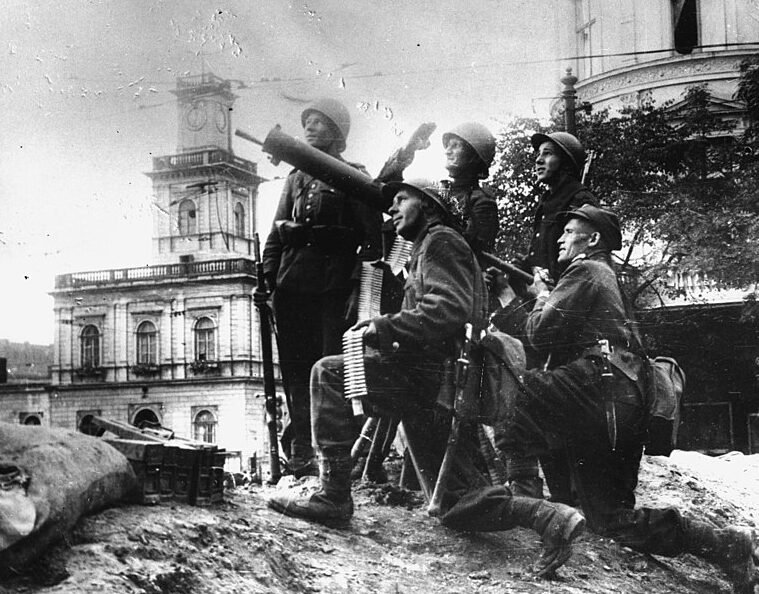
The invasion of Poland on September 1, 1939, marked the beginning of World War II. Britain and France, realizing the futility of further appeasement, declared war on Germany. Image: Polish soldiers during the Invasion.
The Munich Agreement thus stands as a failed attempt to secure peace through compromise with a totalitarian regime.
Lessons and Legacy
The Munich Agreement has become synonymous with the dangers of appeasement. It is frequently cited in discussions of international relations as an example of the perils of conceding to aggressive powers in the hope of maintaining peace. The phrase “Munich analogy” is often used to argue against making concessions to dictatorships or expansionist states.
The United States and its allies adopted a more confrontational stance towards the Soviet Union, preferring deterrence and containment over appeasement.
Historical Debate
Historians continue to debate the merits and consequences of the Munich Agreement. Some argue that Chamberlain and Daladier had few realistic alternatives, given their countries’ lack of preparedness for war and the public’s strong desire for peace. Others contend that a firmer stance might have deterred Hitler or at least delayed the onset of war.
In recent years, some revisionist historians have suggested that the agreement bought crucial time for Britain and France to rearm and prepare for the inevitable conflict. While this perspective acknowledges the agreement’s immediate negative consequences, it argues that the delay was strategically valuable.
Moral and Ethical Considerations
The Munich Agreement also raises important moral and ethical questions. The exclusion of Czechoslovakia from negotiations and the subsequent abandonment of the country are seen as a betrayal of a democratic ally. The agreement underscored the limits of diplomacy when faced with dictatorial regimes driven by expansionist ideologies.





