Who were the most powerful figures in the Nazi Party?
The Nazi Party, officially known as the National Socialist German Workers’ Party (NSDAP), was led and shaped by a cadre of powerful and influential figures who played critical roles in...

The Nazi Party, officially known as the National Socialist German Workers’ Party (NSDAP), was led and shaped by a cadre of powerful and influential figures who played critical roles in...
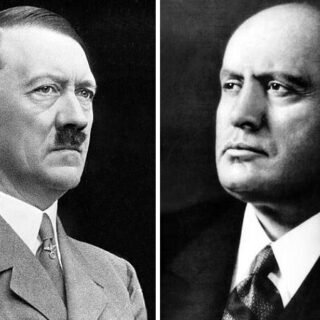
The Axis powers in World War II were a coalition of countries led primarily by three major nations: the German Reich, the Kingdom of Italy, and the Empire of Japan. These countries,...
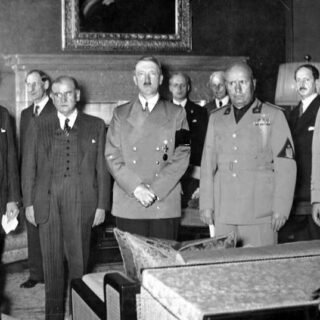
The Munich Agreement, signed on September 30, 1938, is one of the most significant and controversial diplomatic accords of the 20th century. It is often cited as a classic example...

The Treaty of Versailles, signed on June 28, 1919, marked the formal conclusion of World War I between the Allies and Germany. Its terms were harsh and had profound effects...

The alliance forged between Hitler’s Germany and Stalin’s Russia during the early stages of World War II is known as the Molotov-Ribbentrop Pact, also referred to as the Nazi-Soviet Pact...

Adolf Hitler’s failed attempt to seize power in 1923, famously known as the Beer Hall Putsch or the Munich Putsch, marked a critical juncture in his political career and the...
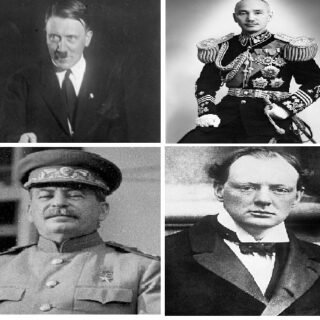
World War II (WWII) was a global conflict that involved many nations and leaders, each playing a crucial role in shaping the course of history. The war spanned from 1939 to...

D-Day, which took place on June 6, 1944, was a significant turning point in World War II and a major operation of the Allied forces to liberate western Europe from...

In less than a year after his appointment as Chancellor of Germany in 1933, Adolf Hitler managed to combine the positions of President and Chancellor, making himself the one who...

What are some of the most common examples of misinformation in history that many people often still hold to this day? With regard to our Founding Father George Washington, there...
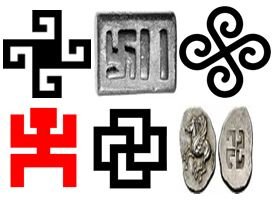
Worldhistoryedu.com provides an interesting look into the various meanings of the swastika – a symbol which goes way beyond the bad reputation brought on it by Nazi German during WWII....
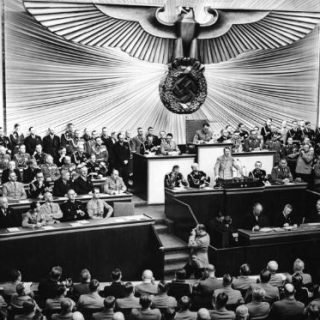
The Third Reich refers to the autocratic government that managed the affairs of Nazi Germany from the early part of 1933 to May 1945. With the ruthless dictator Adolf Hitler...

The following presents the timeline of major events that occurred during World War Two from start to finish. 1933 to 1938: The lead up to WW2 The leader of the...

In the months post the break out of World War II in 1939, Adolf Hitler’s side appeared to have secured significant victories during the early battles in France, Luxembourg, Belgium,...

Adolf Hitler was a brutal German dictator, infamous for instigating World War II and the Holocaust; events which took away millions of lives around the globe. His name has become...





