Seth’s Role in the Osiris Myth
Seth, one of the most complex and multifaceted gods in ancient Egyptian mythology, plays a pivotal role in the Osiris myth, one of the most significant and enduring stories of ancient Egypt. This myth not only illustrates Seth’s character but also encapsulates the eternal struggle between order and chaos, a central theme in Egyptian cosmology.
The Myth of Osiris and Isis
The Osiris myth begins with the reign of Osiris, the benevolent king who taught humanity agriculture and civilization. Osiris’s rule brought prosperity and harmony, embodying the principle of Ma’at, which represents truth, balance, and order. Osiris’s wife, Isis, is equally revered, known for her wisdom and magical prowess.
Seth, Osiris’s brother, is the antithesis of this order. He is the god of chaos, violence, and the desert. Motivated by jealousy and a desire for power, Seth conspires against Osiris to usurp the throne of Egypt. His actions set the stage for a dramatic narrative of betrayal, death, and the quest for justice.
The Murder of Osiris
The central act of the Osiris myth is Seth’s murder of Osiris. In one version of the story, Seth crafts an elaborate plan by hosting a grand feast. During the feast, he presents a beautifully decorated chest and declares that whoever fits perfectly inside it can claim it as a gift. Knowing Osiris’s exact dimensions, Seth ensures the chest is tailored to his brother’s size. When Osiris lies down in the chest, Seth and his accomplices slam the lid shut and seal it with molten lead, trapping Osiris inside. They then throw the chest into the Nile River, where it drifts away and eventually becomes embedded in a tamarisk tree.
In another version, Seth directly attacks Osiris, dismembering his body into fourteen parts and scattering them across Egypt. This brutal act of violence symbolizes Seth’s chaotic nature and his desire to dismantle the order Osiris represents.
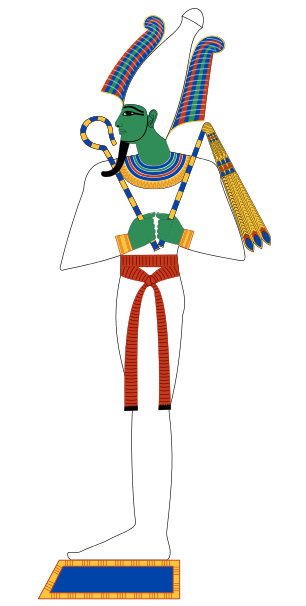
In the Osiris myth, Seth is the antagonist who murders Osiris out of jealousy and desire for the throne. Image: An illustration depicting Osiris.
The Search for Osiris
Isis, the devoted wife of Osiris, embarks on a relentless quest to find her husband’s body. Her journey is arduous, filled with trials and tribulations, but her determination and magical abilities guide her. In the version where Osiris’s body is dismembered, Isis, with the help of her sister Nephthys and other deities like Anubis and Thoth, searches for and collects the scattered pieces of Osiris’s body. This act of reassembling Osiris signifies the restoration of order from chaos.
In the narrative where Osiris is trapped in the chest, Isis discovers the location of the chest and retrieves it. She hides it in a marsh, but Seth finds it again and dismembers Osiris’s body, leading to the same quest for the body parts.
The Resurrection of Osiris
After reassembling Osiris’s body, Isis uses her magical powers to temporarily bring Osiris back to life. This resurrection is crucial, as it allows Osiris to impregnate Isis, leading to the conception of Horus, their son. Osiris’s resurrection is not permanent; he transitions to the afterlife, becoming the ruler of the Duat, the Egyptian underworld. As the lord of the afterlife, Osiris presides over the judgment of souls, embodying the principles of justice and eternal life.
The Birth and Rise of Horus
The birth of Horus marks the next phase of the myth. Isis raises Horus in secrecy to protect him from Seth’s wrath. As Horus grows, he becomes the embodiment of rightful kingship, destined to avenge his father and restore order to Egypt. The conflict between Horus and Seth represents the struggle between rightful rule and usurpation, order and chaos.

The Battle for the Throne
The contest between Horus and Seth for the throne of Egypt is long and arduous, lasting eighty years according to some versions of the myth. This battle includes various trials and challenges, overseen by the assembly of gods. The conflict takes many forms, from direct combat to legal battles, showcasing both the physical and moral dimensions of their struggle.
One notable episode is the boat race, where Horus and Seth compete in stone boats. Horus, using cunning and wisdom, builds a wooden boat disguised as stone, while Seth’s stone boat sinks. This event highlights Horus’s ingenuity and Seth’s brute strength.
The Resolution
The resolution of the myth varies in different versions. In many accounts, Horus ultimately triumphs, avenging his father’s murder and claiming his rightful place as the king of Egypt. His victory symbolizes the restoration of Ma’at and the defeat of chaos. Seth is often depicted as being punished or banished, but his presence remains essential in maintaining cosmic balance.
In other versions, the gods, led by Ra, decree a compromise. Horus becomes the ruler of the living, while Seth is given dominion over the desert and foreign lands. This division reflects the Egyptian belief in balance, where both order and chaos have their place in the cosmos.
Symbolism and Themes
Seth’s role in the Osiris myth is multifaceted. He is the antagonist, the disruptor of order, but his actions are crucial in the grand scheme of Egyptian cosmology. The myth underscores the inevitability of conflict in the struggle for power and the necessity of balance between opposing forces.
Seth’s betrayal and Osiris’s resurrection highlight themes of death and rebirth, a central motif in Egyptian religion. The myth also emphasizes the importance of rightful leadership, as Horus’s victory represents the triumph of legitimacy and justice over usurpation and chaos.
Legacy and Interpretation
The Osiris myth, with Seth as a central figure, has endured through millennia, influencing not only Egyptian culture but also later religious and mythological traditions. Seth’s character, embodying both the necessary and destructive aspects of existence, continues to be a subject of fascination and interpretation in modern scholarship and popular culture.

Seth’s role in the Osiris myth is integral to understanding the ancient Egyptian worldview. His actions set the narrative in motion, leading to a profound exploration of life, death, and the eternal struggle for balance. Image: An artwork portraying Seth.
Frequently Asked Questions about Seth in Ancient Egyptian Mythology
Seth, also known as Set, Setesh, or Sutekh, is a god in ancient Egyptian mythology associated with chaos, violence, deserts, storms, and foreigners. He is one of the oldest deities in the Egyptian pantheon, with a complex character and a dual nature of both beneficence and malevolence.
Below are some frequently asked questions about this ancient Egyptian god:
What are Seth’s primary attributes and symbols?
Seth is often depicted with a unique animal head, known as the “Set animal” or “Typhonic beast,” which has features resembling a composite of different animals, such as a donkey, aardvark, or jackal. His symbols include the was-scepter, which represents power and dominion, and the ankh, symbolizing life.
What are some of the key myths involving Seth?
One of the most famous myths involving Seth is his conflict with his brother Osiris. Seth is notorious for killing Osiris, dismembering his body, and scattering the pieces across Egypt. This act sets off a series of events where Isis, Osiris’s wife, reassembles his body and resurrects him long enough to conceive their son, Horus. Another significant myth is the prolonged battle between Seth and Horus for the throne of Egypt, symbolizing the struggle between order and chaos.
How was Seth worshiped in ancient Egypt?
Despite his chaotic and violent nature, Seth was worshiped in various regions, especially in Upper Egypt and the oases of the Western Desert. He was considered a protector of Ra, the sun god, in his nightly journey through the underworld, where Seth fought the serpent Apophis. In times of foreign invasion, Seth was also invoked as a deity who could protect Egypt from its enemies.
How did Seth’s character change over time in Egyptian mythology?
Initially, Seth was a complex god with both positive and negative aspects. He was revered as a god of strength and power, essential for the balance of the cosmos. However, during the New Kingdom period and later, his image became more negative, particularly due to the association with foreign invaders like the Hyksos, who venerated Seth. Over time, he became more demonized, symbolizing chaos and evil.
What are some common depictions of Seth in Egyptian art?
Seth is commonly depicted as a man with the head of the mysterious Set animal, characterized by a curved snout, square ears, and a forked tail. He is often shown wielding the was-scepter, and in scenes of divine conflict, he is portrayed battling Horus or protecting Ra from Apophis.
Are there any temples dedicated to Seth?
Yes, there were several temples dedicated to Seth throughout ancient Egypt. Notably, the temple of Ombos (Kom Ombo) in Upper Egypt was a significant center of his worship. Additionally, Seth had a prominent temple in the city of Avaris, the capital of the Hyksos rulers, who particularly favored him.
How does Seth’s mythology reflect ancient Egyptian views on chaos and order?
Seth’s mythology encapsulates the ancient Egyptian concept of ma’at (order) versus isfet (chaos). While Seth embodies chaos and disruption, his existence is essential to the balance of the cosmos. His battles with Horus and Apophis symbolize the perpetual struggle between order and chaos, demonstrating the Egyptians’ belief in the necessity of maintaining balance and harmony in the universe.
How does Seth’s relationship with other gods reflect his complex nature?
Seth’s relationships with other gods are multifaceted. His animosity towards Osiris and Horus contrasts with his role as a protector of Ra. Additionally, his marriage to Nephthys, and sometimes to Anat and Astarte, goddesses of war, further illustrate his dual nature. These relationships highlight the complexity of his character, encompassing both destructive and protective elements.
What lessons or morals can be drawn from the stories involving Seth?
The stories involving Seth offer several lessons and morals, such as the importance of justice, the inevitability of conflict in the struggle for power, and the necessity of balance between opposing forces. The triumph of Horus over Seth underscores the victory of order over chaos, emphasizing the value of perseverance, legitimacy, and the restoration of balance.
How did Seth’s mythology influence later cultures and religions?
Seth’s mythology had a lasting impact on later cultures and religions, particularly in the representation of evil and chaotic forces. His character influenced the development of similar deities and demons in other cultures’ mythologies. In some interpretations, elements of Seth’s mythos can be seen in later religious narratives that involve battles between good and evil.
Why is Seth sometimes associated with foreign lands and people?
Seth’s association with foreign lands and people stems from his characterization as a god of the desert and chaos, often linked with regions outside the Nile valley. During the Hyksos period, who were foreign rulers in Egypt, Seth became more closely associated with foreigners. This connection further solidified his role as a deity who could both threaten and protect Egypt from external threats.
How is Seth viewed in modern interpretations of Egyptian mythology?
In modern interpretations, Seth is often viewed as a symbol of the necessary but disruptive forces within the universe. Scholars and enthusiasts appreciate his complex nature and the way his mythology reflects the ancient Egyptian worldview. Contemporary portrayals in literature, art, and media continue to explore his dual aspects, emphasizing the enduring fascination with his character.
Are there any modern cultural references to Seth?
Yes, Seth appears in various modern cultural references, including literature, films, video games, and television series. His character is often adapted to fit contemporary narratives, representing themes of chaos, power, and conflict. These references continue to keep the ancient mythology of Seth alive and relevant in popular culture.