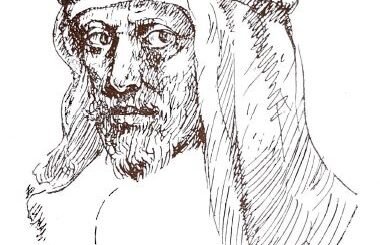
Abdülmecid II: the last Caliph of Islam from the Ottoman dynasty

Abdülmecid II, the last caliph of Islam from the Ottoman dynasty, lived through one of the most tumultuous periods in Islamic and Ottoman history. His life was marked by the fall of the Ottoman Empire, the abolition of the caliphate, and the rise of modern Turkey.
Abdülmecid II, the final caliph of the Ottoman Dynasty and the last holder of the Islamic caliphate, played a significant yet often overlooked role in the closing chapter of the Ottoman Empire. The institution of the caliphate, which traces its origins back to the time of Prophet Muhammad and was seen as a symbol of leadership for the Muslim world, ended with him. His life spanned a period of dramatic change in the Muslim world, as the Ottoman Empire collapsed, the caliphate was abolished, and Turkey emerged as a modern republic.
Below, World History Edu provides a detailed exploration of the life, legacy, and significance of Abdülmecid II, covering his early life, his ascension to the caliphate, the role he played during his tenure, and the impact of the abolition of the caliphate in 1924.
Early Life and Background
Born on May 29, 1868, in Istanbul, Abdülmecid II was a member of the Ottoman imperial family, descended from Sultan Mahmud II. He was the son of Sultan Abdülaziz, who ruled the Ottoman Empire from 1861 until he was deposed in 1876. Abdülmecid grew up during a period of significant change in the empire. The Ottoman state was struggling to maintain its territories and influence, facing increasing pressure from European powers and internal dissidence.
Abdülmecid II received a privileged education typical of Ottoman princes, which included instruction in Islamic studies, modern sciences, and the arts. He was fluent in several languages, including Turkish, Arabic, French, and Persian. A cultured man, Abdülmecid had a particular passion for painting, music, and literature, and he became an accomplished painter known for his artistic works, including portraits and landscapes.
Abdülmecid’s political career, however, would not begin until much later in life. When his father was deposed and died under suspicious circumstances in 1876, Abdülmecid was still a young boy. The turbulent period of Ottoman history, marked by the short reigns of his uncle, Sultan Murad V, and later his cousin, Sultan Abdülhamid II, would shape the young prince’s life.

Image: Abdulmejid II with his daughter Dürrüşehvar and fourth wife Mehisti Hanım
The Fall of the Ottoman Empire
The Ottoman Empire, once a dominant power stretching across Europe, Asia, and Africa, had been in decline for centuries by the time Abdülmecid II came of age. Throughout the 19th century, the empire had lost vast territories in Europe, Africa, and the Middle East. Internal strife, nationalist movements within its multi-ethnic population, and external pressures from rising European powers eroded the empire’s strength.
Sultan Abdülhamid II, who ruled from 1876 to 1909, attempted to preserve the empire by asserting autocratic control and promoting pan-Islamism as a unifying ideology, casting himself as the caliph, or spiritual leader, of Muslims worldwide. However, his rule also sparked discontent, and in 1908, the Young Turk Revolution, led by a group of military officers and intellectuals, forced the sultan to restore the constitution and allow a constitutional monarchy. Abdülhamid II was deposed in 1909, and his brother, Sultan Mehmed V, took the throne, ruling as a figurehead while real power lay with the Young Turk leaders.
The empire’s involvement in World War I proved disastrous. Siding with the Central Powers, the Ottomans suffered massive defeats, and by the end of the war in 1918, the empire was on the verge of collapse. The Treaty of Sèvres, signed in 1920, sought to partition the empire among the Allied powers, leaving the Ottomans with a small portion of their former lands.
Abdülmecid’s Ascension to the Caliphate
In 1922, the Ottoman Sultanate was officially abolished by Mustafa Kemal Atatürk and the Turkish National Assembly, marking the end of over six centuries of Ottoman rule. Sultan Mehmed VI, the last Ottoman sultan, was deposed and went into exile. However, the institution of the caliphate remained intact, and Abdülmecid II, as a prominent member of the Ottoman family, was chosen to succeed as the caliph, though without any political power. He assumed the title of Caliph of Islam on November 19, 1922.
Abdülmecid II’s position was largely symbolic. The new Turkish government, led by Mustafa Kemal Atatürk, sought to distance itself from the Ottoman legacy and the religious authority of the caliphate. Atatürk’s vision for Turkey was a modern, secular state, and the role of the caliph was limited to religious matters without any political influence. Despite this, Abdülmecid II was still regarded with reverence by many Muslims around the world, who viewed him as the spiritual leader of the ummah (the global Muslim community).
As caliph, Abdülmecid II maintained a modest court in Istanbul, and his duties were largely ceremonial. He continued to pursue his artistic interests and avoided involvement in political matters, focusing on his role as a religious figurehead. Nevertheless, his mere presence posed a challenge to the secular ambitions of the new Turkish Republic.
Abolition of the Caliphate

Image: “The Last Caliph,” an illustration in Le Petit Journal illustré, March 1924, published soon after the caliphate’s abolition.
Mustafa Kemal Atatürk’s determination to modernize Turkey and break with its Ottoman past culminated in the abolition of the caliphate on March 3, 1924. The Turkish National Assembly passed a law that not only abolished the caliphate but also sent Abdülmecid II and the remaining members of the Ottoman family into exile. This marked the end of the caliphate, an institution that had existed for nearly 1,300 years.
The abolition of the caliphate was a monumental decision, as it severed the last formal link between the Ottoman dynasty and the Muslim world. The decision was met with shock and dismay by many Muslims around the world, particularly in regions such as India and Egypt, where the caliphate was seen as a unifying symbol for the Islamic world. However, Atatürk’s actions were part of his broader efforts to secularize and modernize Turkey, and he viewed the caliphate as an outdated institution incompatible with his vision for the new republic.
Abdülmecid II was given only 24 hours to leave Turkey, and he was forced into exile in France. He settled in Paris and later Nice, living a quiet life focused on his art and writing. Despite his forced departure from Turkey, Abdülmecid II continued to be a respected figure among Muslims, though his influence was greatly diminished.
Abdülmecid’s Life in Exile
In exile, Abdülmecid II led a life of relative obscurity, though he continued to receive visitors and correspond with Muslim leaders from around the world. He remained an important figure for those who lamented the loss of the caliphate and hoped for its restoration. His refined manner, artistic talents, and personal dignity earned him respect even from those who did not share his Ottoman loyalties.
Abdülmecid lived in Nice, France, in a villa he had purchased. His financial situation was not as dire as that of many other exiled royals, thanks in part to his personal investments and the support of wealthy friends. During his time in France, he dedicated himself to painting and other artistic pursuits. He continued to paint, producing works that were exhibited in galleries, earning him a reputation as a talented artist.
Despite his exile, Abdülmecid continued to play a symbolic role for some Muslims. His supporters, particularly in India, launched efforts to restore the caliphate. The Khilafat Movement, a political campaign by Indian Muslims, sought to preserve the caliphate as a unifying institution for Muslims after World War I. However, with Abdülmecid in exile and Atatürk firmly in control of Turkey, these efforts ultimately failed.

Abdulmejid was officially informed of his dethronement in March 1924. Exiled from his homeland and stripped of political power, he found solace in the arts, leaving behind a rich cultural legacy that complemented his role as the spiritual leader of Muslims during the last days of the Ottoman caliphate.
Legacy and Significance
Abdülmecid II’s reign as caliph was brief and largely ceremonial, but his significance as the last caliph of Islam from the Ottoman dynasty should not be underestimated. His life represents the final chapter of an era that spanned centuries, during which the Ottoman Empire played a central role in the political, religious, and cultural life of the Muslim world.
The abolition of the caliphate marked a profound turning point in Islamic history. For many Muslims, the caliphate was not only a political institution but also a symbol of religious unity and continuity dating back to the time of Prophet Muhammad. The end of the caliphate was seen as the end of an era, and it left a void in the leadership of the Muslim world that has never been filled.
While Abdülmecid II was not a political leader like the sultans who preceded him, his role as caliph gave him a unique place in history. His life reflected the complex and often painful transition from empire to modernity, as the Ottoman Empire’s centuries-old structures were dismantled in the face of new political realities.
Abdülmecid’s personal qualities—his dignity, artistic talent, and intellect—earned him respect in exile and helped preserve the memory of the Ottoman caliphate long after it had been abolished. His legacy is intertwined with the larger history of the Ottoman Empire’s decline and the emergence of modern Turkey under Atatürk.
Abdülmecid II and the End of the Caliphate in the Muslim World
The abolition of the caliphate in 1924 not only ended the Ottoman dynasty’s connection to the Muslim world but also raised questions about leadership and unity within the broader Islamic community. The caliphate had long served as a symbol of Islamic authority, and while it had lost much of its political power by the time of Abdülmecid II, it still held immense religious and cultural significance.
For many Muslims, particularly in India, the caliphate represented a bond that transcended national borders and provided a sense of continuity with the early days of Islam. The loss of the caliphate was therefore deeply felt, especially in regions where the caliphate had been a source of spiritual and moral authority.
In the years following the abolition, various Muslim leaders and intellectuals debated the possibility of restoring the caliphate or creating a new form of leadership for the Muslim world. Some argued that a modern caliphate was necessary to unify the ummah, while others believed that the time of the caliphate had passed and that new political models were needed.
To this day, the question of the caliphate remains a point of discussion in the Muslim world, though no serious attempt to revive the institution has been made. Abdülmecid II’s life and the end of the caliphate symbolize the complex relationship between tradition and modernity in the Muslim world, and the challenges of navigating that transition.
Abdülmecid II’s Contributions to Art and Culture
While Abdülmecid II’s role as caliph is his most notable contribution to history, his artistic achievements are also significant. As a skilled painter, Abdülmecid left behind a body of work that reflects his deep interest in European and Ottoman artistic traditions. His works often depicted scenes from Ottoman history, portraits of notable figures, and landscapes. His ability to bridge Ottoman and European artistic styles is a testament to his cosmopolitan upbringing and broad intellectual interests.
Abdülmecid’s involvement in the arts also highlights the cultural diversity of the Ottoman court during its final years. He was one of several Ottoman princes who were well-educated and engaged in various cultural pursuits, from music and literature to painting. His legacy in the arts remains a lesser-known but important aspect of his life, and his works continue to be appreciated in art circles today.
Questions and Answers

Abdülmecid II was the last Ottoman caliph and the only caliph of the Republic of Turkey. He served as the head of the Osmanoğlu family from 1926 to 1944. Image: Caliph Abdulmejid II, the last Caliph of the Ottoman Dynasty
What title did Abdülmecid II use as caliph, and how was it different from previous caliphs?
Abdülmecid II used the title Halîfe-i Müslimîn (Caliph of the Muslims), while previous caliphs used Emîrü’l-Mü’minîn (Commander of the Faithful).
Besides being a caliph, what were Abdülmecid II’s other interests?
Abdülmecid II was a notable artist and aesthete, with a strong interest in promoting art, literature, painting, and music in Turkey.
What happened to the caliphate after the abolition of the Ottoman caliphate in 1924?
After the abolition of the Ottoman caliphate, Abdülmecid II remained a symbolic figure for a brief time, but the caliphate was eventually abolished entirely. An attempt to continue it under Hussein bin Ali, recognized mainly in the Arab world, also failed.
Where did Abdülmecid II spend his final years, and where was he buried?
Abdülmecid II spent his final years in exile in Paris, where he passed away in 1944. He was buried as a caliph in Medina, marking the end of the Ottoman caliphate.

Though Abdülmecid II’s tenure as caliph was brief and largely symbolic, his legacy endures as the final representative of a centuries-old institution that once played a central role in the Muslim world.