History, Facts and Major Accomplishments of the Ottoman Empire, an Islamic Superpower
The Ottoman Empire, which spanned over 600 years from the late 13th century to the early 20th century, stands as one of history’s most influential empires. Its expanse at its zenith stretched from the Arabian Peninsula in the south, deep into Europe in the north, and as far east as Persia. A blend of military prowess, administrative efficiency, and a rich cultural legacy make the Ottomans a fascinating study in the annals of world history.

Following the conquest of Constantinople by the Ottoman Turks, Mehmed the Conqueror rode straight to the Hagia Sophia and asked that the building not be harmed. Shortly after he called for an imam to lead a Muslim prayer in the church, which later got converted into a Mosque.
Origins
The foundation of the Ottoman Empire can be traced back to the small Anatolian state established by Osman I around 1299. As the Byzantine Empire waned, Osman’s realm expanded, absorbing Byzantine territories. The name “Ottoman” is derived from Osman’s name.
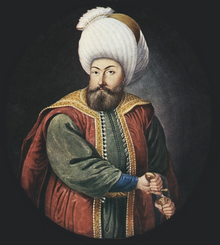
Osman I – founder of the dynasty
Expansion & Consolidation
The empire’s early success was built on military expansion. Constantinople’s capture in 1453 by Mehmed the Conqueror was a seminal moment, turning the empire into a transcontinental dominion. The city, renamed Istanbul, became the empire’s new capital.
Under Selim I, the Ottomans defeated the Mamluks, claiming Egypt, the Arabian Peninsula, and the sacred Islamic cities of Mecca and Medina. This victory gave the Ottoman sultan the title of Caliph, the Islamic world’s religious and political leader.
Suleiman the Magnificent’s reign (1520-1566) marked the empire’s golden age. Territory-wise, it reached its zenith, stretching from Hungary in Europe to Iraq in the Middle East and Algeria in North Africa. Suleiman was not only a military strategist but also a skilled administrator. He revamped the legal system, integrating Sharia with customary law, ensuring justice and stability in his dominions.

Suleiman the Magnificent Suleiman the Lawgiver – Portrait of Suleiman by Titian c. 1530
Administration and Governance

Ottoman Empire, Coat of arms
One of the empire’s most distinctive features was its administrative structure. The millet system allowed various religious communities (Christian, Jewish, etc.) to govern themselves under their laws. While non-Muslims paid the jizya (tax), they were, in turn, exempted from military service and enjoyed relative autonomy.
The Janissaries, elite infantry units composed mostly of Christian boys taken through the devshirme system and converted to Islam, formed the empire’s backbone. Trained in the palace school, they became formidable soldiers and held significant political clout.
Economic and Cultural Achievements of the Ottoman Empire
Istanbul flourished as a global trade hub, connecting Europe, Asia, and Africa. The empire’s strategic position meant it controlled significant trade routes, including the Silk Road’s remnants.
Culturally, the empire was a crucible. Ottoman architecture, characterized by domed mosques and ornate palaces like the Hagia Sophia’s conversion and the Topkapi Palace, was influential. Art, music, and literature blossomed, as did sciences. Institutions of learning and libraries, like the Suleymaniye Library, were established, turning the empire into knowledge repositories.

Decline of the Ottoman Empire

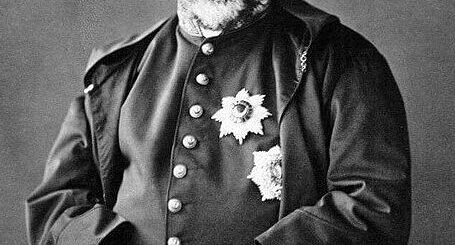
Ottoman Empire timeline – Mehmed VI, the last Sultan of the Ottoman Empire, leaving the country after the abolition of the Ottoman sultanate, 17 November 1922
Post the 17th century, the empire began its slow decline. A combination of internal strife, military defeats, and increasing European powers’ challenges chipped away at its dominance. The empire’s vastness made centralized control difficult. Innovations stagnated, and the empire, once a leader in various fields, began to lag behind Europe.
Modernization and Western Influence
By the 19th century, it became evident that reforms were essential for survival. Efforts to modernize began, heavily influenced by Western models. The Tanzimat reforms (1839-1876) aimed to modernize the empire legally, institutionally, and infrastructurally, guaranteeing all citizens equality irrespective of religion. This era saw the decriminalization of homosexuality and the introduction of the first Ottoman paper currency.
The Young Turks, a revolutionary group, furthered these reforms in the early 20th century, advocating for secularism, modernization, and a constitution.

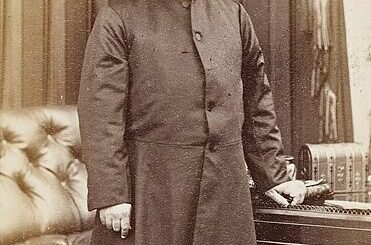
Caliph Abdulmejid II, the last Caliph of the Ottoman Dynasty
World War I and Dissolution
The empire’s fate was sealed with its involvement in World War I, aligning with the Central Powers. The war drained its already dwindling resources. Arab revolts, facilitated by British agents like T.E. Lawrence, further weakened it from within.
After the war, victorious allies partitioned the empire. The Treaty of Sèvres in 1920 sought to dissect its territories, leaving a small Anatolian heartland. However, the treaty was never ratified.
Rise of Modern Turkiye

In 1923, the Turkish Republic was founded upon what was left of the Ottoman Empire, which had lost an enormous amount of territories in southeastern Europe, North Africa, and the Middle East | Image (L-R): Flag of the Republic of Turkey, and Mustafa Kemal Atatürk, founder of modern Turkey
Mustafa Kemal Atatürk emerged as a key figure post-WWI. Opposing the empire’s partition, he led the Turkish War of Independence, resulting in the Treaty of Lausanne in 1923, which recognized modern Turkey’s borders. The Ottoman sultanate was abolished in 1922, and in 1923, the Republic of Turkey was established with Atatürk as its first president. He undertook a series of radical reforms, turning Turkey (now known as Turkiye) into a secular, modern nation-state.