8 Most Famous Islamic Holidays
Islamic holidays hold great spiritual and communal significance for Muslims around the world. These events, rooted in Islamic tradition and the lunar calendar, offer opportunities for worship, charity, and celebration. The holidays range from joyous feasts to solemn occasions of remembrance, each highlighting core principles of Islam such as faith, compassion, and unity. Below is an exploration of the eight most famous Islamic holidays, with insights into their origins, practices, and meanings.
Eid al-Fitr: The Festival of Breaking the Fast
Eid al-Fitr marks the end of Ramadan, a holy month of fasting from dawn to sunset. It is a day of gratitude, celebration, and giving, emphasizing the importance of family and community.
Eid al-Fitr celebrates the completion of a month-long spiritual journey of fasting and self-discipline. It reminds Muslims of the blessings they enjoy and the duty to help those less fortunate.

Mughal emperor, Bahadur Shah Zafar presiding over an Eid al-Fitr procession in Mughal-era Delhi, present-day India.
Practices
- Prayers: The day begins with a special congregational prayer (Salat al-Eid) held in mosques or open spaces.
- Charity (Zakat al-Fitr): Muslims perform acts of charity to ensure that everyone can participate in the festivities.
- Celebrations: Families gather for meals, exchange gifts, and visit friends and relatives.
Eid al-Adha: The Festival of Sacrifice
Eid al-Adha commemorates the willingness of Prophet Ibrahim (Abraham) to sacrifice his son in obedience to God’s command. It coincides with the Hajj pilgrimage in Mecca.
The two main Islamic holidays are Eid al-Fitr (celebrated after Ramadan) and Eid al-Adha (during the Hajj season).
The holiday highlights themes of devotion, sacrifice, and charity. It serves as a reminder of the ultimate submission to God’s will.
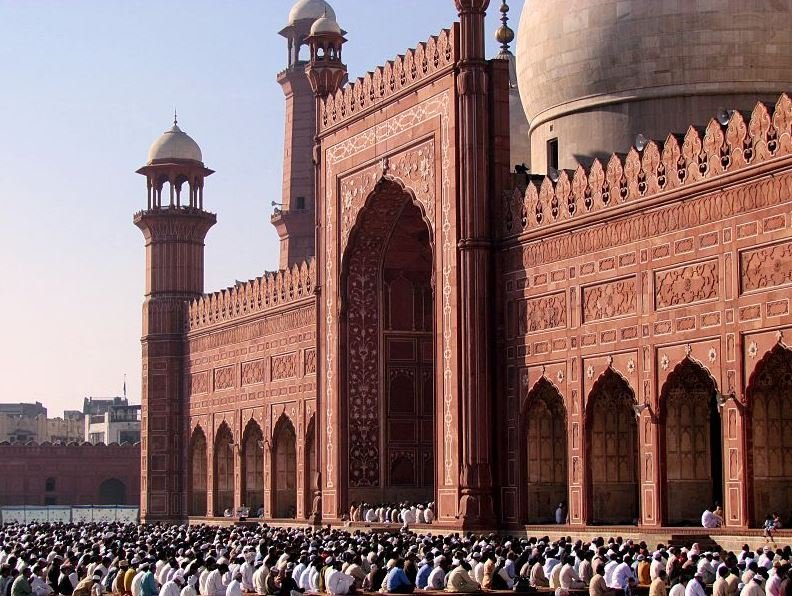
Eid prayer held at Lahore’s Badshahi Mosque in Pakistan.
Practices
- Animal Sacrifice: Muslims slaughter a sheep, goat, cow, or camel and distribute the meat among family, friends, and the needy.
- Prayers: Special prayers and sermons emphasize the story of Prophet Ibrahim and its lessons.
- Hajj Connection: For those performing Hajj, Eid al-Adha is the culmination of a sacred pilgrimage.
Ramadan: The Month of Fasting
Though not a holiday in itself, Ramadan is central to Islamic life and leads to the celebration of Eid al-Fitr. Observed during the ninth month of the Islamic calendar, it commemorates the revelation of the Quran to Prophet Muhammad.Ramadan fosters spiritual growth, self-discipline, and compassion. It provides Muslims with an opportunity to purify their hearts and connect with God.
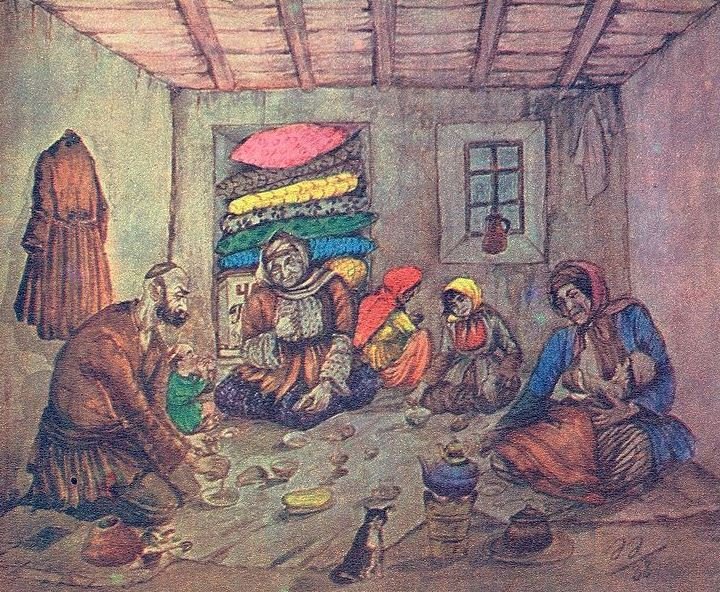
Painting by Azerbaijani artist Azim Azimzade depicting a breaking of fasting during Ramadan.
Practices
- Fasting: Muslims refrain from food, drink, and other physical needs from dawn to sunset.
- Night Prayers: Taraweeh prayers are offered in mosques during Ramadan nights.
- Charity: Acts of generosity and service are encouraged, reinforcing the spirit of community.
Laylat al-Qadr: The Night of Power
Laylat al-Qadr, observed during the last ten nights of Ramadan, is considered the holiest night in Islam. It marks the night when the Quran was first revealed.
This night is described in the Quran as being “better than a thousand months” (Surah Al-Qadr). It is believed that prayers and good deeds performed on this night bring immense blessings.
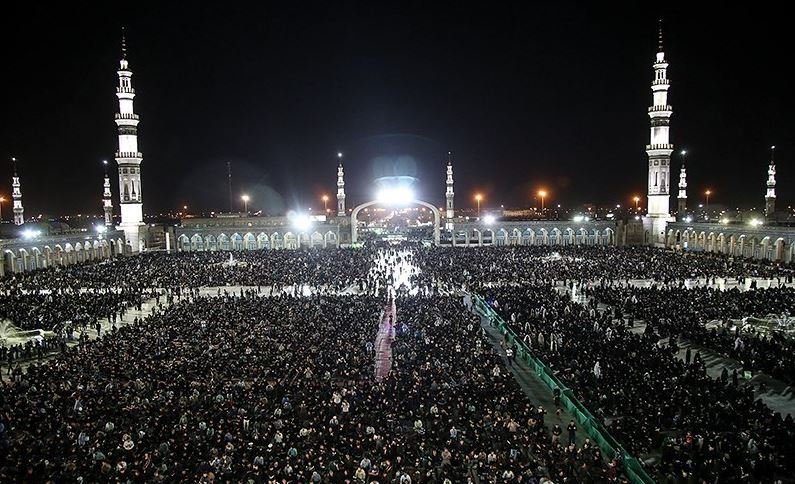
Iranians gathered at Jamkaran Mosque to observe the sacred Qadr Night.
Practices
- Night Vigil: Muslims stay awake in prayer, seeking forgiveness and blessings.
- Quran Recitation: Devotees engage in reciting and reflecting on the Quran.
- Acts of Worship: Supplication, charity, and dhikr (remembrance of God) are emphasized.
Islamic New Year (Hijri New Year)
The Islamic New Year, or Hijri New Year, marks the beginning of the lunar Islamic calendar. It is a time to reflect on the Hijrah, the migration of Prophet Muhammad from Mecca to Medina.
The Hijrah symbolizes a turning point in Islamic history, establishing the first Muslim community and fostering unity.
Practices
- Reflection: Muslims ponder over the lessons of the Hijrah and the sacrifices made by early Muslims.
- Spiritual Renewal: The day is often observed with prayers and supplications for a blessed year ahead.
Ashura
Ashura is observed on the 10th day of Muharram, the first month of the Islamic calendar. While it holds significance for all Muslims, it is especially meaningful for Shia Muslims as a day of mourning for the martyrdom of Imam Hussain, the grandson of Prophet Muhammad, at the Battle of Karbala.
Ashura highlights themes of sacrifice, justice, and the struggle against oppression. For Sunni Muslims, it is also a day of fasting, commemorating the deliverance of Prophet Musa (Moses) and the Israelites from Pharaoh.
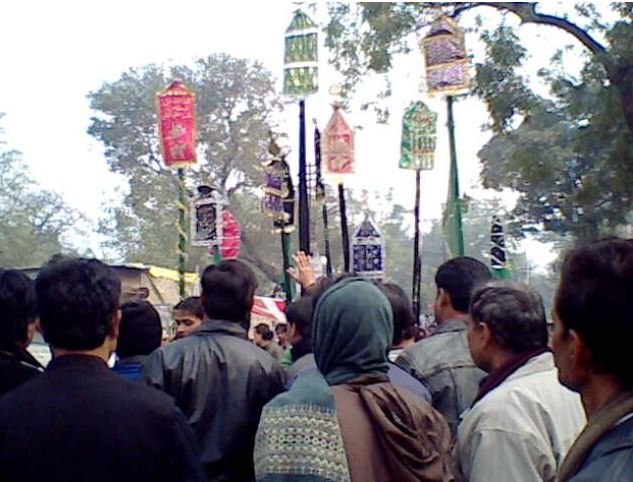
A solemn Ashura procession taking place in India.
Practices
- Shia Observances: Mourning rituals, processions, and recitations of the story of Karbala.
- Sunni Observances: Fasting as a form of gratitude for divine blessings.
Mawlid an-Nabi: The Prophet’s Birthday
Mawlid an-Nabi celebrates the birth of Prophet Muhammad, observed on the 12th day of Rabi al-Awwal in most Islamic traditions.
The occasion serves as a reminder of the Prophet’s teachings, character, and contributions to humanity.
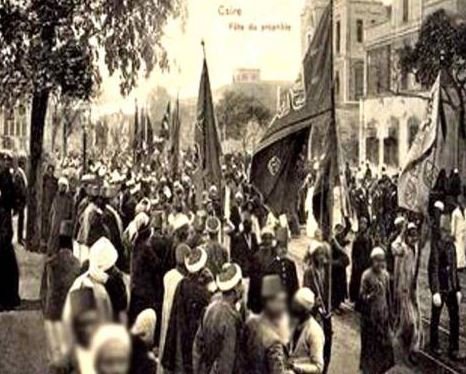
In 1904, a vibrant Mawlid an-Nabi procession made its way down Boulac Avenue in Cairo, Egypt.
Practices
- Recitations and Lectures: Gatherings include recitations of poetry and speeches about the Prophet’s life and message.
- Charity: Acts of kindness and generosity reflect the values espoused by Prophet Muhammad.
- Community Celebrations: Decorations, parades, and communal meals mark the day.
Why are images of Prophet Muhammad often avoided in Islamic art? – History and Major Facts
Hajj: The Pilgrimage
Hajj, one of the Five Pillars of Islam, is an annual pilgrimage to Mecca that every able-bodied Muslim with financial means is required to undertake once in their lifetime.
Hajj represents the unity of Muslims and their submission to God. It commemorates the actions of Prophet Ibrahim, Hajar, and Ismail in the sacred land of Mecca.

The Kaaba during Hajj is a profound sight, surrounded by millions of pilgrims dressed in white.
Practices
- Rites of Hajj: Pilgrims perform specific rituals, including Tawaf (circling the Kaaba) and Sa’i (walking between Safa and Marwah).
- Day of Arafah: A day of intense prayer and repentance, considered the pinnacle of the Hajj experience.
- Global Unity: Hajj fosters a sense of brotherhood as Muslims from diverse backgrounds come together.
Major Calendars in Human History: Origins, Structures, & Impacts on Societies
Frequently Asked Questions
How is the Islamic calendar different from the Gregorian calendar?
The Islamic calendar is lunar-based and about 11 days shorter than the solar Gregorian calendar.
When does Eid al-Fitr occur, and how is it celebrated?
It occurs on 1 Shawwal, after the fasting month of Ramadan, and is celebrated with prayers, meals, and acts of charity (zakat).
What is the significance of Eid al-Adha?
Celebrated on 10 Dhu al-Hijjah, it commemorates the willingness of Ibrahim to sacrifice his son. Muslims distribute meat from sacrificed animals to family, friends, and the poor.
What is the holiest night and day in Islam?
Laylat al-Qadr (Night of Power) during Ramadan is the holiest night, and the Day of Arafah before Eid al-Adha is the holiest day.
What is the role of fasting in Ramadan?
Muslims fast from dawn to sunset to purify their souls, develop compassion, and deepen their faith.
What are Friday prayers (Juma), and why are they significant?
Fridays are considered holy, with communal prayers held at mosques, and Muslims are encouraged to wear clean clothes and share special meals.
How do the Islamic holidays’ dates vary annually?
Due to the lunar calendar, Islamic holidays shift by about 11 days each year on the Gregorian calendar.





