How do the Sirens lure sailors to their doom?

The Sirens were dangerous creatures who lured sailors to their deaths with their enchanting music and voices. They lived on rocky islands and, when sailors were drawn in by their song, they would crash their ships on the rocks and perish. Image: Ulysses and the Sirens (1891) by English painter John William Waterhouse.
The Sirens of Greek mythology are infamous for their deadly ability to lure sailors to their doom. These half-woman, half-bird creatures lived on rocky islands, where they used their enchanting songs and mesmerizing voices to attract sailors, causing them to crash their ships on the jagged coastlines or drown as they drew closer to the irresistible sound.
Origins and Nature of the Sirens
The Sirens first appear in Greek literature as dangerous and seductive creatures associated with the sea. In early myths, they are depicted with both avian and human features, typically shown as women with bird-like bodies, though later interpretations sometimes describe them as fully human. They are often linked with death and destruction, both as symbols of the treacherous nature of the sea and as figures representing temptation and the consequences of indulgence.
The Sirens are usually described as the daughters of the river god Achelous and one of the Muses or another deity. They were companions of Persephone, and when she was abducted by Hades, the Sirens were given wings to search for her. Their failure to rescue her led them to live on the coastlines, where they took on their more sinister role as temptresses of the sea.
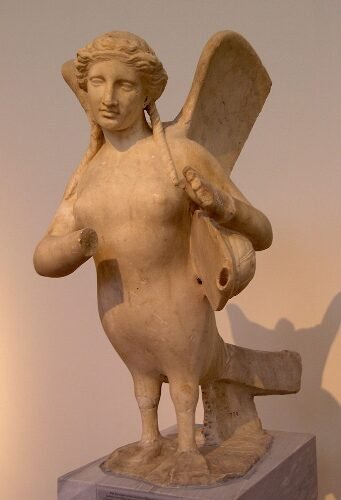
Image: Attic funerary statue of a siren, playing on a tortoiseshell lyre, c. 370 BC
The Lure of the Sirens: The Power of Song
The key to the Sirens’ ability to lure sailors lies in their enchanted song. Their voices were believed to be so sweet and captivating that sailors passing by could not resist turning their ships toward the source of the music. The Sirens would sing promises of forbidden knowledge, eternal beauty, and irresistible pleasures, drawing their listeners ever closer to the dangerous shores.
The power of the Sirens’ song is not merely based on its beauty, but also on its supernatural allure. The Sirens would tap into the deepest desires and longings of their victims. In Homer’s Odyssey, they promise Odysseus knowledge and insight into the world, saying, “We know all things that come to pass on the fruitful earth.”
This promise of wisdom was especially appealing to sailors who spent their lives at sea, often cut off from their families and civilizations for extended periods. The Sirens would craft their song to appeal to the individual desires of those passing by, making their trap even more effective.
The Myth of Odysseus and the Sirens
One of the most famous accounts of the Sirens appears in Homer’s Odyssey, where the hero Odysseus encounters them during his journey home from the Trojan War. Forewarned by the sorceress Circe about the dangers of the Sirens, Odysseus devises a clever plan to hear their song without falling victim to it.
Odysseus instructs his crew to plug their ears with beeswax, rendering them immune to the Sirens’ song. However, Odysseus himself is curious to hear the enchanted music. He has his men tie him to the mast of the ship, ordering them not to release him no matter how much he begs. As the ship passes the Sirens’ island, Odysseus hears their seductive song and is overwhelmed with the desire to go to them, but he is safely restrained by his crew. His clever use of self-restraint and planning allows him to experience the Sirens’ song without succumbing to their deadly allure.
This episode demonstrates the powerful allure of the Sirens and the extreme measures required to resist them. It also reinforces the idea that the Sirens’ song could only lead to destruction, as even a hero like Odysseus needed to be physically restrained to avoid steering his ship into danger.
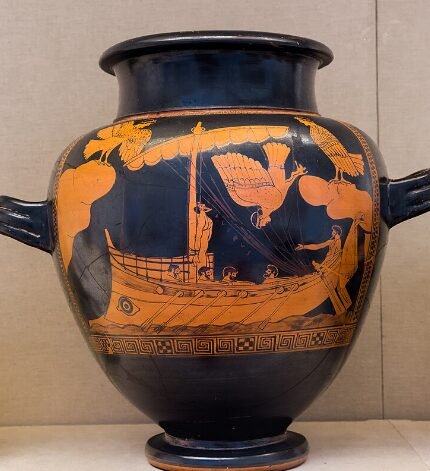
The Sirens continue to symbolize the seductive power of beauty and the importance of self-control in the face of overwhelming temptation. Image: Odysseus and the Sirens, eponymous vase of the Siren Painter, c. 475 BC.
The Myth of the Argonauts and the Sirens
Another famous encounter with the Sirens occurs in the myth of Jason and the Argonauts. As Jason and his crew sailed on their quest for the Golden Fleece, they came upon the island of the Sirens. However, they were saved by the presence of Orpheus, the legendary musician. When the Sirens began to sing, Orpheus played his lyre and sang a song so beautiful and powerful that it drowned out the Sirens’ voices, allowing the Argonauts to sail safely past the danger.
This myth highlights the importance of music in the battle against the Sirens’ enchantment. While Odysseus used physical restraint, the Argonauts used the power of music to overcome the Sirens’ influence, suggesting that beauty and art could be used to counteract their deadly allure.
Symbolism of the Sirens
The Sirens symbolize temptation, destruction, and the dangers of excess. Their enchanting voices represent the seductive power of beauty, desire, and knowledge that can lead people away from reason and safety. In many ways, they embody the struggle between intellect and temptation, with those who succumb to their song paying the ultimate price.
For the ancient Greeks, the Sirens also represented the dangers of the sea itself, which was unpredictable and often fatal to sailors. Their island, strewn with the bones of those who had fallen victim to them, was a visual reminder of the treacherous nature of the open ocean and the perils faced by seafarers.

The Sirens’ method of luring sailors to their doom through the power of song is one of the most iconic and enduring images in Greek mythology. Image: Miniature illustration of a siren enticing sailors who try to resist her, from an English Bestiary, c. 1235
The Death of the Sirens
According to some versions of the myth, the Sirens were fated to die if anyone could hear their song and live to tell the tale. When Odysseus and the Argonauts passed safely by, the Sirens were said to have thrown themselves into the sea in despair, thus ending their reign of terror. This suggests that their power was based on their ability to destroy, and without that, they had no reason to exist.
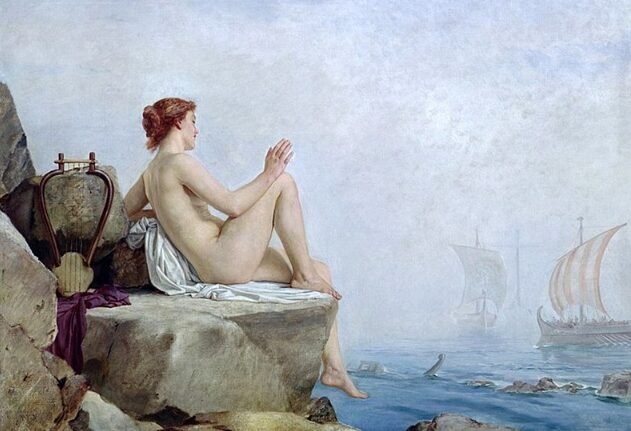
The voices of sirens, promising knowledge, beauty, and pleasure, ensnared those who heard them, leading them to a watery grave. Image: The Siren (1888) by Victorian-Era painter Edward Armitage.
Questions and Answers

Odysseus famously encountered the Sirens in Homer’s Odyssey, blocking his crew’s ears with beeswax to prevent them from hearing the deadly song. Image: Ulysses and the Sirens (c. 1909) by English painter Herbert James Draper
Who were the Sirens in Greek mythology?
The Sirens were half-bird, half-woman creatures known for their enchanting voices. Their beautiful and mesmerizing songs lured sailors to their doom by causing them to crash their ships onto the rocky shores of their island.
How were the Sirens originally depicted in art?
In early artistic depictions, the Sirens were shown with bird-like bodies and the heads of women, or sometimes with bird-like legs. Over time, their bird features were minimized, and they were increasingly portrayed as seductive women.
What role did the Sirens play in Persephone’s myth?
The Sirens were originally companions of Persephone, daughter of Demeter. After Persephone’s abduction by Hades, some myths say Demeter gave the Sirens wings to help search for her, while others suggest they were cursed for failing to prevent the abduction.
How did Odysseus encounter the Sirens in Homer’s Odyssey?
In the Odyssey, Odysseus was warned by Circe about the Sirens’ danger. He had his crew plug their ears with beeswax and tie him to the mast of the ship so he could hear their song without steering the ship into danger. Though enchanted by their voices, Odysseus was safely restrained by his crew until they passed the island.

Image: Greek hero Odysseus and the Sirens, Roman mosaic, second century AD (Bardo National Museum, Tunis, Tunisia)
How many Sirens are mentioned in myths?
While Homer’s Odyssey mentions two Sirens, other myths describe up to five. Their song is said to be both beautiful and sorrowful, calling out to Persephone and luring sailors to their deaths.
How did Jason and the Argonauts escape the Sirens?
In the myth of Jason and the Argonauts, the hero brought along Orpheus, a legendary musician. When the Sirens began to sing, Orpheus played his lyre so beautifully that it drowned out their voices, allowing the Argonauts to sail safely past.
Most Notable Members of the Argonauts, including the hero Jason
What happens to the sailors who succumb to the Sirens’ song?
Sailors who hear the Sirens’ song are unable to resist and are lured to their island, where they meet their deaths. Some myths suggest the Sirens were cannibals who consumed the sailors, while others claim the sailors died from starvation after being unable to leave.
What was the Sirens’ fate if someone escaped their song?
According to some versions of the myth, the Sirens were fated to die if anyone heard their song and survived. After Odysseus successfully escaped, the Sirens, in some stories, threw themselves into the sea and drowned.

Through stories of resistance, like those of Odysseus and the Argonauts, the myth warns against the dangers of temptation and the consequences of giving in to one’s baser desires. Image: The Siren (c. 1900) by English painter John William Waterhouse
What does the term “siren song” mean today?
The term “siren song” refers to something dangerously alluring that leads to negative consequences. It derives from the Sirens’ myth, where their beautiful voices lured sailors to their doom.
How did the depiction of the Sirens change in later periods?
In medieval and Renaissance art, the Sirens evolved into more mermaid-like figures, with the upper body of a woman and the lower body of a fish. This version of the Sirens became a symbol of seduction and the dangers of temptation, often associated with Christian moral lessons about sin.