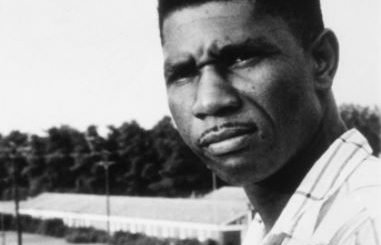
Robert Penn Warren
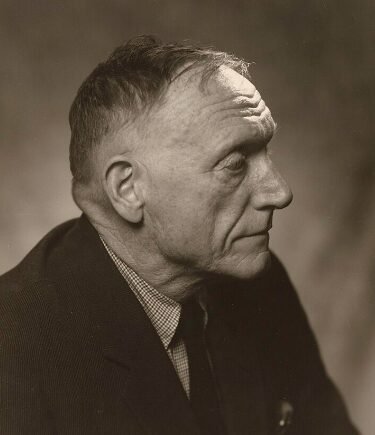
Robert Penn Warren’s life and works spanned a wide range of literary forms, from poetry and fiction to criticism and nonfiction. His contributions to American literature were vast and varied, influencing generations of writers, readers, and scholars.
Robert Penn Warren (April 24, 1905 – September 15, 1989) was one of the most significant American writers of the 20th century. He was a novelist, poet, critic, and educator who made substantial contributions to American literature and culture. Warren’s career spanned more than six decades, during which he won numerous awards, including three Pulitzer Prizes—two for poetry and one for fiction. He was also the first U.S. Poet Laureate, cementing his status as a towering literary figure.
In the article below, WHE explore Warren’s life, his literary achievements, his major works, and the themes that defined his contributions to American letters.
Early Life and Education
Robert Penn Warren was born on April 24, 1905, in Guthrie, Kentucky, a small town located near the Tennessee border. He was the eldest of three children in a family that valued education and literature. His father, Robert Franklin Warren, was a banker and businessman, while his mother, Anna Ruth Penn Warren, was a schoolteacher. His upbringing in rural Kentucky had a profound influence on his literary work, particularly in his depictions of Southern life and politics.
Warren showed academic promise from an early age. He attended high school in Clarksville, Tennessee, and in 1921, at the age of 16, he enrolled at Vanderbilt University in Nashville. While at Vanderbilt, Warren became associated with a group of poets and critics known as the Fugitives. This group, which included notable figures like John Crowe Ransom, Allen Tate, and Donald Davidson, emphasized traditional poetic forms and a deep connection to the Southern agrarian way of life. The Fugitives would later evolve into the Southern Agrarians, a movement that sought to preserve and promote Southern culture and values in the face of industrialization and modernization.
Warren graduated summa cum laude from Vanderbilt in 1925 and went on to pursue graduate studies at the University of California, Berkeley. He later attended Yale University, where he earned a Master of Arts degree in 1927. Warren’s academic achievements were complemented by his Rhodes Scholarship, which allowed him to study at the University of Oxford’s New College from 1928 to 1930. His time in England exposed him to European literary traditions and broadened his intellectual horizons.
Early Career and the Southern Agrarian Movement
In the late 1920s and early 1930s, Warren became deeply involved in the Southern Agrarian movement, a literary and cultural initiative aimed at defending traditional Southern values against the encroachments of industrialization and modernity. The movement’s defining work was the manifesto “I’ll Take My Stand,” published in 1930, in which Warren and 11 other contributors articulated their vision for preserving the agrarian way of life. Warren’s essay, “The Briar Patch,” examined the complexities of race relations in the South, particularly focusing on the question of African American integration into Southern society.
While the Southern Agrarian movement was an important phase in Warren’s intellectual development, he would later distance himself from some of its more reactionary and conservative ideas, particularly its resistance to racial integration. Warren’s evolving views on race would play a significant role in his later work.
Fiction: Novels and Short Stories
One of Warren’s most significant contributions to American literature is his work as a novelist. His most famous novel, “All the King’s Men” (1946), is widely regarded as one of the greatest works of 20th-century American fiction. The novel is a political drama set in the American South, loosely based on the life of Louisiana governor Huey P. Long. It follows the rise and fall of Willie Stark, a charismatic and populist politician who becomes corrupted by power. The novel’s exploration of political morality, ambition, and the consequences of power earned Warren the 1947 Pulitzer Prize for Fiction.
“All the King’s Men” is not only a political novel but also a profound examination of the complexities of human character. The novel’s narrator, Jack Burden, serves as a moral foil to Willie Stark, and his personal journey of self-discovery and reckoning with his past is a central theme. The novel’s intricate structure, shifting narrative perspectives, and philosophical depth make it a landmark in American literature.
In addition to “All the King’s Men,” Warren wrote several other important novels, including:
- “Night Rider” (1939): Warren’s first novel is set in rural Kentucky and tells the story of a violent conflict between tobacco farmers and the American Tobacco Company. The novel explores themes of economic exploitation, resistance, and the limits of individual action within larger social forces.
- “At Heaven’s Gate” (1943): This novel focuses on a family in the American South during the Great Depression, exploring themes of wealth, power, and corruption. It is often considered a companion piece to “All the King’s Men” for its portrayal of moral decay in political and financial institutions.
- “World Enough and Time” (1950): A historical novel set in 19th-century Kentucky, this work examines the destructive consequences of obsession and revenge. The novel is based on the real-life case of the murder of lawyer Solomon Sharp in 1825.
- “Band of Angels” (1955): This novel is set during the American Civil War and Reconstruction era and deals with the themes of slavery, race, and identity. The protagonist, Amantha Starr, is a mixed-race woman who is sold into slavery after her father’s death.
- “The Cave” (1959): This novel tells the story of a man trapped in a cave and the efforts to rescue him. It is a meditation on human isolation, fear, and the relationship between individuals and society.
Poetry: A Master of Verse
In addition to his novels, Warren was an accomplished poet who wrote extensively throughout his life. He published his first collection of poems, “Thirty-Six Poems”, in 1935. However, it was his later collections, particularly those published in the 1940s and 1950s, that established his reputation as a major American poet.
Warren’s poetry is characterized by its exploration of time, memory, mortality, and the human condition. His Southern heritage and experiences deeply influenced his work, often appearing in his reflections on history, race, and the passage of time. His poetic style evolved over the decades, moving from formal, structured verse to more freewheeling and experimental forms.
Among his notable poetry collections are:
- “Promises: Poems 1954–1956” (1957): This collection won Warren his first Pulitzer Prize for Poetry in 1958. It features some of his most famous poems, including “Mortal Limit” and “Founding Fathers, Early Nineteenth Century, Suite.”
- “Now and Then: Poems 1976–1978” (1978): This collection earned Warren his second Pulitzer Prize for Poetry in 1980. The poems reflect on aging, the passage of time, and the interplay between personal and historical memory.
- “Selected Poems: 1923–1975” (1976): This compilation provides a comprehensive overview of Warren’s poetic career and showcases his versatility as a poet.
Warren continued to write poetry until the end of his life. His later collections, including “Being Here: Poetry, 1977–1980” and “Rumor Verified: Poems, 1979–1980”, show a deepening philosophical engagement with issues of mortality, legacy, and the nature of existence.
Critical and Nonfiction Work
In addition to his fiction and poetry, Warren made significant contributions to literary criticism and nonfiction. His critical writings often focused on the role of the artist in society and the relationship between literature and history.
One of Warren’s most influential critical works is “Understanding Poetry” (1938), co-authored with Cleanth Brooks. This textbook became a foundational text for teaching poetry in American schools and universities and played a crucial role in the development of the New Criticism movement. New Criticism emphasized close reading of texts and the analysis of form, structure, and language over historical or biographical contexts.
Warren and Brooks also collaborated on “Understanding Fiction” (1943), another influential textbook that shaped the study of literature in the mid-20th century. These works established Warren as a key figure in American literary education and criticism.
Warren also wrote important works of nonfiction, including his exploration of race relations in America. His book “Segregation: The Inner Conflict in the South” (1956) marked a turning point in his thinking about race. In it, Warren examined the growing tensions surrounding desegregation and civil rights in the South. While he had previously supported segregation during his involvement with the Southern Agrarian movement, by the mid-1950s, Warren had become an advocate for racial integration and social justice.
In “Who Speaks for the Negro?” (1965), Warren conducted interviews with major figures of the Civil Rights Movement, including Martin Luther King Jr., Malcolm X, and James Baldwin. The book provides a historical account of the struggle for civil rights in the U.S. and represents Warren’s growing commitment to addressing racial injustice.
Later Life and Legacy
Warren continued to write and publish well into his later years. In 1974, he was named a MacArthur Fellow, and in 1986, he became the first person to be designated U.S. Poet Laureate by the Library of Congress, a testament to his influence on American literature.
Despite his fame and literary success, Warren remained deeply rooted in the American South, drawing on its history, culture, and conflicts as sources for his work. His evolution on issues such as race and segregation reflected the larger changes taking place in Southern and American society during the 20th century.
Warren died on September 15, 1989, in Stratton, Vermont, at the age of 84. His legacy endures not only through his major works but also through his contributions to literary education, criticism, and his efforts to engage with the social and political issues of his time.
Major Themes in Warren’s Work
Several recurring themes run through Warren’s diverse body of work, reflecting his engagement with both personal and societal concerns:
- The South and Southern Identity: Much of Warren’s fiction and poetry deals with the complexities of Southern life, history, and culture. His exploration of Southern politics, race relations, and the tension between tradition and modernity are central to his work.
- Power and Corruption: “All the King’s Men” is perhaps the most famous example of Warren’s interest in the corrupting influence of power. In both his fiction and poetry, he explores the consequences of unchecked ambition and moral compromise.
- Race and Social Justice: Warren’s views on race evolved significantly over his lifetime, and his later works, including “Segregation” and “Who Speaks for the Negro?”, reflect his commitment to civil rights and racial equality.
- Memory and Time: Warren frequently dealt with the passage of time, the inevitability of death, and the persistence of memory. His poetry, in particular, reflects a deep philosophical engagement with these themes.
Questions and Answers
What literary journal did Robert Penn Warren help establish, and with whom?
Robert Penn Warren helped establish The Southern Review in 1935 with Cleanth Brooks.
Which Pulitzer Prizes did Robert Penn Warren win, and for what works?
Warren won the 1947 Pulitzer Prize for his novel All the King’s Men, and he won Pulitzer Prizes for Poetry in 1958 and 1979.
What organization did Robert Penn Warren co-found?
Warren was a founding member of the Fellowship of Southern Writers.

Image: The Pulitzer Prize for Public Service gold medal, designed by American sculptor Daniel Chester French in 1917
Where and when was Robert Penn Warren born?
Robert Penn Warren was born in Guthrie, Kentucky, on April 24, 1905.
What notable ancestor was Robert Penn Warren descended from?
Warren was descended from Colonel Abram Penn, a Revolutionary War soldier.
Why did Robert Penn Warren attend Clarksville High School after private school?
Warren’s mother thought he was too young for college after graduating from a private high school at 15, so she enrolled him in Clarksville High School for an additional year.
What happened to Robert Penn Warren in 1921 that affected his career plans?
In 1921, Warren lost his left eye in an accident with his brother, ending his plans to attend the U.S. Naval Academy.
What was Robert Penn Warren’s first published poem, and where was it published?
Warren’s first published poem was “Prophecy,” which appeared in The Messkit in 1921.
At what age did Robert Penn Warren enter Vanderbilt University, and when did he graduate?
Warren entered Vanderbilt University at age 16 in 1921 and graduated in 1925 summa cum laude, Phi Beta Kappa, and as the Founder’s Medalist.
What degrees did Robert Penn Warren pursue after Vanderbilt?
Warren earned an M.A. from the University of California, Berkeley, in 1927, and later became a Rhodes Scholar, earning a B.Litt. from New College, Oxford, in 1930.
What prestigious scholarship allowed Robert Penn Warren to study at Oxford?
Warren was a Rhodes Scholar, which enabled him to study at New College, Oxford.
What fellowship did Robert Penn Warren receive to study in Italy?
Warren received a Guggenheim Fellowship to study in Italy during the rule of Benito Mussolini.
Where did Robert Penn Warren begin his teaching career?
Warren began his teaching career in 1930 at Southwestern College, now known as Rhodes College, in Memphis, Tennessee.