Dome of the Rock
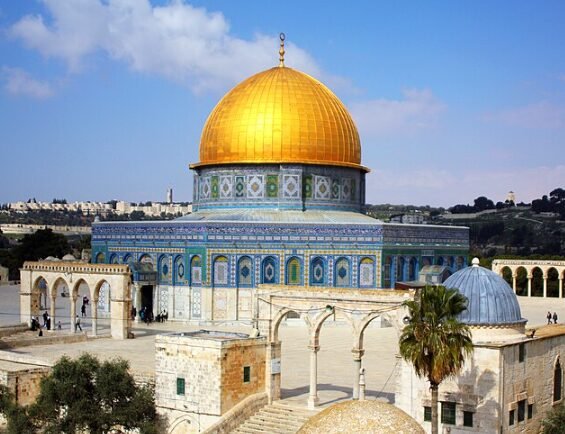
The Dome of the Rock is one of the oldest Islamic architectural masterpieces and a symbol of Jerusalem’s importance to Muslims.
The Dome of the Rock, located in the heart of Jerusalem, is one of the most iconic and important structures in the world, revered by Muslims, Jews, and Christians alike. With its stunning golden dome and intricate Islamic architecture, the Dome of the Rock stands as a symbol of religious, cultural, and historical significance. It is situated on the Temple Mount (known as Haram al-Sharif to Muslims), a site that holds deep religious significance for all three Abrahamic faiths.
Built between 687 and 691 CE by the Umayyad Caliph Abd al-Malik, the Dome of the Rock is one of the oldest extant Islamic structures in the world. It was constructed over a rocky outcrop that is believed to be the Foundation Stone—a sacred site where significant religious events are said to have occurred.
In the article below, Islamic scholars and historians from World History Edu delve into the history, architectural beauty, and religious importance of the Dome of the Rock, as well as the political tensions that have surrounded it over the centuries.
Historical Context and Construction of the Dome of the Rock
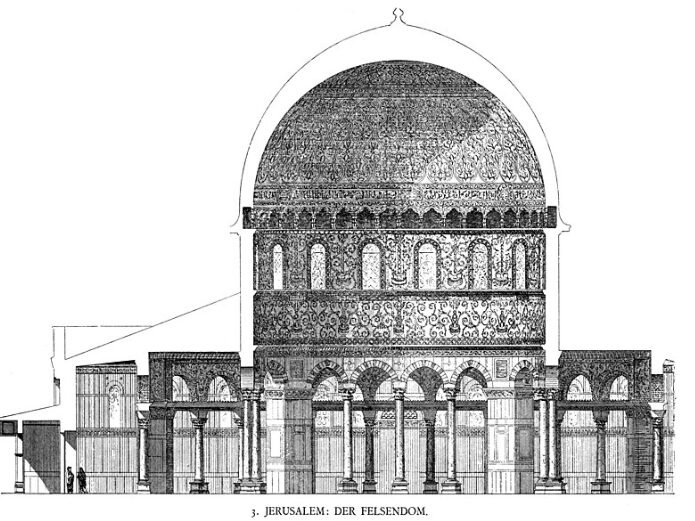
A cross-section of the Dome, featured in an 1887 print, based on the first detailed drawings made by English artist Frederick Catherwood in 1833.
Early Islamic Period
The Dome of the Rock was commissioned by Abd al-Malik, the fifth Umayyad caliph, during a period of rapid Islamic expansion. Abd al-Malik sought to create a monumental symbol of Islam in the newly conquered city of Jerusalem, a city sacred to Jews and Christians, to emphasize Islam’s place as a continuation of the Abrahamic tradition. At the time of its construction, the Islamic empire stretched from Spain to Persia, and Jerusalem had become an important religious and political center.
The construction of the Dome of the Rock began in 687 CE and was completed in 691 CE. The site chosen was no ordinary location—it was the Temple Mount, an area sacred in Judaism as the location of the First and Second Temples. By constructing a magnificent Islamic monument there, Abd al-Malik solidified Muslim presence in the city and demonstrated the strength of the Umayyad caliphate.
Some scholars suggest that the construction of the Dome of the Rock also had political motivations. At the time, the Umayyads were competing with the Abbasid faction and the Zubayrids (followers of Abdallah ibn al-Zubayr, who ruled parts of the Arabian Peninsula in opposition to the Umayyads). The construction of such a grand structure may have been intended to unite Muslims and assert the dominance of the Umayyads over other factions within the Islamic world.
Symbolism and Purpose
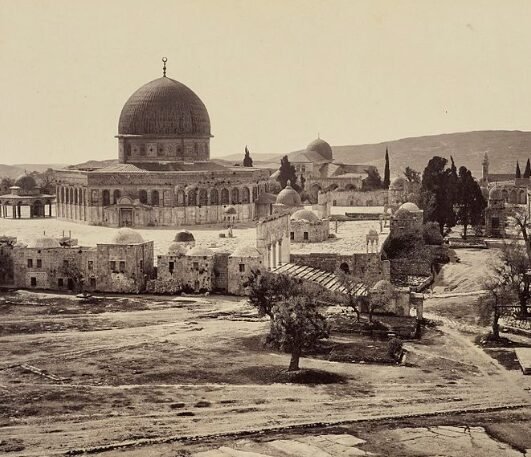
View of the Dome of the Rock from the north, Francis Bedford (1862)
The Dome of the Rock was not intended to be a mosque but rather a shrine to commemorate the holy significance of the site. The rock beneath the dome, known as the Foundation Stone, is a focal point of religious importance. In Islamic tradition, the Prophet Muhammad is said to have ascended to heaven from this spot during his Night Journey (Isra and Mi’raj). This event, a cornerstone of Islamic belief, is why the site is revered by Muslims.
In addition to its Islamic significance, the Foundation Stone holds immense importance in Judaism. It is traditionally regarded as the location where Abraham prepared to sacrifice his son Isaac (or Ishmael, according to Islamic tradition). Furthermore, it is believed to be the site of the Holy of Holies in the Jewish Temples, where God’s presence resided, making it the most sacred site in Judaism.
By placing a grand Islamic structure on such a historically significant site, the Umayyad caliphate was able to create a powerful symbol of Islam’s place in the Abrahamic faiths and in the holy city of Jerusalem.
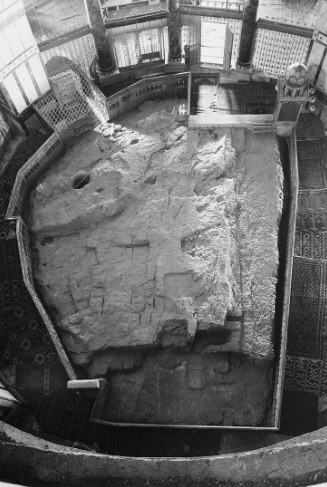
The Foundation Stone within the Dome of the Rock is believed by some to be the place where Ibrahim prepared to sacrifice his son, Ismail.
Architecture of the Dome of the Rock

Like the Al-Aqsa Mosque, the Dome of the Rock is located on the Mount Temple in the Old City of Jerusalem which is in East Jerusalem.
The Dome of the Rock is renowned for its architectural beauty, combining elements of Byzantine, Sassanian, and early Islamic styles. Its design was revolutionary at the time, setting a precedent for Islamic architecture in the centuries to come.
Exterior Design
The most striking feature of the Dome of the Rock is its golden dome, which rises 20 meters (66 feet) above the octagonal base of the building. The original dome was made of wood and covered with gold leaf, though it has been restored and replaced multiple times over the centuries. The current gilded dome was added during a renovation in the mid-20th century, funded by King Hussein of Jordan.
The exterior walls of the Dome of the Rock are covered with colorful tiles, a feature added during the Ottoman restoration in the 16th century under Sultan Suleiman the Magnificent. The tiles display intricate patterns and verses from the Qur’an, emphasizing the Islamic nature of the structure while also reflecting Byzantine and Persian artistic influences.
The octagonal structure of the Dome of the Rock is unique in Islamic architecture, combining elements from Christian and Byzantine building traditions. The eight-sided base allows for the central positioning of the dome, which dominates the skyline of Jerusalem. Each side of the octagon is punctuated with large arched windows, allowing light to filter into the interior and illuminate the sacred rock beneath the dome.
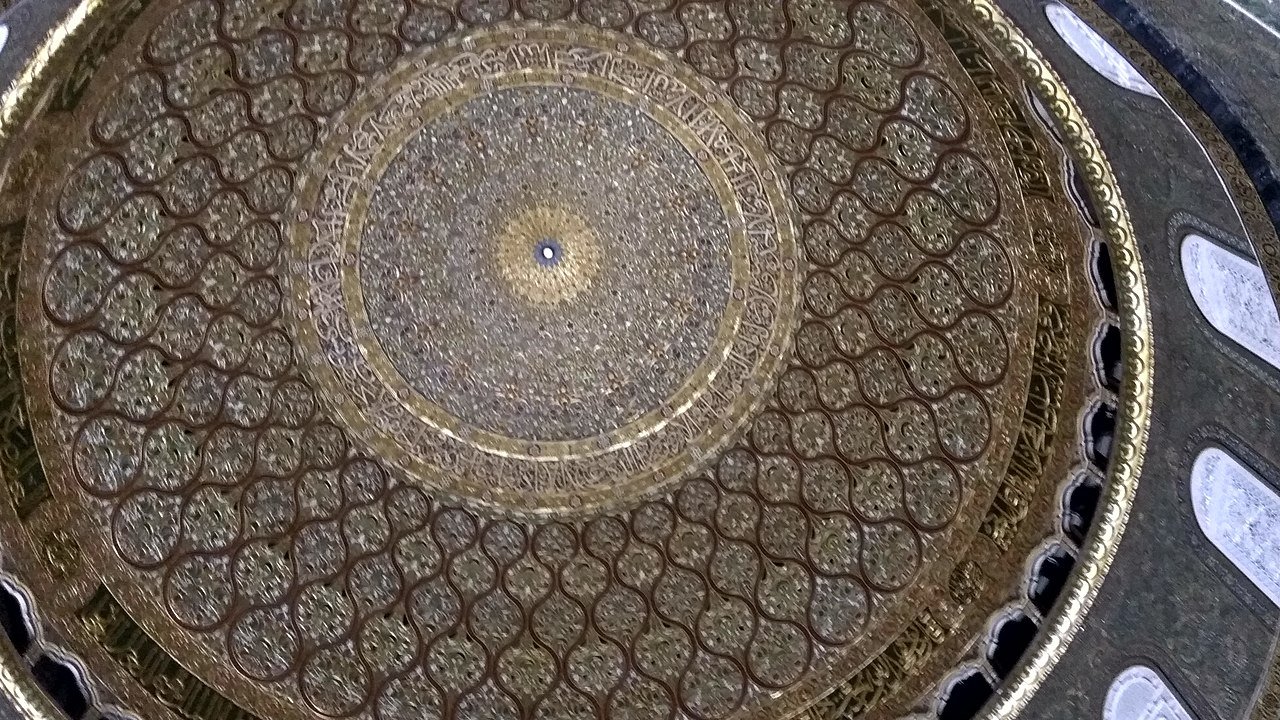
Interior Design
The interior of the Dome of the Rock is equally impressive. The rock at the center, known as the Sakhrah, is surrounded by two concentric ambulatory passages, allowing worshippers to walk around the rock in a circular pattern. This design was likely influenced by the Christian Church of the Holy Sepulchre, located nearby, where pilgrims walk around the site of Jesus’ crucifixion and resurrection.
The interior walls of the Dome of the Rock are adorned with mosaics, inscriptions, and marble columns. The mosaics, in particular, are remarkable for their vibrant colors and intricate designs, featuring floral patterns, geometric shapes, and Islamic calligraphy. The Quranic inscriptions emphasize the oneness of God and the prophethood of Muhammad, making it clear that the building is a monument to Islamic faith.
Interestingly, the Dome of the Rock also contains inscriptions that refute the Christian doctrine of the Trinity. These inscriptions serve to reinforce the Islamic belief in the absolute unity of God, or tawhid, while also highlighting the building’s role in the religious dialogue between Islam and Christianity.
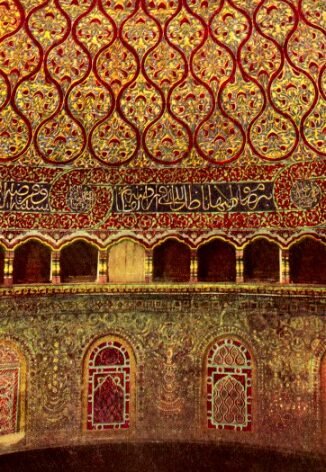
Interior of the Dome of the Rock
Religious Significance of the Dome of the Rock
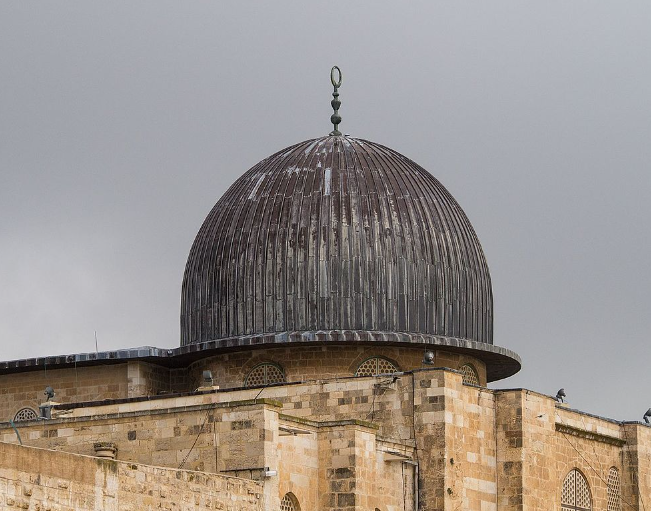
After the 1969 fire that rocked the Al-Aqsa Mosque, the dome of the mosque was covered in aluminum. Previously, it was grey lead.
The Dome of the Rock is a deeply significant site in Islam, Judaism, and Christianity. For Muslims, the site is sacred due to its association with the Night Journey of the Prophet Muhammad. The Qur’an recounts that the Prophet was miraculously transported from Mecca to Al-Aqsa Mosque (which Muslims identify with the area around the Dome of the Rock), from where he ascended to heaven to meet previous prophets and receive instructions from God.
For Jews, the Dome of the Rock sits on the Temple Mount, known in Judaism as the location of the First and Second Jewish Temples. The rock beneath the dome is traditionally believed to be the Foundation Stone, from which God created the world and where the Holy of Holies was located within the Temple. The destruction of the Second Temple in 70 CE by the Romans marked a pivotal moment in Jewish history, and the site remains the holiest place in Judaism.

Al-Aqsa Mosque in Jerusalem is the third holiest site in Islam. It is located in the Old City of Jerusalem, within a larger complex known as Al-Haram al-Sharif (the Noble Sanctuary).
Christians also revere the Temple Mount because of its connection to the Old Testament and the life of Jesus, who is said to have visited the site during his lifetime. The close proximity of the Dome of the Rock to other Christian holy sites in Jerusalem, such as the Church of the Holy Sepulchre, makes it a place of interest for Christian pilgrims as well.

In the 1980s, Yehuda Etzion was involved in a plot to bomb the Al-Aqsa Mosque and the Dome of the Rock (i.e. the Omar Mosque) in Jerusalem, with the goal of creating a spiritual awakening in Israel and building the Third Temple of Jerusalem on the site of the mosque.
Changes and Renovations Over the Centuries
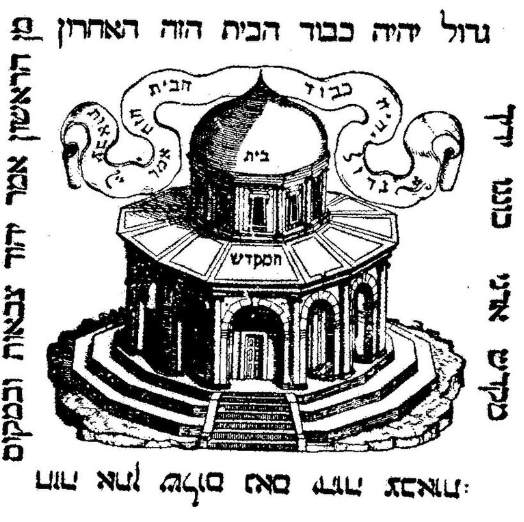
The Temple in Jerusalem, represented as the Dome of the Rock, featured on the printer’s mark of Marco Antonio Giustiniani, Venice, 1545–52.
The Dome of the Rock has undergone several renovations and changes throughout its long history. Each period of restoration reflects the political and religious context of the time.
Umayyad and Abbasid Periods
Following its completion under the Umayyads, the Dome of the Rock remained largely unchanged during the early Islamic period. However, it suffered from neglect during the Abbasid caliphate (750–1258), as the political center of the Islamic world shifted away from Jerusalem to Baghdad.

Depiction of the Templum Domini on the reverse side of the seal of the Knights Templar
Crusader Period
During the Crusades (1096–1291), the Dome of the Rock was transformed into a Christian church by the Crusaders, who referred to it as the Templum Domini (Temple of the Lord). The Crusaders added a cross atop the dome, but the structure was largely preserved. When Saladin recaptured Jerusalem in 1187, the building was restored to its Islamic function, and the cross was removed.
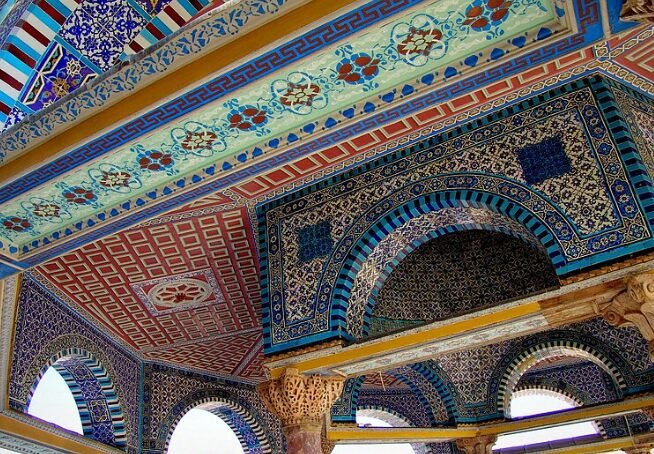
Ceiling of the Dome of the Rock
Ottoman Restoration
One of the most significant periods of restoration occurred under the Ottoman Empire in the 16th century, when Sultan Suleiman the Magnificent undertook a massive renovation of the Dome of the Rock. During this time, the distinctive tilework that covers the exterior of the building was added, replacing earlier mosaics that had deteriorated over time. The Ottoman renovations also reinforced the structure, ensuring its preservation for future generations.
20th Century Renovations
In the 20th century, the Dome of the Rock underwent further restoration, including the replacement of the gold-covered dome in 1959–1961. This restoration was funded by King Hussein of Jordan, who sold one of his personal estates to finance the project. The new gilded dome has become one of the most recognizable features of Jerusalem’s skyline.
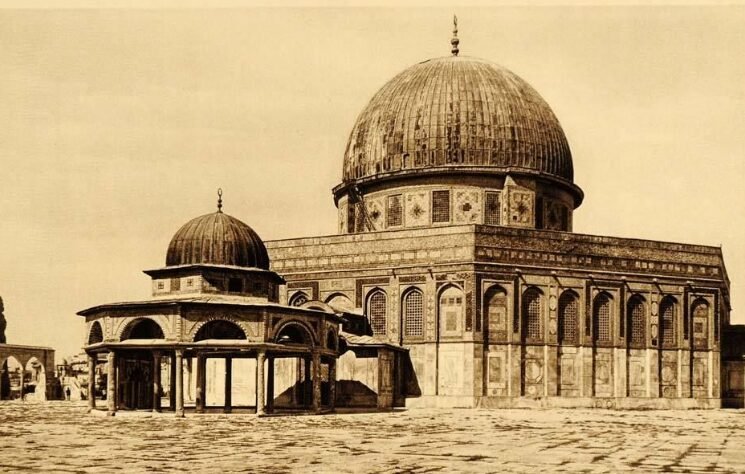
Dome of the Rock in the 1920s
Political and Religious Tensions
The Dome of the Rock is not only a site of religious significance but also one of intense political and religious tension. Because it is located on the Temple Mount, a site sacred to both Jews and Muslims, control over the area has been a point of conflict for centuries.
The Israeli-Palestinian Conflict
In the modern era, the Dome of the Rock has become a flashpoint in the Israeli-Palestinian conflict. After the Six-Day War in 1967, Israel captured East Jerusalem, including the Old City and the Temple Mount. While Israel maintains political control over the area, the Islamic Waqf (religious trust) retains administrative control of the Dome of the Rock and Al-Aqsa Mosque. The complex status of the Temple Mount has led to frequent clashes between Israeli security forces and Palestinian worshippers, particularly over questions of access and sovereignty.
Jewish and Muslim Claims
For Jews, the Temple Mount is the site of the First and Second Temples, making it the holiest site in Judaism. Some Jewish religious groups advocate for the rebuilding of the Third Temple on the site, which would require the removal of the Dome of the Rock. This has heightened tensions between Jewish and Muslim communities, as the destruction or alteration of the Dome of the Rock would likely provoke widespread unrest in the Muslim world.
For Muslims, the Dome of the Rock is part of the Haram al-Sharif complex, which includes the Al-Aqsa Mosque. It is the third holiest site in Islam, after Mecca and Medina. The site’s sanctity in Islamic tradition, combined with its political significance, makes it a symbol of Palestinian identity and resistance to Israeli control.
The Dome of the Rock Today

Aerial view of the Dome of the Rock
Today, the Dome of the Rock remains a symbol of Jerusalem and a focal point for religious devotion and political conflict. Millions of Muslims visit the site each year as part of their religious pilgrimages, while tourists and scholars from around the world come to admire its architectural beauty and historical significance.
The political situation surrounding the Dome of the Rock remains tense, as questions about sovereignty, religious access, and the future of Jerusalem continue to be at the center of the Israeli-Palestinian conflict. Despite these tensions, the Dome of the Rock endures as a symbol of faith, heritage, and the complex history of the Middle East.

The golden dome continues to capture the imagination of all who see it, symbolizing both the beauty and the complexity of this ancient and contested city.
Conclusion
The Dome of the Rock is a masterpiece of Islamic architecture and a site of deep religious significance for Muslims, Jews, and Christians. Its construction in the late 7th century marked the rise of Islam as a major world religion and its establishment in Jerusalem, a city already revered by Jews and Christians. Over the centuries, the Dome of the Rock has been preserved, restored, and transformed by the various political powers that have controlled Jerusalem, yet it remains one of the most recognizable and revered structures in the world.
Questions and Answers
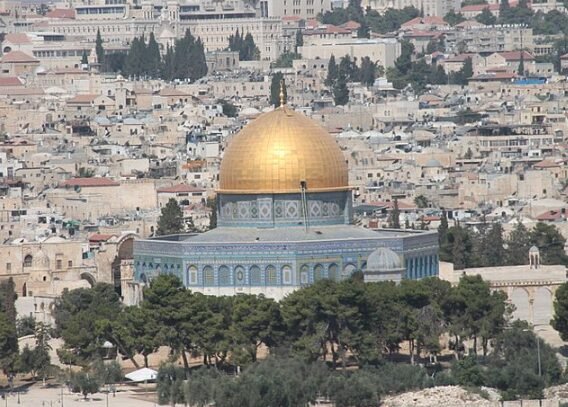
The Dome of the Rock is one of important Islamic structures located within the Al-Haram al-Sharif complex. It is not a mosque but a shrine built over the rock from which the Prophet Muhammad is said to have ascended to heaven.
Why is the Dome of the Rock significant in Islamic architecture?
It is the oldest surviving example of Islamic architecture and the first religious structure built by a Muslim ruler, with inscriptions offering the earliest known proclamations of Islam and the prophet Muhammad.
Who ordered the construction of the Dome of the Rock, and when was it built?
The Umayyad Caliph Abd al-Malik ordered its construction between 691 and 692 CE during the Second Fitna.
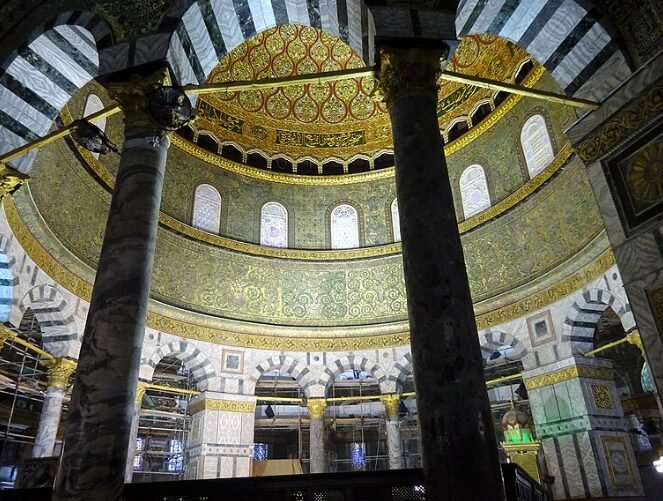
At the crossroads of history, religion, and politics, the Dome of the Rock stands as a testament to the enduring spiritual and cultural significance of Jerusalem. Image: Inner colonnade of the Dome of the Rock
What Jewish structure previously stood on the site of the Dome of the Rock?
The Second Jewish Temple, originally built around 516 BCE and later rebuilt by Herod the Great, stood on the site until it was destroyed by the Romans in 70 CE.
When did the original dome of the Dome of the Rock collapse, and when was it rebuilt?
The original dome collapsed in 1015 and was rebuilt in 1022–1023.

The Dome of the Rock is an Islamic shrine located in the center of the Al-Aqsa Mosque compound on the Temple Mount in Jerusalem’s Old City. Image: Temple Mount, located in the Old City of Jerusalem, has been venerated as a holy site in Judaism, Christianity, and Islam for thousands of years.
Which architectural styles influenced the Dome of the Rock?
The Dome of the Rock was influenced by nearby Byzantine churches and palaces, and its octagonal design may have been inspired by the Byzantine Church of the Seat of Mary (Kathisma).
What changes were made to the Dome of the Rock during the Ottoman period?
During the Ottoman period, colorful Iznik-style tiles, mostly in blue and white, were added to the exterior.
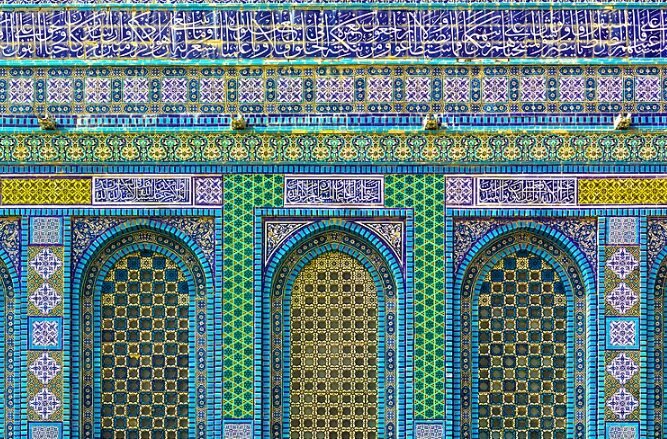
Tiled façade of the Dome of the Rock
When was the dome of the Dome of the Rock gold-plated?
The dome was gold-plated during restorations in 1959–1961 and again in 1993.
What is the Foundation Stone, and why is it significant?
The Foundation Stone, located at the center of the Dome of the Rock, holds deep significance in the Abrahamic religions. In Jewish tradition, it is the site where God created the world and Adam, and where Abraham attempted to sacrifice his son. In Islamic tradition, it is the site where the Prophet Muhammad began his Night Journey to heaven.

Interior – The Dome of the Rock
What religious significance does the Dome of the Rock hold for Muslims?
For Muslims, the Dome of the Rock is revered as the site where the Prophet Muhammad embarked on his Night Journey to heaven, making it a central part of Islamic tradition.
Why was the Dome of the Rock designated a UNESCO World Heritage Site?
It was designated a UNESCO World Heritage Site due to its historical, cultural, and religious significance, as well as its architectural beauty.
What are the other major religious landmarks near the Dome of the Rock?
The nearby major landmarks are the Western Wall and the Church of the Holy Sepulchre.
What impact did the Dome of the Rock have on Islamic architecture?
The Dome of the Rock’s inscriptions, prominently mentioning Muhammad, set a precedent for Islamic monuments and became a standard feature of Islamic architecture.

Historian Oleg Grabar described the Dome of the Rock as a “unique monument of Islamic culture,” both as a work of art and as a significant cultural and religious document. Image: First-known photograph of the Dome of the Rock





