English Caricaturist and Book Illustrator George Cruikshank
George Cruikshank (1792–1878) was a celebrated British caricaturist and book illustrator whose work left an indelible mark on art and literature. Known for his sharp satirical prints, political caricatures, and memorable book illustrations, Cruikshank earned the title of “modern Hogarth” and remains a significant figure in 19th-century art history.
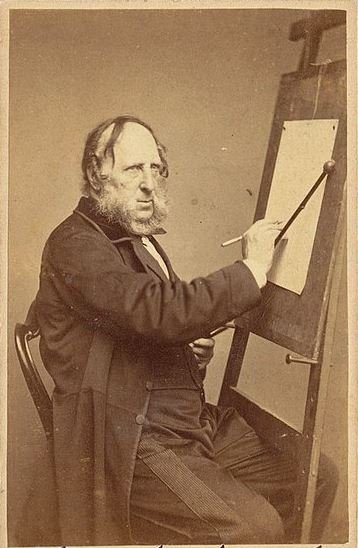
George Cruikshank’s art reached international acclaim, influencing both contemporary and future audiences through his depictions of societal issues, literary scenes, and moral narratives. Image: Cruikshank at work.
Early Life and Artistic Roots
Born in London, Cruikshank was the second son of Isaac Cruikshank, a renowned caricaturist of the late 18th century. Under his father’s tutelage, George began his career as an apprentice and assistant. His brother, Isaac Robert Cruikshank, also became a noted caricaturist, making art a family tradition.
Cruikshank’s early work focused on social and political caricature, gaining attention for his sharp wit and patriotic themes. He quickly became one of England’s leading satirists, succeeding James Gillray in popularity.
Early Success in Caricature
Cruikshank’s early career flourished with his caricatures of English life and political events. Collaborating with William Hone, he gained notoriety for works like The Political House That Jack Built (1819). His biting satire extended to royalty and politicians, and in 1820, he accepted a £100 bribe to refrain from caricaturing King George IV in compromising situations.
Despite his patriotism, Cruikshank’s early works also reflected the racial and social biases of his time. For example, The New Union Club (1819) is now criticized for its racist undertones, and his depictions of Irish rebels and Chinese legal practices were often crude and stereotypical.
Transition to Book Illustration
In 1823, Cruikshank began focusing on book illustration, which would define much of his later career. His first major project was the English translation of Grimms’ Fairy Tales (German Popular Stories), which he illustrated with intricate and imaginative designs.
Among his most famous collaborations was his work with Charles Dickens. Cruikshank illustrated Sketches by Boz (1836), The Mudfog Papers (1837–38), and Oliver Twist (1838). However, their relationship soured later due to disputes over creative contributions. Cruikshank controversially claimed credit for elements of Oliver Twist, a claim Dickens denied.
Social Commentary and Temperance Advocacy
In the late 1840s, Cruikshank shifted focus from commercial illustration to social causes, particularly temperance. A former heavy drinker, he became a passionate advocate for alcohol abstinence. He created impactful works like The Bottle (1847) and its sequel, The Drunkard’s Children (1848), illustrating the destructive effects of alcoholism.
Cruikshank’s dedication to the temperance movement extended to his involvement in public lectures and his role as vice president of the National Temperance League. His magnum opus in this vein was The Worship of Bacchus, a large-scale painting exploring humanity’s relationship with alcohol, now housed in the Tate Gallery, London.
Military and Civic Engagement
Cruikshank also contributed to the Volunteer Movement during the 1859 invasion scare, organizing Rifle Volunteer Corps composed of working men committed to temperance. He founded units like the 24th Surrey RVC and later the 48th Middlesex RVC, though internal conflicts and financial difficulties hindered these efforts.
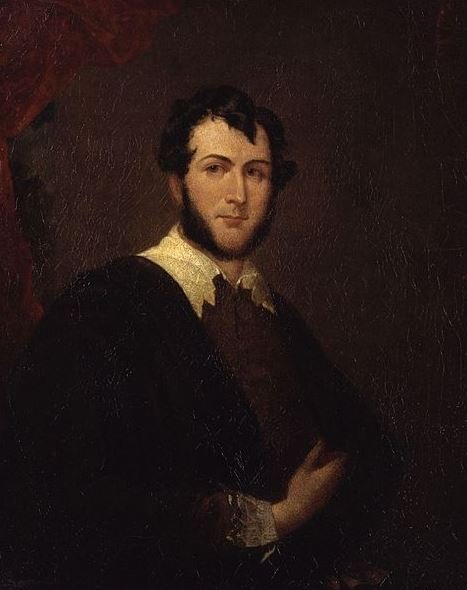
Image: A portrait of George Cruikshank during the 1830s.
Later Years and Decline
Cruikshank’s later years were marked by declining health and productivity. Suffering from palsy, his ability to work diminished, but his legacy remained intact. He continued to publish sporadically, and revivals of his earlier works, such as The Dead Heart in 1893, reaffirmed his influence.
Cruikshank died on February 1, 1878, and was initially buried in Kensal Green Cemetery. Later that year, his remains were reinterred in St. Paul’s Cathedral, a testament to his national significance.
Artistic Legacy
Over his lifetime, Cruikshank created nearly 10,000 prints, illustrations, and plates, encompassing a wide range of subjects, from political satire to fairy tales. Collections of his works are preserved in institutions like the British Museum and the Victoria and Albert Museum. A blue plaque commemorates him at his Hampstead Road residence in Camden Town.
Cruikshank’s artistry continues to be celebrated for its wit, technical skill, and cultural impact, though his works are also scrutinized for reflecting the prejudices of his era. His contributions to literature and social causes ensure his place as a defining figure of 19th-century Britain.





