Charles Dickens
“Oliver Twist”, “A Christmas Carol”, “Nicholas Nickleby”, “David Copperfield”, “A Tale of Two Cities”, and “Great Expectations” are just a few of the well-known classic books by British author Charles John Huffam Dickens better known as Charles Dickens, who was also a writer, editor, illustrator, and social commentator.
He is regarded as one of the 19th century’s most significant and influential authors. Among his many accomplishments, he has been praised for painting a bleak picture of the Victorian underclass and fostering social reform.
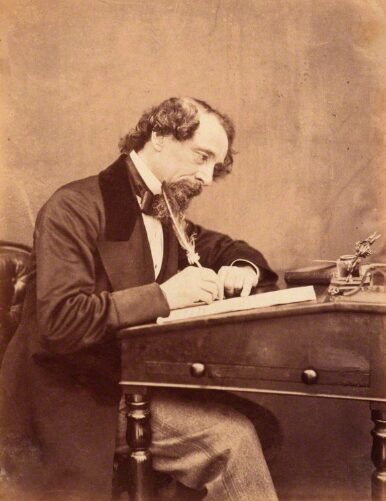
Charles John Huffam Dickens (7 February 1812 – 9 June 1870) was an acclaimed English novelist, journalist, and social critic. He created iconic fictional characters and is considered the greatest novelist of the Victorian era. Image: Charles Dickens at his desk, 1858
Early Life
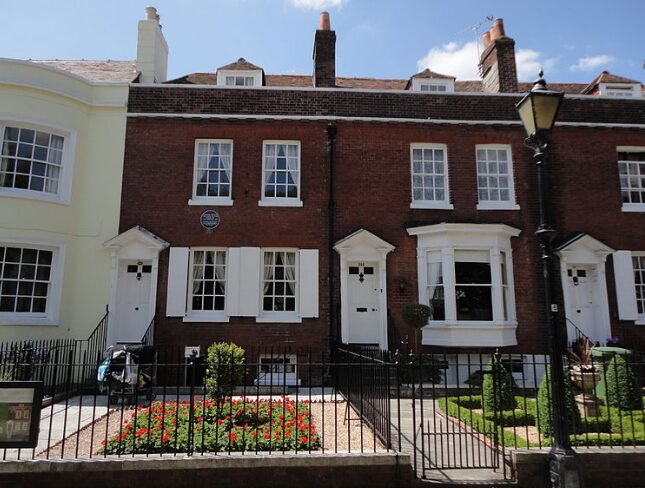
His father was a Navy pay office clerk, and he was born on February 7, 1812, at 1 Mile End Terrace (now 393 Commercial Road), Landport in Portsea Island (Portsmouth), Hampshire.
Growing up, he devoured books like Robinson Crusoe, Gil Blas, the picaresque novels of Tobias Smollett and Henry Fielding, “The Arabian Nights,” and Elizabeth Inchbald’s Collected Farces.
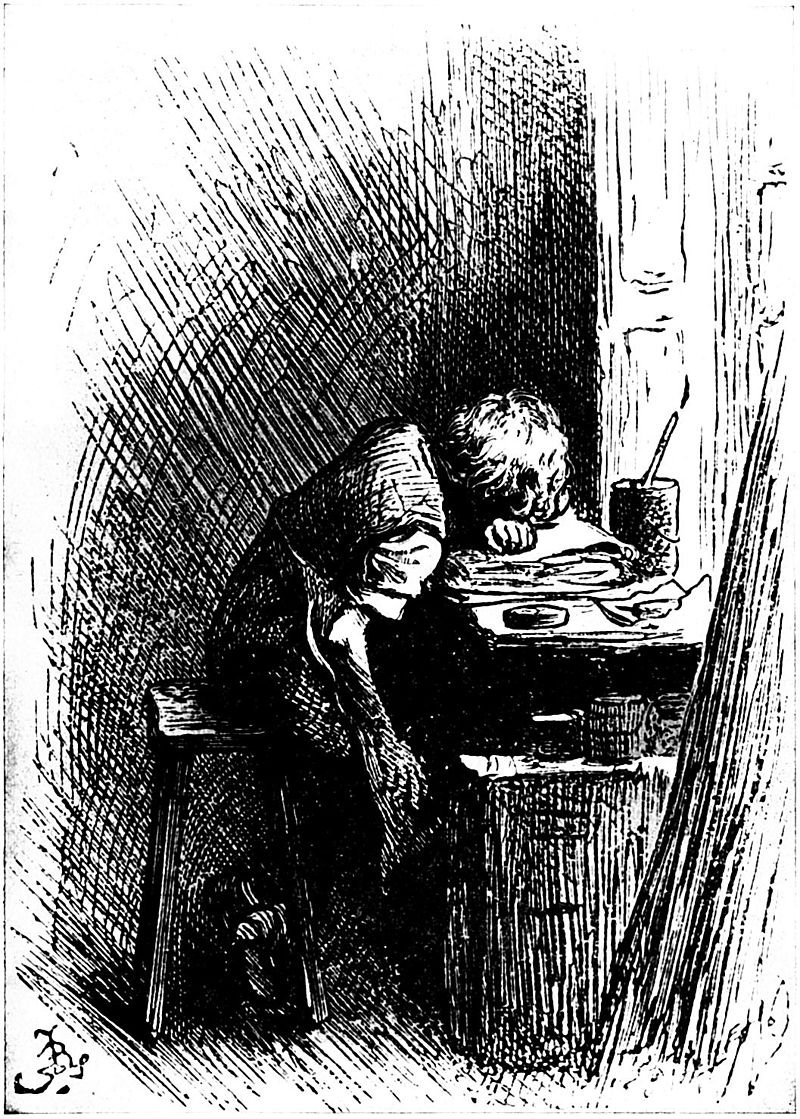
The family hit rock bottom in 1824. His father was sent to prison for debt, and the oldest son, Charles, had been removed from school to work in a factory. Despite loathing his brief stint in the working class, he started to develop a sympathetic understanding of its plight and way of life, which influenced his writings. The Wellington House Academy in Camden Town eventually received him after his father’s release, where he resided until March 1827.
Nicknames that Charles Dickens went by

Image: Young Charles Dickens by Irish history painter Daniel Maclise, 1839
Charles Dickens, the famous English writer, had a few nicknames that he used or was known by:
- Boz: This was the pen name he used early in his career. It was derived from his younger brother’s nickname, “Moses,” which was then pronounced as “Bozes” by a family friend and eventually shortened to “Boz.”
- The Inimitable: Dickens often referred to himself as “The Inimitable” in a humorous and self-deprecating manner.
- The Sparkler of Albion: This was a nickname used by some of his contemporaries, highlighting his prominence and brilliance in English literature.
Love Life
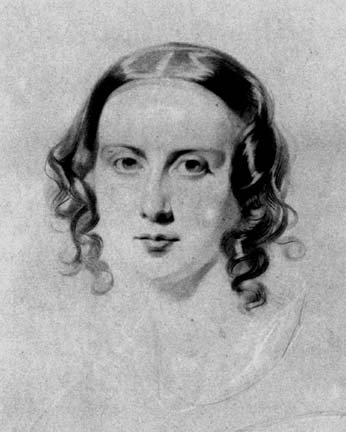
Despite his success, Dickens’ personal life was marked by turmoil. His marriage to Catherine Hogarth produced ten children but ended in separation in 1858. Image: Catherine Hogarth Dickens by British portrait painter Samuel Laurence (1838). She met the author in 1834, and they became engaged the following year before marrying in April 1836.
He met Maria Beadnell, his first love, in 1830. Her parents disapproved of the courtship and broke up the couple by sending her to school in Paris.
In April 1836 after a year of courtship, he wed Catherine, the eldest child of George Hogarth, a renowned Scottish journalist and literary figure. The couple had ten children.
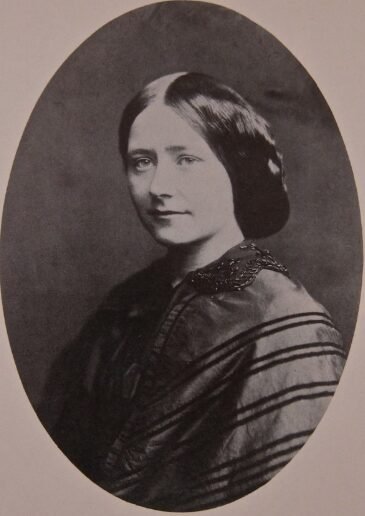
He had first encountered Ellen Ternan in 1857; she would remain by his side until his passing.
Career and Literary Success

Dickens’ works continue to be read and studied for their rich characterizations, social commentary, and masterful storytelling, securing his place as one of the greatest novelists in history. Image: Portrait by Jeremiah Gurney, c. 1867–1868
He was given a job on The Mirror of Parliament by his uncle, William Barrow, and began working in the House of Commons in early 1832. He pondered becoming an actor at this time. He took the situation so seriously that he scheduled an audition at the Lyceum Theater. On the day of his audition, he was sick, thus he was unable to attend. His debut piece, “A Dinner at Poplar Walk,” was submitted to the London publication Monthly Magazine in 1833.
The serial publication of “The Pickwick Papers” in 1836 marked the beginning of his writing career. His descriptive pieces were reproduced as Sketches by “Boz”. With his humor, satire, and astute observations of people and society, he quickly rose to literary fame on a global scale. His works, the majority of which were released in weekly or monthly installments, invented the serial publication of narrative fiction, which eventually took over as the primary Victorian novel publishing format. Along with founding his own publication, “All The Year Round”, he also edited a number of others, including “Household Words”.
After quitting his job as an editor at a newspaper, he started Bentley’s Miscellany, a monthly magazine where he serialized “Oliver Twist” (1837–39). In “Nicholas Nickleby” (1838–1899), he replicated the Pickwick pattern of 20 monthly parts because he found serialization to be profitable and agreeable. Later, he experimented with shorter weekly installments for “The Old Curiosity Shop” (1840–41) and “Barnaby Rudge” (1841).

Dickens’ life and major works reveal a man deeply affected by his own experiences and committed to addressing the social injustices of his time. Image: Dickens’s Dream by English etcher and illustrator Robert William Buss, portraying Dickens at his desk at Gads Hill Place surrounded by many of his characters
American Tour
He traveled to the United States with his wife on January 22, 1842, and lectured on slavery for a month in New York City. A tour to Canada followed his time in the United States, when he performed on stage in light comedies in Niagara Falls, Toronto, Kingston, and Montreal.
A Christmas Carol
The first of his holiday tales, “A Christmas Carol,” which was published in 1843, was followed by “The Chimes” (1844), and “The Cricket on the Hearth” (1845), both of which he started writing shortly after his return to England. Following a brief stay in Italy (1844), he traveled to Switzerland (1846) and started writing “Dombey and Son” (1846–48). His novels were more serious in tone and more well organized than his early writings, and this, together with “David Copperfield,” marked a crucial artistic turning point in his career.
Personal Setbacks
He lost both his father and daughter during the 1850s, which was a devastating blow. In 1858, he and his wife divorced as well. In addition to openly defaming Catherine, He developed a close friendship with a young actress by the name of Ellen “Nelly” Ternan.
It was unclear from the sources whether he and Ternan began dating before or after his marriage ended; it was also thought that he went to great lengths to destroy any records that would have hinted at Ternan’s involvement in his life.
Later Career
He started offering expert readings in 1858. Oratory and intense acting were both used in the readings. He kept giving them all of his life because they were so well-liked. He began serving as editor of the London-based Daily News in December 1845, although he only held the position for ten weeks before leaving as a result of a mix of weariness and discontent with one of the paper’s co-owners.
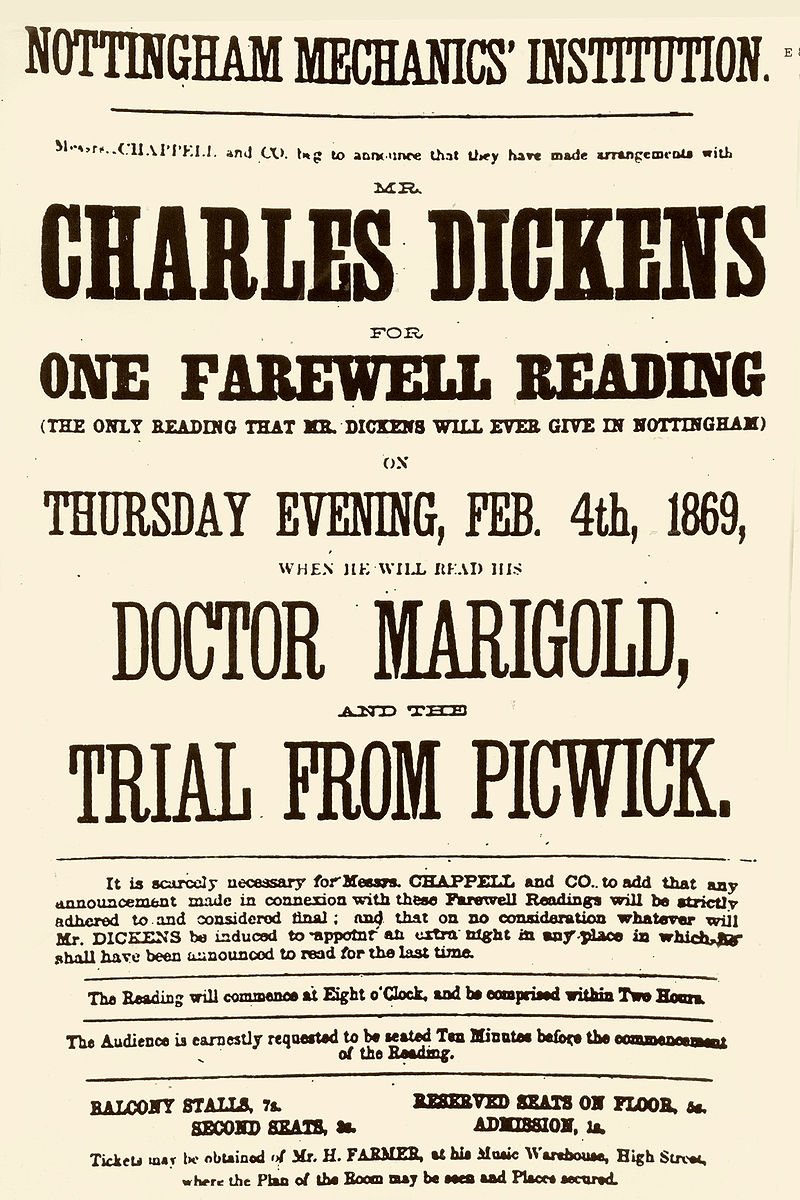
Dickens continued to write and tour, giving public readings of his works, which were immensely popular. However, his health began to decline, exacerbated by his involvement in the Staplehurst rail crash in 1865. Image: Poster promoting a reading by Dickens in Nottingham dated 4 February 1869, two months before he had a mild stroke
Personal Publication
He established the weekly magazine called All the Year Round. In April 1859, the maiden edition was printed. He was the editor and publisher. The journal had a feature where novels were published in serial form. In “All the Year Round”, “A Tale of Two Cities” was the first book to be serialized.
“Great Expectations” first appeared in print in 1860. All the Year Round also ran serialized editions of it.
Brush With Death
Charles Dickens had a notable brush with death in the Staplehurst Rail Crash, which occurred on June 9, 1865. He was traveling from Folkestone to London with his mistress, Ellen Ternan, and her mother when the train derailed over a viaduct that was under repair. Ten people died and forty were injured in the accident.
Dickens was in the first-class carriage, which was one of the few that did not fall into the river. He helped tend to the injured and dying until rescuers arrived. The experience deeply affected him, and although he survived without physical injury, it had a lasting impact on his mental health. Dickens even mentioned that he never quite recovered from the trauma, which haunted him for the rest of his life.
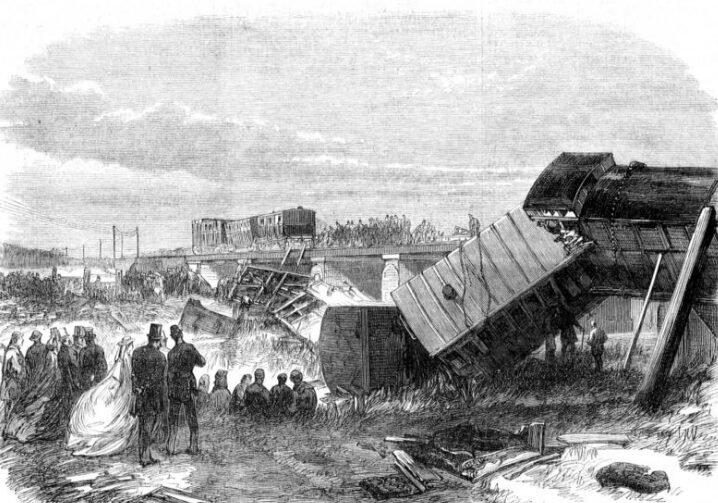
Charles Dickens had a notable brush with death in the Staplehurst rail crash, which occurred on June 9, 1865. Image: Aftermath of the Staplehurst rail crash in 1865
His Death
In March 1870, he organized a farewell tour and gave his final reading. It is believed that one of the things that contributed to his death was the repercussions of the readings.
At Gads Hill Place, he gave up the ghost on June 9, 1870. He was buried in the Poets’ Corner of Westminster Abbey, a testament to his lasting impact on English literature.
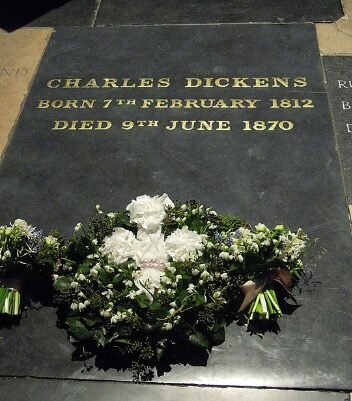
Charles Dickens died on June 9, 1870, leaving “The Mystery of Edwin Drood” unfinished. He was buried in the Poets’ Corner of Westminster Abbey, a testament to his lasting impact on English literature. Image: The grave of Charles Dickens in Westminster Abbey
Legacy
In many locations where he was known, there are museums and festivals honoring his life and works. These include the Charles Dickens Museum in London—his historic mansion where he authored Nicholas Nickleby, The Pickwick Papers, and Oliver Twist—and the Charles Dickens Birthplace Museum in Portsmouth, which is the home where he was born.
The Victoria and Albert Museum is home to the original drafts of several of his books, as well as first editions, proofreading copies, and pictures from Dickens’s friend John Forster’s collection.
A Tale of Two Cities served as the basis for the screenplay for “The Dark Knight Rises” (2012), which was written by Jonathan Nolan. Nolan referred to the portrayal of Paris in the book as “one of the most harrowing portraits of a relatable, recognizable civilization that completely folded to pieces”.
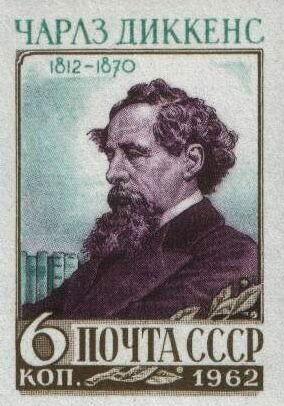
Dickens’ early experiences with poverty and labor profoundly influenced his sense of social justice and his understanding of the class divide. These themes are prevalent in his works, where he often highlighted the struggles of the poor and criticized the social institutions of his time. Image: Soviet postage stamp commemorating Dickens
Statues of Charles Dickens

Statue of Dickens in his birthplace Portsmouth, Hampshire
These statues celebrate Dickens’ legacy and mark significant locations tied to his life and work:
- Located at Clark Park, Spruce Hill, Philadelphia, the Dickens and Little Nell statue was created by American sculptor and author Francis Edwin Elwell in 1890. This bronze sculpture depicts Charles Dickens with Little Nell, a beloved character from his novel “The Old Curiosity Shop.” It captures the emotional depth and narrative power of Dickens’ storytelling.
- Another famous statue of Charles Dickens is located in Portsmouth, England, which is his birthplace. The artwork was created by Martin Jennings. It was unveiled in 2014 to commemorate Dickens’ 202nd birthday, this bronze statue shows Dickens seated, reflecting his contemplative nature and literary genius.
- The third most famous statue of Charles Dickens is located at the Centennial Park in Sydney, Australia. Erected in 1889, this statue celebrates Dickens’ widespread influence and enduring connection to English-speaking cultures worldwide.

Dickens and Little Nell is a bronze sculpture by Francis Edwin Elwell, located in Clark Park, Spruce Hill, Philadelphia. It depicts Charles Dickens and the character Little Nell from his novel “The Old Curiosity Shop,” highlighting Dickens’ literary impact and the emotional depth of his characters. It is one of just three known statues of Dickens, who said he wanted no such representations.
Questions and Answers

Charles Dickens’ works were immensely popular during his lifetime and are still widely read today, with critics and scholars recognizing him as a literary genius. Image: Portrait of Charles Dickens, c. 1850, National Library of Wales

What are some of the major works by Charles Dickens?
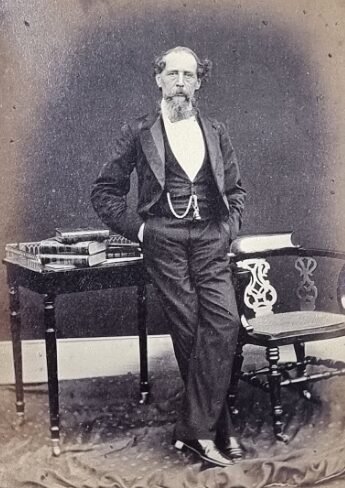
Image: Charles Dickens, c. 1866, by Ernest Edwards
Dickens’ literary career began as a journalist. He started as a parliamentary reporter before moving on to write sketches for periodicals under the pseudonym “Boz.” His first major success came with the serialization of “The Pickwick Papers” in 1836. This comic novel, originally intended to accompany illustrations by Robert Seymour, quickly gained popularity for its humor, engaging characters, and vivid portrayal of early Victorian life.
“Oliver Twist” (1837-1839)
Following the success of “The Pickwick Papers,” Dickens wrote “Oliver Twist,” a novel that highlighted the harsh realities of life for the poor and the criminal underclass in London. The story of the orphaned Oliver, who escapes from a workhouse only to fall into the hands of a gang of juvenile criminals, captivated readers and brought attention to social issues such as child labor, poverty, and the inhumane conditions of workhouses.
“Nicholas Nickleby” (1838-1839) and “The Old Curiosity Shop” (1840-1841)
Dickens continued to tackle social injustices in “Nicholas Nickleby,” which exposed the cruel practices of Yorkshire boarding schools. “The Old Curiosity Shop,” serialized in 1840-1841, tells the tragic story of Little Nell and her grandfather, exploring themes of poverty and exploitation.
“A Christmas Carol” (1843)
One of Dickens’ most famous works, “A Christmas Carol,” was published in 1843. This novella, which tells the story of the miserly Ebenezer Scrooge’s transformation after encounters with the ghosts of Christmas Past, Present, and Yet to Come, has become a timeless holiday classic. It underscores Dickens’ themes of compassion, redemption, and the importance of community and generosity.
“David Copperfield” (1849-1850)
“David Copperfield” is often considered Dickens’ most autobiographical novel. It follows the life of the titular character from childhood to adulthood, depicting his struggles and triumphs. The novel reflects Dickens’ own experiences, particularly his time working in a factory and his pursuit of a literary career. It also introduces some of Dickens’ most memorable characters, such as the charming but untrustworthy Uriah Heep and the ever-optimistic Mr. Micawber.
“Bleak House” (1852-1853)
In “Bleak House,” Dickens critiques the British legal system, particularly the Court of Chancery, through the story of the interminable case of Jarndyce and Jarndyce. The novel’s complex narrative structure, with multiple plotlines and a large cast of characters, showcases Dickens’ storytelling prowess. It also addresses issues such as poverty, urban decay, and the lack of social mobility.
“Hard Times” (1854)
“Hard Times” is Dickens’ response to the industrialization of England and the dehumanizing effects of utilitarianism. Set in the fictional Coketown, the novel criticizes the emphasis on facts and figures at the expense of compassion and imagination. Characters such as Thomas Gradgrind and Josiah Bounderby embody the flaws of this philosophy, while Sissy Jupe represents the antidote of human warmth and creativity.
“Great Expectations” (1860-1861)
“Great Expectations” is a coming-of-age novel that follows the life of Pip, an orphan who dreams of becoming a gentleman. The novel explores themes of ambition, social class, and personal growth, with a richly drawn cast of characters, including the enigmatic Miss Havisham and the convict Magwitch. It remains one of Dickens’ most popular and critically acclaimed works.
“Our Mutual Friend” (1864-1865)
In “Our Mutual Friend,” Dickens returns to the theme of social criticism, focusing on the corrupting power of money. The novel’s intricate plot revolves around the inheritance of a large fortune and features a diverse array of characters, from the virtuous Lizzie Hexam to the unscrupulous Silas Wegg.





