John Everett Millais: Life and Notable Paintings
John Everett Millais, 1st Baronet PRA (8 June 1829 – 13 August 1896), was a towering figure in 19th-century English art. As one of the founding members of the Pre-Raphaelite Brotherhood (PRB), Millais played a crucial role in shaping the artistic landscape of his time.
His career spanned several decades, during which he produced a myriad of works that are celebrated for their meticulous detail, vibrant colors, and profound emotional and symbolic depth.
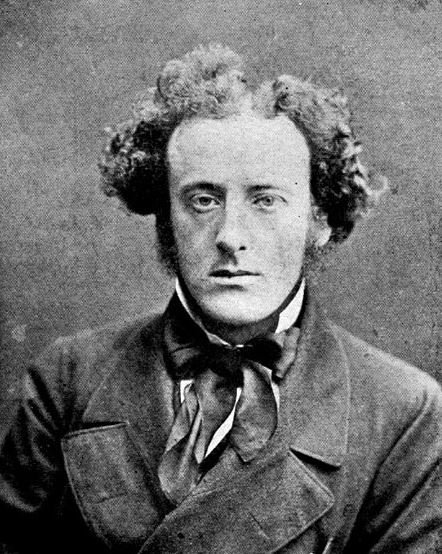
John Everett Millais’s major works, characterized by their meticulous detail and rich symbolism, continue to be admired for their beauty and emotional depth, securing his place as one of the most influential artists of his era. Image: An 1854 picture of Millais.
Early Life and Education
John Everett Millais was born on June 8, 1829, in Southampton Street, London, into a well-to-do family. His father, Thomas Millais, was a successful engraver and lithographer, which provided John with early exposure to the arts. Demonstrating extraordinary talent from a young age, Millais was enrolled at the Royal Academy Schools when he was merely eleven years old, making him the youngest student ever admitted at the time. This early start was indicative of his prodigious abilities and set the foundation for his illustrious career.
English painter John Everett Millais’s exceptional talent was evident from a young age, entering the Royal Academy Schools at just eleven years old, the youngest student at the time.
At the Royal Academy, Millais received rigorous training in classical techniques and principles, learning from esteemed artists such as John Rogers Herbert and Sir Charles Eastlake. However, despite his traditional education, Millais developed a keen interest in exploring new artistic directions, which eventually led him to challenge the established norms of the Royal Academy.
Founding of the Pre-Raphaelite Brotherhood
In 1848, alongside fellow artists William Holman Hunt, Dante Gabriel Rossetti, William Michael Rossetti, James Collinson, Frederic George Stephens, and Thomas Woolner, Millais co-founded the Pre-Raphaelite Brotherhood. Established at his family home in London, 83 Gower Street (now number 7), the PRB was a revolutionary movement aimed at rejecting the mechanistic and formulaic approaches of the Royal Academy. The founders sought to revive the vivid detail, vibrant colors, and morally earnest style of Italian Quattrocento painters, preceding Raphael and Michelangelo.
The Brotherhood’s manifesto emphasized truth to nature, sincere emotion, and complex symbolism, diverging sharply from the academic art of the time. Millais quickly emerged as the most prominent proponent of the Pre-Raphaelite style, leading the movement with his exceptional talent and unwavering commitment to its ideals.
Early Controversial Works
Millais’s early works were instrumental in defining the Pre-Raphaelite aesthetic and generating both acclaim and controversy.
Christ in the House of His Parents (1849–50)
Commissioned by the Anglican Church, Christ in the House of His Parents was one of Millais’s first major works. The painting depicted a realistic and humble portrayal of the Holy Family in their modest home. This departure from the idealized and sanitized religious imagery favored by the establishment caused significant uproar. Critics accused Millais of disrespecting sacred subjects by presenting them in an unembellished and realistic manner. Despite the backlash, the painting was praised for its meticulous detail and emotional depth, showcasing the PRB’s commitment to naturalism and sincerity.
Ophelia (1851–52)
Ophelia is perhaps Millais’s most famous and enduring work. Based on the tragic character from Shakespeare’s Hamlet, the painting captures Ophelia floating in a river, surrounded by an intricate array of flowers and natural elements. The work exemplifies the Pre-Raphaelite dedication to rich color, detailed naturalism, and literary inspiration. Ophelia became emblematic of the movement, highlighting Millais’s ability to blend technical precision with profound emotional resonance. The painting’s stunning realism and symbolic complexity solidified Millais’s reputation as a leading figure in the PRB.
Shift Towards Realism
By the mid-1850s, Millais began to evolve his artistic style, gradually moving away from the strict Pre-Raphaelite approach towards a broader, more realistic form of painting. This transition marked a significant shift in his career, as he sought to appeal to a wider audience and achieve greater commercial success.
The Blind Girl (1856)
Representing one of Millais’s earlier forays into realism, The Blind Girl portrays a young girl suffering from blindness with poignant realism. The painting’s emotional intensity and detailed portrayal of the girl’s condition reflect Millais’s commitment to depicting human suffering and social issues with sincerity and depth.
Spring Frost (1855)
Spring Frost exemplifies Millais’s move towards a more naturalistic style. The painting depicts a family moving their household goods in the early morning frost, capturing the harsh realities of rural life with vivid detail and subdued color tones. This work highlights Millais’s ability to convey everyday scenes with profound emotional and social commentary.
Later Major Works
Millais’s later career was marked by a series of highly successful and influential works that further cemented his legacy as a masterful realist painter.
The Boyhood of Raleigh (1870)
Commissioned by the family of Sir Walter Raleigh, this painting depicts the young Raleigh on a mission to explore the New World. The work is notable for its historical accuracy, detailed naturalism, and dynamic composition. The Boyhood of Raleigh showcases Millais’s ability to blend historical narrative with artistic excellence, creating a work that is both informative and visually compelling.
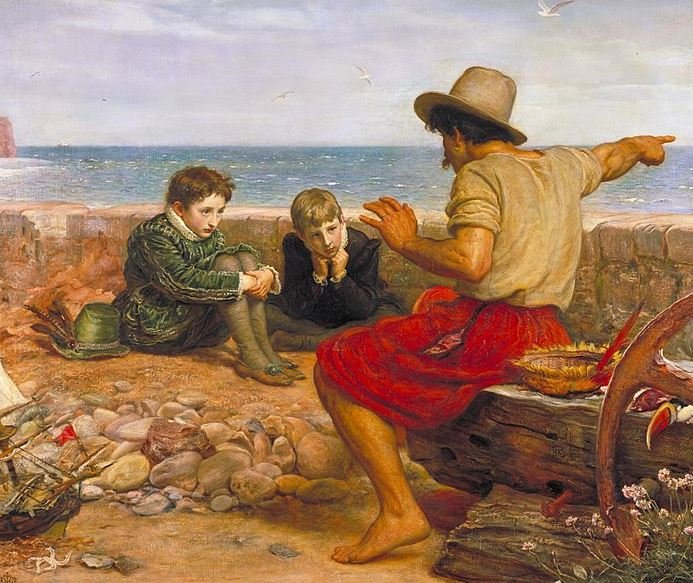
Image: “The Boyhood of Raleigh”
The Hireling Shepherd (1851)
Painted shortly after his introduction to the Pre-Raphaelite Brotherhood, The Hireling Shepherd captures a shepherd with his flock in a pastoral setting. The painting is celebrated for its detailed representation of rural life and the subtle social commentary embedded within the scene. Millais’s use of light and color in this work exemplifies his Pre-Raphaelite roots while hinting at his emerging realist tendencies.
Luncheon of the Boating Party (1862–63)
A departure from his earlier religious and literary themes, this painting portrays a convivial gathering of friends enjoying a meal on a boat. Luncheon of the Boating Party highlights Millais’s versatility as an artist, showcasing his ability to capture lively social interactions with the same meticulous detail and vibrant color that characterized his earlier works.
Personal Life and Influence
Millais’s personal life had a profound impact on his artistic journey. In 1855, he married Effie Gray, a union that followed the annulment of her marriage to the esteemed art critic John Ruskin, a key supporter of Millais’s early work. This marriage not only provided Millais with personal stability but also enhanced his social and intellectual connections, allowing him to secure important commissions and expand his influence within artistic and literary circles.
Effie became a dedicated promoter of Millais’s work, collaborating with him to increase his public visibility and popularity. Their partnership was instrumental in establishing Millais as a leading figure in Victorian art, enabling him to navigate the complexities of the art market and maintain his prominence despite shifting artistic trends.
Critical Reception and Reappraisal
During his lifetime, Millais’s shift towards realism was met with mixed reactions. While his later works achieved enormous commercial success, making him one of the wealthiest artists of his time, this transition attracted criticism from influential figures like William Morris. Critics accused Millais of abandoning the original ideals of the Pre-Raphaelite Brotherhood for more commercially viable pursuits, exemplified by his participation in advertising projects, such as allowing one of his paintings to be used for a soap advertisement.
Early 20th-century critics, influenced by Modernist perspectives, often disparaged his later works, viewing them as lacking the depth and originality of his early Pre-Raphaelite pieces. However, in recent decades, there has been a reevaluation of Millais’s contributions. Scholars now recognize his later paintings as reflective of broader trends in the late nineteenth-century art world, appreciating them for their advanced tendencies and acknowledging their influence on contemporary artistic practices. This reappraisal has helped to restore Millais’s reputation, highlighting his versatility and enduring impact on art.
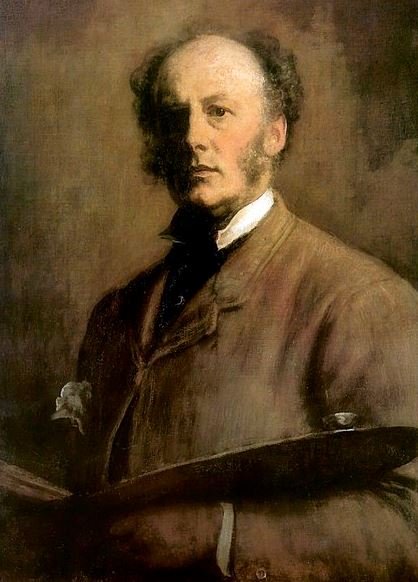
Image: An early 1880s portrait of Millais.
Legacy
Sir John Everett Millais left an enduring legacy as a pioneering artist who played a crucial role in the development of the Pre-Raphaelite movement and Victorian art. His commitment to detailed realism, vibrant color, and symbolic complexity set new standards for artistic excellence. While his later shift towards realism initially attracted criticism, it ultimately contributed to his financial success and broadened his artistic repertoire.
Millais’s work significantly influenced later artistic movements, including the Aesthetic and Arts and Crafts movements. Artists such as Edward Burne-Jones and William Morris drew inspiration from the PRB’s emphasis on beauty, craftsmanship, and moral integrity. Millais’s integration of rich detail and symbolism into his paintings provided a model for future artists seeking to infuse their work with both aesthetic appeal and deeper meaning.
The English painter set high standards for technical proficiency and emotional depth in painting. His meticulous attention to detail and vibrant color schemes continue to inspire artists today, while his ability to convey complex narratives through visual means remains a benchmark for excellence in the art world.
Beyond his artistic achievements, Millais played a significant role in shaping the cultural and social milieu of Victorian England. His works often reflected contemporary social issues and moral concerns, contributing to public discourse through art. Paintings like The Awakening Conscience not only displayed artistic mastery but also engaged with themes of morality and social responsibility.
Millais’s contributions were formally recognized during his lifetime and posthumously. In 1873, he was created a baronet, and he was elected a member of the Royal Academy of Arts, where he served as president from 1896 until his death. These honors underscored his prominence and the respect he commanded within the artistic community.
Today, Millais’s paintings are celebrated in major art institutions around the world. His works continue to be studied and admired for their technical brilliance, emotional resonance, and historical significance. Exhibitions and scholarly research keep his legacy alive, ensuring that Millais remains a vital figure in the history of art.
Frequently Asked Questions
At what age did Millais enter the Royal Academy Schools, and why was this noteworthy?
Millais entered the Royal Academy Schools at the age of eleven, making him the youngest student to do so at the time. This early admission was noteworthy as it highlighted his prodigious talent and set the stage for a distinguished and influential career in art from a very young age.
What was the Pre-Raphaelite Brotherhood, and who were its founding members?
The Pre-Raphaelite Brotherhood (PRB) was an English artistic and literary movement founded in 1848 by seven members: William Holman Hunt, John Everett Millais, Dante Gabriel Rossetti, William Michael Rossetti, James Collinson, Frederic George Stephens, and Thomas Woolner. Established at Millais’s family home in London, the PRB aimed to challenge the prevailing artistic norms of the Royal Academy by reviving the detailed, vibrant, and morally earnest style of Italian Quattrocento painters, preceding Raphael and Michelangelo.
What were the main artistic goals of the Pre-Raphaelite Brotherhood?
The main artistic goals of the PRB were to:
- Revive Quattrocento Italian Art: Emulate the detailed, vibrant, and naturalistic styles of early Renaissance artists.
- Reject Academic Conventions: Oppose the mechanistic and formulaic approaches promoted by the Royal Academy and artists like Sir Joshua Reynolds.
- Infuse Art with Sincerity and Symbolism: Emphasize moral and spiritual themes through intricate symbolism and emotional depth.
- Promote Naturalism: Advocate for direct observation of nature, ensuring faithful and realistic representation in their works.
Which of Millais’s early works generated significant controversy, and why?
Millais’s early masterpiece, Christ in the House of His Parents (1849–50), generated significant controversy upon its release. The painting depicted a realistic and humble portrayal of the Holy Family, challenging the idealized and sanitized religious imagery favored by the establishment. Critics were scandalized by what they perceived as disrespect and the raw, unembellished depiction of biblical figures. Despite the backlash, the painting was also admired for its detailed realism and emotional depth, highlighting the PRB’s commitment to naturalism and sincerity.
What is Ophelia (1851–52), and how did it impact Millais’s reputation?
Ophelia (1851–52) is one of Millais’s most celebrated works, capturing the tragic character from Shakespeare’s Hamlet floating amidst meticulously detailed flowers and natural elements. The painting became emblematic of the Pre-Raphaelite emphasis on rich color, intricate detail, and literary inspiration. Its stunning realism and emotional portrayal solidified Millais’s reputation as a leading figure in the PRB and established him as a master of the movement’s distinctive style.
How did Millais’s artistic style change in the mid-1850s, and what were the consequences?
By the mid-1850s, Millais began to evolve his artistic style, gradually moving away from the strict Pre-Raphaelite approach towards a broader, more realistic form of painting. This transition marked a significant shift in his career as he embraced techniques and subjects that appealed to a wider audience. Millais’s later works achieved enormous commercial success, making him one of the wealthiest artists of his time.
However, this shift attracted criticism from influential figures like William Morris, who accused Millais of abandoning the original ideals of the PRB for more commercially viable pursuits, such as allowing one of his paintings to be used for a soap advertisement.
How was Millais’s shift towards realism received by his contemporaries and later critics?
During his lifetime, Millais’s shift towards realism was often disparaged by former admirers and early 20th-century critics who viewed his move as a departure from the innovative spirit of the Pre-Raphaelites.
Influenced by Modernist perspectives, these critics considered much of his later art to lack the depth and originality of his early work.
However, in recent decades, there has been a reevaluation of Millais’s contributions. Scholars now recognize his later paintings as reflective of broader trends in the late nineteenth-century art world, appreciating them for their advanced tendencies and acknowledging their influence on contemporary artistic practices.
How did Millais’s marriage to Effie Gray influence his career and social standing?
Millais married Effie Gray in 1855, following the annulment of her marriage to the esteemed art critic John Ruskin, a key supporter of Millais’s early work. This marriage provided Millais with personal stability and enhanced his social and intellectual connections, enabling him to secure important commissions and expand his influence within artistic and literary circles.
Effie became a dedicated promoter of Millais’s work, collaborating with him to increase his public visibility and popularity. Their partnership was instrumental in establishing Millais as a leading figure in Victorian art, allowing him to navigate the complexities of the art market and maintain his prominence despite shifting artistic trends.





