Greatest Roman Historians and their Major Works
Roman historiography stands as one of the most influential traditions in the annals of historical writing. Spanning from the early Republic to the twilight of the Empire, Roman historians meticulously chronicled the ebb and flow of power, the valor of its leaders, and the moral underpinnings of its society. These historians not only preserved Rome’s legacy but also shaped the way history was perceived and recorded in Western civilization.
In the article below, World History Edu delves into the lives and major works of ten of the greatest Roman historians, highlighting their unique contributions and enduring impact.
Quintus Fabius Pictor
Quintus Fabius Pictor, a senator and general, is often hailed as Rome’s first historian. Active during the early 3rd century BCE, Pictor was a key figure in Rome’s military and political spheres, participating directly in the Second Punic War against Carthage. His involvement in pivotal battles provided him with firsthand experience, enriching his historical narratives.
During the Second Punic War, Rome’s first annalists, Quintus Fabius Pictor and Lucius Cincius Alimentus, wrote in Greek and relied on historians like Timaeus. Classical Latin histories began in the 2nd century BCE with Cato the Elder’s Origines.
Pictor’s seminal work, Roman History (Historiae Romanae), marked the inception of Roman historiography. Written in Greek, his choice reflected a strategic intent to communicate Rome’s story to the broader Hellenistic world. This work meticulously chronicled Rome’s foundation and early years, employing the “ab urbe condita” framework, which translates to “from the founding of the city.” Pictor’s use of Olympiad dating and a Hellenistic narrative style not only provided chronological clarity but also ensured his work’s accessibility to Greek-speaking audiences.
Pictor’s Roman History laid the groundwork for subsequent Roman historians, establishing key methodologies such as blending myth with historical fact and utilizing external sources to validate Rome’s narrative. His efforts to counteract the negative portrayals by historians like Timaeus underscored the importance of historiography in shaping public perception and national identity.
Lucius Cincius Alimentus
Lucius Cincius Alimentus, another senator and contemporary of Pictor, also contributed to the nascent field of Roman historiography during the Second Punic War. Although less renowned than Pictor, Cincius played a crucial role in documenting Rome’s military and political endeavors.
Cincius authored History of Rome (Historia Romana), also in Greek, aiming to provide a comprehensive account of Rome’s actions and strategies during the tumultuous war period. His work focused on detailed descriptions of battles, diplomatic maneuvers, and the socio-political climate of Rome, offering a contemporaneous perspective on the war against Carthage.
The foundational works of Pictor and Cincius Alimentus set the stage for subsequent historians to explore Rome’s past, influence its present, and shape its future through written accounts.
Despite his contributions, Cincius Alimentus’s works were often critiqued for inaccuracies, notably his exaggerated figures regarding Hannibal’s forces at the Battle of Lake Trasimene. Livy, one of Rome’s foremost historians, preferred Pictor’s accounts over Cincius’s due to these inconsistencies. Nonetheless, Cincius’s efforts exemplify the early struggles of Roman historiography to balance factual reporting with propagandistic elements.
Cato the Elder
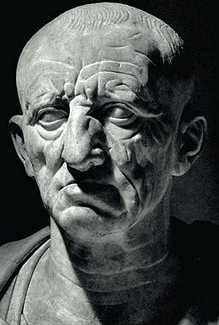
Marcus Porcius Cato, also known as Cato the Elder, was the leader of anti-Carthage faction in Rome’s senate
Marcus Porcius Cato, known as Cato the Elder or Cato the Censor, was a prominent statesman, soldier, and writer in the mid-2nd century BCE. Renowned for his stern moralism and conservative values, Cato was a staunch advocate for traditional Roman virtues and simplicity, often opposing the Hellenization of Roman culture.
Cato’s most notable historical work, Origines (“Origins”), was the first comprehensive Roman history written in Latin. Aimed at educating Romans about their heritage, Origines traced the history of Rome from its mythical beginnings through the early Republic. The work was divided into ten books, each dedicated to different periods and events, replete with legends that highlighted Roman virtues such as bravery, discipline, and piety.
Origines played a pivotal role in cultivating a sense of Roman identity and pride. By writing in Latin, Cato made history accessible to the Roman populace, reinforcing the notion of Rome’s inherent superiority over other cultures, particularly the Greeks. His emphasis on moral lessons intertwined with historical narratives set a precedent for future historians to blend ethical commentary with historical accounts, thereby shaping the moral framework of Roman historiography.
Sallust

Gaius Sallustius Crispus (c. 86–35 BC) was a Roman historian and politician from a plebeian family, likely born in Amiternum, Sabines. A supporter of Julius Caesar, Sallust is the earliest known Latin historian with surviving works, including Conspiracy of Catiline, The Jugurthine War, and fragments of Histories. Politically, he amassed significant, often illicit, wealth during his governorship of Africa. Image: Imaginary portrait of Sallust
Gaius Sallustius Crispus, commonly known as Sallust, was a Roman historian and politician who lived during the 1st century BCE. Born into a minor equestrian family, Sallust rose to prominence through his association with Julius Caesar, which afforded him opportunities in both political and military spheres.
Influenced by Thucydides, Sallust’s writings emphasize political corruption and moral decline.
Sallust authored two significant monographs: Bellum Catilinae (“The Conspiracy of Catiline”) and Bellum Jugurthinum (“The Jugurthine War”). Bellum Catilinae recounts the plot led by Catiline to overthrow the Roman Republic, highlighting the moral and political decay within Roman society. Bellum Jugurthinum details the conflict between Rome and Jugurtha of Numidia, focusing on corruption and incompetence within the Roman political system.
In the 1st century BCE, Roman historians such as Sallust, Livy, and Julius Caesar shifted to fuller narratives.
Sallust’s works are distinguished by their concise and impactful style, characterized by sharp rhetorical devices and moralistic themes. He emphasized the decline of Roman virtues and the rise of corruption, providing a critical lens through which to view the late Republic. His influence extended beyond his lifetime, shaping the narratives of subsequent historians and serving as a cautionary tale about the fragility of republican ideals.
Livy

Roman historian Titus is best known for Ab Urbe Condita, a comprehensive history of Rome from its founding in 753 BC to 9 BC. Livy organized his work into 142 books called “decades,” with only books 1–10 and 21–45 fully surviving. Image: 19th-century statue of Livy at the Austrian Parliament Building
Titus Livius, known in English as Livy, was a Roman historian born in 59 BCE in Patavium (modern-day Padua). Livy dedicated his life to chronicling the history of Rome, earning a reputation as one of the greatest historians of his time. Although he lived through the transition from Republic to Empire, his works primarily focused on the earlier periods of Roman history.
Titus Livius, known as Livy, was a Roman historian born in Patavium (modern Padua) in 59 BC and died there in 17 AD.
Livy’s magnum opus, Ab Urbe Condita (“From the Founding of the City”), comprised 142 books detailing Rome’s history from its legendary foundation in 753 BCE up to his contemporary era. Although only a fraction of these books survive in complete form, the remaining volumes provide an extensive account of Rome’s development, military campaigns, political changes, and societal transformations. Livy organized his work into “decades,” groups of ten books each, making the vast narrative more manageable.
Livy maintained good relations with Augustus and encouraged Claudius to write history. Livy’s writing was praised for its “patavinitas.
Ab Urbe Condita serves as a monumental record of Rome’s evolution, blending historical facts with legends and moral lessons. Livy’s emphasis on the virtues and vices of Rome’s leaders offered a moral framework, illustrating how ethical behavior contributed to the city’s prosperity or decline. His detailed narratives and engaging storytelling made his history accessible and influential, inspiring future generations to view history not merely as a sequence of events but as a source of moral and political guidance.
Julius Caesar

Julius Caesar, born on July 12, 100 BC into a patrician family, initially held the priesthood of Flamen Dialis through his father-in-law Cornelius Cinna. In 58 BC, conflicts in Gaul led him to write “De Bello Gallico” to justify his actions and portray himself as a military hero. Although his accounts are largely accurate, they serve as propaganda. His Commentarii de Bello Civili similarly defends his role in the civil war, emphasizing his protection of Roman liberty.
Gaius Julius Caesar, one of Rome’s most illustrious figures, was born in 100 BCE. A military general, statesman, and pivotal figure in the transition from Republic to Empire, Caesar’s ambitions and actions significantly altered the course of Roman history. His career was marked by military conquests, political alliances, and eventual dictatorship, culminating in his assassination in 44 BCE.
Caesar authored two primary historical works: De Bello Gallico (“The Gallic Wars”) and Commentarii de Bello Civili (“Commentaries on the Civil War”). De Bello Gallico provides a firsthand account of his campaigns in Gaul, detailing military strategies, battles, and interactions with various Gallic tribes. Commentarii de Bello Civili chronicles the civil war between Caesar and Pompey, offering insights into the political maneuverings and conflicts that defined the end of the Roman Republic.
Caesar’s De Bello Gallico focused on Gaul, while broader histories emphasized Rome’s founding myths. These methods influenced later Imperial authors like Tacitus and Suetonius.
Caesar’s commentaries are invaluable for their direct perspective on the military and political events of his time. His clear and concise Latin prose made his works exemplary models of Latin writing, influencing both contemporaries and later historians. Moreover, Caesar utilized his writings as a form of political propaganda, shaping public perception to bolster his image and justify his actions. His blend of objective reporting with personal bias exemplifies the complex interplay between history and personal narrative in Roman historiography.
Tacitus

Publius Cornelius Tacitus (c. AD 56 – c. 120) was a distinguished Roman historian and politician, regarded by modern scholars as one of Rome’s greatest historians. His major surviving works, Annals and Histories, document the Empire from Augustus’s death in 14 AD to Domitian’s death in 96 AD, focusing on emperors like Tiberius, Claudius, Nero, and the Year of the Four Emperors. Other notable writings include Dialogus de oratoribus, Germania, and De vita et moribus Iulii Agricolae. Image: Statue of Tacitus outside the Austrian Parliament Building
Publius Cornelius Tacitus, born around 56 AD in Gaul, was a senator and historian of the early Roman Empire. Serving under emperors such as Vespasian and Domitian, Tacitus had firsthand experience of the political intrigues and power struggles within the imperial court. His career in the Senate and his proximity to imperial authority provided him with unique insights into the workings of the Roman state.
Tacitus is renowned for his four major works: Agricola, Germania, Histories, and Annales. Agricola is a laudatory biography of his father-in-law, the general Gnaeus Julius Agricola, detailing Agricola’s military campaigns in Britain and providing a critique of imperial policies. Germania offers an ethnographic study of the Germanic tribes outside the Roman Empire, emphasizing their customs, social structures, and conflicts with Rome. Histories and Annales are comprehensive accounts of the Roman Empire’s history, focusing on the reigns of emperors and significant political events from the death of Augustus to the end of Domitian’s rule.
Tacitus’s major surviving works, Annals and Histories, document the Empire from Augustus’s death in 14 AD to Domitian’s death in 96 AD, focusing on emperors like Tiberius, Claudius, Nero, and the Year of the Four Emperors.
Tacitus is celebrated for his incisive analysis and critical perspective on the Roman Empire. His works delve into the corruption, moral decay, and abuse of power that characterized the imperial administration. Tacitus’s mastery of Latin and his ability to convey subtle criticism through elegant prose make his histories both literarily and historically significant. His portrayal of emperors and the Senate provides a nuanced understanding of the complexities and contradictions within Roman governance, influencing the way later generations perceive imperial rule.
Suetonius
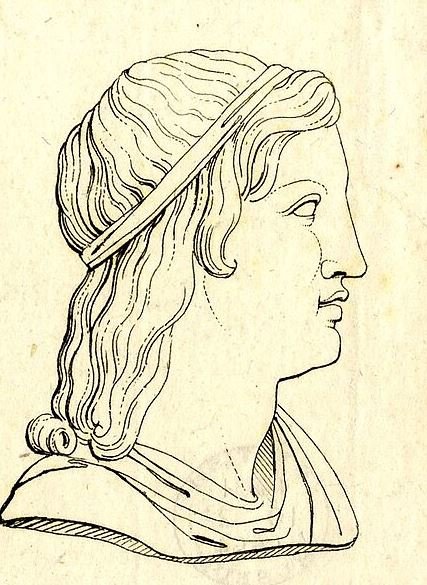
Gaius Suetonius Tranquillus (c. AD 69–after 122) was an early Imperial Roman historian, renowned for De vita Caesarum (The Twelve Caesars) and works on Rome’s daily life and notable figures. Image: 19th-century etching of Suetonius
Gaius Suetonius Tranquillus, known simply as Suetonius, was a Roman historian and biographer born around 69 AD. Serving under the emperors Trajan and Hadrian, Suetonius held various administrative positions, granting him access to the imperial archives and firsthand information about the lives of Roman emperors. His proximity to power enabled him to compile detailed accounts of Rome’s most influential leaders.
Suetonius is best known for his two primary works: De Vita Caesarum (“The Lives of the Caesars”) and De Viris Illustribus (“On Famous Men”). De Vita Caesarum is a collection of twelve biographies covering the Julio-Claudian and Flavian emperors from Julius Caesar to Domitian. Each biography offers a blend of personal anecdotes, political achievements, and scandals, providing a comprehensive portrait of each emperor’s character and reign. De Viris Illustribus includes biographies of prominent literary figures such as poets, grammarians, orators, and philosophers, offering insights into their contributions to Roman culture and society.
Suetonius’s works are invaluable for their rich biographical detail and candid portrayal of emperors. His inclusion of personal and sometimes salacious information about the emperors’ private lives adds depth to the historical record, offering a more humanized view of these powerful figures. Suetonius’s method of organizing biographies thematically rather than chronologically allows for comparative analysis, highlighting similarities and differences among the subjects. His works have served as essential resources for understanding the complexities of imperial leadership and the interplay between personal conduct and public duty in Rome.
Ammianus Marcellinus
Ammianus Marcellinus, born around 330 AD in Antioch, was a Roman soldier and historian who wrote during the reign of Emperor Julian. Serving in the Eastern Roman army, Ammianus gained firsthand experience of the military and political dynamics of his time. His career spanned several decades, providing him with a broad perspective on the events leading to the decline of the Western Roman Empire.

Ammianus Marcellinus (c. 330–c. 391/400) was a Roman soldier and historian who wrote Res gestae, a significant Latin history covering Rome from Emperor Nerva’s accession in 96 to Valens’ death in 378, with surviving sections from 353–378. Image: Res gestae by Roman historian Ammianus Marcellinus
Ammianus authored Res Gestae (“The Deeds”), a comprehensive history covering the period from the reign of Emperor Nerva to the Battle of Adrianople in 378 AD. Although originally comprising 31 books, only the last 13 books survive in complete form. Res Gestae offers detailed accounts of military campaigns, political intrigues, and social conditions, blending narrative history with personal observations.
Ammianus Marcellinus is often regarded as the last great Roman historian, providing a bridge between classical and late antiquity historiography. His meticulous attention to detail and critical analysis of sources set a high standard for historical writing. Ammianus’s work is particularly valuable for its insights into the Roman military, the challenges faced by the empire, and the interactions between Romans and various barbarian groups. His balanced approach, avoiding overt bias, allows readers to gain a nuanced understanding of the complexities and crises that marked the late Roman Empire.
Dio Cassius

Cassius Dio was a Roman politician and historian. His work Roman History is a crucial source for understanding the political, military, and social developments of the Roman Empire. Image: 17th century illustration of Dio
Cassius Dio, known as Dio Cassius, was a Greek historian and senator who lived during the 2nd and early 3rd centuries AD. Born in Nicaea (modern-day İznik, Turkey) around 155 AD, Dio Cassius pursued a career in both military and political spheres, eventually attaining high-ranking positions in the Roman administration. His extensive travels and service under multiple emperors provided him with a wealth of experience and access to imperial records.
Dio Cassius authored Roman History (Historia Romana), an ambitious work intended to encompass the history of Rome from its legendary foundation to his contemporary era. Although originally spanning 80 books, only fragments of his work survive, primarily covering the period from 229 BC to 229 AD. Roman History is distinguished by its comprehensive scope and integration of various sources, including official documents, personal accounts, and earlier histories.
Dio Cassius’s Roman History is a crucial source for understanding the political, military, and social developments of the Roman Empire. His methodical approach to documenting events, combined with his analytical perspective, provides valuable insights into the mechanisms of imperial governance and the challenges faced by Rome over several centuries. Dio Cassius’s emphasis on the transition from Republic to Empire and his critical examination of emperors’ actions contribute significantly to the historiography of Roman political history. His works have been instrumental in shaping modern interpretations of Rome’s imperial phase, offering a detailed narrative that complements the accounts of earlier historians like Tacitus and Suetonius.
Conclusion
From Quintus Fabius Pictor’s foundational Ab Urbe Condita to Dio Cassius’s comprehensive Roman History, these historians not only chronicled events but also interpreted and influenced the understanding of Rome’s past. Their works reflect the complexities of Roman society, politics, and culture, serving as indispensable resources for both contemporaries and future generations.
Frequently Asked Questions

Roman historiography evolved from early annalistic records to sophisticated narratives that intertwined history with moral philosophy and political commentary. Image: The 54 BC denarius depicts Lucius Junius Brutus, Rome’s first consul, flanked by two lictors and an accensus.
Why did Roman historiography emerge strongly during the Second Punic War?
The intense conflict with Carthage during the Second Punic War prompted Rome to document and defend its actions, leading to the emergence of historiography as a means to record and justify Roman endeavors.
Who are considered the founders of Roman historiography?
Quintus Fabius Pictor and Lucius Cincius Alimentus, both senators and participants in the Second Punic War, are recognized as the pioneers of Roman historiography.
Why did Quintus Fabius Pictor write his history in Greek?
Pictor wrote in Greek to reach Greek-speaking audiences and to counter the unfavorable portrayal of Rome by the Greek historian Timaeus, using a Hellenistic style and Olympiad dating.
What is the significance of “ab urbe condita” in Roman historiography?
“Ab urbe condita” (from the founding of the city) established by Pictor became a foundational framework for Roman historical writing, providing a chronological starting point for documenting Rome’s history.
How did Lucius Cincius Alimentus’s work compare to Pictor’s?
While Cincius also wrote in Greek, his contributions were less esteemed by later historians like Livy due to inaccuracies, such as his incorrect figures for Hannibal’s forces at Lake Trasimene.
What was Cato the Elder’s contribution to Roman historiography?
Cato the Elder was the first to compose history in Latin with his work “Origines,” aimed at educating Romans about their heritage and virtues, emphasizing Roman superiority and moral values.
What are the two primary traditions of early Roman historiography?
The two main traditions are the annalistic tradition, which chronicles history year-by-year from Rome’s foundation, and the monographic tradition, which focuses on specific subjects, events, or biographies.
How did political instability influence Roman historiography?
During periods like the social wars of the 70s BCE, historiography became factionalized, with historians like Gaius Licinius Macer and Valerius Antias writing biased histories to support opposing political factions, later used by Livy for balanced narratives.
What distinguishes Roman historiography in terms of themes and purposes?
Roman historiography is characterized by its defense of the Roman state, moralistic themes, and practical aims to educate future leaders. Historians often used their works for propaganda, intertwining history with moral lessons and state prestige.
Who are some major Roman historians and their key contributions?
- Julius Caesar: Wrote “De Bello Gallico” and “Commentarii de Bello Civili,” blending military accounts with personal propaganda.
- Livy: Authored “Ab Urbe Condita,” a comprehensive history of Rome emphasizing moral lessons.
- Sallust: Known for “Bellum Catilinae” and “Bellum Jugurthinum,” highlighting moral decline and political corruption.
- Tacitus: Produced “Agricola,” “Germania,” “Histories,” and “Annales,” offering critical accounts of the Roman Empire.
- Suetonius: Created “De Vita Caesarum” and “De Viris Illustribus,” focusing on biographies of emperors and notable figures.
Bibliography
- Livy (Titus Livius) – Ab Urbe Condita
- Sallust (Gaius Sallustius Crispus) – Bellum Catilinae, Bellum Jugurthinum
- Julius Caesar – De Bello Gallico, Commentarii de Bello Civili
- Tacitus (Publius Cornelius Tacitus) – Agricola, Germania, Histories, Annales
- Suetonius (Gaius Suetonius Tranquillus) – De Vita Caesarum, De Viris Illustribus
- Quintus Fabius Pictor – Roman History (Historiae Romanae)
- Lucius Cincius Alimentus – History of Rome (Historia Romana)
- Cato the Elder (Marcus Porcius Cato) – Origines
- Ammianus Marcellinus – Res Gestae
- Dio Cassius – Roman History (Historia Romana)
Further Reading
For those interested in delving deeper into Roman historiography and its foremost historians, the following works are recommended:
- “The Cambridge Ancient History” – A comprehensive multi-volume series covering the history of the ancient world, including detailed sections on Roman historiography.
- “Roman Historians: Their Lives and Works” by A.E. Astin – An insightful examination of the lives and contributions of key Roman historians.
- “The Historians of Ancient Rome” edited by Ernst Badian – A collection of essays exploring various aspects of Roman historical writing.
- “Historiography and Power in the Early Roman Empire” by Paul Gallivan – An analysis of how historiography was used to shape political narratives during the Roman Empire.






You forgot Josephus.