Constitution of the late Roman Empire
The constitution of the late Roman Empire was an unwritten set of principles and guidelines based on precedent, which centralized power in the hands of the emperor, reducing the influence of the Senate and traditional magistracies.
Summary
The constitution of the late Roman Empire was not a formalized document but rather an unwritten set of guidelines and principles. These rules were passed down through precedent and tradition, defining how the empire was governed. The transition from the Roman Principate to the Dominate marked significant shifts in governance, culminating in a more centralized and monarchical rule. The ascent of Diocletian in AD 284 heralded the beginning of the Tetrarchy, a system designed to bring stability through shared rule. While these reforms sought to address the challenges faced by the empire, they also laid the groundwork for future changes that would shape the governance of the Roman world for centuries.

The vexillum of the Roman Empire.
The End of the Principate and the Rise of the Dominate
The early Roman Empire, known as the Principate, maintained the illusion of a dyarchy where the emperor and the Senate ruled jointly. However, by the time of Diocletian, this pretense was abandoned, and the Dominate officially recognized the emperor as the sole source of power. The Senate’s influence waned, and traditional Republican magistracies lost their real authority. Offices such as the consuls and praetors became largely ceremonial, their primary function limited to presiding over Senate meetings and hosting public games.
Diocletian’s reign marked the decisive shift from the senatorial aristocracy’s political influence toward a more autocratic, bureaucratic administration. The empire’s administrative and military structures were overhauled, reducing the Senate’s role to a vestigial body. The emperor’s authority now superseded any institutional check, reinforcing the centralization of power that would define the late empire.
READ MORE: Senate of the Roman Empire
The Tetrarchy: A New Model of Governance
Diocletian’s most significant constitutional reform was the establishment of the Tetrarchy. This system divided the empire into four parts, each ruled by a separate emperor. Two senior emperors, known as Augusti, governed the eastern and western halves of the empire, while two junior emperors, or Caesares, assisted them and were designated as their successors. This hierarchical structure aimed to ensure stability and prevent power struggles by establishing a clear line of succession.
Diocletian’s reforms laid the groundwork for a more structured and efficient administration, but they also contributed to the growing centralization of power in the emperor’s hands.
While this arrangement provided short-term stability, it did not endure beyond Diocletian’s reign. Following his abdication in AD 305, the Tetrarchy collapsed into civil war as rival claimants fought for control. The failure of the system demonstrated the difficulty of maintaining shared rule in an empire as vast and complex as Rome. Eventually, Constantine the Great would reunify the empire under a single ruler, although he retained many of Diocletian’s administrative reforms.
Administrative Reforms
Diocletian’s reforms extended beyond the structure of the imperial office. He reorganized the empire into smaller administrative units to improve governance and reduce the power of provincial governors, who had previously posed a threat to imperial authority. The empire was divided into two main regions: the Eastern and Western Roman Empires. Each half had a separate administrative capital—Nicomedia in the East and Milan in the West—reflecting the shift away from Rome as the political center.
Additionally, the empire was divided into four prefectures, each overseen by a Praetorian Prefect. These prefectures were further divided into dioceses, which were governed by vicars. The provinces within each diocese were also subdivided to ensure greater control and efficiency. By decentralizing authority and creating a more layered bureaucracy, Diocletian sought to reduce the risk of rebellion and enhance imperial oversight.

Sculpture work depicting the head of Diocletian.
The Imperial Court and the Central Government
The restructuring of governance extended to the imperial court, which became increasingly elaborate and formalized. The emperor surrounded himself with a hierarchy of officials who managed the day-to-day administration of the empire. The most important of these officials was the Imperial Chancellor (Magister Officiorum), who oversaw the civil service and maintained direct communication between the emperor and the provinces.
Other key court officials included the Count of the Imperial Treasury (Comes Sacrarum Largitionum), responsible for financial administration, and the Count of the Private Estates (Comes Rerum Privatarum), who managed the emperor’s personal lands and resources. These high-ranking officials wielded significant power, often acting as the emperor’s chief advisors. Their roles exemplified the increasing bureaucratization of imperial governance, which contrasted sharply with the more informal and senatorial nature of early imperial administration.
Military Reforms and Separation of Civil and Military Authority
Diocletian also sought to reform the military to address internal and external threats. One of his most important reforms was the separation of military and civilian authority. In the earlier empire, provincial governors had often commanded both military and civil administrations, making them potential rivals to the emperor. Diocletian stripped them of military command, placing military authority in the hands of separate generals known as duces (dukes).
The army itself was restructured into two primary forces: the limitanei, or frontier troops, who defended the borders, and the comitatenses, or field armies, which were mobile units capable of responding to threats anywhere in the empire. This division allowed for greater flexibility in military operations and reduced the likelihood of generals amassing enough power to challenge the emperor.
Constantine’s Modifications to the Constitution
After the collapse of the Tetrarchy, Constantine the Great made further changes to Diocletian’s system. While he retained many of the administrative divisions, he abolished the Tetrarchy and re-established a single-ruler system. However, he maintained the Praetorian Prefects, dioceses, and provinces, ensuring the continued functionality of the bureaucratic framework.
Constantine also redefined the role of the emperor, emphasizing his divine status. He adopted the Christian faith and integrated it into the imperial ideology, further centralizing power by positioning himself as God’s representative on earth. This shift reinforced the autocratic nature of the Dominate and diminished the remaining influence of the Senate and traditional aristocracy.
Constantine the Great and his successors modified aspects of Diocletian’s system, the fundamental nature of imperial rule remained unchanged.
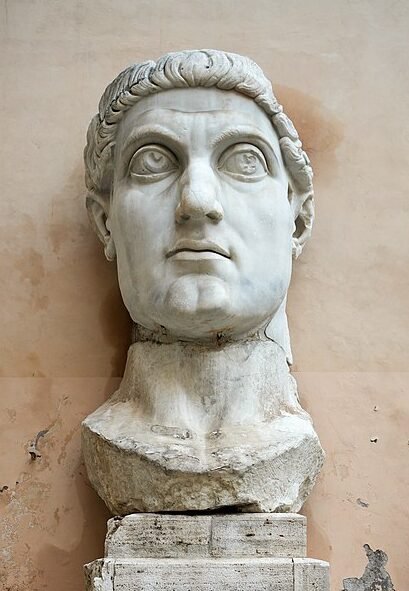
Head of the Colossus of Constantine at the Capitoline Museums in Rome, Italy.
The Role of the Senate in the Late Empire
With the decline of the Principate, the Senate’s role in governance became largely symbolic. Although it continued to exist in both Rome and, later, Constantinople, it had little real power. The Senate retained some judicial and honorary functions, but its legislative and executive influence had been completely eclipsed by the emperor and his court.
The Senate was primarily tasked with overseeing public works, maintaining civic order, and organizing games and festivals. While it still served as a body for the Roman elite, its influence over imperial policy was negligible. The administrative realignment of the empire made the Senate an institution of tradition rather than political power.
The Fiscal Administration and Economic Policies
To support his expansive administrative and military reforms, Diocletian implemented significant changes to the empire’s fiscal system. He introduced a new system of taxation based on land and population assessments, ensuring a more stable revenue stream. Taxation was standardized and collected in kind, meaning that goods such as grain, livestock, and textiles were used to meet tax obligations rather than currency.
Diocletian also attempted to curb inflation through the Edict on Maximum Prices, which sought to regulate the cost of goods and services. However, this policy was largely unsuccessful and was widely ignored due to enforcement difficulties. Nonetheless, his fiscal reforms laid the foundation for a more structured and predictable economic system.
The Decline of the Late Roman Constitution
Despite these extensive reforms, the constitution of the late Roman Empire could not prevent the gradual decline of imperial authority. The administrative complexity of the empire created significant financial burdens, and maintaining a vast military drained resources. Internal power struggles, combined with external pressures from barbarian invasions, ultimately led to the fragmentation of the Western Roman Empire.
By the time of Justinian I (527-565), the regional administrative structure underwent further modifications, and the role of the Treasury and Crown Estates diminished. The collapse of the Western Roman Empire in AD 476 marked the end of centralized rule in the West, while the Eastern Roman Empire, or Byzantine Empire, continued to evolve, retaining many of the late imperial structures but adapting them to new challenges.
Frequently Asked Questions
How did Diocletian’s Tetrarchy change the governance structure?
Diocletian introduced the Tetrarchy, a system in which two senior emperors (Augusti) and two junior emperors (Caesares) ruled different regions of the empire, aiming to ensure stability and an orderly succession.

Sculpture work portraying the four Tetrarchs
Why did the Tetrarchy fail to last beyond Diocletian?
The system collapsed due to internal power struggles and civil wars after Diocletian’s abdication in AD 305, as successors vied for sole control rather than maintaining shared rule.
What was the impact of Diocletian’s administrative reforms?
He reorganized the empire into smaller provinces grouped under dioceses and prefectures, creating a complex bureaucratic system that improved governance but increased administrative costs.
How did Constantine modify Diocletian’s reforms?
Constantine abolished the Tetrarchy, reestablished a single-ruler system, reinforced the emperor’s divine status, and maintained the administrative structure while integrating Christianity into imperial governance.
What role did the Senate play in the late Roman Empire?
The Senate became a ceremonial institution with limited legislative and judicial authority, mainly overseeing municipal affairs and public events, while real power rested with the emperor and his court.
How was the military restructured in the late empire?
The army was divided into frontier troops (limitanei) for border defense and mobile field armies (comitatenses) for rapid response, with military command separated from civil administration to prevent usurpations.
What were the economic consequences of Diocletian’s reforms?
Diocletian introduced a standardized taxation system and attempted price controls with the Edict on Maximum Prices, but economic strain, inflation, and heavy taxation burdened the empire’s financial stability.