Ancient Sumerian God Enki: Origin Story, Worship, Powers & Significance
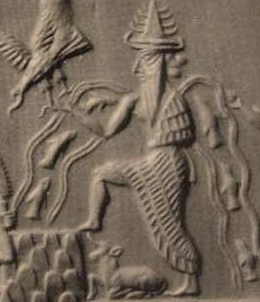
Enki (Sumerian: 𒀭𒂗𒆠 DEN-KI) is the Sumerian god of water, knowledge (gestú), crafts (gašam), and creation (nudimmud), and one of the Anunnaki. Image: Enki illustrated on the Adda Seal, an Akkadian cylinder seal from approximately 2,300 BC.
Enki, one of the most revered deities in ancient Sumerian mythology, embodies the essence of water, knowledge, crafts, and creation. As a pivotal member of the Anunnaki pantheon, Enki’s influence extended far beyond his initial worship in Eridu, shaping the religious and cultural landscapes of Mesopotamia and neighboring civilizations. This comprehensive exploration delves into Enki’s origin story, the nature of his worship, his divine powers, and his enduring significance.
Origin Story
Name and Etymology
Enki’s name (Sumerian: 𒀭𒂗𒆠 DEN-KI) is traditionally translated as “Lord of the Earth.” This interpretation stems from the Sumerian elements “En,” meaning “lord” or a title comparable to “high priest,” and “Ki,” which translates to “earth.” However, the exact meaning remains uncertain, with alternative theories proposing that “Ki” could derive from “kig,” a term of unknown significance, or “kur,” meaning “mound.”
Originally the patron god of Eridu, his cult spread throughout Mesopotamia and to the Canaanites, Hittites, and Hurrians. Enki was linked to constellations and the planet Mercury.
Additionally, Enki is frequently identified with the name “Ea” (Akkadian: 𒀭𒂍𒀀), suggesting a possible Hurrian origin or a derivation from the Semitic root hyy, meaning “life,” potentially linked to “spring” or “running water.” In Sumerian, “E-A” translates to “the house of water,” likely referencing the shrine dedicated to Enki at Eridu.
Role and Evolution
Originally, the primary deity associated with Eridu was Abzu, representing the subterranean waters or the freshwater sea. Over time, Enki emerged as a central figure, often depicted as the divine consort of the goddess Ninhursag. This transition involved Enki assuming Abzu’s attributes, including his fertilizing powers as the lord of waters and semen.
Numerous myths about Enki exist from Southern Iraq to the Levant, and he remained prominent from the third millennium BCE to the Hellenistic period.
Scholar Thorkild Jacobsen hypothesized that Enki gradually supplanted Abzu as Eridu’s chief deity, while P. Steinkeller suggested that Enki initially held a subordinate role to a goddess, likely Ninhursag, before rising to prominence. This evolution highlights the dynamic nature of Sumerian religious practices and the shifting prominence of deities within their pantheon.
Worship
Main Temples and Locations
Enki’s primary place of worship was the city of Eridu, considered one of the earliest urban centers in Southern Iraq. His main temple, known as E-abzu (“abzu temple”) or E-en-gur-a (“house of the subterranean waters”), was a monumental ziggurat situated near the marshlands of the Euphrates River by the ancient Persian Gulf coastline. This temple is recognized as the earliest known in Southern Iraq, dating back over 6,500 years to the Ubaid period.
Temple Features and Rituals
Throughout its 4,500-year history, Enki’s temple underwent 18 expansions, reflecting its enduring significance until its abandonment during the Persian period. Excavations revealed several key features:
- Fresh Water Pool: Located at the entrance, symbolizing Enki’s dominion over water and serving as a focal point for purification rituals.
- Communal Feasts: Numerous carp bones were found, indicating that communal feasts, possibly involving the consumption of sacred fish, were integral to worship practices.
- Twin Water Flows: Representing Enki’s connection to the Tigris and Euphrates rivers, these water features underscored the sacred role of water in religious ceremonies.
These elements not only highlighted water’s sacred role in worship but also set architectural and ritual precedents for subsequent Sumerian temples, emphasizing continuity and the centrality of water in Sumerian religious life.
Spread of Worship
While Enki was originally the patron god of Eridu, his cult gradually spread throughout Mesopotamia and extended to neighboring cultures, including the Canaanites, Hittites, and Hurrians. This widespread adoption underscores Enki’s universal appeal and the adaptability of his worship across diverse cultural contexts.
Powers
Domain and Attributes
Enki’s divine portfolio was vast, encompassing several key areas:
- Water: As the god of freshwater, Enki controlled rivers, streams, and subterranean waters, vital for agriculture and sustenance.
- Knowledge (Gestú): Enki was revered as the god of wisdom and intellectual pursuits, often associated with the dissemination of knowledge and cultural advancements.
- Crafts (Gašam): He was the patron of artisans and craftsmen, overseeing the creation and mastery of various crafts.
- Creation (Nudimmud): Enki played a central role in creation myths, including the creation of humanity and the establishment of civilization.
Mythological Roles
Enki’s powers were vividly portrayed in various Sumerian myths, illustrating his multifaceted nature:
- Creation of Life and Fertility: In the epic “Enki and Ninhursag,” Enki transforms the barren land of Dilmun into a fertile paradise by bringing fresh water, symbolizing his role as a life-giver and sustainer.
- Making of Man: In the Babylonian “Enûma Eliš,” Enki subdues the rebellious Abzu and assists in creating humans from clay and Kingu’s blood. This act establishes humans as servants of the gods, ensuring the cosmos remains functional.
- Uniter of Languages: The Sumerian epic “Enmerkar and the Lord of Aratta” credits Enki with unifying human language by altering speech, thereby facilitating communication and societal coherence.
- The Deluge: In flood myths like the “Eridu Genesis” and the “Legend of Atrahasis,” Enki consistently aids humanity by instructing heroes to build boats to survive divine floods, highlighting his compassionate nature.
- Interactions with Other Deities: In myths such as “Enki and Inanna” and “Inanna’s Descent,” Enki plays supportive roles, aiding other gods and goddesses in their endeavors, further emphasizing his role as a mediator and protector.
Symbolism and Iconography
Enki’s divine powers were often depicted through rich symbolism:
- Water Streams: Representing his control over freshwater, often shown flowing into his shoulders.
- Flounced Skirt and Cone-Shaped Hat: Signifying his divine status.
- Horned Crown: A common symbol of divinity in Mesopotamian iconography.
- Trees and Eagles: Symbolizing nature’s dual aspects and Enki’s role in life and replenishment.
- Keeper of the “Me”: Enki was portrayed as the guardian of the “Me,” the divine powers or gifts of civilization, further cementing his association with knowledge and culture.
Significance
Cultural Integration and Syncretism
Enki’s influence transcended Sumerian boundaries, integrating into various Mesopotamian civilizations and beyond:
- Akkadian and Babylonian Traditions: Known as Ea, Enki retained his attributes as a god of wisdom, water, and creation. His temple at Eridu influenced architectural and religious practices across these cultures.
- Canaanite, Hittite, and Hurrian Religions: Enki was identified with gods like Ia in Canaanite religion and was recognized as a god of contracts and protector of humanity in Hurrian and Hittite mythologies. This syncretism reflects his widespread appeal and adaptability.
Literary and Religious Legacy
Enki features prominently in a multitude of ancient texts, ensuring his enduring presence in Mesopotamian literature and religious thought:
- Epic Narratives: Stories like “Enki and Ninhursag,” “Enmerkar and the Lord of Aratta,” and flood myths portray his central role in creation, civilization, and divine-human interactions.
- Hymns and Inscriptions: Enki is celebrated in various hymns and royal inscriptions, highlighting his importance in both religious and political spheres.
- Preservation in Archives: Libraries such as that of Assurbanipal and archives at Hattusas have preserved numerous myths and hymns dedicated to Enki, ensuring his stories were passed down through generations.
Architectural Influence
Enki’s worship influenced architectural practices beyond his primary temple:
- Sacred Water Pools: The inclusion of water features in his temple became standard in subsequent Sumerian temples and were later adopted in religious structures like mosques and Christian churches.
- Ziggurat Design: The monumental ziggurat of E-abzu set architectural standards for temple construction, emphasizing grandeur and the centrality of water in religious worship.
Political Significance
While primarily a religious figure, Enki’s prominence had political implications:
- Sacred City of Eridu: Even after Eridu lost its political significance, its status as a sacred city persisted, underscoring the lasting influence of Enki’s worship.
- Shift in Divine Attributes: The transfer of divine attributes from Enki to other gods like Marduk in Babylon reflects shifting political and religious landscapes, where deities associated with earlier centers of power adapted to new cultural contexts.
Ethical and Moral Influence
Enki’s myths convey profound moral and ethical lessons:
- Balance and Responsibility: Stories such as Enki falling ill from overindulgence symbolize the dangers of excess and the importance of moderation.
- Stewardship and Compassion: His role in creating humans and aiding them during crises emphasizes themes of stewardship, compassion, and ethical treatment of creation.
- Promoting Harmony: Enki’s actions often aim to maintain harmony and balance within the cosmos, encouraging responsible behavior and societal cohesion.
Influence on Later Cultures
Elements of Enki’s mythology influenced later religious and cultural narratives:
- Biblical Parallels: The title “Ninti,” meaning “the mother of all living,” parallels the Biblical Eve, reflecting shared themes of creation and the origins of humanity.
- Astronomical Associations: Enki was linked to celestial bodies such as the planet Mercury and the star Canopus, integrating his divine persona with astronomical phenomena recognized by later cultures.
Frequently Asked Questions

Enki was later known as Ea or Ae in Assyrian-Babylonian religion, and some scholars associate him with Ia in Canaanite religion. In Greek sources, he was called Aos. Image: Depiction of God Ea seated, holding a cup, from Nasiriyah, southern Iraq, 2004–1595 BC. Iraq Museum.
What is the most widely accepted meaning of Enki’s name, and what are the alternative theories?
The most widely accepted translation of Enki’s name is “Lord of the Earth,” derived from the Sumerian “En” (lord/high priest) and “Ki” (earth). Alternative theories suggest that “Ki” might originate from “kig,” a term of unknown meaning, or “kur,” meaning “mound.” Additionally, Enki is often identified with “Ea,” which some scholars believe is of Hurrian origin or derived from the Semitic root hyy, meaning “life,” possibly relating to “spring” or “running water.” In Sumerian, “E-A” translates to “the house of water,” potentially referencing his shrine at Eridu.
How did Enki’s role evolve from the original deity associated with Eridu?
Initially, Abzu was the primary deity of Eridu, representing subterranean waters or the freshwater sea. Over time, Enki emerged as a central figure, depicted as the divine lover of the goddess Ninhursag. This transition saw Enki adopting Abzu’s attributes, including his fertilizing powers as the lord of waters and semen. Thorkild Jacobsen suggested that Enki gradually supplanted Abzu as Eridu’s chief deity, while P. Steinkeller proposed that Enki initially held a subordinate role to a goddess before rising to prominence.
What were the key features of Enki’s main temple, and why were they significant?
Enki’s main temple, E-abzu (“abzu temple”) or E-en-gur-a (“house of the subterranean waters”), was a ziggurat located near the Euphrates marshlands at Eridu. Dating back over 6,500 years to the Ubaid period, the temple underwent 18 expansions over 4,500 years before its abandonment during the Persian period. Key features included a fresh water pool at the entrance, numerous carp bones indicating communal feasts, and twin water flows symbolizing Enki’s connection to the Tigris and Euphrates rivers. These elements emphasized water’s sacred role in worship and set a precedent for subsequent Sumerian temples.
How is Enki typically depicted in Sumerian iconography?
Enki is often portrayed with symbols representing his dominion over water and life. On the Adda Seal, an Akkadian cylinder seal from around 2300 BC, he is shown with two streams of water flowing into his shoulders, symbolizing the Tigris and Euphrates. He wears a flounced skirt, a cone-shaped hat, and a horned crown signifying divinity. Accompanied by two trees symbolizing nature’s dual aspects and an eagle descending to his arm, these images highlight Enki’s role as the god of water, life, and replenishment. Additionally, he is depicted as the keeper of the “Me,” the divine powers or gifts of civilization.
What role does Enki play in the creation myths of Sumerian mythology?
In Sumerian myths, Enki is central to creation and the establishment of civilization. In “Enki and Ninhursag,” he brings fresh water to the barren land of Dilmun, transforming it into a fertile region, symbolizing water’s life-giving properties. In the Babylonian “Enûma Eliš,” Enki subdues the threatening Abzu and assists in creating humans from clay and Kingu’s blood, establishing humans as servants of the gods. These roles underscore Enki’s position as a benefactor and protector of humanity, emphasizing themes of creation, fertility, and balance.
How does Enki contribute to the unification of languages according to Sumerian epics?
In the Sumerian epic “Enmerkar and the Lord of Aratta,” Enki is credited with unifying human language. By altering speech, he facilitates communication and debate among kings, promoting societal coherence and intellectual development. This aspect of Enki highlights his role in fostering civilization and enhancing human cooperation through linguistic standardization.
What is Enki’s involvement in Sumerian flood myths, and what does it signify?
In flood myths like the “Eridu Genesis” and the “Legend of Atrahasis,” Enki consistently aids humanity. He advises flood heroes such as Ziusudra and Atrahasis to build boats to survive the deluge, preventing the complete annihilation of humans. These interventions showcase Enki’s compassionate nature and his commitment to preserving life against divine wrath, emphasizing themes of mercy and protection.
Describe the relationship between Enki and the goddess Inanna in Sumerian mythology.
In the myth “Enki and Inanna,” Enki and the goddess Inanna engage in a drinking contest, after which Enki, intoxicated, gifts Inanna the “mes” (divine decrees), symbolizing the transfer of cultural and civilizational elements. In “Inanna’s Descent,” Enki assists Inanna during her perilous journey to the underworld, reinforcing his image as a helper and protector. These stories highlight Enki’s supportive role in the affairs of other deities and his influence on cultural development.
How did Enki’s worship influence later Mesopotamian civilizations and other cultures?
Enki, later known as Ea in Akkadian and Babylonian traditions, maintained his significance as a god of wisdom, water, and creation. His temple at Eridu influenced architectural and religious practices across Mesopotamia, with sacred water pools becoming standard in temples and later religious structures like mosques and Christian churches. Enki was syncretized with gods from neighboring cultures, such as El in the Canaanite pantheon and possibly Yah in certain Semitic traditions. In Hurrian and Hittite mythology, he was recognized as a god of contracts and protector of humanity, reflecting his widespread appeal and adaptability.
What ethical and moral lessons are conveyed through Enki’s myths?
Enki’s myths often emphasize balance, responsibility, and the dangers of excess. For instance, the story of Enki falling ill from consuming his own semen symbolizes the consequences of overindulgence and the importance of moderation. Additionally, his role in creating humans and assisting them during crises underscores themes of stewardship, compassion, and the ethical treatment of creation. These narratives convey moral lessons about maintaining harmony and acting responsibly within society and the natural world.





eve prior adam and eve