Renowned for their unique language, artistic achievements, and complex political structures, the Elamites left an enduring legacy that influenced subsequent civilizations, particularly the Persian Empire.
In the article below, World History Edu delves into the history, origins, significance, and legacy of the Elamites, highlighting their contributions to human civilization.
Origins

Elam was a fascinating ancient civilization located in what is now western and southwestern Iran, extending into parts of southern Iraq. Image: A map depicting the extent of the Elamite Empire (highlighted in orange) alongside neighboring regions.
Elam was strategically situated in the fertile lowlands of the Karun River, primarily within the boundaries of present-day Khuzestān and Ilam provinces in Iran, extending into parts of southern Iraq. This location provided Elam with access to vital trade routes and natural resources, facilitating interactions with neighboring civilizations such as Sumer, Akkad, and later Assyria. The region’s diverse geography, encompassing river valleys, highlands, and arid plains, contributed to the development of distinct cultural and political centers within Elam.
The origins of Elam can be traced back to the Proto-Elamite period (c. 3200 – 2700 BCE), a time marked by early urbanization and the formation of city-states. Key centers during this era included Anshan, Awan, and Shimashki, which later coalesced into a more unified Elamite state. The emergence of Susa as a prominent city around 4000 BCE underscores its longstanding significance as a cultural and political hub. Proto-Elamite artifacts, such as pottery and seals, indicate a society influenced by Mesopotamian innovations while retaining unique Elamite characteristics.
The name “Elam” comes from Sumerian and Akkadian terms, while classical sources referred to it as Susiana, named after its capital, Susa.
The Elamites referred to their homeland as Hatamti in the Linear Elamite script and Haltamti in Cuneiform Elamite, reflecting their distinct linguistic identity. Elamite is classified as a language isolate, meaning it has no known relation to other language families, including neighboring Semitic and Indo-European languages. This linguistic uniqueness underscores the Elamites’ separate cultural identity despite extensive interactions with surrounding civilizations. The use of both Linear and Cuneiform scripts highlights Elam’s adaptability and its engagement with broader writing traditions of the ancient world.
History

Proto-Elamite Period (c. 3200 – 2700 BCE)
The Proto-Elamite period marks the dawn of Elamite civilization, characterized by the establishment of early urban centers and the development of administrative systems. The city of Susa emerged as a critical site for trade and cultural exchange with Sumer, evidenced by Proto-Elamite seals and pottery that blend local styles with Mesopotamian influences.
This period also saw the consolidation of smaller states into more organized political entities, laying the groundwork for future Elamite dynasties. The Proto-Elamite script, though undeciphered, represents one of the earliest writing systems in the region, indicating a complex bureaucratic society.
Old Elamite Period (c. 2700 – 1500 BCE)
The Old Elamite period witnessed the rise of powerful dynasties, notably the Awan and Simashki dynasties, which established Elam as a formidable political force in the Near East. The Awan dynasty (c. 2350 – 2150 BCE) engaged in both conflict and cooperation with the Akkadian Empire, facing subjugation under Sargon of Akkad before asserting independence under King Kutik-Inshushinak. The Simashki dynasty continued these interactions, including the notable sacking of Ur by King Kindattu, demonstrating Elam’s military prowess and strategic ambitions.
This period was marked by the construction of significant architectural projects, such as temples and administrative buildings, reflecting Elam’s growing complexity and organizational capabilities. The Old Elamite period also saw increased use of the Elamite language in inscriptions, solidifying its role in governance and administration.
Middle Elamite Period (c. 1500 – 1100 BCE)
The Middle Elamite period was dominated by the Anshanite dynasties, including the Kidinuids, Igihalkids, and Shutrukids. This era emphasized the “Elamisation” of Susa, integrating cultural and administrative practices from Anshan into the lowland city. The Shutrukid dynasty (c. 1210 – 1100 BCE) exemplified Elamite expansionism, conducting military campaigns into Kassite Babylonia and capturing significant Mesopotamian artifacts, such as the statues of Marduk and Hammurabi. These conquests not only demonstrated Elam’s military strength but also facilitated cultural exchanges and the dissemination of Elamite art and administration across the region.
Architectural advancements continued with the construction of monumental structures like the ziggurat at Chogha Zanbil, showcasing Elam’s architectural ingenuity and religious devotion. The Middle Elamite period also faced challenges from Kassite invasions, yet Elamite resilience ensured the continuity of their political and cultural institutions.
Neo-Elamite Period (c. 1100 – 540 BCE)
The Neo-Elamite period represents the final phase of Elamite civilization, characterized by increased pressure from the expanding Neo-Assyrian Empire. Despite temporary alliances and military campaigns aimed at preserving sovereignty, Elam struggled against the formidable Assyrian military machine. Internal strife, including dynastic conflicts and political fragmentation, further weakened Elam’s ability to resist external invasions.
Key events in this period include the Assyrian sack of Susa, which marked the decline of Elamite political power. The incorporation of Elam into the Median and later Achaemenid Empires signaled the end of Elam as an independent entity. However, Elam’s cultural and administrative practices were absorbed and integrated into these emerging empires, ensuring the preservation of many Elamite traditions.
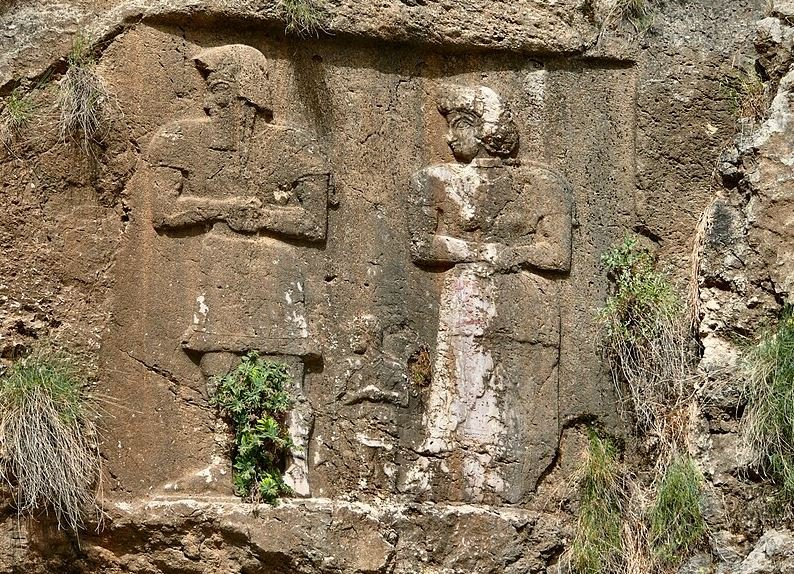
Image: Elamite relief depicting a male and a female (right).
Significance
Elam was a major political player in the Ancient Near East, frequently interacting with powerful neighbors like Sumer, Akkad, and Assyria. The ability of Elamite dynasties to navigate complex alliances and conflicts underscored their political acumen and strategic importance. Elam’s military campaigns, particularly during the Old and Middle Elamite periods, showcased their capability to exert influence beyond their borders, impacting the political dynamics of Mesopotamia and Babylonia.
Elamite culture was rich and multifaceted, with significant contributions to art, architecture, and writing. Elamite art is distinguished by its intricate statuettes, cylinder seals, and monumental architecture. The Statue of Queen Napir-Asu and the Stele of Untash-Napirisha are exemplary artifacts that illustrate Elamite artistic sophistication and religious symbolism. These works not only served religious and ceremonial purposes but also demonstrated the Elamites’ technical skill and aesthetic sensibilities.
The construction of monumental structures like the ziggurat at Chogha Zanbil highlights Elam’s architectural advancements and religious devotion. Elamite cylinder seals evolved from simple designs to highly complex forms, serving as personal identifiers and tools for administrative control, reflecting the civilization’s bureaucratic complexity.
Elam was a central node in ancient trade networks, engaging in extensive economic interactions with neighboring civilizations, particularly the Indus Valley Civilization. Archaeological discoveries in Susa have unearthed numerous Indus artifacts, including carnelian beads and shell bracelets, indicating robust maritime and overland trade routes. These trade relationships facilitated cultural exchanges and contributed to Elam’s economic prosperity, allowing for the accumulation of wealth and the patronage of artistic and architectural projects.
The decline of trade after 1900 BCE, coinciding with the decline of the Indus Valley Civilization, did not diminish Elam’s earlier economic achievements. Instead, it highlighted the civilization’s integration into broader ancient trade networks, emphasizing Elam’s role in the economic landscape of the Ancient Near East.
Elamite religion was polytheistic, featuring a diverse pantheon of gods and goddesses who played vital roles in both the natural and supernatural realms. The integration of local deities like Inshushinak and Kiririsha with gods from neighboring cultures, such as the Mesopotamian Ishtar, reflects the dynamic and syncretic nature of Elamite religion. This religious flexibility facilitated cultural exchanges and reinforced Elam’s influence across different regions.
Linguistically, Elamite’s status as a language isolate underscores the distinct cultural identity of the Elamites. Despite linguistic differences, the adoption of cuneiform scripts adapted from Akkadian illustrates Elam’s engagement with broader writing traditions, enabling administrative control and cultural continuity.
Legacy
The legacy of Elam endured beyond its political dissolution through its integration into the Achaemenid Empire. The Achaemenids inherited and assimilated many Elamite cultural and administrative practices, such as the use of Elamite as one of the official languages alongside Old Persian and Babylonian. Titles like “king of Anshan” and elements of Elamite art and religion were incorporated into Persian traditions, facilitating a cultural continuity that bridged ancient Elam and later Persian empires.
Elamite administrative practices influenced the bureaucratic systems of the Achaemenids, contributing to the efficiency and cohesion of the Persian Empire. This integration highlights the enduring significance of Elamite culture in shaping the governance and cultural landscape of subsequent civilizations.
Elamite cultural and religious practices continued to influence Persian traditions long after the fall of Elam. The persistence of Elamite religious personnel and cults within the Achaemenid Empire ensured that Elamite deities remained integral to Persian religious life. Architectural styles and artistic motifs from Elam were incorporated into Persian art, reflecting a synthesis of Elamite and Persian aesthetics.
The Elamites also served as cultural conduits, facilitating the transmission of Mesopotamian innovations to the Iranian plateau. This role was crucial in the development of Persian civilization, as Elamite practices were blended with indigenous traditions to create a unique and enduring cultural identity.
Today, the legacy of the Elamites is preserved in modern Iran through the names of regions such as Ilam and Khuzestan, which honor the historical presence of the Elamite civilization. These regions continue to celebrate their ancient heritage through archaeological sites, museums, and cultural initiatives that highlight Elam’s contributions to Iranian history.
Elamite artifacts, including statues, seals, and architectural remnants, are invaluable to understanding Iran’s ancient past. Continued archaeological research and preservation efforts ensure that the legacy of Elam remains a vital part of Iran’s cultural and historical identity.
Greatest Cities in Persian Empire
Conclusion
The Elamites were a cornerstone of ancient Near Eastern civilization, whose history, origins, and cultural achievements significantly influenced the region’s political and cultural dynamics. From their early urbanization and unique linguistic identity to their sophisticated art and resilient political structures, the Elamites demonstrated remarkable adaptability and innovation. Their legacy, preserved through integration into the Achaemenid Empire and celebrated in modern Iran, underscores the enduring impact of Elamite civilization on subsequent cultures and empires.





