Salt Men of Iran: Origin Story, Discovery, and Significance
The ancient Iranian salt mine mummies, commonly referred to as the “Salt Men of Iran,” are a remarkable archaeological discovery that sheds light on the lives and deaths of individuals who lived thousands of years ago. Found in the Chehrabad salt mine, located near Zanjan in northwestern Iran, these mummies have been naturally preserved by the unique properties of the salt-rich environment. The preservation of their bodies, clothing, and personal artifacts offers a rare glimpse into ancient cultures, trade networks, and mining practices.
Discovery of the Salt Men
The first Salt Man was discovered in 1993 when miners working in the Chehrabad mine came across a mummified body. Initial examinations revealed that the individual had been naturally preserved due to the high salt concentration in the mine, which inhibited bacterial decay and desiccated the soft tissues. The mummy, with its reddish skin and tufts of hair still intact, astonished archaeologists.
Subsequent excavations unearthed more mummies, with at least six individuals identified to date. These mummies date back to different historical periods, ranging from the Achaemenid Empire (circa 550–330 BCE) to the Sasanian Empire (circa 224–651 CE). Some bodies were buried deep within collapsed sections of the mine, indicating they might have been trapped during mining accidents.
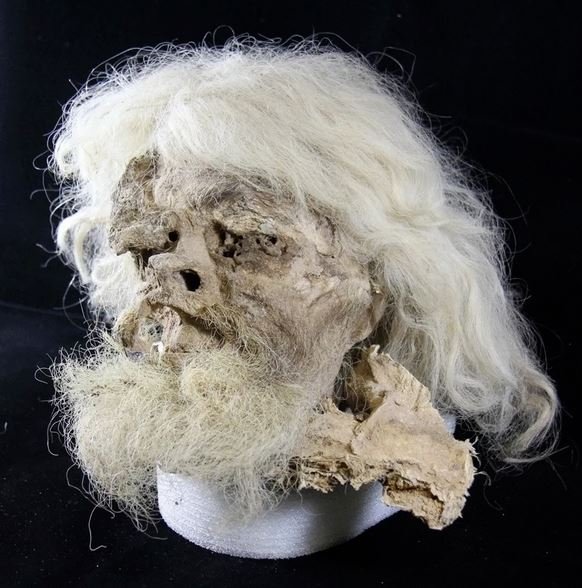
The preserved head of Salt Man 1, exhibited at the National Museum of Iran in Tehran.
READ MORE: Rulers of the Achaemenid Empire: From Cyrus the Great to Artaxerxes V
Scientific Analysis of the Mummies
The Salt Men have been the subject of multidisciplinary research, employing techniques such as radiocarbon dating, DNA analysis, and isotopic studies to understand their origins and lifestyles.
Radiocarbon Dating
Radiocarbon dating revealed that the mummies span a period of over a thousand years. The earliest, known as Salt Man 1, dates to around 400 BCE, during the Achaemenid period. The most recent mummy belongs to the Sasanian period, roughly 1,300 years later.
DNA Analysis
DNA analysis provided insights into the genetic profiles of the Salt Men, suggesting they were a diverse group. Some were likely locals, while others may have traveled from distant regions. This diversity underscores the significance of the Chehrabad mine as part of broader trade and economic networks.
Isotopic Studies
Isotopic analysis of teeth and bones offered information about the diets and living conditions of these individuals. The Salt Men consumed a varied diet, including cereals and proteins, indicating a relatively well-nourished population. Some isotopic signatures suggest that they lived in highland areas before working in the mines.
Preservation and Artifacts
The remarkable preservation of the Salt Men extends beyond their bodies. Clothing, tools, and other personal items have also survived, providing a snapshot of their daily lives.
The Salt Men wore garments made of wool and leather, which have been well-preserved due to the desiccating properties of the salt. These textiles include trousers, tunics, and shoes, showcasing the sophisticated weaving and tailoring techniques of the time.
Artifacts found with the mummies include leather belts, knives, wooden tools, and even food items like seeds. These objects reflect the practical needs of miners and hint at the broader cultural practices of the time.
Some mummies exhibit distinctive features, such as long hair and beards, preserved in astonishing detail. For example, Salt Man 1’s hair was dyed with henna, suggesting a cultural or ritualistic practice. Others show signs of injuries, likely caused by mining accidents, emphasizing the dangers of their work.
Cultural and Historical Significance
The Salt Men provide invaluable insights into the socio-economic and cultural dynamics of ancient Iran. Their discovery underscores the importance of salt as a commodity in antiquity and highlights the role of mining in sustaining ancient economies.
Salt was a valuable resource in ancient times, essential for food preservation, seasoning, and various industrial processes. The Chehrabad mine likely played a significant role in supplying salt to surrounding regions, making it an important economic hub.
Artifacts and isotopic evidence suggest that the mine was part of extensive trade networks. Items found in the mine, such as textiles and tools, may have been imported, indicating connections with other regions. This reflects the interconnectedness of ancient societies and the significance of trade in shaping cultural exchanges.
The presence of diverse individuals among the mummies raises questions about the social organization of mining operations. Were these miners free laborers, conscripted workers, or enslaved individuals? The evidence is inconclusive but points to a complex social structure.
The Mystery of the Salt Men
Despite the wealth of information gleaned from the mummies, many questions remain unanswered. How did these individuals end up in the mine? Were they victims of accidents, or were their burials intentional?
The positioning of some bodies suggests they were trapped during mine collapses. This theory is supported by the presence of tools and mining debris around the mummies. However, the lack of systematic burial practices raises questions about the mine’s safety protocols and the risks faced by workers.
Some researchers have speculated that the placement of certain mummies might have been intentional, possibly as part of ritualistic practices. However, there is little concrete evidence to support this hypothesis.
The Salt Men exhibit signs of wear and tear consistent with strenuous labor, including joint degeneration and fractures. However, they also show signs of relatively good health overall, suggesting they were well-fed and cared for. Ongoing studies aim to uncover more about their living conditions and health status.
Preservation Efforts and Challenges
The discovery of the Salt Men has posed significant challenges for archaeologists and conservationists. The same salt that preserved the mummies poses a threat to their long-term stability once removed from the mine.
Researchers have employed innovative methods to stabilize and preserve the mummies. These include controlled storage environments with regulated temperature and humidity, as well as specialized materials for transporting and displaying the remains.
The display of human remains raises ethical questions about the treatment of the deceased and the cultural context of their discovery. Efforts have been made to balance scientific research with respect for the cultural and historical significance of the Salt Men.

The remains of one of the Salt Men, labeled Saltman 4, poignantly capture the harrowing nature of his final moments, with his body frozen in an enduring expression of panic.
Cultural Heritage and Public Engagement
The Salt Men have become an important part of Iran’s cultural heritage, attracting both scholarly interest and public attention. Exhibitions showcasing the mummies and their artifacts have been organized to educate the public about their significance.
Several of the Salt Men are housed in museums in Iran, where they are displayed alongside explanatory materials about their historical context. These exhibits aim to highlight the importance of ancient mining practices and the role of salt in shaping civilizations.
The Chehrabad mine has also become a site of interest for cultural tourism. Efforts have been underway to develop the site into a protected heritage area, ensuring its preservation for future generations.
Future Research Directions
The Salt Men continue to be a focus of ongoing research, with new technologies and methodologies offering fresh insights into their lives and deaths.
Advances in DNA sequencing may provide more detailed information about the genetic backgrounds and familial relationships of the Salt Men. This could shed light on the demographic makeup of the mining community.
Further studies of the mummies’ bones and tissues could reveal more about their health, diet, and exposure to environmental hazards.
Continued exploration of the Chehrabad mine and its surroundings may uncover additional mummies and artifacts, helping to contextualize the existing findings.

Questions and Answers about the Salt Men of Iran
How were the “Salt Men of Iran” preserved?
The Salt Men were naturally mummified by the high salt concentration in the Chehrabad salt mine near Zanjan, which preserved their bodies and artifacts.
When and how was the first Salt Man discovered?
In 1993, miners unearthed a well-preserved mummified head in the Chehrabad salt mine, with features like reddish hair, a beard, and a gold earring.
What artifacts were found with the first Salt Man?
Artifacts included iron knives, woolen trousers, a silver needle, remnants of food, and parts of his leather boot containing fragments of his leg and foot.
How did the discovery of additional mummies unfold?
In 2004, miners discovered a second mummy, prompting international archaeological investigations. By 2005, three more mummies were excavated, bringing the total to five.
What periods do the Salt Men date back to?
Radiocarbon dating revealed two distinct periods: the Achaemenid era (6th–4th century BCE) and the Sasanian era (4th–6th century CE).
What insights do isotopic studies of the Salt Men provide?
Isotopic studies revealed that the miners had diverse origins, with some from nearby regions like the Tehran-Qazvin Plain and others from distant areas such as Central Asia.
What do the Salt Men’s artifacts and clothing indicate?
The wool and leather garments show sophisticated textile production, while tools and pottery provide evidence of daily life and mining practices.
What differences were found between Achaemenid and Sasanian mining operations?
Achaemenid mining relied on distant labor and supplies, while Sasanian mining was more localized and regionally organized.
What unique stories do individual Salt Men tell?
Salt Man No. 1 had a fatal head injury, raising questions about foul play. Salt Man No. 5 had tapeworms, indicating the consumption of undercooked meat. Salt Man No. 4, a teenager, was crushed in a cave-in.
What challenges were faced in preserving the Salt Men?
Inadequate storage initially caused damage, but modern, airtight display cases have since been installed to protect the mummies.
Where are the Salt Men displayed today?
Four Salt Men are housed in the Rakhtshuikhane Museum in Zanjan, while the first is displayed in the National Museum of Iran in Tehran.
What broader insights do the Salt Men offer?
The Salt Men reveal details about ancient Persian life, mining practices, trade networks, and cultural adaptations, offering a rich understanding of Iran’s history.