History of the Kingdom of Cappadocia
Cappadocia was a Hellenistic-era Iranian kingdom situated in Asia Minor, in what is now modern-day Turkey. Emerging from the Achaemenid satrapy of Cappadocia, the kingdom was founded by its last...
Ancient Persia refers to a series of empires centered in the Iranian plateau, including the Achaemenid, Parthian, and Sassanid empires.
These FAQs provide a snapshot of the vast and rich history of ancient Persia, which has had a significant impact on the cultural and historical landscape of the Middle East and beyond.
Ancient Persia was primarily located in what is today Iran, stretching at times from Egypt in the west to India in the east.
Cyrus the Great, Cambyses II, Darius I, and Xerxes I (also known as Xerxes the Great) are among the most renowned Persian rulers.
Cyrus the Great is credited with founding the Achaemenid Empire (also known as the First Persian Empire), while Cambyses II, the son of Cyrus, expanded the empire further, including the conquest of Egypt in 525 BCE.
The Persian Wars refer to a series of conflicts between the Persian Empire and the Greek city-states, primarily Athens and Sparta, in the 5th century BCE.
Zoroastrianism, the state religion of ancient Persia, emphasized the dualistic battle of good vs. evil and influenced Persian ethics, law, and governance.
Persepolis, constructed by Darius I, was one of the significant capitals of the Achaemenid Empire.
The Achaemenid Empire fell to Alexander the Great’s Macedonian army in 330 BCE after a series of campaigns.
The empire was divided into provinces called satrapies, each governed by a satrap (governor). This system allowed for efficient control over vast territories.
Persian art and architecture were grand, with massive palaces, intricate carvings, and detailed mosaics. The Persian gardens, or “paradises”, were also a notable contribution.
The Persians were generally tolerant of other cultures, often integrating foreign gods into their religious practices and allowing conquered peoples to maintain their customs.
After the fall of the Achaemenids and the subsequent decline of the Seleucid Empire, the Parthians rose in the east. Later, the Sassanids overthrew the Parthians, aiming to revive Persian traditions and culture.
The Battle of Ctesiphon, fought between the Romans and the Sassanids, was one of the many battles for control of the key city of Ctesiphon, demonstrating the ongoing struggle for dominance in the region.
Modern-day Iran is deeply rooted in its Persian heritage, from language and culture to traditions and festivals like Nowruz, the Persian New Year.
The Persian Empire had significant interactions with India, from trade relationships to the spread of culture, religion, and even the Persian script, which influenced the development of several Indian scripts.
Ancient Persia saw developments in various sciences, including astronomy, medicine, and mathematics. Persian literature, with epic poets like Ferdowsi and philosophers like Omar Khayyam, had a profound influence on subsequent Islamic and world literature.

Cappadocia was a Hellenistic-era Iranian kingdom situated in Asia Minor, in what is now modern-day Turkey. Emerging from the Achaemenid satrapy of Cappadocia, the kingdom was founded by its last...
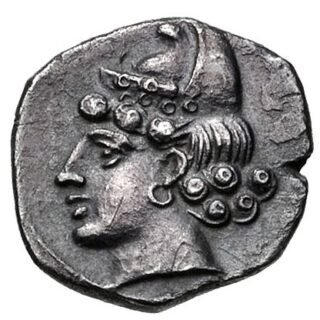
Arses, also known as Artaxerxes IV, ruled as the twelfth Achaemenid King of Kings from 338 to 336 BC. His brief and tumultuous reign marked the decline of the Persian...
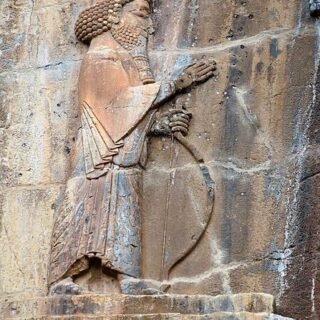
Artaxerxes III, born Ochus, was one of the most notable kings of the Achaemenid Empire, reigning from 359/58 to 338 BC. As a ruler, he is remembered for consolidating his...

The ancient Iranian salt mine mummies, commonly referred to as the “Salt Men of Iran,” are a remarkable archaeological discovery that sheds light on the lives and deaths of individuals...

The Sasanian kings were instrumental in shaping the empire’s history, blending military prowess, cultural patronage, and administrative reforms. Their accomplishments ensured the survival of Persian traditions and significantly influenced neighboring...

The circumstances of Cyrus the Great’s death remain an enduring historical puzzle. Despite the significance of this Persian ruler—founder of the Achaemenid Empire and revered statesman—ancient sources provide divergent and...

Ardashir I (180–242 AD), also known as “Ardashir the Unifier,” was the founder of the Sasanian Empire, which became one of the most powerful dynasties in Persian history. Born in...

The crossing of the Hellespont in 480 BC was a monumental moment in ancient history, marking the start of the Second Persian Invasion of Greece. Under the command of King...

The Sasanian Empire, officially known as Ērānšahr (Middle Persian: 𐭠𐭩𐭥𐭠𐭭𐭱𐭲𐭥𐭩), meaning “Empire of the Iranians,” was the last pre-Islamic Persian empire, flourishing from 224 to 651 AD. Established by Ardashir...

Darius I (c. 550–486 BCE), also known as Darius the Great, was one of the most influential rulers of the Achaemenid Empire. His reign, from 522 to 486 BCE, marked...
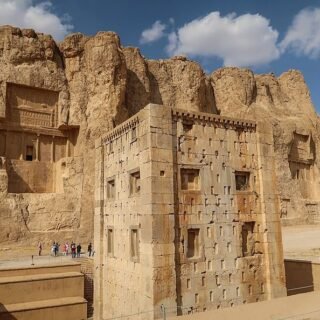
Naqsh-e Rostam, an archaeological masterpiece situated in Iran’s Fars Province, serves as a profound testament to the region’s illustrious history. This necropolis, carved into the sheer cliffs of a mountain,...
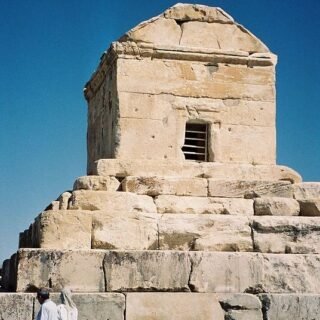
The Tomb of Cyrus the Great, located in Pasargadae, Iran, stands as a monumental testament to the legacy of one of history’s most influential rulers. As the final resting place...

Cyrus the Younger (424–401 BC), son of Darius II and Parysatis, was a Persian prince and satrap known for his ambition and military prowess. Aided by Greek mercenaries, he launched...

Shapur I, also known as Shabuhr I, was a pivotal figure in Iranian history as the second Sasanian King of Kings of Iran. His reign, spanning approximately from 240 to...
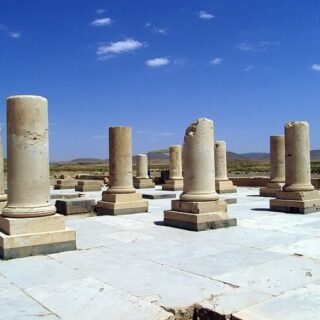
Origin Story: The Founding of Pasargadae Pasargadae, established in the 6th century BCE, marks the birthplace of the Achaemenid Empire under Cyrus the Great. Its founding is intertwined with Cyrus’s...





