Abu’l-Hasan Asaf Khan
Asaf Khan was the Grand Vizier of Mughal Emperor Jahangir and later served under Shah Jahan. He was also the father of Mumtaz Mahal and the brother of Empress Nur Jahan.
Early Life and Family Background
Abu’l-Hasan Asaf Khan was born around 1569 into a distinguished Persian family that had sought fortune in Mughal India. His father, Mirza Ghiyas Beg, better known by his title Itimad-ud-Daulah, was a respected noble who served as the Prime Minister of the Mughal Emperor Jahangir. Asaf Khan’s mother, Asmat Begam, belonged to the influential Aqa Mulla clan. His family had originally resided in Tehran before moving to India in 1577 when Ghiyas Beg was appointed to Akbar’s court.
Asaf Khan was also the elder brother of Nur Jahan, the powerful and influential wife of Emperor Jahangir. His strong familial connections played a crucial role in his rise within the Mughal administration. Through his sister’s influence, he gained prominence in the Mughal court and gradually rose to key administrative positions.
Marriage and Children
In his youth, Asaf Khan married Diwanji Begum, the daughter of a nobleman, Khwaja Ghias-ud-Din of Qazvin. The couple had a large family, with at least ten children, including three sons and seven daughters. Among his children, the most famous was Arjumand Banu Begum, who later became Mumtaz Mahal, the beloved wife of Emperor Shah Jahan.
Mumtaz Mahal, born Arjumand Banu Begum, was the chief consort of Mughal Emperor Shah Jahan and the inspiration behind the Taj Mahal.
His sons, Shaista Khan, Mirza Bahmanyar, and Farrukh Fal, also played notable roles in the Mughal administration. His daughters were married into influential noble families, further strengthening his family’s standing in the empire. Through his daughter Mumtaz Mahal, Asaf Khan was also the maternal grandfather of Aurangzeb, who later became the sixth Mughal emperor.
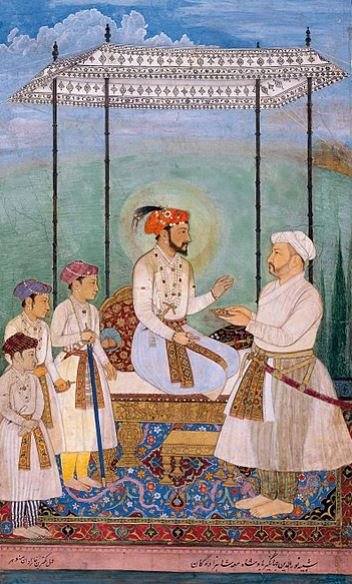
Asaf Khan (right) and Shah Jahan (center) with his sons (left)
Political Career and Rise to Power
Asaf Khan’s political career flourished under Emperor Jahangir, who appointed him as Vakil (Chief Minister), the highest administrative office in the Mughal Empire, in 1611. His rise was significantly aided by his sister Nur Jahan, who wielded immense influence over Jahangir. Recognizing his administrative skills and loyalty, Jahangir entrusted him with key responsibilities, including overseeing the empire’s governance and ensuring stability.
In 1625, Asaf Khan was appointed the Governor of Lahore, which was then a crucial administrative and political center of the Mughal Empire. His tenure in Lahore was marked by effective governance and military success. However, his most notable role came during the succession struggle following Jahangir’s death in 1627.
Role in Shah Jahan’s Accession
The death of Emperor Jahangir in 1627 triggered a power struggle between different factions of the Mughal court. Asaf Khan played a decisive role in securing the throne for his son-in-law, Prince Khurram, who later became Emperor Shah Jahan.
At the time of Jahangir’s death, Prince Shahryar, Nur Jahan’s son-in-law, attempted to seize the throne. However, Asaf Khan strategically aligned with Dawar Bakht, Jahangir’s grandson, and launched a military campaign to crush Shahryar’s forces near Lahore. After securing victory, Asaf Khan had Shahryar executed, effectively eliminating his sister Nur Jahan’s influence and paving the way for Shah Jahan’s coronation in 1628.
Following this victory, Asaf Khan was appointed Grand Vizier (Wazir-e-Azam) by Shah Jahan, a position he held until his death in 1641. His influence during the early years of Shah Jahan’s reign was significant, as he helped consolidate the new emperor’s rule and played a key role in policy-making.
Administrative Achievements
As Grand Vizier, Asaf Khan was instrumental in managing the Mughal administration. He was responsible for overseeing revenue collection, judicial matters, and military campaigns. His tenure saw significant improvements in governance, trade, and the consolidation of Mughal authority in key regions.
He also served as the Governor of Gujarat (1630–1639), a crucial province in the Mughal Empire. His administration in Gujarat was marked by effective economic policies and infrastructural development, strengthening the region’s prosperity.
Military Campaigns and Decline
Despite his administrative success, Asaf Khan faced challenges in military campaigns. In 1632, he led the Mughal forces in the siege of Bijapur, a Deccan stronghold. However, the campaign ended in failure, leading to a decline in his influence at court. While he retained his position as Grand Vizier, his standing in the empire gradually diminished.
Death and Burial
Asaf Khan died on June 12, 1641, while engaged in a military conflict against the rebellious Raja Jagat Singh Pathania. His death marked the end of an era in Mughal politics, as he had been a key figure in the empire’s administration for decades.
In recognition of his service, Shah Jahan ordered the construction of Asaf Khan’s tomb in Shahdara Bagh, Lahore, near the tombs of Emperor Jahangir and Empress Nur Jahan. His mausoleum, though not as grand as the Taj Mahal, remains an important historical site and a testament to his significance in Mughal history.
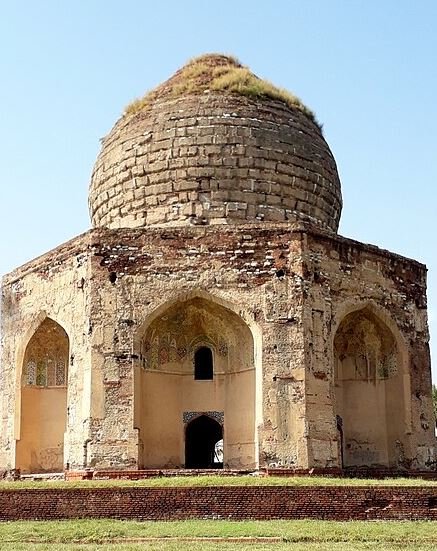
Front view of the Tomb of Asif Khan
Legacy and Impact
Asaf Khan’s legacy is closely tied to the rise of Shah Jahan and the political stability of the Mughal Empire during the early 17th century. His role in securing Shah Jahan’s throne ensured continuity in Mughal rule and facilitated an era of prosperity and architectural grandeur, exemplified by the construction of the Taj Mahal.
His family’s influence persisted long after his death. His grandson, Aurangzeb, went on to become one of the most powerful Mughal emperors. His son, Shaista Khan, served as a key governor and military commander in the empire, playing an important role in the Mughal expansion into the Deccan and Bengal.
Asaf Khan’s daughter Mumtaz Mahal was initially buried in Burhanpur but later reinterred in the Taj Mahal in Agra, where her tomb remains a UNESCO World Heritage Site.
In Mughal history, Asaf Khan is remembered as a skilled administrator, a loyal statesman, and a key architect of Shah Jahan’s rise to power. His contributions to governance, diplomacy, and court politics significantly shaped the trajectory of the Mughal Empire, leaving an enduring impact on India’s history.
Timeline of Asaf Khan
Frequently Asked Questions
What was Asaf Khan’s role in Mughal politics?
He played a key role in securing Shah Jahan’s accession by defeating Prince Shahryar, the rival claimant to the throne, after Jahangir’s death in 1627.
What were Asaf Khan’s main positions in the Mughal Empire?
He served as Grand Vizier (1628–1641), Subedar of Lahore (1625–1627), Subedar of Gujarat (1630–1639), and Faujdar of Gagron (1635–1641).
How was Asaf Khan related to Emperor Aurangzeb?
He was the maternal grandfather of Aurangzeb, as his daughter Mumtaz Mahal was Aurangzeb’s mother.

Portrait of Aurangzeb by Indian artist Bichitr.
Mumtaz Mahal had 14 children, including Jahanara Begum and Crown Prince Dara Shikoh. However, seven of them died young.
What was his relationship with Empress Nur Jahan?
Nur Jahan was his older sister, and while they initially worked together, they later became political rivals after Jahangir’s death.

Portrait of Nur Jahan.
What was Asaf Khan’s role in the Mughal succession crisis?
He sided with Shah Jahan, arranged his swift accession, and orchestrated the downfall of Nur Jahan’s faction, ensuring Shah Jahan’s uncontested rule.
When and how did Asaf Khan die?
He died on June 12, 1641, during a military campaign against Raja Jagat Singh Pathania.
Where is Asaf Khan buried?
His tomb is located in Shahdara Bagh, Lahore, near the tombs of his sister Nur Jahan and Emperor Jahangir.





