Amenemhat III: Life, Reign and Major Accomplishments

Amenemhat III was the sixth ruler of Egypt’s Twelfth Dynasty during the Middle Kingdom, known for his architectural innovations, administrative reforms, and economic achievements. Image: A damaged portrait sculpture of Amenemhat III in the Ägyptisches Museum Berlin, Berlin
Pharaoh Amenemhat III, the sixth ruler of Egypt’s Twelfth Dynasty during the Middle Kingdom, reigned during a golden age marked by cultural, economic, and architectural achievements. His tenure is notable for its peace, stability, and grand construction projects, all of which highlight his capable leadership and administrative innovation.
In the article below, World History Edu delves into his life, reign, and major accomplishments, providing a comprehensive overview of his enduring legacy.
Early Life and Ascension to the Throne
Amenemhat III was the son of Pharaoh Senusret III, under whom Egypt underwent significant administrative reforms and military campaigns. These efforts ensured a stable foundation for Amenemhat III’s future rule. He was co-regent with his father for approximately 20 years, during which he assumed increasing responsibilities, likely gaining valuable experience in governance. This co-regency marked a smooth transition of power, with Amenemhat III taking over a stable and flourishing kingdom upon Senusret III’s death.

Co-ruling with his father, Senusret III, for 20 years, Amenemhat III inherited a stable kingdom shaped by aggressive reforms. Image: A statue of Senusret III at the British Museum, showing the traits that are peculiar for this king
Length of Reign and Chronology
Amenemhat III reigned for at least 45 years, with some evidence suggesting a possible 46th year. This long reign allowed him to undertake numerous ambitious projects and firmly establish his legacy. His reign is well-documented in king lists from the New Kingdom, such as the Karnak, Abydos, and Saqqara lists, as well as in the Turin Canon, which records a partial reign length of “40+ years.”
Administration and Governance
Amenemhat III’s administration was characterized by efficiency and a focus on centralized governance. His reign saw the appointment of skilled officials, including Vizier Kheti and Treasurer Ikhernofret, who played pivotal roles in managing state affairs. These officials supervised construction projects, mining expeditions, and trade missions, reflecting the sophistication of the Middle Kingdom’s bureaucracy. Records from this era, such as correspondence and contracts, showcase the high level of administrative organization under his rule.

Amenemhat III’s reign marked Egypt’s cultural and economic peak, characterized by ambitious construction projects, especially in Faiyum, where he honored Sobek and Renenutet and enhanced Lake Moeris. Image: Inscriptions by Amenemhat III in the chapel of Renenutet
Architectural Innovations and Building Program
Amenemhat III is best known for his extensive building program, particularly in the Faiyum region. His work included the construction of a massive temple dedicated to Sobek, the crocodile god, and the excavation and expansion of Lake Moeris, a project that transformed the area into a fertile agricultural hub. This hydraulic engineering marvel reclaimed significant arable land, contributing to Egypt’s food security and economic prosperity.
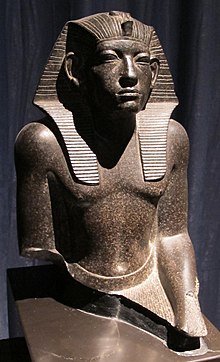
Statue of Amenemhat III in the Pushkin Museum, Moscow
One of Amenemhat III’s most famous constructions is the mortuary temple complex near his Hawara pyramid, often referred to as the “Labyrinth.” This vast and intricate structure was celebrated by ancient authors like Herodotus and Strabo for its architectural complexity and grandeur. The Labyrinth served not only as a mortuary temple but also as a center of administration and religious activity.
The Two Pyramids of Amenemhat III
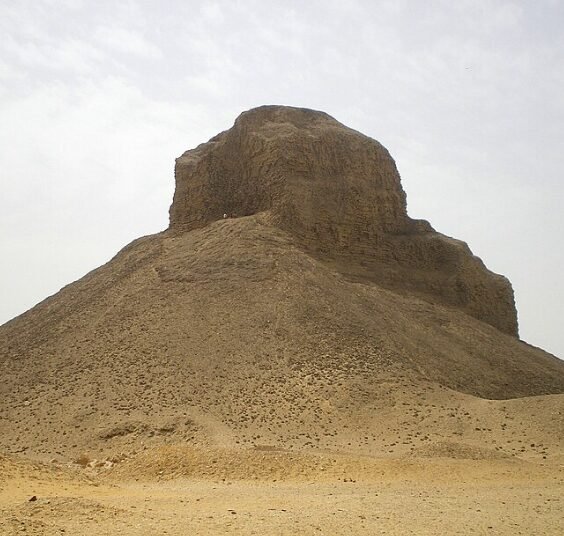
The Black Pyramid of Pharaoh Amenemhat III
The first pyramid constructed by Amenemhat III, located at Dahshur, is known as the Black Pyramid. This structure was plagued by structural issues due to groundwater seepage, which caused instability. Despite these challenges, the Black Pyramid stands as a testament to innovative construction techniques and remains an important architectural accomplishment of his early reign.
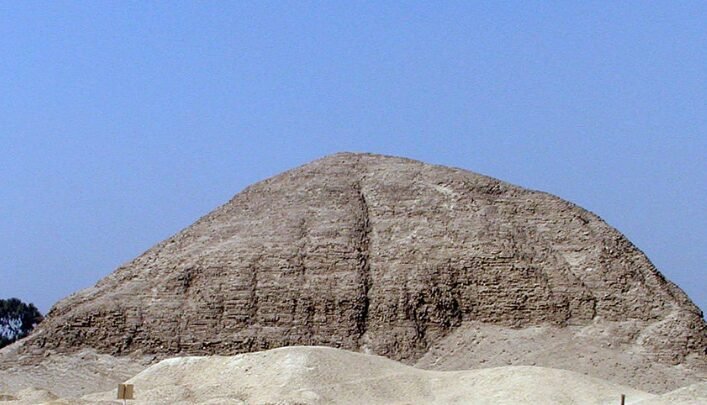
Amenemhat III built two pyramids, at Dahshur and Hawara, and exploited resources from quarries like Tura, Aswan, and Sinai. Image: The pyramid of Amenemhat III at Hawara
After the difficulties with the Black Pyramid, Amenemhat III shifted his efforts to Hawara, where he constructed his second pyramid. This structure, which became his final resting place, featured a more advanced design, addressing the issues encountered at Dahshur. The associated mortuary temple, the Labyrinth, further solidifies Hawara’s importance as a center of religious and administrative activity.
Mining and Resource Exploitation

Granite statue in the Egyptian Collection of the Hermitage Museum, St. Petersburg
Amenemhat III’s reign was marked by extensive exploitation of natural resources, with mining and quarrying activities reaching their peak. Key sites included:
- Sinai Peninsula: Expeditions to Wadi Maghara and Serabit el-Khadim extracted turquoise and copper, with over 50 inscriptions attesting to these activities.
- Wadi Hammamat: Schist was quarried here for statues and construction.
- Wadi el-Hudi: Amethyst was mined from this location, primarily for jewelry and decorative purposes.
- Tura and Aswan: Fine limestone and red granite were sourced for temples and statues.
- Nubian Quarries: Diorite was procured for use in statuary.
These efforts supported Amenemhat III’s ambitious construction projects and contributed to Egypt’s economic prosperity.
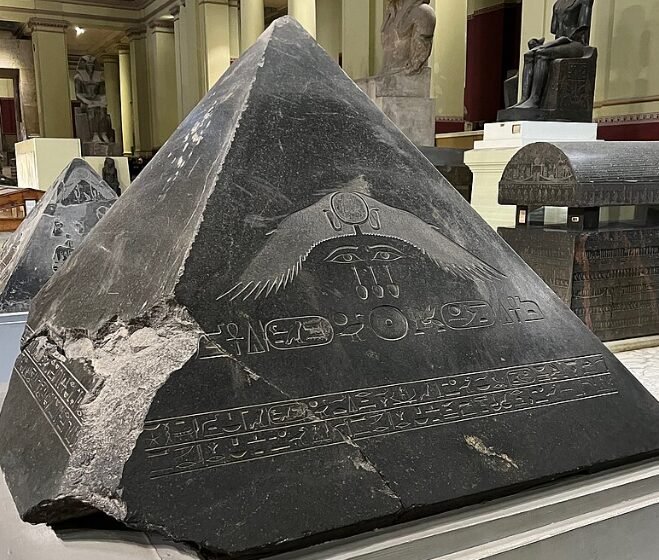
The pyramidion of the Black Pyramid
Economic Achievements
Amenemhat III’s reign is regarded as the economic zenith of the Middle Kingdom. His policies ensured efficient management of resources, enabling large-scale public works. The reclamation of land in the Faiyum region and the creation of irrigation systems boosted agricultural productivity, providing surplus food and ensuring the kingdom’s stability. Trade expeditions to Punt and other regions further enriched Egypt, bringing in exotic goods like incense, gold, and rare metals.
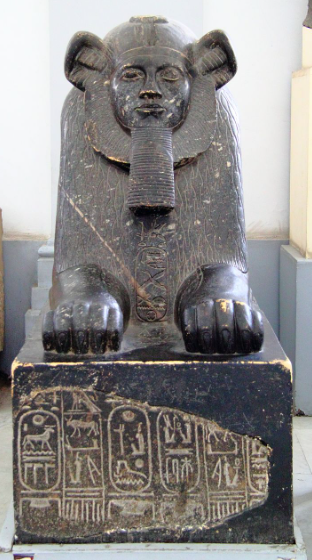
Another important similarity between the Greek and Egyptian version has to do with their roles. In both cultures, the mythical creatures were known for serving as guards or protectors. Image: A recumbent sphinx of Amenemhat III, the sixth king of the Twelfth Dynasty of the Middle Kingdom.
Minimal Military Activity
Unlike his predecessor, Senusret III, who was known for his military campaigns, Amenemhat III engaged in very little military activity. The peace and stability of his reign allowed resources to be diverted toward construction, resource exploitation, and administrative improvements. The only recorded military expedition during his rule was a small mission to Nubia in his ninth regnal year, which resulted in no reported casualties.
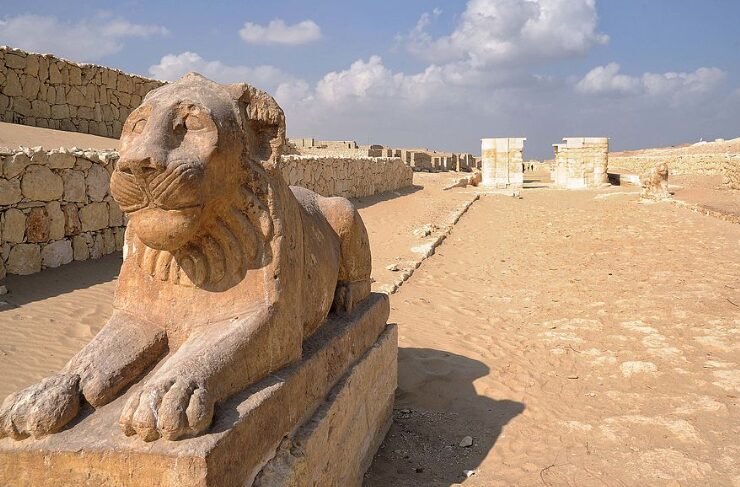
Limestone recumbent lion statue at the temple in Medinet Madi
Mathematical Contributions
The Rhind Mathematical Papyrus, a key artifact in the history of mathematics, is believed to have been composed during Amenemhat III’s reign. This document, which provides insights into ancient Egyptian knowledge of arithmetic and geometry, underscores the intellectual advancements of the Middle Kingdom and the cultural flourishing that characterized his era.
Family and Succession
Amenemhat III was married to at least two queens, Aat and Khenemetneferhedjet III, both of whom were buried in his Dahshur pyramid. His daughter Neferuptah, who was likely groomed as his successor, predeceased him. Her name appears in a cartouche, a privilege typically reserved for royalty, indicating her elevated status. His successors were Amenemhat IV, who possibly co-reigned with him briefly, and Sobekneferu, the first female pharaoh of the Twelfth Dynasty.

Reigning for over 45 years, he appointed Amenemhat IV as co-regent, with Sobekneferu later concluding the dynasty’s rule. Few military campaigns occurred during his stable reign. Image: Scarab of Middle Kingdom pharaoh Amenemhat IV
READ MORE: Female Rulers of Ancient Egypt
Artistic Legacy
Amenemhat III’s artistic contributions include approximately 80 statues, which range from expressive realism to idealized forms. These works reflect a departure from the rigid conventions of earlier dynasties, emphasizing detailed musculature and facial features. Materials used in his sculptures included limestone, diorite, and copper alloys, showcasing the diversity of artistic mediums during his reign.

Amenemhat III dressed in panther skin from the Egyptian Museum, Cairo
Legacy and Historical Impact
Amenemhat III’s long and stable reign left a profound impact on Egypt. His architectural innovations, particularly in Faiyum and Hawara, set new standards for construction. His economic policies and resource management ensured prosperity, while his focus on peace and stability allowed the kingdom to flourish culturally and materially. His successors inherited a thriving Egypt, making his reign a defining period of the Middle Kingdom.
Conclusion
Pharaoh Amenemhat III’s reign epitomizes the achievements of the Middle Kingdom. His extensive building projects, administrative reforms, and economic policies established a legacy of prosperity and innovation. Despite minimal military activity, his focus on peace and stability ensured the flourishing of Egyptian society. Amenemhat III remains a key figure in ancient Egyptian history, celebrated for his contributions to architecture, governance, and culture.
Frequently Asked Questions

Amenemhat III (Ancient Egyptian: Ỉmn-m-hꜣt, “Amun is at the forefront”) was the sixth pharaoh of the Twelfth Dynasty during Egypt’s Middle Kingdom. Image: Egyptian alabaster statuette head of Amenemhat III from the Louvre, Paris
What were Amenemhat III’s key contributions to architecture?
He built extensively in the Faiyum region, constructing a temple to Sobek, developing Lake Moeris, and building two pyramids—one at Dahshur (the Black Pyramid) and another at Hawara.
How was Amenemhat III’s reign documented archaeologically?
His reign is well-attested through inscriptions at mining sites in Egypt, Nubia, and the Sinai Peninsula, which detail extensive quarrying operations and logistical efforts.

Portrait sculpture of Amenemhat III in the Luxor Museum, Luxor
What role did mathematics play during Amenemhat III’s reign?
The Rhind Mathematical Papyrus, a significant artifact in Egyptian mathematics, is believed to have been composed during his rule, reflecting the intellectual advancements of the time.
What is known about Amenemsobhat III’s family?
He was the son of Senusret III and had multiple wives, including Aat and Khenemetneferhedjet III. His daughter Neferuptah was likely groomed as his successor but predeceased him. His successors were Amenemhat IV and Sobekneferu.
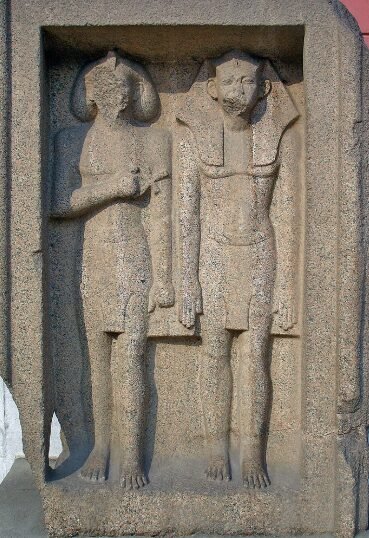
A naos from Amenemhat III’s Hawara funerary temple shows him and his successor Amenemhat IV, symbolizing life.
What made Amenemhat III’s building program in Faiyum significant?
His work in Faiyum, including the irrigation of Lake Moeris and construction of the Labyrinth near his Hawara pyramid, transformed the region into a fertile agricultural hub.
What distinguishes Amenemhat III’s two pyramids?
The Black Pyramid at Dahshur faced structural challenges, while the pyramid at Hawara, known for its advanced design, included the famous Labyrinth and served as his final resting place.

Sobekneferu (Reign – c. 1806-1802 BC) of the Middle Kingdom. Image: Statue of Sobekneferu which was lost during World War II
What artistic legacy did Amenemhat III leave behind?
About 80 statues of Amenemhat III survive, showcasing a mix of expressive realism and idealized forms, highlighting the artistic sophistication of his reign.
How did Amenemhat III manage his administration?
He relied on capable officials like Vizier Kheti and Treasurer Ikhernofret, who oversaw state affairs, mining expeditions, and trade missions to Punt, reflecting a well-organized bureaucracy.
What was the economic impact of Amenemhat III’s reign?
Exploiting resources from quarries and mines, combined with innovative irrigation projects, supported Egypt’s economic zenith, ensuring stability and prosperity during his rule.

Pectoral of Amenemhat III from the tomb of Mereret at Dahshur, one of his sisters





