Middle Kingdom of Ancient Egypt
The Middle Kingdom (c. 2045–1782 BC) was a period of reunification and stability following the First Intermediate Period. It included the Eleventh and Twelfth Dynasties, and sometimes part of the...
The 12th Dynasty marks a period in ancient Egyptian history during the Middle Kingdom, and it’s known for a series of strong pharaohs and impressive achievements, particularly in terms of construction.
Here are some key points about the 12th Dynasty:
Duration: Circa 1991 BC – 1802 BC
He was the founder of the 12th Dynasty. Amenemhat I moved the capital from Thebes to Itjtawy, located near the modern city of El-Lisht. He also introduced a co-regency system with his son, Senusret I, which would become a common practice in this dynasty.
Under his reign, there was an expansion of trade and a series of military campaigns. He strengthened Egypt’s control over Nubia and undertook extensive building projects, including the construction of temples and fortresses.
His reign was relatively peaceful. There’s evidence of mining expeditions and continued construction, but he’s less prominent than other pharaohs of the dynasty.
He’s best known for the innovative design of his pyramid complex and the extensive agricultural works, particularly in the Faiyum region.
Often regarded as the most powerful pharaoh of the 12th Dynasty, he undertook several military campaigns in Nubia and fortified Egypt’s southern border. His statues depict a more realistic and less idealized facial expression, a departure from the usual royal depictions.
His reign marked the zenith of the Middle Kingdom in terms of prosperity. He continued the exploitation of the Faiyum for agriculture and initiated significant building projects, including the construction of the Labyrinth, an enormous temple complex.
He’s known for several mining expeditions, but his reign was short, and his role was eclipsed by his powerful predecessor and successor.
She was the sister and successor of Amenemhat IV. Sobekneferu is the first confirmed female ruler of Egypt and the last ruler of the 12th Dynasty. Her reign was relatively short.
The 12th Dynasty is recognized for its architectural innovations, especially in pyramid building. The pyramid complexes of this era often included beautiful reliefs, statues, and stelae.
Literature flourished during this period, with several famous works like “The Tale of Sinuhe” originating from the Middle Kingdom era.
There was an emphasis on centralization and consolidation of power, as well as the standardization of art and writings.
The end of the 12th Dynasty marked the beginning of a weaker 13th Dynasty and set the stage for the Second Intermediate Period.

The Middle Kingdom (c. 2045–1782 BC) was a period of reunification and stability following the First Intermediate Period. It included the Eleventh and Twelfth Dynasties, and sometimes part of the...
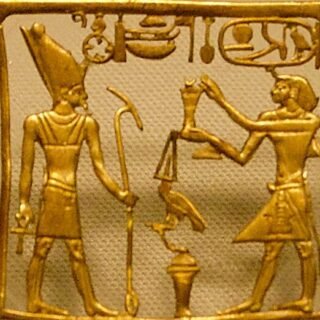
Amenemhat IV, sometimes spelled Amenemhet IV, was the seventh and penultimate ruler of Egypt’s Twelfth Dynasty during the later phase of the Middle Kingdom. Summary Scholars often assign his reign...

Amenemhat I, also spelled Amenemhet I, was the inaugural ruler of the Twelfth Dynasty in ancient Egypt’s Middle Kingdom. Rising from non-royal lineage, he established a fresh political order, relocated...

Senusret II, also known as Sesostris II, was the fourth pharaoh of Egypt’s Twelfth Dynasty, ruling from around 1897 BC to 1878 BC. His reign marked a period of peace,...

Khakaure Senusret III, also known as Senwosret III or Sesostris III in its Hellenized form, was one of the most significant pharaohs of ancient Egypt. He ruled during the Twelfth...
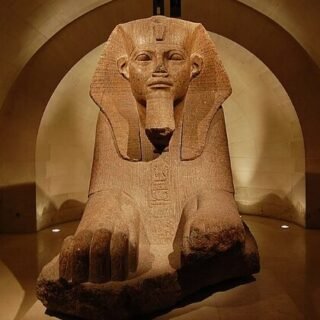
Amenemhat II, also known as Nubkaure Amenemhat II, was the third pharaoh of Egypt’s 12th Dynasty, ruling for at least 35 years. His reign, while relatively long, is marked by...
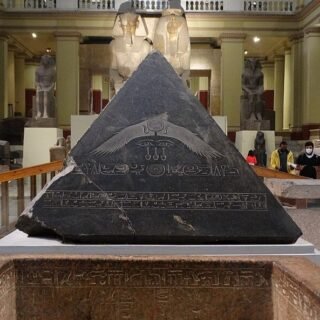
The pyramidion of Amenemhat III, often regarded as a pinnacle of ancient Egyptian craftsmanship and symbolism, originates from the 12th Dynasty during the Middle Kingdom (circa 1850 BC). It was...
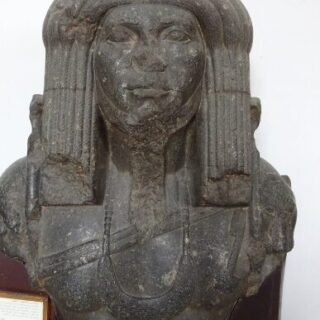
Pharaoh Amenemhat III, the sixth ruler of Egypt’s Twelfth Dynasty during the Middle Kingdom, reigned during a golden age marked by cultural, economic, and architectural achievements. His tenure is notable...
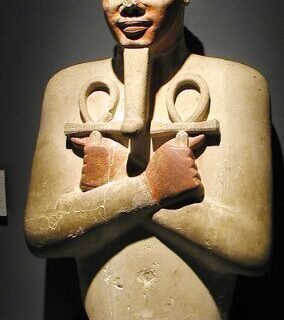
Senusret I, also known as Sesostris I, was the second pharaoh of Egypt’s Twelfth Dynasty, which is considered part of the Middle Kingdom period (c. 1971 BC – 1926 BC)....
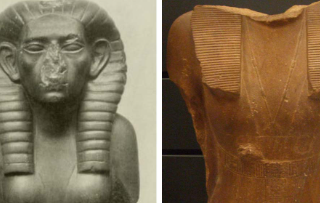
Egypt during the era of the Middle Kingdom was widely prosperous. However, that all came to a halt when King Amenemhat IV suddenly passed away. Now plunged in a state...





