American Botanist William Saunders
William Saunders was a pioneering figure in horticulture, landscape design, and agricultural science. His efforts in designing national cemeteries, shaping Washington, D.C.’s park system, and introducing new plant species left an indelible mark on American history.
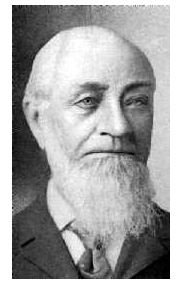
Early 1920s photo of William Saunders.
Early Life and Education
William Saunders was born on December 7, 1822, in St. Andrews, Scotland. His early interest in horticulture led him to enroll at Madras College in 1834, where he cultivated a foundational understanding of plants and landscape gardening. Recognizing his potential, he pursued further studies in horticulture at the University of Edinburgh.
To gain practical experience, Saunders trained at the Royal Botanic Gardens, Kew, in London, one of the world’s foremost institutions in botanical research. This early exposure to professional gardening techniques helped shape his later contributions to landscape architecture and agricultural innovation.
In 1848, Saunders married Martha Mildwaters, and the couple emigrated to the United States, where he became a citizen in 1857. He initially worked as a gardener on the estate of William Bostwick in New Haven, Connecticut, where he applied his knowledge of plant propagation and landscape design.
By the 1850s, he moved to Baltimore, Maryland, where he was employed on the estate of philanthropist Johns Hopkins. There, he managed the estate’s farm operations while designing extensive landscape features, including lakes and ornamental gardens.
Professional Collaborations and Cemetery Designs
During his time in Baltimore, Saunders began writing extensively about horticulture. His articles appeared in respected journals such as The Horticulturalist, Hovey’s Magazine of Horticulture, The Farmer and Gardener, and The Philadelphia Florist. His writings provided farmers and gardeners with practical guidance on cultivating fruit trees, grapevines, and ornamental plants.
In 1854, Saunders formed a professional partnership with Thomas Meehan, a fellow horticulturist he had met at Kew Gardens. Together, they established a nursery and collaborated on various public landscaping projects, including cemeteries, urban parks, and residential gardens.
Saunders’ cemetery designs were particularly influential, with notable projects including Rose Hill Cemetery in Chicago and Oak Ridge Cemetery in Springfield, Illinois. He also planned cemeteries in locations such as Perth Amboy, Rahway, and Bethlehem, Pennsylvania, applying his vision of serene, naturalistic burial grounds.
Role in the U.S. Department of Agriculture
Saunders’ expertise in horticulture and landscape design led to his appointment in 1862 as superintendent of the experimental gardens at the newly established U.S. Department of Agriculture (USDA). At the time, the department was still a bureau and would not gain cabinet status until 1889. Nevertheless, Saunders’ tenure, which lasted nearly four decades, had a lasting impact on American agriculture and landscape architecture.
Contributions to Landscape Design
In 1863, Saunders was commissioned to design the Soldiers’ National Cemetery in Gettysburg, Pennsylvania, a site of profound national significance following the Battle of Gettysburg. He developed a radial design centered around a grand monument, ensuring that the Union soldiers’ graves were arranged by state. His approach emphasized simplicity and dignity, using uniform rectangular slabs of granite inscribed with each soldier’s name, rank, and regiment. This design philosophy sought to instill a solemn and contemplative atmosphere.
Before President Abraham Lincoln delivered his Gettysburg Address, he met with Saunders to review the cemetery plans. Lincoln reportedly praised the layout for its unique departure from conventional burial grounds, calling it “admirable and befitting.” Saunders’ work at Gettysburg became a model for future national cemeteries in the United States.
Following Lincoln’s assassination in 1865, Saunders was tasked with designing the landscape for a monument at Oak Ridge Cemetery, Springfield, Illinois. His plan incorporated expansive lawns and irregularly arranged non-native trees, including magnolias and mock oranges, adding to the site’s beauty and serenity.
In Washington, D.C., Saunders was instrumental in shaping the city’s park system. As president of the Washington Parking Commission, he spearheaded a large-scale tree-planting initiative, overseeing the planting of 80,000 trees and earning the capital its nickname, “City of Trees.” His work included the landscaping of the Capitol’s west facade, further cementing his reputation as a visionary in urban landscape design.
Horticultural Achievements
Under Saunders’ leadership, the USDA Experimental Gardens played a pivotal role in advancing American agriculture. His 1862 Catalogue of the Plants, Bulbs, Tubers, Etc., for Distribution from the U.S. Propagating Garden outlined the objectives of the garden and became the first USDA publication. He championed the introduction of new plant species, aiming to improve agricultural yields and diversify crops across the United States.
Between 1865 and 1867, Saunders supervised the evaluation of over 120 wheat varieties, 167 types of rye, 230 melon cultivars, and more than 500 strawberry, apple, pear, and grape varieties. These rigorous trials enabled the selection of superior crops for American farmers. One notable success was the introduction of Tappahannock wheat, a high-yielding, disease-resistant variety that significantly improved productivity. By 1873, The New York Times reported that wheat yields had more than doubled in some regions due to the adoption of Tappahannock wheat.
Saunders also introduced economically valuable plants such as the Japanese persimmon, camphor tree, Japanese cedar, and eucalyptus. His work with winter-hardy apple varieties from Russia contributed to improved apple cultivation in the northeastern United States.
As a founder of the National Grange, William Saunders also championed the rights and welfare of farmers.
Perhaps his most celebrated introduction was the Washington navel orange. In 1871, he received a dozen orange saplings from Bahia, Brazil. Recognizing their superior sweetness and seedlessness, he distributed two trees to Eliza Tibbets in Riverside, California. The trees thrived in the region’s climate, leading to the development of California’s citrus industry. By the early 20th century, the Washington navel orange had become one of the state’s most profitable agricultural products.
Founding the National Grange
Saunders was a staunch advocate for farmers’ rights and agricultural reform. In 1867, he co-founded the National Grange of the Order of Patrons of Husbandry, an organization dedicated to advancing the interests of American farmers. Serving as the Grange’s first Master for six years, he played a key role in drafting its constitution and ensuring that women were actively involved in leadership roles. The Grange became a powerful force in advocating for rural communities, cooperative purchasing, and policy reforms in agriculture.
Saunders’ legacy endures in the lush urban forests, productive farmlands, and dignified cemeteries that continue to reflect his vision for a greener, more sustainable nation.
Publications and Legacy
Throughout his career, Saunders published hundreds of articles on horticulture, landscape design, and agricultural science. Some of his most influential works include:
- Landscape Gardening (1869), a report for the USDA outlining principles of landscape architecture.
- Landscape Decorative and Economic Gardening (1871), which expanded on his design philosophy for residential and public spaces.
- Remarks on the Design for the Soldiers’ National Cemetery, Gettysburg (1864), detailing his vision for the Gettysburg cemetery.
- Numerous articles in The Horticulturist, The Philadelphia Florist, and The Farmer and Gardener, offering practical guidance on tree planting, road construction, and estate planning.
Saunders continued his work at the USDA until his death on September 11, 1900. His influence extended beyond his lifetime, shaping the fields of landscape architecture, urban forestry, and agricultural innovation. His contributions to national cemeteries, urban green spaces, and horticultural advancements remain integral to the American landscape.

A 2003 photo of the Gettysburg National Cemetery.
Timeline of William Saunders (1822–1900)
- 1822 – Born on December 7 in St. Andrews, Scotland.
- 1834 – Enrolled at Madras College, developing an interest in horticulture.
- 1840s – Studied horticulture at the University of Edinburgh and trained at Kew Gardens.
- 1848 – Married Martha Mildwaters and emigrated to the United States.
- 1850s – Worked on the estates of William Bostwick in Connecticut and Johns Hopkins in Maryland.
- 1854 – Partnered with Thomas Meehan to establish a nursery and design public parks.
- 1862 – Appointed superintendent of the USDA Experimental Gardens.
- 1863 – Designed the Soldiers’ National Cemetery at Gettysburg.
- 1867 – Co-founded the National Grange and served as its first Master.
- 1871 – Introduced the Washington navel orange to California.
- 1900 – Passed away on September 11.
Frequently Asked Questions
How did Saunders influence American horticulture?
As head of the USDA Experimental Gardens, he introduced economically important plants like the Washington navel orange and conducted extensive agricultural experiments.
What role did Saunders play in the National Grange?
He was a founder and the first Master of the National Grange, advocating for farmers’ interests and supporting women’s participation in the organization.
What was unique about his design for the Gettysburg cemetery?
Saunders used a radial layout, grouped graves by state, and employed a simple, solemn aesthetic with extensive landscaping.

How did Saunders impact urban landscape planning in Washington, D.C.?
He helped develop city parks, led the planting of 80,000 street trees, and earned Washington the nickname “City of Trees.”
What was his connection to the introduction of the Washington navel orange?
He received the first trees from Brazil in 1871 and distributed them, leading to the fruit’s success in California.
What was his role in the USDA’s early development?
He set its research guidelines, initiated plant trials, and published its first report outlining experimental agricultural methods.
How did Saunders’ horticultural publications influence the field?
His articles provided practical guidance on plant propagation, landscape design, and agricultural techniques, shaping American horticulture.