Who was Thomas Pinckney, and what were his key roles in early American history?
Thomas Pinckney, born on October 23, 1750, in Charles Town (modern-day Charleston), South Carolina, was a pivotal figure in early American history. His life and career spanned critical periods of the nation’s formation, from the Revolutionary War to the War of 1812. Pinckney was not only a military leader but also a statesman and diplomat, whose contributions to politics and foreign relations helped shape the United States during its early years.
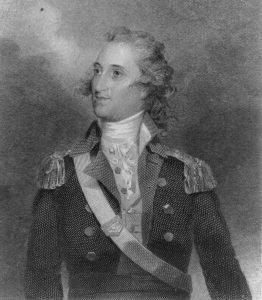
Thomas Pinckney was an American statesman, diplomat, and military officer who played significant roles in the American Revolutionary War and the War of 1812.
Early Life and Education
Thomas Pinckney was born into one of South Carolina’s most prominent families. His father, Charles Pinckney, was a successful lawyer and planter, while his mother, Eliza Lucas Pinckney, gained fame for her pioneering work in cultivating indigo as a profitable crop in the colony. The Pinckney family was well-established in colonial society, providing Thomas with both the resources and connections needed for a strong education and future public service.
At a young age, Pinckney was sent to England to study, following the practice of many elite colonial families at the time. He attended Westminster School, a prestigious institution, before enrolling at Christ Church, Oxford, where he received a classical education. He also studied law at the Middle Temple in London, equipping him with a strong legal foundation. His time in Europe exposed him to Enlightenment thought, which later influenced his political views. This education was critical in shaping his intellectual outlook and preparing him for the complex political and military challenges he would face in his career.
Military Service in the American Revolution
When the American Revolution broke out in 1775, Pinckney was one of many Southern elites who joined the Patriot cause. He returned to South Carolina from Britain and quickly became involved in the fight for independence. His military career during the Revolutionary War was marked by leadership, courage, and a commitment to the cause.
Pinckney began his military service as an aide-de-camp to General Horatio Gates, one of the key American commanders during the war. He was present during several significant campaigns, including the ill-fated Battle of Camden in 1780, where American forces suffered a major defeat at the hands of the British. Despite the defeat, Pinckney’s dedication to the cause never wavered, and he continued to serve in various military roles throughout the war.
In 1781, Pinckney was captured by British forces during the Siege of Charleston. He was held as a prisoner of war but was eventually released as part of a prisoner exchange. Following his release, Pinckney returned to active duty and was instrumental in the final stages of the war, particularly in the Southern campaigns that helped to weaken British control over the region. By the war’s end, Pinckney had earned a reputation as a capable and reliable military leader.
Post-War Life and Political Career
After the American Revolution, Pinckney returned to civilian life and focused on managing his plantation in South Carolina. However, it was not long before he was drawn back into public service. In 1787, he was elected Governor of South Carolina, a position he held until 1789. During his tenure, Pinckney played a crucial role in the state’s political development, particularly in its adoption of the United States Constitution. He presided over the South Carolina convention that ratified the Constitution, helping to secure the state’s approval of the new federal framework.
Pinckney’s support for the Constitution was indicative of his broader political philosophy, which favored a strong central government to maintain order and ensure the nation’s growth. His governance of South Carolina reflected these principles, as he worked to modernize the state’s political institutions and align them with the new federal system. His leadership during this period was critical in helping South Carolina navigate the transition from colonial rule to statehood within the new republic.
Diplomatic Career: U.S. Minister to Britain and Envoy to Spain
Pinckney’s political career took a significant turn in 1792 when President George Washington appointed him as the U.S. Minister to Great Britain. This position came at a challenging time, as relations between the United States and Britain remained tense following the Revolutionary War. One of the most pressing issues during Pinckney’s tenure as minister was the impressment of American sailors by the British Navy. Impressment involved the forced conscription of sailors into the British Navy, often under the claim that they were British subjects. This practice was a major grievance for the United States and would later contribute to the outbreak of the War of 1812.
Despite his efforts, Pinckney was unable to secure significant concessions from the British on the impressment issue, though he did work to maintain diplomatic ties between the two countries. His time in Britain helped him develop a deeper understanding of European politics and diplomacy, which would prove valuable in his subsequent roles.
In 1795, Pinckney was appointed as a special envoy to Spain, where he achieved one of his most notable diplomatic successes. The United States had long sought to define its southern boundary with Spanish-controlled Florida and to secure navigation rights on the Mississippi River, which was essential for trade in the western territories. Pinckney successfully negotiated the Treaty of San Lorenzo, also known as Pinckney’s Treaty, which established the border between Spanish Florida and the United States and granted Americans free navigation of the Mississippi River.
Pinckney’s Treaty was a major diplomatic victory for the young United States, as it not only secured crucial territorial and trade rights but also improved relations with Spain, a key European power. The treaty helped solidify Pinckney’s reputation as a skilled diplomat and statesman.
Role in the 1796 Presidential Election
Following his diplomatic success in Spain, Pinckney became a key figure in national politics. In 1796, he was chosen by the Federalist Party as the running mate for John Adams in the presidential election. At that time, the electoral system stipulated that the candidate with the most electoral votes would become president, while the runner-up would become vice president. Although Adams won the presidency, Pinckney was not elected vice president, as Thomas Jefferson, the Democratic-Republican candidate, received more electoral votes.
Despite not becoming vice president, Pinckney continued to serve the nation in various capacities. He was elected to the U.S. House of Representatives in 1797, representing South Carolina. His time in Congress was marked by his continued advocacy for strong federal policies, including support for military preparedness and diplomatic engagement with European powers. Pinckney’s influence in national politics was further strengthened by his family’s prominence; his brother, Charles Cotesworth Pinckney, was also a leading Federalist and would later run for president in 1804 and 1808.
Service in the War of 1812
Pinckney’s military career did not end with the American Revolution. During the War of 1812, he was commissioned as a major general in the U.S. Army. Although he did not play a major role in the war’s front-line battles, his appointment to this high rank reflected the trust and respect he had earned from the nation’s leadership. The War of 1812, fought between the United States and Great Britain, was largely sparked by unresolved tensions from the Revolutionary War, including issues like impressment, which Pinckney had attempted to address during his earlier diplomatic service.
Pinckney’s military leadership during this time was largely administrative, but his involvement underscored his continued commitment to public service and to the defense of the United States.
Intellectual and Philosophical Contributions
Beyond his military and political careers, Pinckney was also recognized for his intellectual contributions. In 1797, he was elected as a member of the American Philosophical Society, one of the most prestigious intellectual organizations in the United States at the time. The society was dedicated to the advancement of knowledge in fields such as science, philosophy, and political theory, and Pinckney’s membership reflected his engagement with the broader intellectual currents of his time.
As a member of the American Philosophical Society, Pinckney contributed to discussions on a wide range of topics, including the principles of government, economics, and foreign policy. His experiences as a diplomat and military leader gave him a unique perspective on the challenges facing the young republic, and he used this platform to advocate for policies that he believed would strengthen the nation.

Image: A portrait of Pinckney in1791
Later Life and Legacy
Thomas Pinckney retired from public life in the early 19th century, spending his later years on his plantation in South Carolina. Despite stepping back from active politics, his influence remained strong, particularly through his family’s continued involvement in national affairs. His brother, Charles Cotesworth Pinckney, remained a prominent figure in the Federalist Party, and the Pinckney family name became synonymous with leadership in South Carolina.
Pinckney passed away on November 2, 1828, at the age of 78. His legacy as a statesman, diplomat, and military leader is one of significant achievement and lasting impact on the development of the United States. His contributions to both domestic and foreign policy helped shape the early years of the republic, particularly through his work in securing American interests in the Mississippi River and his efforts to improve relations with European powers.
His role in negotiating Pinckney’s Treaty stands out as one of his most enduring accomplishments. The treaty not only resolved a major territorial dispute but also helped facilitate the economic expansion of the United States by securing vital navigation rights. Pinckney’s ability to navigate the complexities of international diplomacy at a time when the United States was still a relatively weak power demonstrated his skill as a negotiator and a visionary leader.
Conclusion
Thomas Pinckney’s life and career were characterized by service, both on the battlefield and in the halls of diplomacy. From his early role in the American Revolution to his later contributions as a diplomat and politician, Pinckney dedicated his life to the advancement of the United States. His work as Governor of South Carolina, U.S. Minister to Britain, and envoy to Spain exemplified his commitment to the country’s growth and stability.
While Pinckney may not be as widely remembered as some of his contemporaries, his impact on American history is undeniable. His military leadership, political service, and diplomatic successes helped to shape the early republic and ensure its survival in a challenging international environment. Through his dedication and vision, Pinckney left a lasting legacy that continues to influence American politics and foreign policy to this day.
Frequently Asked Questions

Where was Thomas Pinckney born, and how did his upbringing influence his education?
Thomas Pinckney was born into a prominent family in Charles Town, Province of South Carolina. His family’s social and political status provided him access to a high-quality education, which he pursued in Europe, where he was exposed to Enlightenment ideas that influenced his views on governance and independence.
What was Thomas Pinckney’s role during the American Revolutionary War?
During the American Revolutionary War, Thomas Pinckney served as an aide to General Horatio Gates. His military service was notable for his leadership and strategic abilities, and by the end of the war, he had established himself as an important military figure and a committed patriot.
What role did Thomas Pinckney play in South Carolina’s political development after the American Revolution?
After the Revolutionary War, Pinckney transitioned into a political career and was elected Governor of South Carolina from 1787 to 1789. During his tenure, he presided over the state convention that ratified the United States Constitution, securing South Carolina’s acceptance of the new government framework.
What diplomatic challenges did Thomas Pinckney face as U.S. Minister to Great Britain?
As U.S. Minister to Great Britain, appointed by President George Washington in 1792, Pinckney faced difficulties in securing concessions from Britain, particularly regarding the impressment of American sailors, which would later become a key issue in the War of 1812.

Image: Pinckney in 1820
What was Thomas Pinckney’s most notable diplomatic achievement?
Pinckney’s most notable diplomatic success was negotiating the Treaty of San Lorenzo (Pinckney’s Treaty) with Spain in 1795. The treaty defined the border between Spanish-controlled territories and the United States, secured navigation rights on the Mississippi River, and was vital for the economic expansion of the western territories.
How did Thomas Pinckney’s political career continue after his diplomatic success in Spain?
Following his diplomatic success in Spain, Pinckney was chosen by the Federalist Party as John Adams’s running mate in the 1796 presidential election. Although Adams won the presidency, Thomas Jefferson became vice president due to the electoral system at the time. Pinckney went on to serve in the U.S. House of Representatives from 1797 to 1801.
What role did Thomas Pinckney play during the War of 1812?
During the War of 1812, Pinckney was commissioned as a major general, demonstrating his continued dedication to the nation’s defense. While his role in this war was less prominent than in the American Revolution, his appointment reflected the trust placed in him by the U.S. government.
How was Thomas Pinckney recognized for his intellectual contributions?
In 1797, Pinckney was elected to the American Philosophical Society, recognizing his intellectual engagement and contributions to fields such as science, philosophy, and political theory. This underscored his standing not only as a military and political leader but also as a thinker engaged with the intellectual currents of his time.





