American Novelist Nathaniel Hawthorne: Life and Major Works
Nathaniel Hawthorne remains a foundational figure in American literature, revered for his skillful intertwining of history, psychology, and symbolism.
His exploration of complex moral questions and his critique of societal expectations have had a lasting impact on American storytelling. Works like The Scarlet Letter and The House of the Seven Gables not only shaped the literary landscape of the 19th century but continue to resonate in modern discussions of identity, morality, and societal values.
Through his evocative narratives, Hawthorne left an indelible mark on the Romantic movement and established himself as a master of American fiction.
Early Life and Ancestry
Nathaniel Hawthorne was born on July 4, 1804, in Salem, Massachusetts, a city deeply rooted in America’s Puritan past. His family was long established in Salem, with ancestors playing significant roles in early colonial history.
Notably, one of Hawthorne’s forebears, John Hathorne, was a judge during the infamous Salem witch trials. This legacy cast a shadow on Hawthorne’s view of his family history and instilled a sense of guilt and moral complexity that would become central to his writing. To distance himself from his Puritan ancestry, he added a “w” to his last name, changing it from “Hathorne” to “Hawthorne.”
Education and Early Writing
Hawthorne’s academic path began at Bowdoin College in Maine, where he enrolled in 1821. During his college years, he met several influential figures, including future poet Henry Wadsworth Longfellow and future U.S. President Franklin Pierce.
Graduating in 1825, Hawthorne embarked on a path toward authorship, initially in relative obscurity and isolation. He published his first novel, Fanshawe, in 1828, but he later regretted it, finding the work unsatisfactory. During these years, Hawthorne developed his distinct literary voice, combining dark themes and historical settings with psychological complexity.
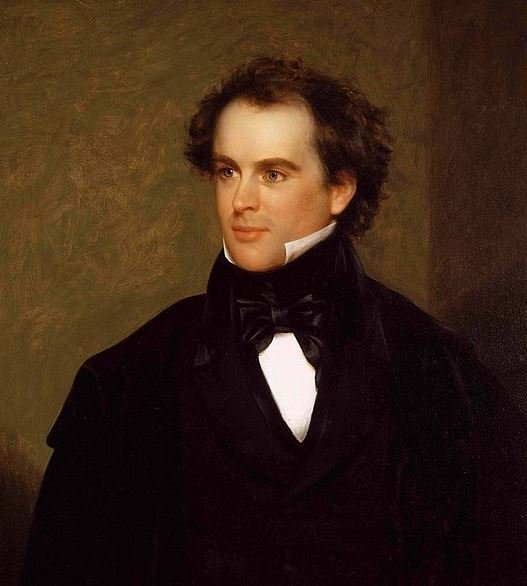
Image: Charles Osgood’s portrait of Nathaniel Hawthorne.
Struggles and Success with Short Stories
Following Fanshawe, Hawthorne faced financial difficulties and spent much of his time writing short stories and sketches, many of which were published anonymously in periodicals.
These early works were later collected in Twice-Told Tales (1837), a significant publication that established Hawthorne as a writer of note. The collection includes stories like “The Minister’s Black Veil” and “Dr. Heidegger’s Experiment,” which explore themes of secrecy, sin, and human frailty. Twice-Told Tales gained a favorable reception, and his friend Longfellow praised the collection for its exploration of moral complexity and its distinctive American voice.
Marriage and Life in Concord
In 1838, Hawthorne became engaged to Sophia Peabody, a painter and intellectual. In need of a steady income to support his future family, he worked at the Boston Custom House and briefly joined Brook Farm, a utopian transcendentalist community.
However, Hawthorne found the communal lifestyle unappealing, preferring solitude and quiet for his work. He and Sophia married in 1842 and moved to The Old Manse in Concord, Massachusetts, where they lived for several years. During this time, he was surrounded by influential transcendentalist thinkers like Ralph Waldo Emerson and Henry David Thoreau, although Hawthorne himself was skeptical of their idealism.
The Scarlet Letter and Literary Fame
In 1850, Hawthorne achieved widespread fame with the publication of The Scarlet Letter, a novel that remains his most acclaimed work. Set in Puritan New England, The Scarlet Letter examines themes of sin, guilt, and redemption through the story of Hester Prynne, a woman condemned by her community for bearing an illegitimate child. The novel’s exploration of individual moral struggle against a backdrop of rigid religious ideology resonated with readers and solidified Hawthorne’s place in American literature. The Scarlet Letter is considered one of the greatest American novels and a cornerstone of the American Romantic movement.
Later Works: Exploring Dark Romanticism
Following The Scarlet Letter, Hawthorne wrote several other significant novels, including The House of the Seven Gables (1851), The Blithedale Romance (1852), and The Marble Faun (1860). Each novel reflects his dark Romanticism, focusing on themes such as ancestral guilt, moral ambiguity, and the consequences of secret sin. The House of the Seven Gables, inspired by a house in Salem that Hawthorne knew well, is a Gothic tale of a cursed family lineage. The Blithedale Romance draws upon his experiences at Brook Farm, critiquing the idealism of transcendentalist utopian communities. The Marble Faun, written during Hawthorne’s stay in Italy, explores the impact of guilt and the complex relationship between innocence and corruption.
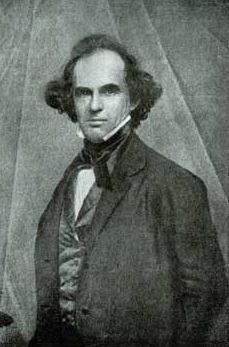
Image: A daguerreotype of Hawthorne.
Political Appointment and Time in Europe
Hawthorne’s college friend, Franklin Pierce, was elected president in 1852, and as a reward for his loyalty, Hawthorne was appointed U.S. consul to Liverpool, England. This role offered financial stability and allowed him to travel widely throughout Europe. His experiences abroad enriched his worldview and provided inspiration for The Marble Faun. Although his time in Europe was enjoyable and broadened his perspectives, he felt increasingly disconnected from the literary scene in America.
Final Years and Legacy
After returning to the United States in 1860, Hawthorne settled in Concord, Massachusetts. He struggled to find inspiration and produce new work in his later years, and the onset of the Civil War saddened him deeply, as he was disillusioned by the country’s division and violence. Hawthorne passed away on May 19, 1864, during a trip to the White Mountains with his friend Pierce.
Hawthorne’s legacy endures through his rich contributions to American literature, particularly in his exploration of moral complexity, the human psyche, and the lasting impact of history. As a central figure in the Romantic and dark Romantic movements, his works have influenced generations of writers and readers who are drawn to his introspective portrayal of guilt, sin, and redemption. His narratives, particularly in The Scarlet Letter, continue to be studied for their psychological insight and their critique of the moral rigidity of American society.
What were the sociocultural effects of the American Civil War?
Thematic Significance and Influence
Hawthorne’s writing delves into the darker aspects of human nature, often within historical and Puritan settings, to question societal and individual moral standards. He explores how guilt and secrets affect individuals and communities, revealing the psychological turmoil beneath outwardly pious facades.
His critique of Puritanism, though rooted in his ancestral connection to Salem, reflects a broader distrust of rigid moralism and intolerance. This thematic depth has made his work timeless, as modern readers continue to find relevance in his reflections on human imperfection and the consequences of judgment.
Frequently Asked Questions
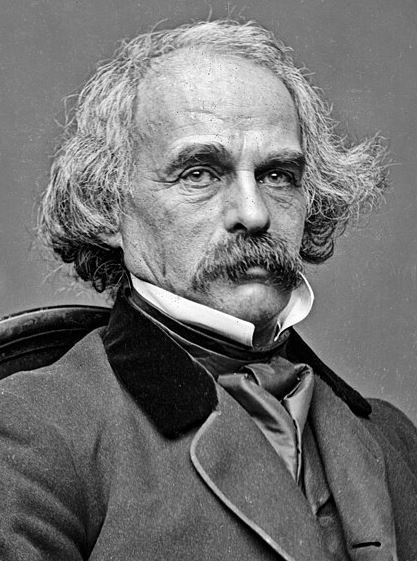
Image: Hawthorne during the 1860s
How did Hawthorne’s family history influence his writing?
Hawthorne’s family had deep roots in Salem, Massachusetts, and one of his ancestors was a judge in the Salem witch trials. This connection shaped his views on Puritanism and influenced his works’ recurring themes of guilt, sin, and moral ambiguity.
Where did Hawthorne attend college, and what honor did he receive there?
Hawthorne attended Bowdoin College in Maine, where he was elected to the Phi Beta Kappa honor society in 1824.
What was Hawthorne’s first novel, and how did he view it later in life?
Hawthorne’s first novel, Fanshawe, was published in 1828. He later distanced himself from it, feeling it did not match the standard of his later works.
What collection of stories helped establish Hawthorne’s reputation?
The publication of Twice-Told Tales in 1837, a collection of short stories published in various periodicals, helped establish Hawthorne’s literary reputation.
Who was Sophia Peabody, and how did she impact Hawthorne’s life?
Sophia Peabody, an artist and intellectual, was Hawthorne’s wife. They married in 1842, and she influenced his work and supported his literary pursuits.
Which position did Hawthorne take for financial stability before fully pursuing writing?
To achieve financial stability, Hawthorne worked at the Boston Custom House and briefly joined the Brook Farm transcendentalist community, though he found that communal living did not suit him.
What themes are explored in The Scarlet Letter, and why is it significant?
The Scarlet Letter explores themes of sin, guilt, and redemption, set against the strict moral codes of Puritan New England. Published in 1850, it solidified Hawthorne’s reputation as a key figure in American literature.
Which other novels further established Hawthorne’s literary reputation?
Following The Scarlet Letter, Hawthorne published The House of the Seven Gables (1851) and The Blithedale Romance (1852), both of which contributed to his standing as a master of the Romantic and dark Romantic genres.
How did Hawthorne’s friendship with Franklin Pierce influence his career?
Hawthorne’s friendship with Franklin Pierce led to his appointment as consul to Liverpool, England, when Pierce became president in 1853. This diplomatic role provided him with financial stability and exposure to European culture.

U.S. President Franklin Pierce
How did Hawthorne’s time in Europe affect his later years?
During his time in Europe, he continued to write while gaining new cultural influences. However, upon returning to the U.S. in 1860, he felt creatively exhausted, particularly as the Civil War loomed.
What are the central themes in Hawthorne’s work?
Hawthorne’s works often examine inherent sin, guilt, and the dark aspects of human nature. They critique rigid moral codes and explore complex psychological and moral themes, often through historical and symbolic settings.
Why is Hawthorne considered a master of dark Romanticism?
Hawthorne’s focus on moral complexity, inherent sin, and psychological depth exemplifies dark Romanticism. His works highlight human imperfection and the consequences of moral rigidity, making him a central figure in the genre.





