American Politician and Lawyer Richard Caswell
Richard Caswell was an American politician, lawyer, and military leader who served as the first and fifth governor of North Carolina, a delegate to the Continental Congress, and a senior officer in the militia during the American Revolutionary War.
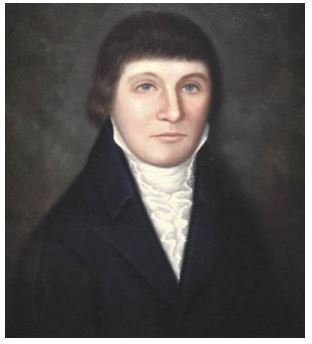
Portrait of Richard Caswell.
Early Life and Career
Richard Caswell was born on August 3, 1729, in Harford County, Maryland (now part of present-day Baltimore), as one of eleven children born to Richard Caswell Sr. and Christian Dallam Caswell. His family moved to New Bern, North Carolina, in 1745, where young Caswell began his career as a surveyor.
By 1750, he was appointed deputy surveyor of the province, gaining an early foothold in public service. Over the next few years, Caswell emerged as a prominent leader, representing his community for 17 years in the North Carolina House of Burgesses, where he advocated for infrastructure and town development. His most notable achievement during this time was the introduction of a bill that led to the establishment of “Kingston”—a town later renamed Kinston after the American Revolutionary War.
In addition to his political career, Caswell was a prosperous lawyer, farmer, land speculator, and tanner, which allowed him to amass significant wealth and influence. His leadership extended beyond politics as he served as grand master of North Carolina’s Masonic lodges, further solidifying his status within the local elite.
Military Service and the Regulator Movement
Caswell’s military career began during the turbulent period of the Regulator Movement. In 1771, he fought in the Battle of Alamance, where he commanded the right wing of Governor William Tryon’s forces. This battle, which marked the end of the Regulator Movement, demonstrated Caswell’s effectiveness in military leadership and foreshadowed his future role as a commander during the American Revolution.
Role in the American Revolutionary War
Caswell represented North Carolina as a delegate to the First Continental Congress in 1774 and again in 1775. He was a signatory of the Continental Association of 1774, a boycott of British goods aimed at pressuring Great Britain to repeal the Coercive Acts. His participation in these critical assemblies underscored his dedication to colonial self-governance and opposition to British overreach.
With the outbreak of the American Revolutionary War, Caswell’s military responsibilities expanded significantly. On May 4, 1776, when the militia district of New Bern was formed, Caswell was appointed to command its minuteman region. He led North Carolina’s Provincial Congress forces to victory at the pivotal Battle of Moore’s Creek Bridge in February 1776. This triumph crushed Loyalist opposition in North Carolina and bolstered Patriot morale throughout the colonies.
As a signatory of the Continental Association, a wartime leader, and the architect of North Carolina’s first constitution, Caswell left an indelible mark on the history of both his state and the nation.
In 1780, Caswell was commissioned as major general of militia and state troops. Unfortunately, his leadership was tested at the Battle of Camden Court House in 1780. During the battle, Virginia militia units panicked and fled, leaving Caswell’s troops exposed and contributing to a devastating Patriot defeat. Following this defeat, Caswell returned home suffering from an unnamed illness. Adding to the complexities of his service, the North Carolina General Assembly appointed William Smallwood of Maryland to command the state’s militia without informing Caswell, prompting his resignation on October 21, 1780.
Despite his resignation, Caswell’s military career was not over. When Smallwood left North Carolina in January 1781, Caswell resumed his role as major general of militia, a position he retained until the conclusion of the war. His leadership in organizing North Carolina’s defense was critical during the final years of the revolution.
Governor of North Carolina (1776–1780 and 1785–1787)
Caswell’s political career reached its apex when he became North Carolina’s first governor under the newly written state constitution. As president of the North Carolina Provincial Congress, Caswell oversaw the drafting of the constitution in 1776 and was subsequently elected governor when the congress adjourned. He took the oath of office on January 16, 1777, and was re-elected by the General Assembly for three consecutive one-year terms, serving until 1780.
During his tenure, Caswell navigated the fledgling state through the complexities of the Revolutionary War, managing the challenges of war while maintaining civil governance. The state constitution limited governors to three consecutive terms, forcing Caswell to step down in 1780. However, his influence on state governance remained profound.
After serving as North Carolina’s comptroller and returning to the North Carolina Senate, Caswell was elected governor again in 1785. He served for two additional years, from 1785 to 1787, ensuring the state remained stable during the post-revolutionary period.
Later Career and Contribution to the U.S. Constitution
Caswell remained active in public service after his governorship. He served as comptroller of North Carolina and as a member of the North Carolina Senate between his two gubernatorial terms. Caswell was also chosen as one of North Carolina’s delegates to the United States Constitutional Convention of 1787, although he did not attend. Despite his absence, his support for a stronger federal government and his contributions to North Carolina’s legal and political frameworks were evident in his continued legislative work.
In 1789, Caswell returned to the North Carolina General Assembly, this time serving as Speaker of the Senate. His legislative career culminated in his efforts to promote public education, which he had advocated since 1760, when he proposed using reimbursement funds from the French and Indian War to establish free schools in every county.
Personal Life and Family
Caswell married Mary Mackilwean, daughter of James and Elinor Mackilwean, in the early 1750s. The couple had three children: William Caswell, born in 1754, and two daughters who died in infancy. Mary Caswell died from complications of childbirth in 1757. Their home, known as Red House, stood on the site where the Richard Caswell Memorial Park is now located in Kinston, North Carolina.
Following Mary’s death, Caswell married Sarah Heritage on June 20, 1758. Sarah was the daughter of William Heritage and Susannah Moore. Together, they had eight children: Richard, Sarah, Winston, Anna, Dallam, John, Susannah, and Christian. Caswell’s sons, Richard and William, played significant roles during the Revolutionary War. Richard Caswell Jr. was colonel of the Dobbs Regiment and lieutenant colonel of the 2nd North Carolina Regiment but was lost at sea in 1784. William Caswell, from his first marriage, served as a brigadier general and commanded the New Bern District during the war.
Death and Legacy
Richard Caswell died on November 10, 1789, in Fayetteville, North Carolina, while serving as Speaker of the Senate. His body was returned to Kinston for burial in the Caswell family cemetery, where a memorial and museum now stand in his honor.
One of Caswell’s most enduring legacies was his advocacy for public education. His 1760 proposal to use funds reimbursed by the Crown after the French and Indian War for establishing free schools was incorporated into North Carolina’s first state constitution in 1776. Caswell believed that education was essential for maintaining a well-informed and engaged citizenry, and his efforts laid the foundation for the development of North Carolina’s educational system.
In recognition of his contributions, Caswell County, North Carolina, and Fort Caswell were named in his honor. Additionally, the Richard Caswell Memorial Museum in Kinston preserves the memory of his service and leadership. His impact on North Carolina’s political, military, and educational landscape remains a testament to his dedication and foresight.
Frequently Asked Questions
What was Richard Caswell’s role in the American Revolutionary War?
Caswell commanded North Carolina’s militia and led Patriot forces to victory at the Battle of Moore’s Creek Bridge in 1776. He was later commissioned major general of militia and state troops but faced defeat at the Battle of Camden in 1780.
How did Caswell contribute to North Carolina’s political development?
As president of the North Carolina Provincial Congress, Caswell oversaw the drafting of the state’s first constitution in 1776 and served as the state’s first governor under that constitution from 1777 to 1780.
What was Caswell’s impact on public education in North Carolina?
Caswell advocated for public education by proposing in 1760 that funds reimbursed after the French and Indian War be used to establish free schools, a provision that was later incorporated into the North Carolina Constitution.
How did Caswell’s military career end during the Revolutionary War?
After his defeat at the Battle of Camden in 1780 and being replaced by William Smallwood, Caswell resigned but was reappointed as major general of militia after Smallwood’s departure in 1781.
What contributions did Caswell make to the U.S. Constitution?
Caswell was chosen as one of North Carolina’s delegates to the United States Constitutional Convention in 1787, although he did not attend. His political influence, however, shaped the state’s governance.
What was Caswell’s family life like and how did his sons contribute to the war effort?
Caswell was married twice, first to Mary Mackilwean and later to Sarah Heritage. His sons, William and Richard, served as officers during the Revolutionary War, with Richard lost at sea in 1784.
Richard Caswell’s legacy is honored through places named after him, such as Caswell County and Fort Caswell, and the Richard Caswell Memorial Museum in Kinston, North Carolina.





