7 Most Important Ancient Cities in North America
Ancient North America was home to various sophisticated and influential civilizations, each with their unique cities that served as cultural, economic, and religious hubs. Each site reflects the ingenuity, resilience, and cultural achievements of the people who built and inhabited them. From the monumental earthworks of Poverty Point to the sophisticated urban planning of Cahokia and Tenochtitlan, these ancient cities continue to inspire and educate us about the past. Their legacies endure in the archaeological remains that we study and preserve.
Below, World History Edu presents some of the most important ancient cities in North America:
Cahokia: The Mysterious Metropolis
Cahokia is one of the most fascinating ancient cities in North America. Located near modern-day St. Louis, Missouri, it was the largest and most complex pre-Columbian archaeological site north of Mexico. Cahokia flourished between 1050 and 1350 AD and was the center of the Mississippian culture.
Cahokia was renowned for its sophisticated urban planning. The city featured large public plazas, residential areas, and more than 120 mounds. The largest mound, Monks Mound, is the largest earthen structure in the Americas, standing at about 100 feet tall.
At its peak, Cahokia’s population is estimated to have been between 10,000 and 20,000 people, making it one of the largest cities in the world during its time.
The city was a major trading hub, with artifacts found from as far away as the Great Lakes, Gulf Coast, and Appalachian Mountains. This indicates a vast trade network.
Cahokia had a complex social and political structure, with a chiefdom system that exerted control over a wide region.

One of the most bustling ancient urban centers in North America was Chaco Canyon. Located near modern-day St. Louis, Missouri, Chaco Canyon featured some of the largest buildings in North America, reflecting advanced architectural skills. Image: The staircase side of the Monks Mound.
Teotihuacan: The City of the Gods
Teotihuacan, located in the Valley of Mexico, is one of the most significant ancient cities in Mesoamerica. Although technically in modern-day Mexico, its influence extended into what is now the southwestern United States, making it a crucial part of North American history.
Teotihuacan is famous for its monumental pyramids, including the Pyramid of the Sun and the Pyramid of the Moon. The city’s layout reflects sophisticated urban planning, with a grid pattern and a central avenue known as the Avenue of the Dead.
The city was a major cultural and economic hub, influencing various Mesoamerican cultures, including the Maya and the Zapotecs. It played a key role in the development of urbanism in the region.
In terms of economy and trade, Teotihuacan was a major center. It had a plethora of trade, crafts, and religious structures. It produced high-quality obsidian tools and pottery, which were traded extensively.
And unbeknownst to many, at its peak, Teotihuacan had a population of around 125,000, making it one of the largest cities in the world at the time.

Teotihuacan’s influence can be seen in the architectural and cultural developments of later Mesoamerican civilizations. Its decline remains a mystery, but its legacy endures in the archaeological remains that attract researchers and tourists alike. Image: the Pyramid of the Sun.
Religious Practices and Major Deities of Pre-Columbian Civilizations
Chaco Canyon: The Ancestral Puebloans
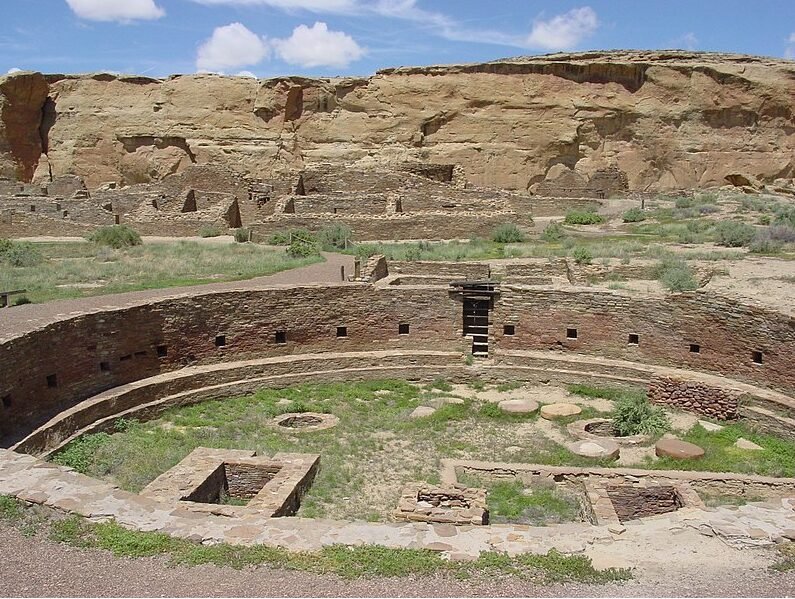
Chaco Canyon’s architectural and astronomical achievements continue to be studied by archaeologists and anthropologists. It remains a symbol of the ingenuity and resilience of the Ancestral Puebloan people. Image: Great kiva of Chetro Ketl loacted at the Chaco Culture National Historical Park.
Chaco Canyon, located in northwestern New Mexico, was the center of the Ancestral Puebloan culture between 900 and 1150 AD. It is one of the most important archaeological sites in the American Southwest.
Chaco Canyon is renowned for its large multi-story buildings, known as “Great Houses.” These structures were made of sandstone blocks and timber, showcasing advanced masonry skills.
The buildings and roads of Chaco Canyon are aligned with solar, lunar, and cardinal directions, indicating a deep understanding of astronomy among the Ancestral Puebloans.
Chaco Canyon was a major center for trade and communication. Roads radiated out from the canyon, connecting it to other regions and facilitating the exchange of goods such as turquoise, shells, and pottery.
The canyon served as a major ceremonial center, with large kivas (circular ceremonial structures) that played a crucial role in the religious life of the inhabitants.

Mesa Verde: The Cliff Dwellings

Mesa Verde is considered one of the most important ancient cities in North America because it provides a fascinating glimpse into the rich and diverse history of the continent. Image: Cliff Palace at the Mesa Verde National Park.
Mesa Verde, located in present-day Colorado, is famous for its well-preserved cliff dwellings built by the Ancestral Puebloans. The site was inhabited from around 600 to 1300 AD.
Mesa Verde is home to some of the most iconic and well-preserved cliff dwellings in North America, such as Cliff Palace, which contains over 150 rooms and 23 kivas. These dwellings were built into the alcoves of canyon walls, providing protection and insulation.
The city had a great deal of architectural Innovation. The Ancestral Puebloans demonstrated advanced building techniques, using sandstone, mortar, and wooden beams to construct their homes. The layout of these dwellings indicates a high level of social organization.
Despite the arid environment, the inhabitants of Mesa Verde practiced agriculture, growing crops such as corn, beans, and squash. They developed innovative methods for water conservation and soil management.
Mesa Verde was a cultural and religious center, with evidence of intricate pottery, weaving, and other crafts.
Poverty Point: The Prehistoric Earthworks
Poverty Point, located in northeastern Louisiana, is one of the most significant prehistoric earthwork complexes in North America. It dates back to between 1700 and 1100 BC, making it one of the oldest sites on this list.
The site is renowned for its massive earthworks, including a series of concentric ridges and mounds. The largest mound, known as Mound A, is about 72 feet tall and required a massive labor force to construct.
Poverty Point was a major center for trade, with artifacts found from as far away as the Great Lakes and the Gulf Coast. The inhabitants traded items such as stone tools, copper, and shell beads.
The construction of the earthworks indicates a high level of social organization and the ability to mobilize large groups of people for communal projects.
The site was a major ceremonial center, with evidence of complex rituals and gatherings.
Similar to Mesa Verde, Poverty Point is a UNESCO World Heritage Site and a state historic site, recognized for its cultural and historical significance. It provides a glimpse into the social and economic life of prehistoric North American societies.
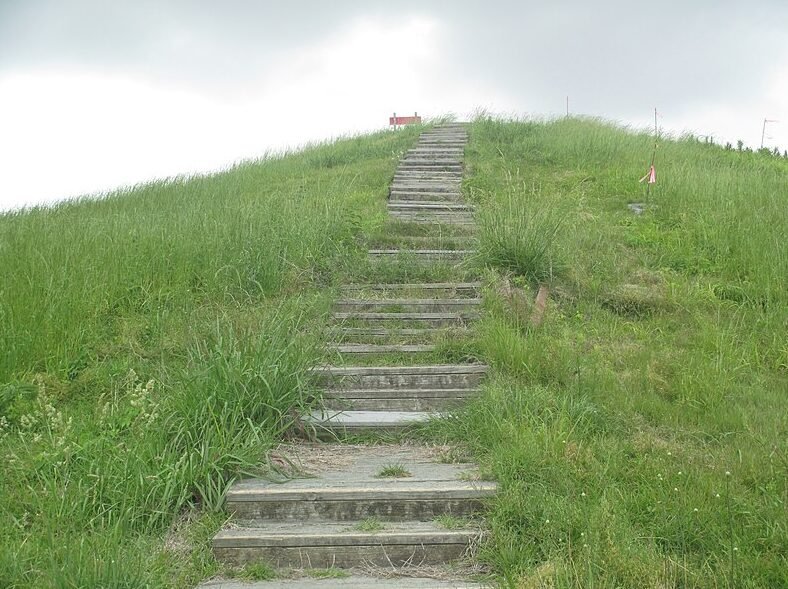
Poverty Point remains a significant archaeological site, providing insights into the social, economic, and political life of ancient North American societies. Image: Mound A at Poverty Point.
Tenochtitlan: The Aztec Capital
Tenochtitlan, though technically in Mexico, was a major influence on the regions now part of North America. Founded around 1325 AD, it was the capital of the Aztec Empire and one of the largest cities in the world at its height.
Tenochtitlan was an engineering marvel, built on an island in the middle of Lake Texcoco. The city featured a complex system of canals, causeways, and aqueducts, reflecting advanced urban planning and engineering skills.
At its peak, Tenochtitlan had a population of over 200,000 people. It was a major economic hub, with markets that attracted traders from across Mesoamerica. The city’s economy was based on agriculture, trade, and tribute from conquered regions.
The city was a major religious center, with numerous temples and pyramids dedicated to Aztec gods. The Templo Mayor, a large pyramid at the center of the city, was the most important religious site.
Tenochtitlan was also best known as a military powerhouse, exerting control over a vast empire through warfare and alliances.
Great Serpent Mound: The Mysterious Effigy
The Great Serpent Mound, located in southern Ohio, is one of the most famous effigy mounds in North America. Its origins are still debated, but it is generally believed to have been constructed by the Adena culture around 1000 BC.
The Great Serpent Mound is an effigy mound in the shape of a serpent, stretching over 1,300 feet in length. The precise purpose of the mound is unknown, but it is believed to have had astronomical, ceremonial, or religious significance.
Some researchers believe the serpent’s coils align with astronomical events such as solstices and equinoxes, suggesting a sophisticated understanding of astronomy among its builders.
The mound is a testament to the ceremonial and artistic achievements of the Adena culture, reflecting their spiritual beliefs and practices.
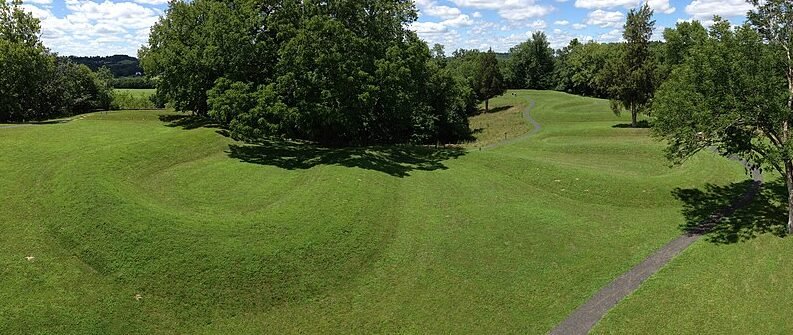
The Great Serpent Mound is a National Historic Landmark and a UNESCO World Heritage Site. It continues to attract researchers and visitors, offering a window into the ancient cultures of North America. Image: A significant view of the The Great Serpent Mound.





