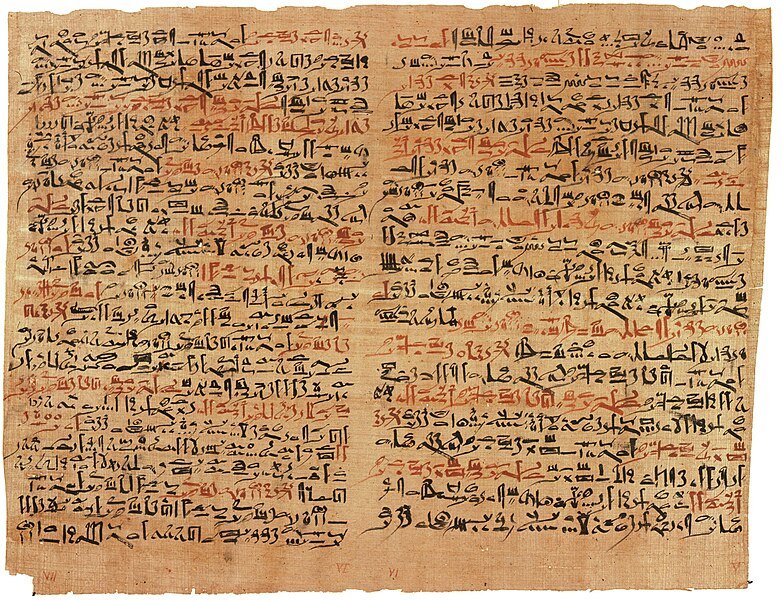
The Ebers Papyrus
Ancient Egypt, one of the world’s oldest civilizations, developed an advanced medical system that combined practical knowledge, religious beliefs, and supernatural concepts. Egyptian medicine was highly regarded by contemporary cultures, including the Greeks, who credited Egyptian physicians with pioneering various medical techniques. This study and practice of medicine were deeply intertwined with religious beliefs, magic, and empirical observations, making it one of the most fascinating medical traditions of the ancient world.
READ MORE: Science and Technology in Ancient Egypt
Sources of Medical Knowledge
Much of what we know about Egyptian medicine comes from medical papyri, archaeological evidence, and inscriptions. Key medical texts include:
- The Edwin Smith Papyrus (c. 1600 BCE) – A surgical text that outlines treatments for trauma, fractures, wounds, and neurological conditions. It is considered one of the most scientific Egyptian medical texts, describing cases systematically and detailing anatomical observations.
- The Ebers Papyrus (c. 1550 BCE) – The most extensive surviving medical document, containing over 800 prescriptions and discussing ailments such as digestive disorders, eye diseases, and heart conditions.
- The Kahun Gynecological Papyrus (c. 1800 BCE) – A text focused on women’s health, fertility, pregnancy, and gynecological conditions.
- The Hearst Papyrus (c. 1600 BCE) – A document listing various prescriptions for internal ailments.
- The London Medical Papyrus (c. 1350 BCE) – A mix of magical and medical remedies.
- The Berlin Papyrus (c. 1200 BCE) – Contains discussions of pregnancy tests, contraception, and treatments for various diseases.
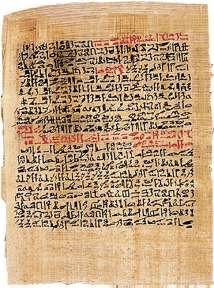
The Ebers Papyrus
These texts demonstrate a blend of scientific observation and magical-religious healing, highlighting the Egyptians’ attempts to categorize and systematically address medical issues.
The Papyrus Lansing: “If you’re wise, choose to become a scribe!”
Physicians and Medical Hierarchy
Egyptian physicians, known as “sunu,” were highly trained and specialized. Many served in temples, particularly those dedicated to Imhotep, the deified physician and architect of Djoser’s Step Pyramid. Some physicians worked for the royal court, while others served the general public.
Medical practitioners were hierarchically organized:
- High-ranking Physicians – Those who served the pharaoh and nobility, often specializing in specific areas such as ophthalmology, dentistry, or gastroenterology.
- Temple Physicians – Associated with religious institutions, responsible for healing the sick through prayers, rituals, and medical treatments.
- General Practitioners – Served common people, diagnosing and treating a variety of ailments.
- Magicians and Healers – Used spells, incantations, and amulets to ward off disease-causing spirits.
- Midwives and Nurses – Assisted with childbirth and postpartum care.
Specialization was highly valued, and some physicians focused on specific parts of the body. The Greeks noted that Egyptian doctors treated only one type of disease, a level of specialization rare in the ancient world.
Theoretical Understanding of Disease
Egyptians believed that disease was caused by both physical and supernatural factors. The primary theories included:
- Imbalance of bodily fluids – The body contained channels similar to the Nile’s irrigation system, and blockages could lead to illness. This foreshadowed later Greek medical theories on humors.
- Spiritual causes – Disease could be inflicted by gods or malevolent spirits. Protective spells and amulets were common methods of prevention.
- Contamination and Diet – Egyptians recognized the link between hygiene, diet, and disease. They practiced regular handwashing and had dietary restrictions.
While their understanding of physiology was rudimentary, Egyptian doctors made empirical observations that influenced later medical traditions.
Everything that you need to know about Apep, the Ancient Egyptian Deity of Chaos
Medical Education and Training
Medical education took place in temples known as Per Ankh (“House of Life”), which functioned as centers of learning and healing. Physicians underwent rigorous training that included:
- Memorization of medical texts
- Practical experience through apprenticeships
- Anatomical knowledge from treating wounded soldiers and performing mummification
- Mastery of surgical techniques and herbal remedies
These institutions were akin to early medical schools, ensuring that knowledge was preserved and passed down through generations.
Diagnosis and Examination Methods
Egyptian physicians employed a structured approach to diagnosis, which often included:
- Observation – Examining symptoms such as swelling, discoloration, or abnormal secretions.
- Palpation and Touch – Feeling for tumors, fractures, or organ irregularities.
- Interrogation – Asking the patient about their symptoms and lifestyle.
- Urine and Stool Analysis – Noting changes in color, consistency, and smell.
- Pulse Examination – Though rudimentary, some Egyptian texts suggest an awareness of the pulse’s relation to the heart.
After assessing a patient, the physician classified their condition into three categories:
- Ailments treatable with medical intervention.
- Ailments requiring prayers and spells.
- Ailments deemed incurable.
Ancient Egyptian medicine was a remarkable blend of empirical knowledge, religious practices, and magical beliefs.
Common Diseases and Their Treatments
Egyptians suffered from a range of diseases, many of which stemmed from the environment, diet, and living conditions. Some common illnesses and treatments included:
- Eye infections – Treated with honey, copper, and malachite.
- Gastrointestinal issues – Remedies included castor oil, figs, and herbs like coriander.
- Respiratory conditions – Inhalation of herbs, steam baths, and honey mixtures.
- Skin diseases – Ointments made from animal fat, herbs, and minerals.
- Bone fractures – Splints, bandages, and honey dressings to prevent infection.
- Dental problems – Toothaches were common; some treatments involved clove oil or drilling abscessed teeth.
Preventive medicine played a role, with emphasis on personal hygiene, regular bathing, and dietary restrictions.
While the ancient Egyptians’ understanding of disease was still rooted in spiritual explanations, many of their treatments were highly effective and influenced medical traditions across the ancient world.
Surgical Practices
Although surgery was limited, Egyptian physicians performed minor procedures, including:
- Trepanning – Drilling into the skull to relieve pressure.
- Tumor excision – Some records mention the removal of cysts and tumors.
- Wound treatment – Sewing wounds, applying honey (a natural antiseptic), and using linen bandages.
- Amputations – Performed in extreme cases, sometimes with prosthetic replacements.
They lacked advanced anesthesia, relying on opium, mandrake, and alcohol for pain relief.
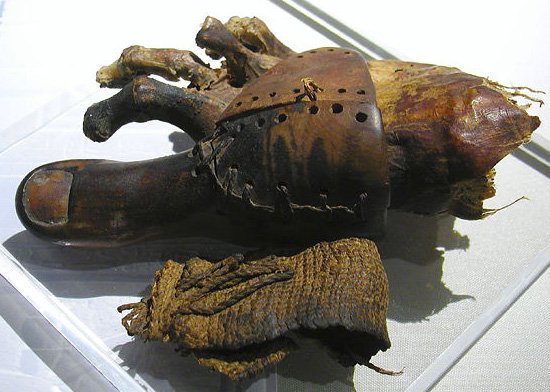
A wooden and leather prosthetic toe.

Magic and Religion in Medicine
Egyptian medicine was deeply intertwined with religious and magical beliefs. Physicians often worked alongside priests, using incantations, amulets, and prayers to invoke divine healing. Deities associated with medicine included:
- Thoth – God of wisdom and medicine.
- Sekhmet – Goddess of healing and disease.
- Heka – God of magic, believed to imbue spells with power.
- Isis – Protector of mothers and children, associated with healing.
Protective amulets, such as the Eye of Horus, were commonly worn to ward off illness. Magical texts often prescribed spells to be recited while administering medicine.
Pharmacology and Herbal Remedies
Egyptians used an extensive array of natural remedies, derived from plants, minerals, and animal products. Some notable treatments included:
- Aloe vera – Used for burns and skin conditions.
- Garlic – Believed to boost immunity and treat infections.
- Honey – A natural antiseptic applied to wounds.
- Opium – Used for pain relief.
- Frankincense and Myrrh – Antiseptic and anti-inflammatory properties.
- Coriander and Fennel – Used for digestive issues.
Many of these remedies influenced later Greek and Roman medicine.
READ MORE: 10 Most Revered Gods and Goddesses in Ancient Egypt
Legacy and Influence on Later Medicine
Egyptian medical practices influenced Greek and Roman physicians, including Hippocrates and Galen, who studied Egyptian texts and incorporated their knowledge into Western medicine. Egyptian medical techniques also had an impact on Islamic medicine, with scholars translating Egyptian medical papyri into Arabic.
Modern studies confirm the efficacy of many Egyptian remedies, particularly the use of honey as an antibiotic and various herbs for gastrointestinal ailments. Their understanding of wound care, surgery, and pharmacology laid the groundwork for future medical advancements.
Questions and answers
How did ancient Egyptian physicians practice medicine?
Egyptian physicians combined spells, herbal remedies, and practical treatments but had limited anatomical understanding.
What did ancient Egyptians believe caused disease?
Egyptians believed disease was caused by divine punishment, malevolent spirits, or ghosts rather than physical or bacterial sources.
How did ancient Egyptians view the heart and brain?
The heart was considered the center of intelligence and emotion, while the brain was thought to be useless, despite evidence of brain surgery.
Why were Egyptian doctors respected in the ancient world?
Egyptian doctors were highly regarded for their medical expertise, and civilizations like the Hittites, Assyrians, and Greeks sought their knowledge.
Who was Merit-Ptah?
Merit-Ptah was the first recorded female physician, serving as the royal court’s chief doctor around 2700 BCE.
What was Imhotep known for in medicine?
Imhotep, active circa 2668-2600 BCE, wrote medical treatises and was later deified as a god of medicine and healing.
What was the contribution of Hesyre to Egyptian medicine?
Hesyre, known as the first dentist, held the title “Chief of Dentists and Physician to the King” around 2600 BCE.
Who was Peseshet in Egyptian medicine?
Peseshet was a female physician and teacher at a medical school in Sais around 2500 BCE.
What medical instruments did Qar have?
Qar, a royal physician around 2355 BCE, was buried with bronze surgical instruments, some of the oldest known.
How did magic influence Egyptian medicine?
Egyptian doctors believed supernatural forces influenced health and combined medical treatments with spells to enhance effectiveness.
Which gods were associated with Egyptian medicine?
Egyptian physicians invoked gods like Heka, Sekhmet, and Isis for healing and protection.
READ MORE: 10 Most Famous Egyptian Goddesses
What unusual remedy did Egyptians use for coughs?
A common Egyptian remedy for coughs involved drinking milk mixed with a roasted mouse, often accompanied by an incantation.
What are some significant Egyptian medical texts?
The Ebers Papyrus (c. 1550 BCE) detailed treatments for various ailments, while the Edwin Smith Papyrus (c. 1600 BCE) focused on surgical procedures.
How did Egyptian medicine influence later civilizations?
Egyptian medical knowledge, particularly through Greek transmission, influenced later traditions and shaped future generations of physicians.
Egyptian medicine was a blend of practical treatments and supernatural beliefs, with a focus on diagnosis, remedies, and magical interventions.





