Ancient Egyptian Pharaoh Anedjib
Pharaoh Anedjib, also known as Adjib, Hor-Anedjib, or Hor-Adjib, was a ruler during Egypt’s 1st Dynasty. He governed in a period marked by the consolidation of power and evolving royal traditions. His reign, estimated to last 8–10 years, remains significant for its innovations in royal titulary, contributions to Egypt’s administrative and religious institutions, and archaeological discoveries.
Life and Historical Records
Anedjib’s reign is documented through inscriptions on various materials, including stone vessels, ivory tags, and jar seals, discovered in Abydos and Saqqara. His Horus name, Anedjib, symbolized his divine kingship. Historical sources, such as the Egyptian historian Manetho, attribute a reign of 26 years, while the Royal Canon of Turin claims an exaggerated 74 years. Modern Egyptologists dismiss these figures as improbable, instead crediting him with a relatively short but impactful rule.
Family and Lineage
Anedjib’s parentage remains uncertain, though it is widely speculated that he was the son of King Den, one of Egypt’s most powerful early rulers. His familial connections highlight the dynastic continuity within the 1st Dynasty.
Anedjib may have been married to a woman named Betrest, as suggested by the Palermo Stone, which describes her as the mother of his successor, King Semerkhet. However, this claim lacks definitive evidence. Records of his children, if any, have not survived, but Semerkhet is considered a possible member of his family.
First Dynasty of Egypt: History, Notable Rulers, & Accomplishments
Reign
One of Anedjib’s most significant contributions was the introduction of the “Nebuy” title, meaning “The Two Lords.” This title represented the duality of Upper and Lower Egypt and invoked the divine patronage of Horus and Seth, emphasizing the pharaoh’s role as the unifier and protector of the two lands.
Anedjib founded two significant royal institutions:
- Horus, the Gold of the Divine Community: A fortress symbolizing royal strength and divine protection.
- Horus, the Star of the Divine Community: A royal residence underscoring the connection between the king and the heavens.
Inscriptions from his reign reveal that he commissioned numerous cult statues of himself, many of which depicted him with full royal insignia. These statues were central to religious practices and reinforced his divine authority.
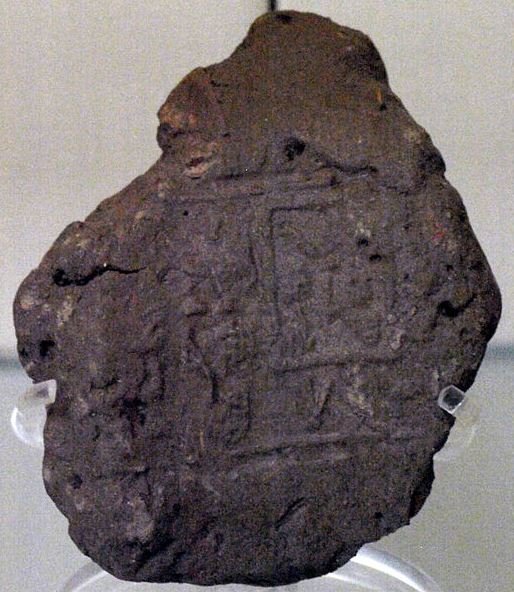
A clay seal impression inscribed with the name of 1st Dynasty Pharaoh, dating to approximately 2900 BCE.
The Heb Sed Jubilee Controversy
The Heb Sed festival was a throne jubilee traditionally celebrated after 30 years of reign. Inscriptions claim Anedjib celebrated a first and second Heb Sed. However, Egyptologists suggest these inscriptions were appropriated from King Den’s tomb, with Anedjib erasing Den’s name and replacing it with his own. This act points to a potential lack of legitimacy or a desire to bolster his image. Additionally, the notation “Qesen” (calamity) on the Heb Sed pavilion inscriptions hints at possible unrest or challenges during his reign.
Accomplishments
Anedjib’s reign saw significant advancements in material culture. Stone vessel inscriptions and cult statues reflect his focus on art and religion, which were integral to consolidating his authority.
The construction of royal institutions during his rule played a vital role in centralizing power. These establishments became symbols of his reign and represented the administrative and spiritual connection between the king and his subjects.
Through his titles and artistic commissions, Anedjib emphasized his role as the unifier of Egypt and a divine ruler. These efforts highlight his strategic approach to legitimizing his reign in a period of political consolidation.
Tomb and Burial
Anedjib’s tomb, known as “Tomb X,” is located in the royal necropolis of Umm el-Qa’ab in Abydos. Measuring 16.4 by 9 meters, it is the smallest royal tomb in the area. The burial chamber consisted of two rooms with thick walls and wooden plank foundations. Some of the wooden elements, including roof posts, were found well-preserved during excavations.
Surrounding Anedjib’s tomb are 64 subsidiary graves, likely belonging to his court and family. This practice, typical of the 1st Dynasty, suggests that members of the king’s entourage were buried alongside him, either through ritual suicide or execution. These tombs contained ivory carvings and other artifacts, reflecting the wealth and traditions of the time.
Anedjib’s tomb was excavated by Flinders Petrie between 1899 and 1900. Unlike other royal tombs in the necropolis, it has not been re-excavated since. Artifacts from the site, including stone vessel fragments and inscriptions bearing his serekh, offer valuable insights into his reign and burial practices.
Challenges and Legacy
The word “Qesen” on inscriptions suggests that Anedjib’s reign may have ended violently or amid significant challenges. This, combined with the appropriation of King Den’s records, points to possible instability during his rule.
Despite a short reign, Anedjib’s innovations in titulary, contributions to religious and administrative institutions, and emphasis on royal symbolism highlight his role in shaping early Egyptian kingship. His burial site and associated artifacts continue to provide valuable insights into the political and cultural dynamics of the 1st Dynasty.
Frequently Asked Questions

A fragment of a stone bowl bearing the name of Pharaoh Anedjib.
What artifacts and inscriptions are associated with Anedjib?
Artifacts such as inscriptions on schist, alabaster, marble, breccia, ivory tags, and jar seals have been found bearing Anedjib’s name and titles. These were primarily discovered in Abydos and Saqqara, providing important evidence of his rule and activities.
What innovations in royal titles did Anedjib introduce?
Anedjib introduced the “Nebuy” title, meaning “The Two Lords,” symbolizing the unification of Upper and Lower Egypt and the divine partnership of Horus and Seth. This complemented the traditional “Nisut-Bity” title, further legitimizing his kingship.
What evidence is there for Anedjib’s Heb Sed jubilees?
Inscriptions claim that Anedjib celebrated two Heb Sed jubilees, traditionally held after 30 years of reign. However, these records appear to have been appropriated from King Den’s tomb, with Anedjib replacing Den’s name with his own. This suggests he likely did not celebrate the jubilees himself, reflecting a shorter reign.
What challenges or conflicts may have occurred during Anedjib’s reign?
Inscriptions referring to the Heb Sed pavilion include the word “Qesen” (calamity), suggesting potential turmoil. The end of Anedjib’s reign may have been marked by conflict or instability, possibly contributing to his relatively brief rule.
What do we know about Anedjib’s burial site?
Anedjib’s tomb, known as “Tomb X,” is located at the Umm el-Qa’ab necropolis in Abydos. It is the smallest royal tomb of the 1st Dynasty and consists of a two-room burial chamber surrounded by 64 subsidiary tombs. These ancillary burials are thought to include the remains of his court or family members.
What significant discoveries were made in Anedjib’s tomb?
Excavators found well-preserved wooden planks and intact roof posts in the tomb. Artifacts such as cylinder seals, ivory carvings, and inscriptions bearing Anedjib’s serekh provide valuable insights into his reign and burial practices.
What was Anedjib’s legacy in early Egyptian history?
Despite his short reign, Anedjib’s introduction of the Nebuy title, his commissioning of cult statues, and his construction projects reflect his efforts to solidify his rule. However, evidence of instability and his modest burial site suggest a reign marked by both ambition and challenges.





