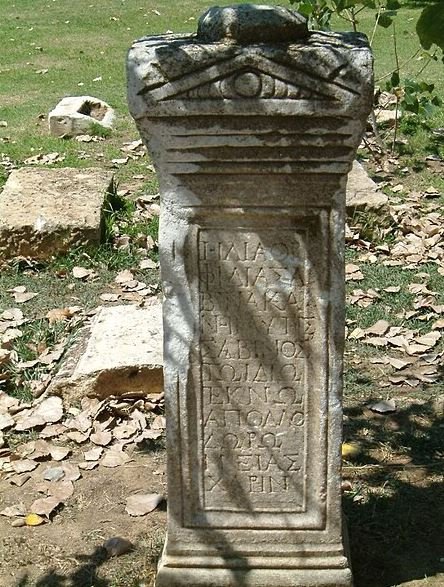
Ancient Greek City of Olynthus: History & Major Facts
The ancient city of Olynthus, located in Chalcidice, Greece, has a rich and complex history. Its evolution from a small Neolithic settlement to a significant Greek polis and its eventual destruction by Philip II of Macedon showcases the interplay of myth, culture, politics, and warfare in ancient Greece. The rediscovery and excavation of Olynthus have provided invaluable insights into Greek urban planning, art, and daily life.
Mythological Foundation and Early History
Olynthus is named after its mythological founder, Olynthus, who was believed to be either the son of Heracles or the river god Strymon. The city’s origins date back to the Neolithic era when a small settlement flourished on the South Hill during the 3rd millennium BC.
This early settlement was abandoned during the Bronze Age but was resettled in the 7th century BC by the Bottiaeans, a Thracian tribe expelled from Macedon by King Alexander I.
Persian Rule and Reconstitution
Olynthus entered historical records during the Persian invasions of Greece in the early 5th century BC. After the defeat of the Persian fleet at Salamis in 480 BC, Persian authority in the Balkans weakened. General Artabazus, tasked with maintaining control, suspected Olynthus of disloyalty. In response, he captured the city, massacred its inhabitants, and repopulated it with Greeks from Chalcidice under the leadership of Kritovoulos of Toroni.
While Herodotus describes this massacre in vivid terms, some evidence suggests that the original Bottiaean population may have continued to live in the area, blending with the newly settled Greek population. This marked the beginning of Olynthus’ transition into a Greek polis, though it remained relatively minor in comparison to other city-states in the region.
Development into a Polis and Synoecism
Olynthus’ prominence began to grow in 432 BC when King Perdiccas II of Macedon encouraged nearby settlements to merge with Olynthus in a process known as synoecism. This merging was part of Perdiccas’ strategy to counter Athenian influence in the region. As a result of this synoecism, the population expanded, and the city spread to the North Hill. This new settlement was developed with a Hippodamian grid plan, an innovative urban layout that divided the city into orderly blocks.
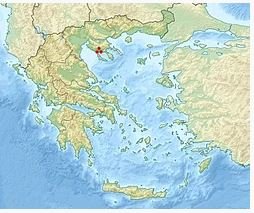
Image: The exact location of Olynthus within Greece.
The Formation of the Chalkidian League
In 423 BC, Olynthus became the head of the Chalkidian League, a confederation of cities in Chalcidice formed to protect against Athenian aggression during the Peloponnesian War. This league initially consisted of several small cities but grew significantly in strength and influence after the war, eventually encompassing 32 cities. Olynthus even secured treaties with Macedonian King Amyntas III, further cementing its regional dominance.
The Chalkidian League’s power extended to include cities as far west as the Strymon River and even Macedonian strongholds like Pella. By the mid-4th century BC, Olynthus had become a major regional power, rivaling Athens and Sparta.
Conflict with Sparta and Macedon
Olynthus’ growing power did not go unnoticed. In 382 BC, Sparta, prompted by concerns from nearby cities like Acanthus and Apollonia, launched a campaign to curb Olynthus’ influence. The resulting three-year war ended in 379 BC, with Olynthus agreeing to formally dissolve the Chalkidian League. However, the dissolution appears to have been largely symbolic, as Olynthus and its allies continued to act cohesively.
By the mid-4th century BC, Olynthus had reached the height of its power. It played a crucial role in Greek geopolitics, forming alliances and leveraging its strategic location to counterbalance regional powers. However, tensions with Philip II of Macedon began to escalate as Olynthus allied with Athens to resist Macedonian expansion. Despite receiving support from Athens, Olynthus was unable to withstand Philip’s forces.
Destruction by Philip II
In 348 BC, Philip II laid siege to Olynthus after isolating the city by dismantling the rest of the Chalkidian League. The siege was relatively brief, aided by internal betrayal from prominent Olynthian citizens, Euthycrates and Lasthenes. Once the city fell, Philip razed it, looted its treasures, and sold its population into slavery, including the Athenian garrison stationed there. This marked the end of Olynthus as a significant political and cultural center.
Archaeological Rediscovery
The ruins of Olynthus remained largely unoccupied after its destruction. Centuries later, interest in the site grew. British adventurer William Leake initially misidentified the location of Olynthus near Agios Mamas. However, in the early 20th century, archaeologists like Adolf Struck and Alan Wace correctly identified the site near the village of Myriophyton.
Excavations officially began in 1928, led by David Moore Robinson in collaboration with the American School of Classical Studies at Athens. These excavations uncovered significant portions of the ancient city, revealing its urban layout and providing insights into its history.
Key Findings from Excavations

The excavations revealed that Olynthus was divided into two main areas:
South Hill (Archaic Settlement)
- The South Hill housed the earlier settlement from the 7th century BC.
- Archaeologists uncovered a planned layout with two major avenues intersected by cross streets.
- Structures included small homes, shops, a deanery, and the agora, indicating an organized urban center.
North Hill (Classical Settlement)
- The North Hill was developed following the synoecism in 432 BC.
- It featured a Hippodamian grid plan with city blocks containing ten two-story houses, each with a paved courtyard.
- The eastern part of the North Hill revealed aristocratic villas adorned with some of the earliest Greek floor mosaics, showcasing the city’s wealth and artistic achievements.
- Public buildings included the agora, a public fountain, an arsenal, and the Bouleuterion (parliament building).
Architectural Features
Both the South and North Hills were surrounded by extensive defensive walls, likely constructed with sun-dried bricks on a stone foundation. However, these fortifications were no match for Philip’s army, as the city was entirely leveled during its destruction.
Urban Planning and Artistic Innovations
Olynthus is celebrated for its advanced urban planning and artistic contributions. The use of the Hippodamian grid plan exemplifies the city’s commitment to organized urban development. The aristocratic villas on the North Hill featured elaborate floor mosaics, some of the earliest known in Greek art. These mosaics depicted mythological and geometric designs, reflecting the cultural sophistication of Olynthus.
Legacy and Historical Significance
Despite its destruction, Olynthus left a lasting legacy in Greek history. Its contributions to urban planning, particularly the Hippodamian grid, influenced city layouts across the ancient Greek world. The discovery of early mosaics highlights its role in the development of Greek art.
The city’s history also serves as a testament to the geopolitical struggles of ancient Greece, illustrating the tensions between regional powers like Athens, Sparta, and Macedon. Olynthus’ alliance-building and resistance against Philip II underscore the complexities of Greek diplomacy and warfare.
Did you know…?
The city’s name derives from olunthos, meaning “wild fig fruit.”
Modern Preservation and Public Access
Today, Olynthus is an important archaeological site managed by the Greek government. A small museum near the site displays artifacts recovered during excavations, offering visitors a glimpse into the city’s rich history. The ruins, open for public tours, provide a fascinating look at ancient Greek urbanism and daily life.
Excavations (1928–1938) revealed significant artefacts, now displayed in the Archaeological Museum of Olynthos.
Frequently Asked Questions
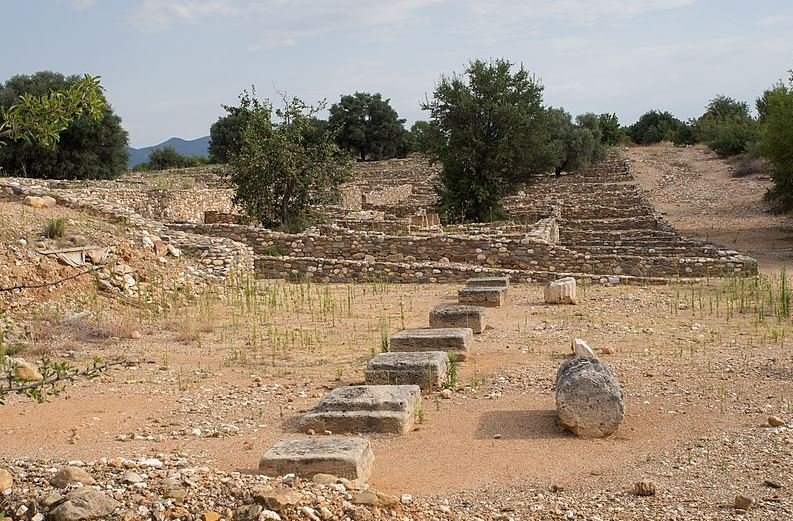
Olynthus contributed significantly to urban planning and art in ancient Greece. Its archaeological rediscovery provides insights into Greek urbanism, with its site and artifacts preserved for public exploration today. Image: Ruins of a council house of ancient Olynthus.