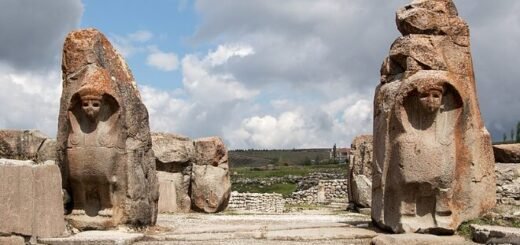
Hittite King Muwatalli II: Reign & Accomplishments
Muwatalli II, also known as Muwatallis or Muwatallish, was a prominent king of the New Kingdom of the Hittite Empire, reigning approximately from 1295 to 1282 BCE according to the middle chronology, or 1295 to 1272 BCE in the short chronology.
He was the eldest son of Mursili II, a notable Hittite king, and Queen Gassulawiya. Muwatalli had several siblings, among whom his brother Hattusili III played a significant role in the empire’s administration. This familial lineage positioned Muwatalli as a key figure in the continuation and expansion of the Hittite dynasty.

Hittite King Muwatalli II’s reign was marked by significant military and political actions that influenced the Hittite Empire’s history. Image: Depiction of Muwatalli II on a relief at Sirkeli Höyük
Relocation of the Capital and Administrative Reforms
One of Muwatalli II’s most significant actions was relocating the Hittite capital from Hattusa to Tarhuntassa. This strategic move, though not explicitly documented, is believed to have been influenced by ongoing border skirmishes with the Kaska and internal rebellions led by figures like Piyamaradu.
By moving the capital further south, Muwatalli aimed to distance the administrative center from the unstable northern borders, thereby enhancing the empire’s stability and preparing for future military engagements, particularly against Egypt over control of Syria.
In addition to relocating the capital, Muwatalli II appointed his brother Hattusili as the governor of Hattusa. This delegation of power ensured that Hattusa remained under competent control, allowing Muwatalli to focus on consolidating power in Tarhuntassa and addressing external threats.
Military Campaigns and the Battle of Kadesh
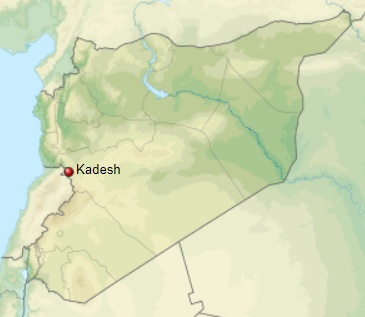
The Battle of Kadesh took place in the 13th century BC, specifically around 1274 BC, during the late Bronze Age. It was a significant military encounter between the Egyptian Pharaoh Ramesses II and the Hittite King Muwatalli II in the region of Kadesh, located in present-day Syria. Image: Kadesh, location within modern-day Syria
Muwatalli II is perhaps best known for his military confrontation with the Egyptian Pharaoh Ramesses II at the Battle of Kadesh. This battle is one of the most well-documented conflicts of the ancient world, primarily due to the extensive records left by Ramesses II.
Muwatalli II was a key figure in the history of the Hittite Empire, known for his strategic decisions, military prowess, and diplomatic achievements.
The Hittite king orchestrated a sophisticated military strategy, involving the use of spies and deceptive tactics to mislead Ramesses about the true location of the Hittite forces. Initially, Hittite spies posed as deserters and misinformed Ramesses that their army was stationed far away in Aleppo. However, when additional Hittite scouts were captured, Ramesses discovered the deception and realized that the Hittite army was actually near Kadesh.

Image: An illustration depicting Ramses II during the Battle of Kadesh.
The battle commenced with Hittite forces launching a surprise attack on Ramesses’ division. Despite initial Hittite successes, Ramesses managed to rally his troops and counterattack effectively. The ensuing conflict was intense, resulting in heavy casualties on both sides and a strategic stalemate. While both leaders claimed victory, historical consensus suggests that the battle was inconclusive and detrimental to both empires, as it significantly depleted their military resources.

Ramesses II at the Battle of Kadesh
Army divisions used by Pharaoh Ramesses II during the Battle of Kadesh
Diplomatic Efforts and Treaty with Wilusa
A testament to Muwatalli II’s diplomatic acumen is the treaty he forged with Alaksandu, the ruler of Wilusa (identified with ancient Troy) in the Arzawa region. This treaty highlights the intricate network of alliances and rivalries that characterized the Late Bronze Age geopolitical landscape. Such agreements were essential for maintaining Hittite influence and securing strategic territories, ensuring the empire’s dominance in the region.
Peace Negotiations with Egypt
Egyptologists speculate that prior to Ramesses II ascending to the Egyptian throne, Muwatalli II may have established an informal peace treaty with Seti I, Ramesses’ predecessor.
This understanding was likely aimed at preventing immediate conflict over the contested region of Kadesh, allowing both powers to focus on their internal affairs. According to this theory, Seti I ceded control of Kadesh to Muwatalli to concentrate on domestic issues, thereby averting an early clash and setting the stage for the eventual Battle of Kadesh under Ramesses II’s rule.
How the Battle of Kadesh produced the First Peace Treaty in World History
Family and Succession
Muwatalli II was married to Tanu-Ḫepa and had at least two known children. His son Urhi-Teshup succeeded him as king under the name Mursili III. However, Urhi-Teshup’s reign was short-lived, as he was deposed by his uncle Hattusili III after merely seven years.
Muwatalli II was the eldest son of Mursili II and Queen Gassulawiya and played a significant role in the empire’s administration, military campaigns, and diplomatic relations.
Another of Muwatalli’s sons, Kurunta, served as the vassal ruler of Tarhuntassa during Hattusili III’s reign. There is also a suggestion that a third son, Ulmi-Teshup, might be the same individual as Kurunta, indicating possible overlap or conflation in historical records.

Hattušiliš III was a renowned as one of the prominent rulers of the Hittite Empire, lived during the 13th century BC. Image: Rock relief of Hattusili III, the king of the Hittite Empire
Relations with Tudhaliya IV and Maathorneferure
Muwatalli II was the uncle of Tudhaliya IV and Egyptian Queen Maathorneferure, further intertwining the Hittite royal family with neighboring powers and enhancing diplomatic ties through familial alliances. These connections underscored the Hittite strategy of securing alliances through marriage and kinship, thereby stabilizing their political influence across the region.
Legacy and Historical Context
Muwatalli II’s legacy is multifaceted, marked by his strategic relocation of the capital, his military campaigns, and his diplomatic endeavors. His reign occurred during a tumultuous period known as the Late Bronze Age collapse, which saw the fall of several ancient civilizations. The Hittite Empire, under Muwatalli’s leadership, navigated these challenges through military resilience and strategic diplomacy.
The Move to Tarhuntassa: Strategic and Religious Motives
The decision to move the capital to Tarhuntassa is attributed to both strategic and religious motivations. Strategically, moving the capital away from Hattusa reduced the immediate threat from northern adversaries and positioned the Hittite administration closer to the southern frontiers, where conflicts with Egypt were imminent. This relocation facilitated more effective military coordination and resource allocation for campaigns in Syria.
Religiously, some scholars, such as Itamar Singer, argue that the move was influenced by religious reforms. The change in the depiction of the Storm God on royal seals from Teshub to Pihassassa suggests a shift in religious symbolism, possibly reflecting broader theological changes within the empire. This religious aspect, combined with political strategy, indicates that Muwatalli II sought to reinforce his authority both militarily and spiritually.
Reliefs and Iconography at Sirkeli Höyük
Muwatalli II’s influence is also evident in the reliefs found near Sirkeli Höyük, a significant settlement on the Ceyhan River in ancient Cilicia. These reliefs depict the king in a manner consistent with Hittite iconography, emphasizing his divine status and heroic attributes.
One notable relief shows Muwatalli being embraced by the Storm God of Lightning, symbolizing his divine favor and protection. Another relief, partially destroyed, is believed to depict Urhi-Teshup, Muwatalli’s son, who briefly succeeded him before being overthrown by Hattusili III.
The Battle of Kadesh: Detailed Tactics and Outcomes
The Battle of Kadesh is a defining moment in Muwatalli II’s reign. The Hittite king, aiming to assert control over the strategically vital region of Syria, meticulously planned his approach against Ramesses II’s Egyptian forces. By deploying spies and utilizing deceptive tactics, Muwatalli sought to gain a tactical advantage. The initial misinformation about the Hittite army’s location allowed the Hittites to gather intelligence and position their troops effectively for the ensuing confrontation.
When Ramesses II realized the true location of the Hittite forces, the battle intensified. Muwatalli deployed charioteers in multiple divisions, attacking Ramesses’ camp from different directions. Despite the coordinated Hittite assault, Ramesses managed to repel the attacks and claim a tactical victory. However, the heavy losses sustained by both armies weakened their overall military capabilities, leading to a stalemate that underscored the futility of the prolonged conflict.
Diplomatic and Historical Implications
The Battle of Kadesh, though militarily inconclusive, had significant diplomatic and historical implications. The mutual exhaustion from the battle prompted both empires to seek peace, resulting in one of the earliest known recorded peace treaties. This treaty, documented in later inscriptions, marked a temporary cessation of hostilities and established a framework for future diplomatic relations between the Hittites and Egyptians.
The battle also highlighted the advanced military strategies employed by both civilizations, showcasing the importance of chariot warfare and tactical deception in ancient military doctrines. Additionally, the extensive records left by Ramesses II in both literary and pictorial forms provide valuable insights into Egyptian propaganda and the portrayal of military achievements, influencing how historical events were recorded and remembered.
Civil Strife and Succession after Muwatalli II’s Death
Following Muwatalli II’s death, the Hittite Empire faced internal strife and power struggles. His son, Urhi-Teshup (Mursili III), briefly ascended to the throne but was soon deposed by his uncle, Hattusili III. This succession crisis led to a bitter civil war, destabilizing the empire during a critical period. Hattusili III’s eventual rise to power restored stability and continued the legacy of the Hittite rulers, ensuring the empire’s resilience amidst external pressures and internal conflicts.
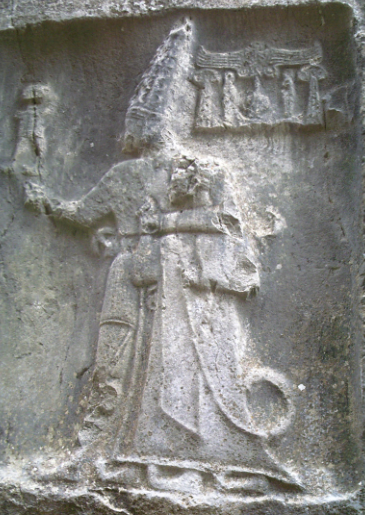
Hittite King Tudhaliya IV was the son of King Hattusili III and Queen Puduhepa
Architectural and Cultural Contributions
Muwatalli II’s reign also saw significant architectural and cultural developments. The relocation of the capital to Tarhuntassa involved the construction of new administrative buildings and temples, reflecting the empire’s prosperity and the king’s dedication to consolidating power. These developments not only enhanced the administrative efficiency of the empire but also reinforced the cultural and religious identity of the Hittite people.
The reliefs and inscriptions from Sirkeli Höyük and other sites provide a rich tapestry of Hittite art and iconography, celebrating the king’s divine favor and military prowess. These artistic expressions played a crucial role in legitimizing the king’s authority and reinforcing his image as a protector and leader of the Hittite people.
Conclusion
Muwatalli II’s reign was a period of strategic maneuvering, military confrontation, and diplomatic efforts that significantly shaped the history of the Hittite Empire. His relocation of the capital to Tarhuntassa, his military campaigns against Egypt, and his diplomatic treaties with neighboring rulers underscore his role as a key figure in the Late Bronze Age geopolitical landscape. Despite the challenges and eventual civil unrest following his death, Muwatalli II’s actions left an indelible mark on the Hittite Empire, ensuring its legacy in the annals of ancient Near Eastern history.
His contributions to military strategy, diplomacy, and administrative reforms exemplify the complexities and dynamics of ruling an empire during a period marked by both internal and external pressures. The Battle of Kadesh, in particular, stands as a testament to the intricate interplay of warfare and diplomacy, highlighting the delicate balance that leaders like Muwatalli II had to maintain to sustain their empires.
Moreover, Muwatalli II’s efforts in relocating the capital and fostering religious and cultural shifts demonstrate his vision for a resilient and unified empire. These moves not only addressed immediate threats but also laid the groundwork for future stability and expansion. The enduring legacy of Muwatalli II is reflected in the continued prominence of his brother Hattusili III, who succeeded him and further solidified the Hittite Empire’s dominance in the region.
In summary, Muwatalli II was a multifaceted ruler whose reign encompassed significant military, diplomatic, and administrative achievements. His leadership during the pivotal Battle of Kadesh and his strategic decisions regarding the empire’s capital and governance structure highlight his importance in Hittite history. As a ruler who navigated the complexities of Late Bronze Age politics and warfare, Muwatalli II remains a key figure in understanding the broader narrative of ancient Near Eastern civilizations and their enduring legacies.
Frequently Asked Questions

Muwatalli II was a prominent king of the New Kingdom of the Hittite Empire, reigning approximately from 1295–1282 BCE (middle chronology) or 1295–1272 BCE (short chronology). Image: A late Hittite rock relief near Sirkeli Höyük, west of the Ceyhan River, depicts Great King Muwatalli II (1290–1272 BCE).
What major administrative change did Muwatalli II implement during his reign?
Muwatalli II is best known for relocating the Hittite capital from Hattusa to Tarhuntassa. This strategic move aimed to stabilize the empire by distancing the administrative center from northern border conflicts and improving military coordination for upcoming campaigns, particularly against Egypt.
How did Muwatalli II handle the governance of Hattusa after moving the capital?
After relocating the capital to Tarhuntassa, Muwatalli II appointed his brother Hattusili as the governor of Hattusa. This ensured that Hattusa remained under competent control, allowing Muwatalli to focus on consolidating power in Tarhuntassa and addressing external threats.
What is the significance of the Battle of Kadesh in Muwatalli II’s reign?
The Battle of Kadesh was a major military confrontation between the Hittite Empire under Muwatalli II and the Egyptian Empire led by Ramesses II. It is one of the most well-documented battles of the ancient world and showcased advanced military strategies. Although both sides claimed victory, it resulted in heavy losses and led to the first known recorded peace treaty between the two empires.

Egyptian and Hittite Empires, around the time of the Battle of Kadesh
What diplomatic achievements is Muwatalli II known for?
Muwatalli II forged a significant treaty with Alaksandu, the ruler of Wilusa (ancient Troy), one of the Arzawa lands. Additionally, he is suspected of having reached an informal peace treaty with Seti I of Egypt before Ramesses II’s reign, aiming to avoid immediate conflict over Kadesh and allowing both empires to focus on internal matters.
Who succeeded Muwatalli II, and what challenges did his successor face?
Muwatalli II was succeeded by his son Urhi-Teshup, who became king as Mursili III. However, his reign was short-lived as he was deposed by his uncle Hattusili III after seven years, leading to a bitter civil war and subsequent stabilization under Hattusili III’s rule.
What role did Muwatalli II’s family play in the Hittite Empire?
Muwatalli II’s family played significant roles in the empire’s administration and governance. His brother Hattusili was appointed governor of Hattusa, his son Urhi-Teshup briefly became king, and another son, Kurunta, served as the vassal ruler of Tarhuntassa. Additionally, Tudhaliya IV and Egyptian Queen Maathorneferure were his nephew and niece, respectively, highlighting the strategic alliances formed through familial ties.
What architectural and cultural contributions did Muwatalli II make?
A: Muwatalli II’s relocation of the capital to Tarhuntassa involved constructing new administrative buildings and temples, reflecting the empire’s prosperity and his efforts to consolidate power. Artistic contributions include reliefs near Sirkeli Höyük depicting the king with divine attributes, reinforcing his authority and divine favor.
How did Muwatalli II’s reign impact the Hittite Empire during the Late Bronze Age collapse?
Muwatalli II’s strategic relocations, military campaigns, and diplomatic efforts helped navigate the Hittite Empire through the tumultuous period of the Late Bronze Age collapse. His actions ensured the empire’s resilience and set the foundation for continued influence under his successors, despite the internal strife following his death.
What legacy did Muwatalli II leave for future Hittite rulers?
Muwatalli II’s legacy includes his strategic capital relocation, successful military campaigns like the Battle of Kadesh, and diplomatic treaties that shaped Hittite foreign relations. His reign demonstrated effective military and administrative strategies, which were emulated by his successors, particularly Hattusili III, ensuring the Hittite Empire’s sustained dominance in the ancient Near East.