Ancient Synagogue in Israel: Origins and Significance
The ancient synagogue holds a significant place in the cultural and religious history of the Jewish people, both in Israel and the Diaspora. Emerging during a transformative period in Jewish history, the synagogue evolved into the central institution for communal life, worship, and education.
Origins of the Synagogue
The origins of the synagogue are somewhat obscure, but its emergence is generally tied to the Babylonian exile in the 6th century BCE. The destruction of Solomon’s Temple in Jerusalem in 586 BCE and the subsequent exile of the Jewish elite created a need for new forms of communal worship and instruction.
Without the central Temple, Jews in exile adapted their religious practices, focusing on prayer, scripture reading, and study. These gatherings likely formed the precursor to the synagogue.
By the time of the Second Temple period (516 BCE–70 CE), synagogues had become more established, serving as local centers for religious and communal activity. Archaeological evidence and literary sources, such as the writings of Philo, Josephus, and the New Testament, indicate the widespread presence of synagogues in this period. Their functions complemented the Temple’s sacrificial system, providing a setting for community prayer and Torah study.

The remains of the ancient synagogue at Kafr Bir’im, located in the Galilee.
The Synagogue in the Land of Israel
In Israel, the synagogue played a crucial role, especially during and after the destruction of the Second Temple by the Romans in 70 CE. This event marked a turning point in Jewish religious practice, as the sacrificial system centered in the Temple ceased. The synagogue became the primary institution for maintaining Jewish religious life, emphasizing prayer, Torah reading, and study over sacrifices.
Archaeological Evidence
Archaeological discoveries provide valuable insights into ancient synagogues in Israel. Notable examples include:
The Synagogue at Gamla
Located in the Golan Heights, this 1st-century synagogue is one of the earliest known examples. It features a rectangular plan, benches along the walls, and an absence of figural decoration, reflecting early Jewish aniconic traditions.
The Synagogue at Masada
This fortress near the Dead Sea contains a synagogue dating to the Roman siege (73–74 CE). Its discovery underscores the widespread establishment of synagogues by the 1st century.
The Synagogue at Capernaum
A prominent example from the 4th century CE, it showcases intricate basalt and limestone architecture. Its size and design reflect the wealth and importance of the local Jewish community.
The Synagogue at Sepphoris
Featuring a mosaic floor depicting the zodiac and biblical scenes, this 5th-century synagogue illustrates the integration of Jewish and Greco-Roman artistic traditions.
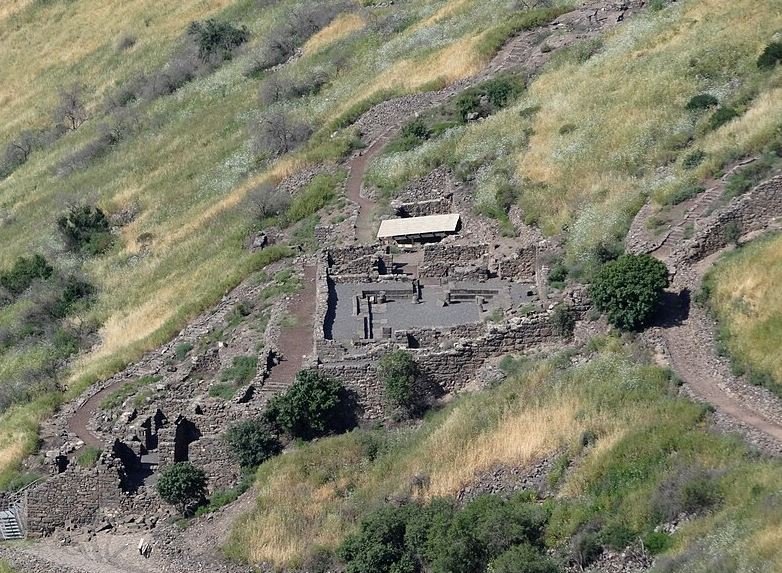
Remains of the Gamla Synagogue.
Functions of the Synagogue
The ancient synagogue served multiple roles, which extended beyond religious worship:
Synagogues were primarily places of prayer and Torah reading. The liturgy often included the Shema, Amidah, and Psalms, accompanied by readings from the Torah and Prophets.
Synagogues functioned as centers for education, where children and adults learned Hebrew, scripture, and Jewish law. This role was crucial in preserving Jewish traditions and identity, particularly in the Diaspora.
Also, synagogues often served as venues for community councils and courts, addressing local disputes and managing communal affairs.
They provided space for communal gatherings, celebrations, and discussions, reinforcing social bonds within the Jewish community.
The Synagogue in the Diaspora
The Diaspora, or dispersion of Jews beyond the land of Israel, significantly influenced the development of the synagogue. Jewish communities in places like Egypt, Asia Minor, Rome, and Babylonia adapted their religious practices to their new environments, often using the synagogue as a cultural anchor.
Synagogues in Hellenistic and Roman Contexts
Diaspora synagogues were deeply influenced by their surrounding cultures. For example:
The Synagogue at Delos
Located on the Greek island of Delos, this 2nd-century BCE synagogue is one of the oldest known outside Israel. Its Greek-style architecture reflects the integration of Jewish and Hellenistic traditions.
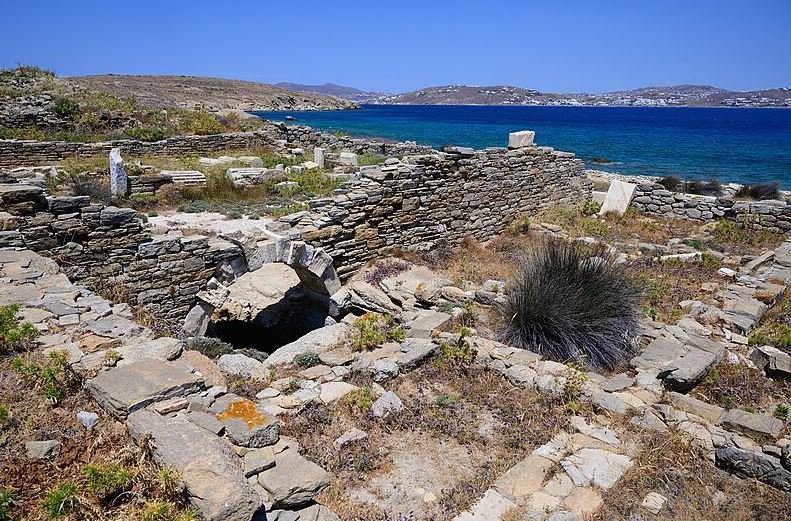
Remains of the Delos Synagogue.
The Synagogue at Ostia
Near Rome, this 4th-century CE synagogue features a niche for the Torah scrolls and inscriptions in Hebrew, Greek, and Latin. Its cosmopolitan nature underscores the diversity of the Jewish Diaspora.
The Dura-Europos Synagogue
In modern-day Syria, this 3rd-century CE synagogue is renowned for its vivid wall paintings depicting biblical scenes. These artworks demonstrate the blending of Jewish and local artistic traditions.
Architectural Features
While synagogue architecture varied widely, certain features were common:
- Orientation: Synagogues were typically oriented toward Jerusalem, reflecting the centrality of the Temple in Jewish worship.
- Torah Ark: A niche or cabinet, often elaborately decorated, housed the Torah scrolls.
- Bimah: A raised platform for reading the Torah and leading prayers.
- Benches: Seating was arranged along the walls, emphasizing the communal nature of worship.
- Decorative Elements: While early synagogues avoided figural representation, later examples, especially in the Diaspora, featured mosaics and frescoes with biblical themes, symbolic motifs (e.g., menorahs, lions), and even zodiac imagery.
Role in Jewish Identity
The synagogue was instrumental in preserving Jewish identity, especially in the Diaspora. It provided a space where Jews could maintain their religious practices, celebrate festivals, and pass down traditions. The emphasis on Torah study and education ensured the continuity of Jewish law and culture, even in the absence of the Temple.
Moreover, the synagogue fostered a sense of community and solidarity, helping Jews navigate the challenges of living as minorities in diverse cultural contexts. Its adaptability to local conditions while retaining core religious functions demonstrates the resilience of Jewish tradition.
Conclusion
The ancient synagogue was a cornerstone of Jewish religious and communal life in Israel and the Diaspora. Emerging during a time of upheaval, it evolved to meet the needs of Jewish communities, adapting to diverse cultural environments while preserving core elements of Jewish identity.
Questions and Answers

Ruins of the Synagogue at Capernaum.
What was the significance of the ancient synagogue in Judean society?
The ancient synagogue was central to Judean society in Israel and the Diaspora, serving as an inclusive and localized form of worship. It became a vital communal and religious institution, especially after the destruction of the Second Temple in 70 CE.
What were some terms used to describe synagogues, and what do they signify?
Terms such as proseuchē (“prayer house”), synagoge (“gathering place”), hagios topos (“holy place”), qahal (“assembly”), and bet kneset (“house of gathering”) were used. These terms reflect the synagogue’s association with prayer, communal gatherings, and sacred activities.
What role did the synagogue play beyond being a site for Torah reading?
The synagogue served as a venue for judicial proceedings, archives, treasuries, public fasts, communal meals, lodging for travelers, and public Torah reading and teaching. It functioned as a communal hub rather than replicating the Temple’s sacrificial role.
How did synagogue worship differ from Temple rituals?
Unlike the Temple’s exclusive priestly rituals, synagogue worship involved active participation from community members. People recited prayers, read from the Torah, and engaged in ceremonies, reflecting a more democratic and participatory form of worship.
What key feature symbolized the centrality of the Torah in the synagogue?
The Torah shrine, often located on the Jerusalem-oriented wall, became the focal point of synagogue architecture. It symbolized Jewish survival, religious continuity, and the importance of the Torah after the Temple’s destruction.
How did Rabbinic Judaism influence the synagogue’s role in community life?
Rabbinic Judaism extended the synagogue’s functions to include legal matters and communal needs. Rabbis adjudicated property disputes, family law, and issues intersecting with ritual law, blending religious and non-religious roles within the synagogue.
Why did synagogue architecture vary, and what features were common?
Synagogue architecture varied based on local needs, with designs accommodating lodging, schools, dining areas, and ritual baths. Common features included orientation toward Jerusalem and the Torah shrine, ensuring continuity in function and symbolism.
What role did the synagogue play in the Jewish Diaspora?
In the Diaspora, synagogues adapted to local conditions, often starting as domestic buildings before acquiring monumental features. They retained core elements like the Torah shrine and Jerusalem orientation, symbolizing Jewish identity and heritage.
What does the orientation of synagogues toward Jerusalem signify?
The Jerusalem orientation preserved the memory of the Temple and reinforced Jewish loyalty and identity. It served as a universal expression of reverence for Jewish traditions and history.
How did non-Jews interact with synagogues in the Diaspora?
Non-Jews, including Christians, sometimes contributed to synagogue maintenance or attended services. This interaction underscores the synagogue’s respectability and role within broader communities.
Why were purity concerns significant in synagogue design?
Purity concerns, a continuation of Temple traditions, influenced synagogue designs with features like fountains, basins, or nearby water sources. These elements reflected ongoing adherence to Jewish laws of cleanliness.
How did synagogues balance local influences and shared traditions?
While synagogue designs varied to meet local needs, shared traditions like the Torah shrine and Jerusalem orientation ensured that Jewish worship and identity remained consistent across regions.
What made the synagogue central to Jewish life after the Temple’s destruction?
The synagogue replaced sacrificial practices with prayer and Torah study, becoming a participatory and multifunctional space for worship, education, and community activities, ensuring the preservation of Jewish traditions.
What broader purpose did the synagogue serve in ancient Judean society?
Beyond prayer, the synagogue acted as a community center, addressing legal, educational, and social needs. Its adaptability to local demands made it a cornerstone of Jewish identity in both Israel and the Diaspora.