Armée des Émigrés
The Armée des Émigrés refers to the counter-revolutionary armies composed of French royalist émigrés during the French Revolution. These forces, operating outside France, aimed to overthrow the First French Republic and restore the monarchy. Supported by allied monarchies like Great Britain and Spain, they also collaborated with internal royalist groups, such as the Chouans. The Armée des Émigrés participated in significant conflicts like the sieges of Lyon and Toulon, striving to reverse the revolutionary changes in France.
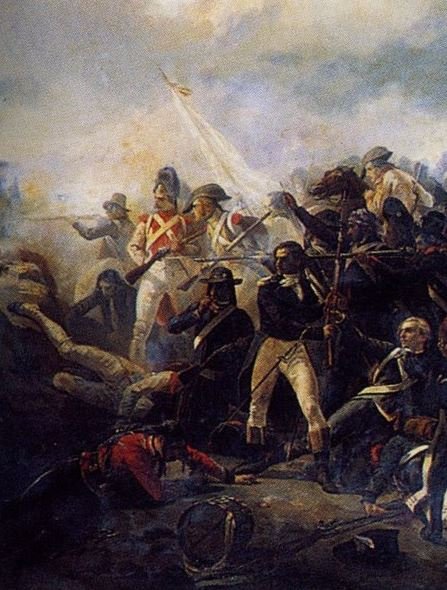
An illustration depicting the Armée des émigrés during a battle.
Origins and Composition of the Armée des Émigrés
The Armée des Émigrés was primarily formed by:
- Noble Volunteers: Members of the French aristocracy, including descendants of the royal family, joined the cause after fleeing France.
- Royalist Refugees: Many émigrés funded and raised their own troops, often with covert financial aid from European monarchies.
- Royalist Military Units: Pre-revolutionary French Royal Army regiments, such as the Régiment de Saxe Hussards and the Irish Brigade, which emigrated with their commanders, provided experienced soldiers.
Napoleon Bonaparte later acknowledged their commitment, stating, “True, they are paid by our enemies, but they were or should have been bound to the cause of their King.” Despite their dedication, the armies faced significant challenges and eventual dissolution.
Notable Units and Organizations
The Armée des Émigrés consisted of various units with distinct histories and operations. Below are some of the key forces within their ranks:
Armée de Condé
The Army of Condé, formed under Louis Joseph de Bourbon, prince de Condé, was one of the most notable émigré forces. It operated in conjunction with European monarchies and sought to reclaim France from revolutionary forces. This unit became a symbol of aristocratic resistance.
Armée des Princes
Raised in 1792 in Trier, Germany, this army operated under the leadership of Louis XVI’s brothers, the Comte de Provence and the Duc d’Artois. It had an initial strength of 10,000 men and fought alongside the Prussian army during the invasion of France. However, after the defeat at Valmy, the army was disbanded later that year.
Armée de Bourbon
This small royalist force was formed in Madrid and Seville. With a standing force of 2,000 men, it briefly participated in the War of the Pyrenees. Elements of this unit later integrated into the Spanish army, where they continued to serve until recalled to France in 1815 after Napoleon’s second defeat.
Regional Units and Engagements
Various smaller royalist units operated within allied armies, particularly in Spain, and participated in regional conflicts:
Légion des Pyrénées
- Formation: Created in 1794 by the Marquis de Saint-Simon.
- Operations: This unit fought in the Pyrénées-Atlantiques, facing significant losses at battles such as Saint-Étienne-de-Baïgorry and Port-Bidassoa.
- Fate: After heavy casualties, it was absorbed into the Régiment de Bourbon.
Légion de Panetier
- Creation: Formed in 1793 under the Comte de Panetier.
- Operations: It defended key positions like Port-Vendres but was ultimately amalgamated into the Régiment de Bourbon following its founder’s death.
Légion du Vallespir
- Formation: Established by Spanish general Ricardos with émigré officers.
- Operations: Focused on defending the Roussillon region before merging with other émigré units.
Royal Roussillon
- Origins: Formed in 1794 from émigrés, prisoners, and deserters in Barcelona.
- Notable Incident: A mob massacre claimed 129 soldiers during a local procession, signaling the unit’s vulnerability.
- Legacy: Merged into the Légion de Panetier.
Régiment de Bourbon
- Formation: Created in 1796 from various merged units, including the Légion de Panetier.
- Role: Operated as part of the Spanish army, garrisoning key locations like Ciudad Rodrigo and Mallorca.
- Notable Engagements: Played a role in the Siege of Girona in 1808 and continued as part of the Spanish military, eventually evolving into Spain’s “53rd Infantry Regiment.”
Challenges and Decline
The Armée des Émigrés faced numerous challenges that limited its effectiveness:
- Dependence on Foreign Support: Lacking independent resources, the armies relied heavily on subsidies from allied monarchies, leading to strained relations and limited autonomy.
- Fragmentation: Composed of multiple independent units, coordination between forces was difficult, reducing their overall strategic impact.
- Lack of Recruitment: Many émigrés struggled to replenish their ranks, as their cause resonated less with broader European populations and as revolutionary France solidified its control.
- Military Failures: Major defeats, such as those at Valmy and Toulon, undermined the armies’ morale and eroded their capacity to continue fighting.
Napoleon’s Amnesty and Its Impact
In 1802, Napoleon Bonaparte, then First Consul, declared a general amnesty for the émigrés. This decree allowed the majority to return to France, with exceptions for key commanders and those who held ranks in enemy armies. This marked the effective end of the Armée des Émigrés as a cohesive fighting force.
Armée des Émigrés are seen as devoted royalists, with Napoleon acknowledging their courage, though they faced significant challenges and limited success in restoring the monarchy.
The amnesty not only weakened the émigré armies but also symbolized the Republic’s dominance. By offering reconciliation, Napoleon attempted to integrate former royalists into the new regime, consolidating his political power.

French general and emperor Napoleon Bonaparte
Legacy of the Armée des Émigrés
Despite their ultimate failure, the Armée des Émigrés left a lasting legacy:
- Symbol of Royalist Resistance: The émigré forces embodied the determination of the French aristocracy to restore the monarchy and traditional values.
- Cultural and Historical Impact: Their campaigns highlighted the broader European struggle between revolutionary ideals and conservative monarchies during the late 18th century.
- Integration into Allied Armies: Many émigrés continued to serve in allied armies, particularly in Spain, where their contributions influenced military traditions.
Frequently Asked Questions
Who composed the Armée des émigrés?
The army included French nobles, émigré refugees, troops of the former French Royal Army, and forces funded by other European monarchies.
Which major battles or sieges involved the Armée des émigrés?
They participated in the sieges of Lyon and Toulon and operated in various theaters such as the Pyrenees and Roussillon.
What was the Armée de Condé?
It was a prominent unit of the émigré army, led by the Prince of Condé, composed of royalist volunteers and former French Royal Army troops.
What was the Armée des Princes?
Raised in Germany in 1792 under Louis XVI’s brothers, this 10,000-strong force fought alongside the Prussian army before disbanding after the French victory at Valmy.
What role did Spain play in supporting émigré forces?
Spain provided refuge and incorporated units like the Légion des Pyrénées and Régiment de Bourbon into its army, with émigrés fighting alongside Spanish forces.
What happened to the Armée des émigrés after the Revolution?
Many émigrés were granted amnesty by Napoleon in 1802, but certain units, like the Régiment de Bourbon, remained active in the Spanish army until the 19th century.





