Ashur-uballit I
Ashur-uballit I was the first king of the Middle Assyrian Empire, ruling from around 1363 to 1328 BC. He established Assyria as a major power by defeating the Mitanni king Shuttarna III and asserting dominance over the Hurri-Mitanni Empire.

A clay tablet containing a message sent by Ashur-uballit I’s to an Egyptian Pharaoh.
Summary
Ashur-uballit I was a pivotal figure in Assyrian history, marking the beginning of the Middle Assyrian Empire. His reign saw Assyria emerge as a dominant force in Mesopotamia, ending Mitanni control over the region and establishing Assyrian influence over Babylonian affairs. His military campaigns, diplomatic initiatives, and political maneuvers laid the groundwork for future Assyrian expansion and shaped the geopolitical landscape of the ancient Near East.
The End of Mitanni Domination
Ashur-uballit I ascended to the throne after his father, Eriba-Adad I, had already begun to weaken Mitanni’s hold over Assyria. The Mitanni, a Hurrian kingdom that had dominated northern Mesopotamia, had long exerted influence over Assyria, reducing its kings to vassals. However, with Mitanni power waning due to internal strife and external threats from the Hittites, Ashur-uballit capitalized on the opportunity to assert Assyrian independence.
His decisive victory over Shuttarna III, the Mitanni king, not only freed Assyria from foreign domination but also signaled the beginning of its rise as a powerful empire. This conquest effectively shifted the balance of power in northern Mesopotamia, diminishing Mitanni’s role and allowing Assyria to emerge as a regional power. From this point onward, Assyria began expanding its influence, challenging both Mitanni and Babylon in the process.

Stele of king Eriba-Adad I at the Pergamon Museum in Berlin, Germany.
Intervention in Babylonian Affairs
Assyria’s growing power inevitably brought it into conflict with Babylonia, ruled at the time by the Kassite dynasty. The two kingdoms had a complex relationship, alternating between cooperation and hostility. Ashur-uballit I sought to strengthen ties between the two through diplomacy, arranging a marriage between his daughter, Muballitat-Sherua, and the Babylonian king Burnaburiash II. This union produced a son, Prince Kara-hardash, creating a bloodline that linked the Assyrian and Babylonian royal families.
However, upon Burnaburiash II’s death, Babylon fell into turmoil. Kara-hardash, now king, faced resistance from anti-Assyrian factions, leading to a rebellion in which he was assassinated. In response, Ashur-uballit I launched a military intervention, unwilling to allow his grandson’s death to go unpunished. He invaded Babylon and installed Kurigalzu II, another Kassite prince, as the new ruler. This marked the first of many Assyrian interventions in Babylonian politics, setting a precedent for future Assyrian kings.
Despite initially being placed on the throne by Assyria, Kurigalzu II later turned against his benefactors. He attempted to break free from Assyrian control by launching an invasion into Assyrian territory. Ashur-uballit I, however, successfully repelled the Babylonian forces at Sugagu, near Assur, demonstrating Assyria’s military strength. In retaliation, he launched a counteroffensive into Babylonian lands, annexing key territories in central Mesopotamia and forcing Kurigalzu II to accept a treaty that heavily favored Assyria.
This intervention signified Assyria’s growing dominance over Babylon and demonstrated that Assyrian kings would no longer be passive neighbors. Future Assyrian rulers would continue to interfere in Babylonian affairs, further cementing Assyrian influence in southern Mesopotamia.
Amarna Letters and Diplomacy with Egypt
Ashur-uballit I’s reign is well-documented in the Amarna Letters, a collection of diplomatic correspondences between various rulers of the ancient Near East and the Egyptian pharaohs Amenhotep III and Akhenaten. These letters provide crucial insight into Assyria’s growing stature on the international stage.
In one of his letters, Ashur-uballit I directly addressed the Pharaoh, presenting himself as an equal and seeking diplomatic relations with Egypt. This move angered Burnaburiash II of Babylon, who wrote to the Pharaoh, complaining that Assyria had previously been a Babylonian vassal and had no right to negotiate independently with Egypt. This letter underscores the shifting power dynamics in Mesopotamia—while Babylonia attempted to maintain its traditional dominance, Assyria was now asserting itself as an independent and equal power.
Another point of interest in the Amarna Letters is that Ashur-uballit I refers to an earlier Assyrian ruler, Ashur-nadin-ahhe II, as his “father” or “ancestor,” rather than his actual father, Eriba-Adad I. Some scholars have debated whether the Ashur-uballit mentioned in these letters was the same as Ashur-uballit I, but this practice of referring to royal predecessors as “fathers” was common in ancient diplomacy, making it likely that the two were indeed the same person.
Legacy and Impact on Assyria’s Future
Ashur-uballit I’s reign laid the foundation for the expansion and consolidation of the Middle Assyrian Empire. By defeating the Mitanni and breaking free from their influence, he ensured that Assyria would never again be a vassal state. His intervention in Babylonian politics set a precedent that future Assyrian rulers would follow, leading to an enduring rivalry between the two Mesopotamian powers.
His military successes secured Assyria’s northern and western borders, while his diplomatic maneuvers elevated Assyria’s status among the great powers of the ancient Near East. No longer a minor state, Assyria was now an independent and assertive kingdom capable of engaging with Egypt, Babylon, and the Hittites on equal terms.
His successors would build on his achievements, expanding Assyrian territory further and strengthening its military. The Middle Assyrian Empire would continue to grow in power, setting the stage for the later Neo-Assyrian Empire, which would dominate the Near East for centuries.
Frequently Asked Question about Ashur-uballit I
How did Ashur-uballit I influence Babylonian politics?
Following instability in Babylonia after the death of Burnaburiash II, Ashur-uballit intervened and installed Kurigalzu II as king, marking the beginning of ongoing Assyrian involvement in Babylonian affairs.
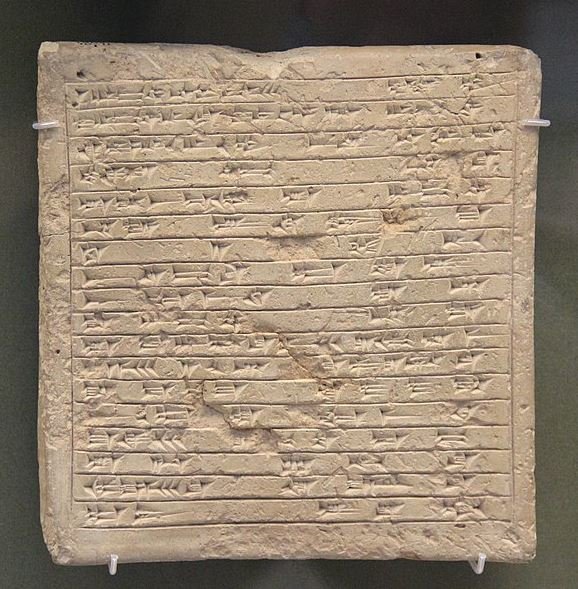
Tablet from Ashur-uballit I’s reign.
What was the significance of Ashur-uballit I’s daughter?
His daughter, Muballitat-Sherua, married the Kassite king Burnaburiash II, strengthening Assyria’s ties with Babylonia. Their son, Kara-hardash, briefly ruled Babylon before being overthrown in a rebellion.
What do the Amarna letters reveal about Ashur-uballit I?
The Amarna letters contain two diplomatic messages from Ashur-uballit I to the Egyptian pharaoh, demonstrating Assyria’s growing influence. He referred to a previous Assyrian ruler as his “father,” following the common diplomatic practice of the time.
Why did Ashur-uballit I’s diplomacy anger Babylonia?
Babylonian king Burnaburiash II was angered when Ashur-uballit I sent messages directly to Egypt, as Babylonia considered Assyria a vassal state. He warned the Pharaoh against dealing with Assyria independently.
How did Ashur-uballit I respond to Kara-hardash’s overthrow?
After his grandson Kara-hardash was deposed and killed in a Babylonian revolt, Ashur-uballit I invaded Babylon and installed Kurigalzu II as the new ruler.

What was the outcome of the conflict with Kurigalzu II?
Although initially placed on the throne by Ashur-uballit I, Kurigalzu II later turned against Assyria and invaded its territory. Ashur-uballit defeated him at Sugagu and launched a counterattack into Babylonian territory.





