Barsbay: Ninth Burji Mamluk sultan of Egypt
Al-Ashraf Sayf ad-Dīn Barsbāy (Arabic: الأشرف سيف الدين برسباي), who ruled Egypt from 1422 to 1438 as the ninth sultan of the Burji Mamluk dynasty, left a profound mark on the political, economic, and cultural landscapes of his time.
Rising from a humble background as a Circassian slave under Sultan Barquq, Barsbāy climbed the ranks of the Mamluk hierarchy to ultimately seize the throne.
His 16-year reign, longer than many of his predecessors, was characterized by administrative reforms, economic initiatives, foreign campaigns, and architectural patronage. Though his methods sometimes sparked controversy, Barsbāy’s accomplishments consolidated the Mamluk state and influenced regional commerce and diplomacy.
Early Life and Rise
Barsbāy’s origins lay in Circassia, a region in the North Caucasus that supplied many slaves to the Mamluk state. Sold into servitude, he entered the Mamluk military corps in Egypt during the reign of Sultan Barquq, the first Burji ruler. His intelligence, loyalty, and martial capabilities earned him positions of increasing responsibility. In 1418, he was appointed governor of Tripoli, a crucial post that helped him refine his administrative and governance skills.
When Sultan Tatar’s young son, Muhammad, took the throne as a child, Barsbāy emerged as one of the key powerbrokers at the Cairo court. He served as a tutor to Muhammad, honing his political insight. Rival factions competed for influence over the child sultan. The resulting tensions gave Barsbāy an opportunity to forge alliances and outmaneuver competitors. He partnered briefly with another emir, Taribay, until their interests diverged. Ultimately, Barsbāy overcame his rivals, imprisoned Taribay, and, with support from influential emirs, deposed Sultan Muhammad in April 1422, declaring himself sultan.
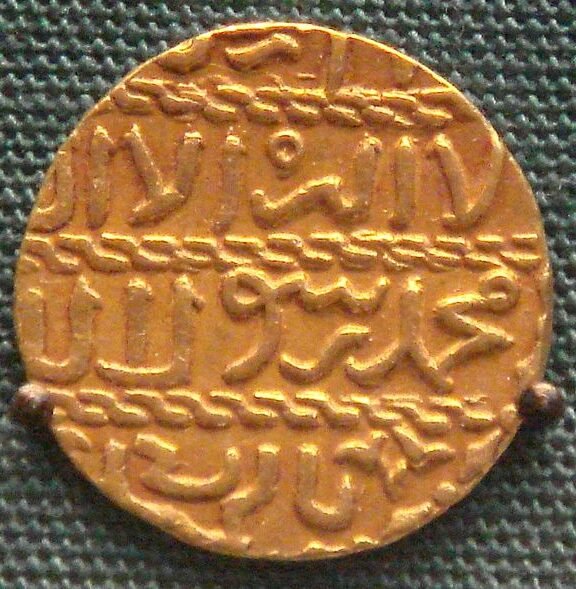
Image: Gold ashrafi of Barsbay housed in the British Museum.
Consolidation of Power
Securing his claim to the throne was Barsbāy’s first priority. During the early years of his reign, he quashed rebellions and quelled potential threats to stability. His lengthy rule gave Egypt a respite from the rapid succession of sultans that had previously unsettled the realm. Although some chroniclers portrayed him as greedy and bad-tempered, these traits may have reflected political necessity and the demands of maintaining order in a fractious environment. Simultaneously, Barsbāy cultivated a reputation for piety and generosity toward the poor, supporting Sufi communities and endowing religious institutions.
Economic and Administrative Reforms
One of Barsbāy’s most notable achievements was his effort to consolidate the Mamluk state and secure its financial foundations. He understood that in a world of shifting trade networks and economic downturn, controlling commerce was essential. To that end, Barsbāy secured exclusive Egyptian rights over key Red Sea routes and redirected much of the Indian Ocean trade through Jeddah, bringing merchants and wealth closer to Cairo.
Moreover, Barsbāy introduced state monopolies on critical commodities such as sugar and pepper. By centralizing control of these goods, he ensured a steady flow of revenue into the royal treasury. To further attract merchants, he reduced customs duties, encouraging foreign traders to make Egypt their primary hub for East-West trade. While these policies angered some European powers who chafed at the monopoly, they enriched the Mamluk state and helped finance Barsbāy’s other initiatives.
His reforms also involved administrative reorganization. He reinforced the sultanate as a military magistrature, streamlining the bureaucracy and reasserting Cairo’s central authority. By controlling appointments and promotions, Barsbāy built a loyal cadre of officials who would implement his policies and maintain his power.
Foreign Policy and Military Campaigns
Barsbāy’s foreign policy aimed to bolster Egypt’s position in the Mediterranean and Red Sea regions. Between 1424 and 1426, he launched a military campaign against Cyprus, a Christian kingdom led by King Janus of the House of Lusignan. The Mamluk forces triumphed, capturing Janus and compelling him to pay tribute. This victory demonstrated Mamluk might and secured valuable political and economic concessions, allowing Egypt to maintain a dominant maritime presence.
While these expansions enhanced Egypt’s prestige, Barsbāy’s reign was not free from hardship. A severe famine and outbreak of plague struck Egypt in 1430, testing the sultan’s resilience. He struggled to mitigate these crises, but the natural disasters nonetheless left their mark, weakening the population and economy at a time when Barsbāy sought to consolidate his gains.
Relations with Other Muslim States
Beyond the Mediterranean, Barsbāy cultivated relations with other Muslim polities. He recognized the importance of maintaining good ties with states like Bengal. Diplomatic exchanges occurred, but not all interactions were smooth. When a Bengali envoy’s ship sank near Jeddah, destroying valuable spices intended as gifts, Barsbāy responded harshly by arresting the embassy and confiscating their merchandise. Such incidents strained relations and demonstrated that Barsbāy’s policies, while profitable, could be uncompromising and ruthless.
Cultural and Architectural Legacy
In addition to economic and political endeavors, Barsbāy invested heavily in architectural and cultural projects. Religious endowments and the patronage of learning enhanced his standing among the scholarly and religious elites. In 1424, he sponsored the construction of a madrasa-mosque complex along Cairo’s historic al-Muizz Street. This institution not only served religious and educational purposes but also symbolized Barsbāy’s piety and commitment to public welfare.
Another major building project was his mausoleum-khanqah complex, erected in 1432 in Cairo’s Northern Cemetery. A khanqah was a Sufi monastery, reflecting Barsbāy’s encouragement of mysticism and devout practice. These architectural works combined Mamluk aesthetics with practical functions, embodying the era’s distinctive blend of spirituality, scholarship, and statecraft. In 1437, he built yet another mosque in al-Khanqa, further contributing to the urban fabric of Mamluk Cairo.
By investing in such monuments, Barsbāy ensured that his legacy would outlive him. The structures bore witness to his wealth, his dedication to Islam, and his desire to shape the cultural identity of his empire. They remain significant examples of Mamluk architecture and continue to inspire historians and scholars.
Personal Life and Family
Barsbāy’s personal life reflected the complexities of his time. He contracted multiple marriages, forging political alliances through these unions. His wives came from prominent families within and beyond the Mamluk hierarchy, including the daughter of Sultan Tatar and a member of the Ottoman royal lineage. One of his most consorts, Khawand Jolban, was originally a concubine who bore him a son, al-Aziz Yusuf.
Frequently Asked Questions
What position did Barsbay hold before becoming sultan?
He served as governor of Tripoli and was a tutor to Sultan Tatar’s young son, Muhammad.
How did Barsbay come to power?
He overthrew the child sultan Muhammad in 1422 with the support of influential emirs.
What was Barsbay’s background?
He was originally a Circassian slave under Sultan Barquq and rose through the Mamluk ranks.
How long did Barsbay rule?
He ruled Egypt as sultan from 1422 to 1438, a relatively long and stable period for the Mamluk era.
What key economic policies did Barsbay implement?
He secured rights over Red Sea trade, routed Indian Ocean trade through Jeddah, and established state monopolies on sugar and pepper.
What military action did Barsbay undertake abroad?
He invaded Cyprus between 1424 and 1426, captured King Janus, and forced him to pay tribute.
How did Barsbay strengthen the Egyptian economy despite a global downturn?
He reduced customs duties to attract merchants, making Egypt a central hub for East-West trade, though this angered some European powers.
What was Barsbay’s approach to religious and charitable activities?
He supported Sufi communities, gave generously to the poor, and funded significant religious building projects.
What architectural works did Barsbay leave behind?
He sponsored a madrasa-mosque complex on al-Muizz Street, built a mausoleum-khanqah complex in the Northern Cemetery, and erected a mosque in al-Khanqa.
How did Barsbay’s personal life reflect his status?
He had multiple marriages, including alliances with powerful families and even an Ottoman princess, demonstrating his wide-reaching influence.





